


Anyone who decides to take crypto seriously eventually needs to learn how to trade on an exchange that actually fits their profile. In 2025, that goes way beyond comparing fees. It means understanding which products you use, how you deal with leverage, what level of security you consider acceptable, and how good the experience is on the app you open dozens of times a day.
Bitunix, for example, is a crypto exchange platform that has grown quickly among spot and derivatives traders thanks to its intuitive design and streamlined identity verification. But this guide is not a click-here-then-click-there tutorial. It is a map to help you evaluate the main options on the market.
Types Of Crypto Exchanges You’ll Find In 2025
Today, the average trader moves across three main categories. There are pure spot exchanges, focused on straightforward buying and selling of crypto, often with few or no derivatives. There are derivatives platforms that prioritize margin, margin, and more sophisticated risk structures. And finally, there are DEXs (decentralized exchanges), which run on smart contracts.
They offer more autonomy, but demand extra care with wallets, slippage, and liquidity. Bitunix was born as a crypto derivatives trading platform, but it does not stop there. It combines futures, copy trading, spot, and yield products under one roof, which appeals to users who prefer to keep funds concentrated in fewer places.
What Really Matters When Choosing An Exchange
When someone asks which exchange is perfect, the answer starts with a bit of self-analysis.
Range of pairs and products
Bitunix offers 800+ trading pairs in 2025 across futures and spot, with a focus on BTC, major altcoins, and new tokens that gradually come onto traders’ radar.
Liquidity and execution speed
The company handles billions in daily volume and supports more than 800 spot pairs, with a matching engine running at a millisecond level and very tight top-of-book spreads on the most liquid coins. This helps reduce slippage and makes it easier to open and close large positions.
Tools for reading the market
Instead of relying on an external site, traders can use TradingView inside the app, with Ultra K-line, dozens of indicators, and drawing tools. There is also a Multi-Window module that lets users trade across multiple charts on the same screen, a feature clearly designed for anyone tracking several pairs at once.
Risk management and leveraged products
On perpetual futures, Bitunix offers leverage of up to 125x, combined with robust pricing mechanisms, layered risk limits, and an advanced liquidation system to help reduce unnecessary liquidations.
These criteria help separate exchanges with solid operations from improvised projects.
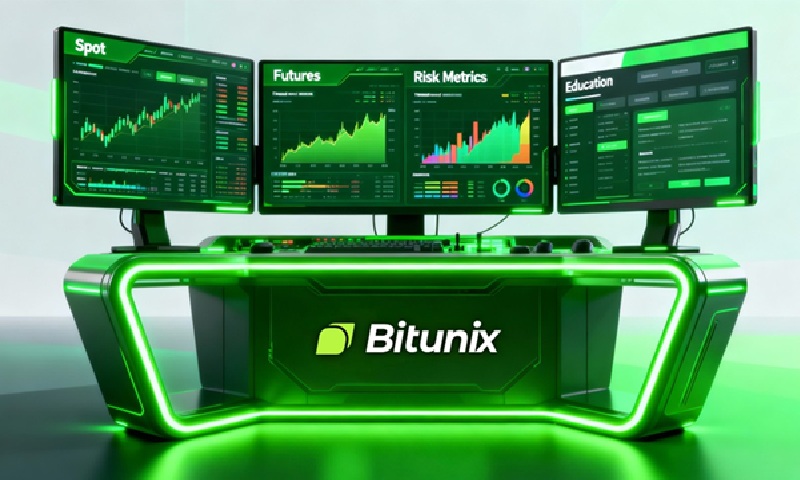
A full trading command center layout illustrating how Bitunix unifies education, execution, and analytics in one place.
Bitunix Inside: Tools That Matter For Everyday Trading
Bitunix’s edge becomes clearer when you put all the pieces together.
Futures and margin – perpetual contracts with leverage, a wide range of order types (stop-loss, take-profit, trailing stop, reverse), and a hedge mode to keep long and short positions on the same asset.
Spot trading – more than 800 pairs, a fast engine, and a focus on listing both blue chips and hidden gems.
Desktop-style tools inside the app – Multi-Window with multiple charts, native TradingView, price and funding alerts, and panels to switch between spot and futures in seconds.
Automated investing – the Bitunix Earn product, with flexible and fixed options, plus Dual Investment for users who want returns linked to price behavior without trading manually all the time.
For more active traders, this means fewer tabs open and a tighter workflow, concentrating market analysis, execution, and monitoring in a single environment.
KYC, Compliance, And Protection: Why Onboarding Matters
No ultimate guide to crypto trading in 2025 is complete if it ignores KYC. In Bitunix’s case, onboarding starts with a simple signup flow, designed as a fast registration process where users create an account in a few steps and then go through a guided verification phase.
This user-friendly verification system combines document upload, automated checks, and a selfie. It is part of a global compliance framework with a protection fund that ties user identification to security measures and capital reserved for user protection in extreme scenarios. This is an exchange that truly cares, aiming to balance regulatory requirements with a smooth experience.
Conclusion
In the end, perfect for you is not a label. It is a practical question. The best exchange is the one that offers products aligned with the way you trade, security that matches your risk appetite, and tools that help you make faster, more informed decisions. Bitunix is a strong candidate on that front, bringing together derivatives with up to 125x leverage, deep spot markets, native TradingView, Multi-Window, and a flexible KYC process.