

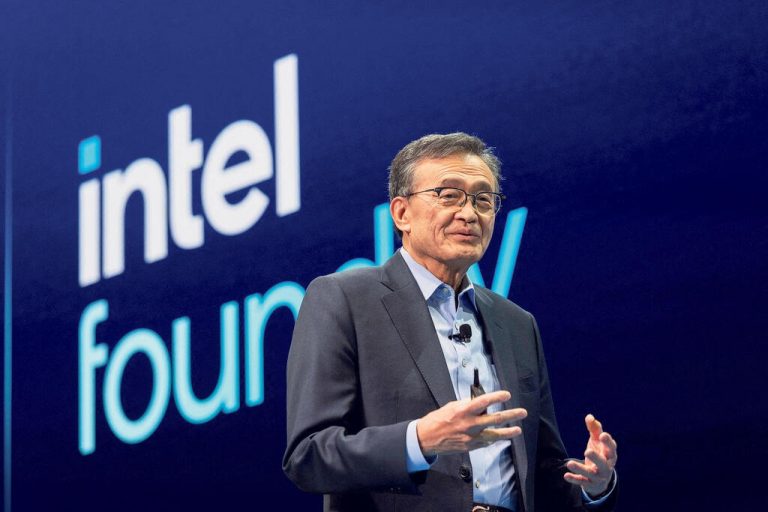
The U.S. government’s decision to take a 9.9% equity stake in Intel has rattled investors and raised concerns that President Donald Trump is ushering in a new era of direct government involvement in private corporations.
The deal, announced Friday, converts $11.1 billion in CHIPS Act grants and other government funding into stock ownership. Intel’s press release included endorsements from Microsoft, Dell, and other corporate partners praising the move as a boost for U.S. semiconductor competitiveness. But many on Wall Street said the transaction crossed a line, according to a Reuters report.
Trump himself tied the stake to pressure on Intel CEO Lip-Bu Tan, writing on social media that Tan wanted to keep his job and “ended up giving us $10 billion for the United States.”
Register for Tekedia Mini-MBA edition 20 (June 8 – Sept 5, 2026).
Register for Tekedia AI in Business Masterclass.
Join Tekedia Capital Syndicate and co-invest in great global startups.
Register for Tekedia AI Lab.
“It sets a bad precedent if the president can just take 10% of a company by threatening the CEO,” said James McRitchie, a shareholder activist in California who owns Intel stock. “The message is: we love Trump, or we risk losing part of our company.”
Intel shares rose in the days between Trump’s public calls for Tan’s resignation and the deal announcement, jumping from $20.41 on August 6 to $24.56 on August 15. But the stock slipped 1% to close at $24.35 on Tuesday after investors began digesting the terms.
According to a securities filing, the U.S. Commerce Department will not gain board seats but can vote “as it wishes” on certain matters. It must back management’s nominees for directors and corporate proposals, but retains flexibility elsewhere. The arrangement, analysts say, could blunt activist investor campaigns but at the cost of diluting existing shareholders and reducing their voting power.

Fitch Ratings said the deal does little to improve Intel’s fundamentals, maintaining its BBB credit rating, just above junk. CEO Tan himself acknowledged Intel did not need the funding, noting that SoftBank had injected $2 billion just three days earlier.
The government’s intervention marks the third major corporate entanglement for Trump’s White House in recent months, following a “golden share” in U.S. Steel’s sale to Nippon Steel and a July stake in a mining company tied to military supply chains.
Commerce Secretary Howard Lutnick suggested defense contractors may be next.

The strategy mirrors approaches long seen abroad. Governments in Germany, Japan, South Korea, Taiwan, and Singapore all hold ownership stakes in national champions, particularly in autos. For example, the German state of Lower Saxony controls 20% of Volkswagen.
But in the U.S., critics believe, the move resembles creeping state capitalism. During the 2008–2009 financial crisis, Washington temporarily took equity in struggling firms, but Intel’s case is different—its finances remain stable.
“A government stake in an otherwise private entity potentially creates a conflict between what’s right for the company and what’s right for the country,” said Robert McCormick of the Council of Institutional Investors.
Kristin Hull, chief investment officer at Nia Impact Capital, called the development troubling: “I have more questions than confidence. The lines between where is the government and where is the private sector—we’re really blurring them here.”
Other investors warned that government stakes could distort corporate decision-making on sensitive issues such as plant locations, layoffs, or international expansion. Rich Weiss of American Century Investments said regulations would be needed to guard against insider trading and conflicts of interest.
Not all reactions were negative. One large institutional investor, speaking anonymously to Reuters, said a U.S. stake could shield Intel from activist campaigns that prioritize short-term returns. Still, the investor cautioned, “If this becomes a tool that’s more widespread, we’ll have to ask why capital markets aren’t providing financing and why government pressure is.”
Treasury Secretary Scott Bessent said Wednesday that a stake in Nvidia, the world’s most valuable semiconductor firm, is “not on the table,” but he left open the possibility of future investments in industries such as shipbuilding.
“Could there be other industries where that we’re reshaping, something like ship building? Sure, there could be things like that,” Bessent said.
Intel now finds itself at the center of an experiment without precedent in modern U.S. industrial policy: a healthy private company with the federal government as one of its largest shareholders, raising both the hopes of greater national semiconductor strength and the fears of blurred boundaries between the state and the market.