

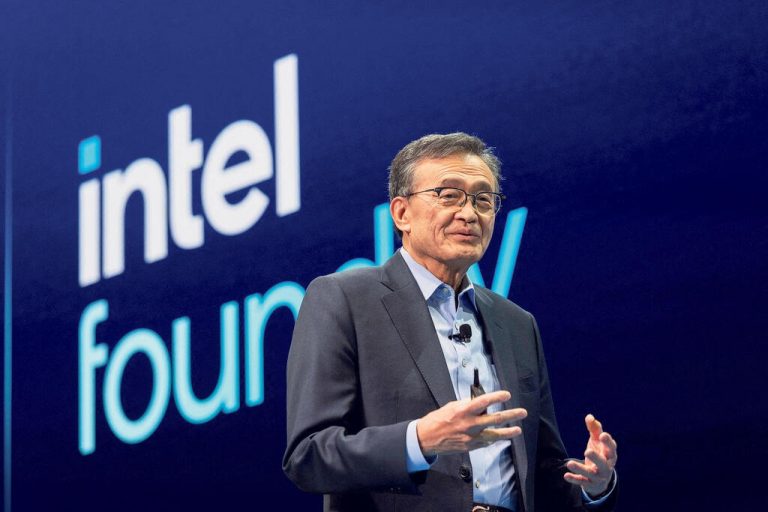
President Donald Trump on Thursday publicly called for the resignation of Intel CEO Lip-Bu Tan, intensifying scrutiny over the executive’s alleged ties to Chinese firms and throwing one of America’s most critical tech companies into crisis.
“The CEO of INTEL is highly CONFLICTED and must resign, immediately. There is no other solution to this problem,” Trump posted on Truth Social around 7:30 a.m., in a direct attack that jolted markets and caught Intel off guard. The company’s shares dropped 3.1% by the end of trading.
The controversy erupted after a Republican senator raised concerns about Tan’s reported financial interests in Chinese companies. Trump’s reaction, however, elevated the matter from a routine vetting issue to a full-blown political and public relations storm — one that now threatens to undermine confidence in Intel at a time when the U.S. is fighting to regain its global chipmaking edge.
Register for Tekedia Mini-MBA edition 20 (June 8 – Sept 5, 2026).
Register for Tekedia AI in Business Masterclass.
Join Tekedia Capital Syndicate and co-invest in great global startups.
Register for Tekedia AI Lab.
In a statement sent to reporters hours later, an Intel spokesperson said: “Intel, the Board of Directors, and Lip-Bu Tan are deeply committed to advancing US national and economic security interests and are making significant investments aligned with the President’s America First agenda.”
But for many observers, the damage may already be underway. Veteran crisis-communications experts warn that the situation could spiral quickly unless Intel takes decisive steps to control the narrative.
While Trump has long targeted government officials, corporate lawyers, and university presidents, it is rare for the President to directly call for the ouster of a sitting CEO of a major American corporation. In this case, the attack comes amid the administration’s broader crackdown on perceived Chinese influence in high-tech sectors and as it pushes for the return of advanced manufacturing jobs to the U.S.

“President Trump remains fully committed to safeguarding our country’s national and economic security,” said a White House official in a statement to Business Insider. “This includes ensuring that iconic American companies in cutting-edge sectors are led by men and women who Americans can trust.”
Lip-Bu Tan, a veteran of the semiconductor industry, was appointed as Intel’s chief executive in March. Though seen by some as a strategic and globally connected leader, his past investment ties have now drawn fire at the highest levels.
Crisis Management Experts Weigh In
Crisis management experts who spoke to Business Insider said Intel needs to address the issue head-on to avert further crises. The U.S. chipmaker has tried to overcome its years of downturn, marked by relentless revenue declines. Tan was appointed the company’s CEO in a bid to revive its fortune.

Kevin Donahue, a 30-year veteran of corporate crisis communication, warned that Intel must act immediately.
“It’s potentially fatal,” Donahue said. “You absolutely cannot stay mum in situations like this.”
He urged Intel to issue a robust and multi-front response addressing investors, customers, and government stakeholders, while anticipating how the narrative might evolve online. “Otherwise,” he said, “the crisis grows.”
Another industry expert, Michele Ehrhart, formerly VP of global communications at FedEx and author of Crisis Compass, said Intel must decide whether to publicly back Tan or not.
“You have to really draw a line in the sand on what it is you’re trying to accomplish and how you’re planning to do that,” said Ehrhart, who is the author of the book “Crisis Compass.”
Ehrhart noted that putting Tan in front of the press could help restore trust, though she cautioned against over-communicating.
“Here’s our statement. We’re not going to go beyond it,” she advised.
Donahue also recommended that Intel assemble a rapid-response team of legal, PR, and government affairs experts to coordinate messaging and demonstrate the board’s confidence in Tan’s appointment.
“That’s a tall order,” he admitted.
Managing Trump’s Attack
But Trump’s involvement adds a uniquely unpredictable element. Evan Nierman, CEO of crisis PR firm Red Banyan, said dealing with a standard political figure is one thing, but confronting Trump is another matter entirely.
“You have to create an offramp,” Nierman said, advising Intel to find a diplomatic way to de-escalate. “Get in touch with people close to the President and try to demonstrate alignment.”
Nierman called Trump’s political style “transactional” and suggested that a careful review of his posts and speeches might reveal what Intel could say or offer to get him to step back. “You’re going to have a lot more success than telling him no, ignoring him, or trying to defend yourself.”
A New Test for Corporate America
The episode underscores a new reality for corporate America: doing business, especially in sensitive sectors like semiconductors, now involves navigating high-stakes geopolitical tensions, domestic political pressures, and the personal attention of the President himself.
For Intel, how it handles this moment could determine not just the future of its leadership but also its credibility with investors, regulators, and allies at a time when the U.S. is making historic investments in reshoring chip production.
As of Thursday evening, Intel’s board had not announced any change in leadership. But few expect this to fade quietly, not while the President continues to post.