

U.S. President Donald Trump on Tuesday welcomed Japan’s commitment to invest nearly $36 billion in oil, gas, and critical mineral projects across Texas, Ohio, and Georgia, describing the pledge as the “first tranche” of a sweeping $550 billion strategic investment initiative under the landmark U.S.-Japan trade deal.
“Our MASSIVE Trade Deal with Japan has just launched!” Trump posted on social media. “The scale of these projects are so large, and could not be done without one very special word, TARIFFS.”
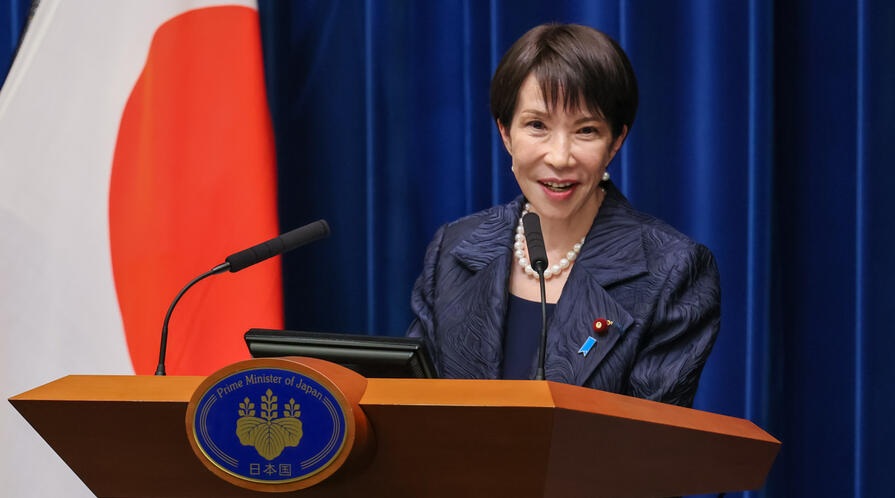
The president’s comments underscore his administration’s use of tariffs as leverage to secure foreign investment commitments, a tactic central to the agreement that reduced most Japanese import tariffs to 15%. Japanese Prime Minister Sanae Takaichi framed the investments as mutually beneficial.
Register for Tekedia Mini-MBA edition 20 (June 8 – Sept 5, 2026).
Register for Tekedia AI in Business Masterclass.
Join Tekedia Capital Syndicate and co-invest in great global startups.
Register for Tekedia AI Lab.
“We believe these initiatives truly embody the purpose of this Strategic Investment Initiative, namely the promotion of mutual benefit between Japan and the United States, the enhancement of economic security, and the promotion of economic growth,” she posted on X (translated via Google).
Breakdown of Major Projects
The $36 billion initial tranche comprises three flagship initiatives:
- Portsmouth Powered Land Project (Ohio)
Valued at $33 billion and operated by SB Energy (a SoftBank subsidiary), this natural gas-fired power facility is expected to generate 9.2 gigawatts of electricity. U.S. Commerce Secretary Howard Lutnick called it “the largest natural gas generation facility in history,” highlighting its scale and strategic importance for U.S. energy security and industrial demand. - Texas GulfLink Deepwater Crude Oil Export Facility
A $2.1 billion project off the Texas coast, developed by Dallas-based Sentinel Midstream. At full capacity, it is projected to enable up to $30 billion in annual U.S. crude exports, strengthening America’s position as a global energy exporter. - Synthetic Diamond Grit Facility (Georgia)
A $600 million investment to produce diamond grit, dust, and powder—critical raw materials for U.S. industrial manufacturing due to their exceptional hardness and wear resistance. The facility will be operated by Element Six, part of De Beers Group, the world’s leading diamond company. The Commerce Department emphasized the material’s importance to economic and national security.
The announcement follows the U.S.-Japan trade agreement negotiated in late 2025, under which Tokyo committed $550 billion in investments in American projects over the coming decade in exchange for tariff reductions on most Japanese imports to 15%. The deal reflects Trump’s “America First” strategy of using tariffs as leverage to attract foreign capital and manufacturing to the U.S., particularly in strategic sectors like energy, critical minerals, and advanced manufacturing.

The investments align with U.S. efforts to enhance energy security, reduce reliance on foreign supply chains for critical materials, and bolster domestic industrial capacity. The natural gas and oil export projects directly support U.S. energy dominance, while the synthetic diamond grit facility addresses vulnerabilities in industrial abrasives and superhard materials—sectors where China has significant influence.
The news provided a positive catalyst for U.S. energy and industrial stocks. Shares of natural gas infrastructure companies, midstream operators, and critical materials firms rose modestly in early trading. Adani Group’s recent $100 billion AI data center announcement in India and similar global moves underscore the surging demand for reliable, large-scale power generation—demand that projects like Portsmouth Powered Land are positioned to meet.
The deal also highlights Japan’s strategic pivot toward deeper U.S. economic integration amid rising geopolitical tensions with China. Tokyo has sought to diversify supply chains and strengthen alliances with the U.S. following disruptions in critical minerals and semiconductors.

Broader Trade and Investment Dynamics
The U.S.-Japan agreement is part of a series of bilateral deals Trump has pursued since returning to office. Similar frameworks have been negotiated with India, South Korea, and select European partners, with tariffs used as leverage to secure investment commitments and market access concessions.
The $550 billion pledge—while spread over a decade—represents one of the largest foreign direct investment commitments in U.S. history. If fully realized, it would support hundreds of thousands of jobs in energy, manufacturing, and infrastructure while strengthening bilateral ties.
The initial $36 billion tranche, for now, focuses on high-impact, strategic projects that align with U.S. priorities: energy independence, critical materials security, and industrial competitiveness. Business leaders expect that the success of these flagship initiatives will influence the pace and scale of subsequent Japanese investments under the broader agreement.
As the U.S.-Japan partnership deepens, the focus will shift to execution: permitting timelines, regulatory approvals, workforce development, and integration into existing energy and industrial ecosystems.