

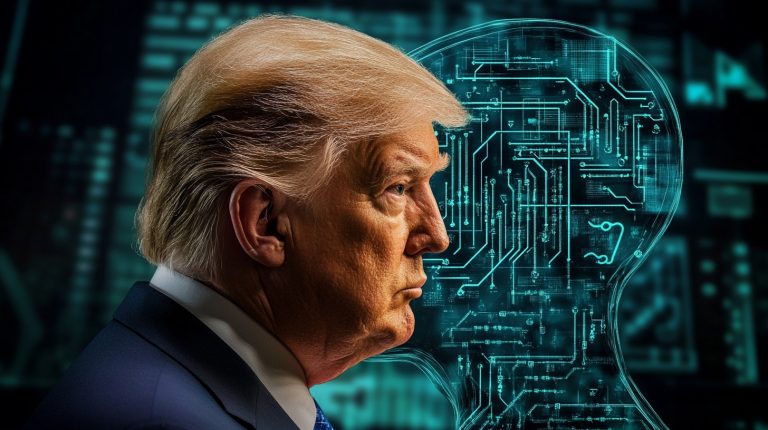
In a move aimed at reshaping the United States’ approach to artificial intelligence (AI), President Donald Trump signed a new executive order on Thursday, revoking key AI policies established under former President Joe Biden.
The order, which promises to eliminate “barriers to American AI innovation,” has sparked a debate about balancing rapid technological development with ethical safeguards and public safety.
A New Vision for AI: Promoting Innovation Without ‘Ideological Bias’
The executive order lays out an ambitious plan to maintain global leadership in AI technology by developing systems that are “free from ideological bias or engineered social agendas.” The language of the order appears to address longstanding criticisms from Trump and his allies, including tech mogul Elon Musk, who have argued that previous AI policies reflected “woke” liberal biases.
Register for Tekedia Mini-MBA edition 20 (June 8 – Sept 5, 2026).
Register for Tekedia AI in Business Masterclass.
Join Tekedia Capital Syndicate and co-invest in great global startups.
Register for Tekedia AI Lab.
Trump’s order emphasizes that AI initiatives should “promote human flourishing, economic competitiveness, and national security.” It mandates a comprehensive review of all policies, regulations, and directives tied to Biden’s 2023 executive order, with the potential to suspend any initiatives that do not align with this new direction.
Unwinding Biden’s AI Safeguards
Biden’s 2023 executive order introduced stringent requirements for AI systems, particularly those used by federal agencies. It mandated that agencies prove their AI tools were not harming the public or suspend their use, a move aimed at preventing discriminatory outcomes and misinformation. The Biden administration had also required tech companies building advanced AI models to share critical details with the government before releasing their systems to the public.

These measures were part of a broader effort, led by then-Vice President Kamala Harris, to curb potential harms from AI technologies. The Biden administration’s AI policies targeted risks associated with tools such as medical diagnosis chatbots, which could spread false information, and facial recognition systems that had been linked to wrongful arrests, particularly of Black men.
However, Trump’s new order casts these safeguards as obstacles to innovation. The administration argues that Biden’s AI policies imposed “unnecessarily burdensome requirements” on developers, potentially stifling the private sector’s ability to compete internationally.
The New AI Action Plan
The executive order directs the White House to draft an AI action plan within 180 days, underlining a pivot to a more business-friendly regulatory environment. This plan will be developed by a select group of White House technology and science officials, including newly appointed Special Advisor for AI and Crypto, David Sacks. Sacks, a venture capitalist and former PayPal executive, is expected to bring a market-oriented approach to the administration’s AI strategy.

The action plan is expected to focus on enhancing U.S. economic competitiveness through AI while reducing regulatory hurdles. However, the lack of specific guidelines on how to manage ethical concerns related to bias and safety has raised red flags among civil rights groups and AI ethics experts.
Concerns Over Bias and Public Safety
The Trump administration’s move to prioritize innovation over regulation has drawn criticism from those who believe that unchecked AI development could lead to real-world harm. Alondra Nelson, former acting director of the White House Office of Science and Technology Policy under Biden, described the new order as “backward-looking.” She warned that the policy shift might unravel existing initiatives that protect the public from harmful AI applications.
“Trump’s order signals a shift away from a balanced approach that both encourages innovation and safeguards public rights and safety,” Nelson said. “In 60 days, we’ll know which Americans’ rights and safety the Trump Administration believes deserve to be protected in the age of AI, and if there will be a level playing field for every technologist, developer, and innovator or just the tech billionaires.”
The Biden administration’s policies had set in motion a series of studies on AI’s impact across sectors, from cybersecurity to public benefits, with a focus on ensuring that AI tools did not contribute to social inequities. Critics say that by repealing these policies, Trump risks erasing much of this groundwork.
Business groups and tech advocates have largely welcomed Trump’s order, viewing it as a chance to boost American innovation in a competitive global market. Americans for Responsible Innovation, a nonprofit organization, praised Trump’s focus on “out-innovating the rest of the world.”
“Today’s executive order is a placeholder until the administration has a chance to develop a full strategy for executing that vision,” said Eric Gastfriend, the organization’s executive director. He noted that many federal agencies had already frozen AI policy work after Trump repealed Biden’s executive order earlier this week.
However, experts warn that prioritizing innovation without robust ethical guidelines could lead to unintended consequences. The lack of clear protections against biased algorithms and misinformation could particularly impact vulnerable populations, critics argue.
Impact on Federal Agencies and AI Developers
Under Biden’s policies, federal agencies had been instructed to scrutinize AI tools and ensure they did not perpetuate biases or misinformation. This included reviewing AI models used in healthcare, law enforcement, and public services. Trump’s order not only halts these reviews but also requires agencies to revise their acquisition and deployment strategies for AI tools.
For AI developers, the new order could reduce compliance costs and accelerate the deployment of new technologies. However, it also creates uncertainty about what standards, if any, they will need to meet regarding ethical considerations and public safety.
The focus on “human flourishing” and economic competitiveness aligns with Trump’s broader agenda of reducing regulations to stimulate business growth. His administration has argued that previous policies under Biden created a compliance-heavy environment that discouraged innovation and allowed foreign competitors to gain ground.
Trump’s approach also mirrors sentiments expressed by Musk, who believes there should be a form of “neutral” AI that avoids politically charged content moderation and ideological leanings.