

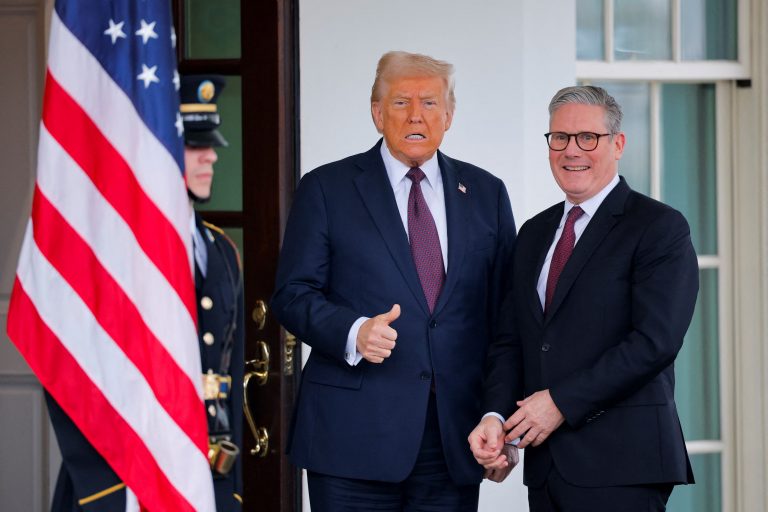
U.S. President Donald Trump has escalated tensions with Britain, warning that Washington could impose sweeping tariffs if London refuses to scrap its digital services tax, a policy long viewed in the United States as disproportionately targeting American technology firms.
“If they don’t drop the tax, we’ll probably put a big tariff on the UK,” Trump said at a White House event, signaling a readiness to translate longstanding policy objections into direct trade retaliation.
The dispute centers on the United Kingdom’s 2% digital services tax, introduced in 2020 to capture revenue from large technology companies generating income from British users. The levy applies primarily to U.S.-based firms such as Apple, Alphabet, the parent of Google, and Meta, which dominate global digital advertising and platform ecosystems.
Register for the next Tekedia Mini-MBA.
Register for Tekedia AI in Business Masterclass.
Join Tekedia Capital Syndicate and co-invest in great global startups.
Washington’s opposition is rooted in both commercial and strategic concerns. U.S. policymakers believe that unilateral digital taxes discriminate against American firms, effectively exporting tax burdens onto companies that are central to U.S. economic strength and technological leadership. The Trump administration’s latest threat suggests a shift from diplomatic pressure toward coercive trade policy, using tariffs as leverage to force policy alignment.
Trump’s remarks come ahead of a planned visit by King Charles III, which the president indicated could help ease strains.
“I think the King could help repair the relationship,” Trump said, underscoring how economic disagreements are increasingly intersecting with high-level diplomacy.

At a structural level, the dispute exposes unresolved tensions in the global tax system. Digital companies can generate significant revenues in markets where they have limited physical presence, creating gaps in traditional tax frameworks. The U.K.’s levy was introduced as an interim solution while negotiations continue at multilateral levels to establish a coordinated approach to taxing multinational corporations.
However, progress on a global framework has been uneven, prompting countries to act independently. That fragmentation is precisely what Washington is seeking to prevent, arguing that a patchwork of national taxes risks creating overlapping obligations, higher compliance costs, and potential double taxation for firms operating across jurisdictions.
The threat of tariffs introduces a more immediate economic risk. The United States is one of the United Kingdom’s largest trading partners, and any escalation could affect a wide range of sectors beyond technology. While Trump did not specify targets, a broad-based tariff could hit British exports in areas such as automotive manufacturing, pharmaceuticals, and financial services, sectors deeply integrated into transatlantic trade flows.

For the U.K., the digital tax represents both a fiscal tool and a political signal. It is seen as a domestic pressure to ensure that large technology companies contribute more equitably to public finances, particularly as digital services play an increasingly central role in the economy. Rolling it back under external pressure could carry political costs, complicating negotiations.
The dispute has also added to a broader shift in trade policy under Trump, where tariffs are increasingly used as instruments of negotiation rather than purely protective measures. This approach raises the risk of retaliatory cycles, particularly if Britain responds with countermeasures or seeks to align with other jurisdictions pursuing similar taxes.
Markets are likely to view the situation through a wider lens of geopolitical risk. The combination of trade tensions, ongoing conflicts in the Middle East, and fragile global supply chains creates an environment where policy shocks can have amplified effects on investor sentiment and cross-border investment flows.
There is also a corporate dimension. Companies such as Apple, Alphabet, and Meta face growing regulatory and tax pressures across multiple jurisdictions, forcing them to navigate an increasingly complex global market. A tariff escalation tied to digital taxation would add a fresh challenge, potentially affecting pricing strategies, investment decisions, and market access.
However, the path forward remains uncertain as diplomatic engagement could still produce a compromise, particularly if broader international tax negotiations regain momentum. Alternatively, the dispute could harden into a test case for how far the United States is willing to go in defending its technology sector through trade policy.