

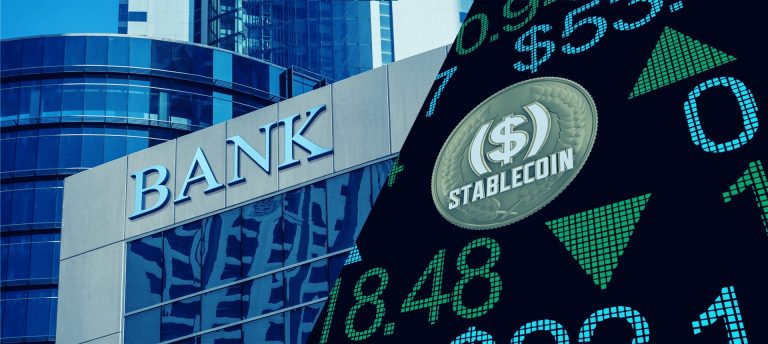
U.S. Bancorp has created a Digital Assets and Money Movement unit, marking one of the clearest signs yet that traditional American banking is being pulled into a new era shaped by tokenization, blockchain rails, and the rapid rise of stablecoins.
Announced in mid-October 2025, the new division places the bank squarely inside a global shift that has financial institutions scrambling to modernize their infrastructure before the next generation of money movement leaves them behind.
Stable-coin adoption is sweeping across the world, transforming from a niche experiment into a financial utility. U.S. lenders, in particular, are racing to build internal capabilities. The momentum is being fueled by the popularity of dollar-backed digital tokens, which are now settling everything from cross-border remittances to corporate treasury transfers. Even conservative institutions that once kept blockchain at arm’s length are rolling out pilots or forming internal teams to prepare for widespread use of tokenized deposits, programmable payments, and instant settlement systems.
Register for Tekedia Mini-MBA edition 20 (June 8 – Sept 5, 2026).
Register for Tekedia AI in Business Masterclass.
Join Tekedia Capital Syndicate and co-invest in great global startups.
Register for Tekedia AI Lab.
U.S. Bancorp’s move fits neatly into this new reality. With more than six hundred billion dollars in assets, the bank cannot afford to fall behind rivals that are already deploying blockchain systems. JPMorgan runs its own tokenization network. Citigroup has built tokenized cash settlement tools. Global institutions from Europe to Asia are rolling out similar initiatives.
The result is an industry-wide rush to ensure that banks—not fintech startups—control the pipes that will carry the next evolution of digital money.
The new division at U.S. Bancorp will be led by payments veteran Jamie Walker, who currently heads Merchant Payment Services. He will remain in that role until a successor is named, after which he will step into his new position under Chief Digital Officer Dominic Venturo.

Venturo said the bank’s customers, especially corporates and institutions, increasingly want to understand how digital assets can help them move money safely, store value efficiently, and interact with tokenized instruments in a regulated environment. The new structure is designed to meet that demand with a long-term focus rather than piecemeal experimentation.
The organization intends to develop blockchain-based tools that support stablecoin activity, tokenized assets, and advanced digital payment rails. That includes research into issuing or integrating stablecoins, exploring tokenized real-world assets that settle instantly, and constructing on-chain money-movement infrastructure capable of supporting both domestic and cross-border flows.
The unit will also oversee custody and settlement services for cryptocurrencies, enabling U.S. Bancorp to serve institutional clients seeking compliant exposure to digital assets. Internally, it will coordinate innovation efforts across the bank to ensure all blockchain projects meet regulatory and risk-management standards.

The establishment of this division sends a message to the wider market. While crypto markets have weathered cycles of hype and collapse, the technology underneath—especially the rails powering stablecoins—has only grown more entrenched. Dollar-backed tokens now settle hundreds of billions of dollars in monthly transactions globally.
Large corporations have begun experimenting with on-chain treasury operations. Payment companies are integrating stablecoins directly into their products. And financial regulators in major economies, including the U.S., are edging toward more structured frameworks that would allow banks to issue or custody tokenized dollars.
This shift explains why financial institutions are moving quickly. Stablecoins offer faster settlement, lower transaction costs, and programmable features that traditional payment systems cannot match. As adoption widens, banks risk losing relevance if they fail to own the infrastructure powering the new digital-money ecosystem.
Bancorp joining the fray, setting up a division dedicated to digital assets, signals that tokenized markets, stablecoins, and digital-money rails are expected to become permanent financial instruments rather than speculative experiments. For a bank of its size, the new unit is not just a response to competition—it is a bet that the next major transformation in global finance will happen on distributed ledgers, and that institutions prepared today will have the advantage tomorrow.