

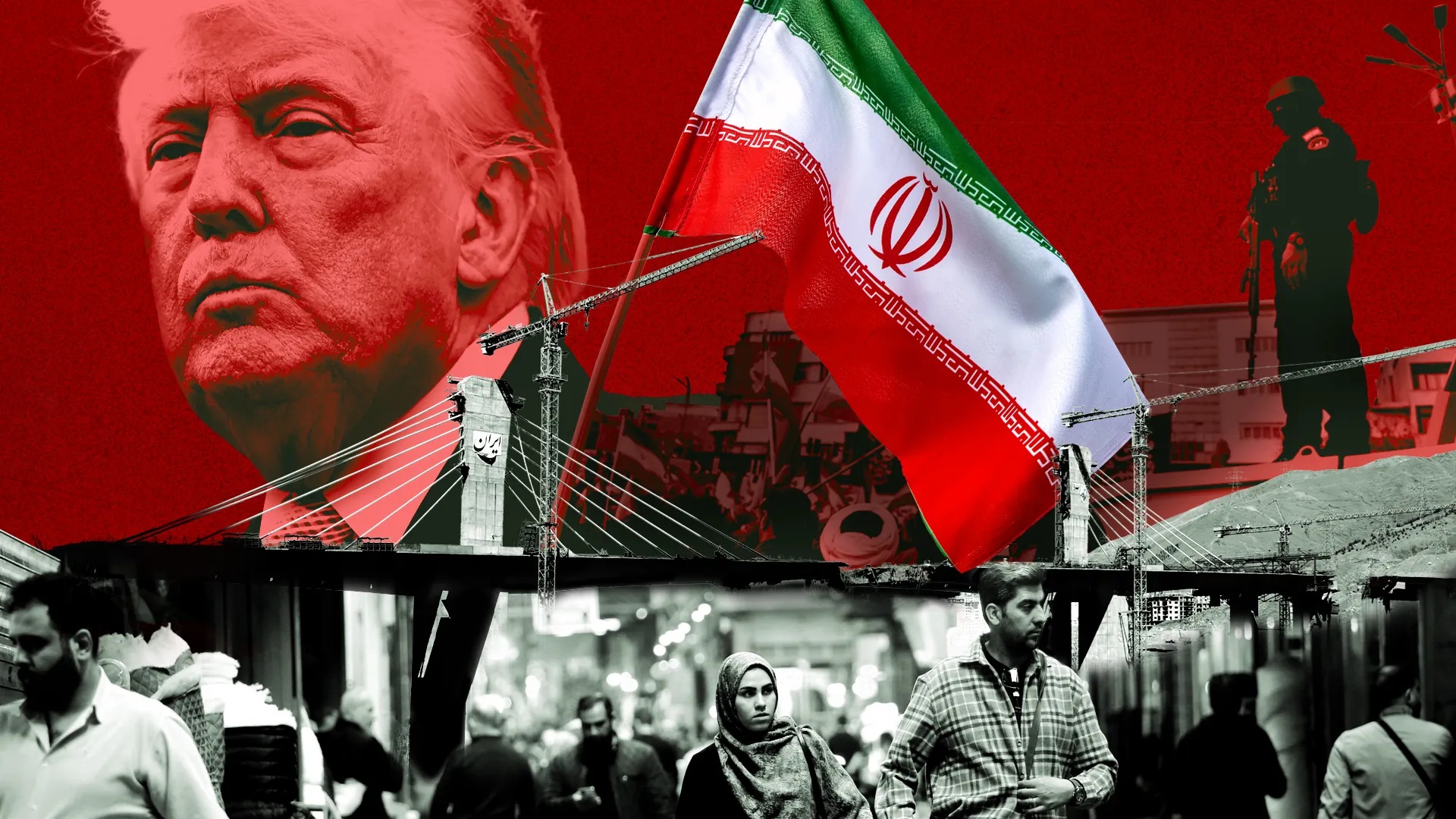
The United States and Iran have reached a framework agreement aimed at ending months of conflict that has destabilized the Middle East, disrupted global energy markets, and heightened fears of a broader regional war.
The preliminary memorandum of understanding, which is expected to be formally signed in Switzerland on Friday, outlines a path toward reopening the Strait of Hormuz, ending military operations across multiple fronts, and launching broader negotiations over Iran’s nuclear program and sanctions relief.
The deal marks the most significant diplomatic breakthrough since hostilities erupted following U.S.-Israeli strikes on Iran earlier this year.
Register for the next Tekedia Mini-MBA.
Register for Tekedia AI in Business Masterclass.
Join Tekedia Capital Syndicate and co-invest in great global startups.
U.S. President Donald Trump declared victory on social media, writing: “The Deal with the Islamic Republic of Iran is now complete.”
The statement came shortly after Pakistani Prime Minister Shehbaz Sharif, whose government played a key mediation role, announced that negotiators had secured an agreement.
Sharif said the pact calls for “the immediate and permanent termination of military operations on all fronts, including in Lebanon.”

The announcement immediately reverberated across global markets. Oil prices fell sharply, stock markets rallied, and investors welcomed the prospect of renewed stability in one of the world’s most strategically important regions.
Strait Of Hormuz Set To Reopen
The most immediate consequence of the agreement is expected to be the reopening of the Strait of Hormuz, through which roughly one-fifth of global oil supplies and a significant portion of the world’s liquefied natural gas shipments pass.
Iran effectively shut down the strategic waterway after the conflict began in February, triggering one of the biggest energy market shocks in years. The closure pushed crude prices above $100 per barrel, reignited inflation pressures across major economies, and intensified concerns about global growth.

Trump said the strait would reopen on Friday and announced the end of the U.S. naval blockade of Iranian ports.
“Ships of the World, start your engines. Let the oil flow!” Trump wrote.
Brent crude futures fell about 4% following the announcement as traders priced in the prospect of restored oil flows and reduced geopolitical risk.
Lebanon Emerges As Key Component Of Deal
One of the most notable aspects of the framework is its inclusion of Lebanon, which became the deadliest secondary front in the conflict. Since March, fighting between Israel and the Iran-backed Hezbollah movement has killed thousands of people and displaced an estimated 1.2 million residents.
The Lebanese front had become a major obstacle in negotiations, with both Israel and Hezbollah resisting repeated international calls for restraint. Iran’s Supreme National Security Council announced that military operations on all fronts, including Lebanon, would end permanently beginning Monday night.
Iranian Foreign Minister Abbas Araqchi stressed that implementation would require a complete halt to Israeli military operations in Lebanon. He wrote that the United States bears responsibility for ensuring the agreement is carried out.
Lebanese Parliament Speaker Nabih Berri welcomed the framework, saying it lays the groundwork for regional stability. However, Israeli officials signaled that significant disagreements remain. Israeli Defence Minister Israel Katz said Israel would oppose pressure to withdraw from areas it currently occupies in southern Lebanon.
“This is the main lesson from the events of October 7,” Katz said.
“Prime Minister Netanyahu made this clear to U.S. President Trump and other senior American officials, and I also clarified it yesterday to U.S. Defense Secretary Pete Hegseth.”
Nuclear Issue Postponed For Future Negotiations
While the agreement addresses military operations and maritime security, it leaves the most contentious issue unresolved: Iran’s nuclear program. Iranian Deputy Foreign Minister Kazem Gharibabadi said negotiators would use a 60-day ceasefire period to pursue a broader settlement. The future talks are expected to address sanctions relief, uranium enrichment levels, nuclear inspections, and regional security arrangements.
The issue remains politically sensitive for Trump. During his first term, Trump withdrew the United States from the 2015 nuclear agreement negotiated under Barack Obama, arguing that the deal failed to adequately constrain Tehran’s nuclear ambitions. Since then, Iran has significantly expanded its uranium enrichment activities, accumulating more than 400 kilograms of material enriched to levels approaching weapons-grade purity.
Before the announcement, U.S. and Iranian officials offered differing visions of the eventual outcome. A U.S. official said the final agreement would lead to the dismantling of Iran’s nuclear program, including the destruction and removal of highly enriched uranium stockpiles. An Iranian official, meanwhile, indicated that Tehran would instead dilute enriched uranium domestically rather than surrender it.
The gap underscores the difficult negotiations that still lie ahead.
Frozen Assets And Sanctions Relief Emerge As Incentives
Economic incentives appear to have played a major role in securing the breakthrough. According to Iranian sources familiar with the negotiations, the draft framework includes provisions for the release of approximately $25 billion in frozen Iranian assets. The broader agreement is also expected to address U.S. and European sanctions that have constrained Iran’s economy for years.
European powers quickly welcomed the diplomatic progress. In a joint statement, the governments of the United Kingdom, Germany, France, and Italy said they were prepared to lift sanctions in response to “clear, verifiable steps” by Iran to curb its nuclear activities.
China also welcomed the agreement, highlighting the broad international support for efforts to stabilize the region.
Political victory for Trump
The agreement is likely to provide a significant political boost for Trump, who has repeatedly expressed frustration over what he viewed as insufficient support from key U.S. allies, particularly in Europe, during the crisis. Throughout the conflict, Trump repeatedly argued that Washington had borne the bulk of the economic and military burden while allies hesitated to take stronger positions against Iran.
The swift endorsement from major European governments following the framework agreement is expected to strengthen Trump’s argument that sustained U.S. pressure ultimately compelled allies to align more closely with Washington’s approach.
The breakthrough also arrives at a crucial political moment. Rising fuel prices and economic uncertainty had become growing concerns for voters ahead of November’s midterm elections, while divisions had emerged within Trump’s own political coalition over how aggressively to confront Iran.
By securing a pathway toward reopening the Strait of Hormuz while maintaining pressure on Tehran’s nuclear program, Trump can present the agreement as a diplomatic achievement that advances both energy security and national security objectives.
While financial markets reacted positively to the announcement, analysts caution that substantial obstacles remain before a comprehensive peace settlement is achieved.
Israeli Prime Minister Benjamin Netanyahu has not publicly endorsed the framework, and Israeli officials continue to insist on retaining operational flexibility in Lebanon.
Questions also remain over how Iran’s nuclear activities will be addressed, how sanctions relief will be phased in, and whether all regional actors will comply with the ceasefire provisions.
Still, after months of warfare, economic disruption, and fears of a wider regional conflict, the framework agreement represents the clearest sign yet that diplomacy may be gaining momentum.