

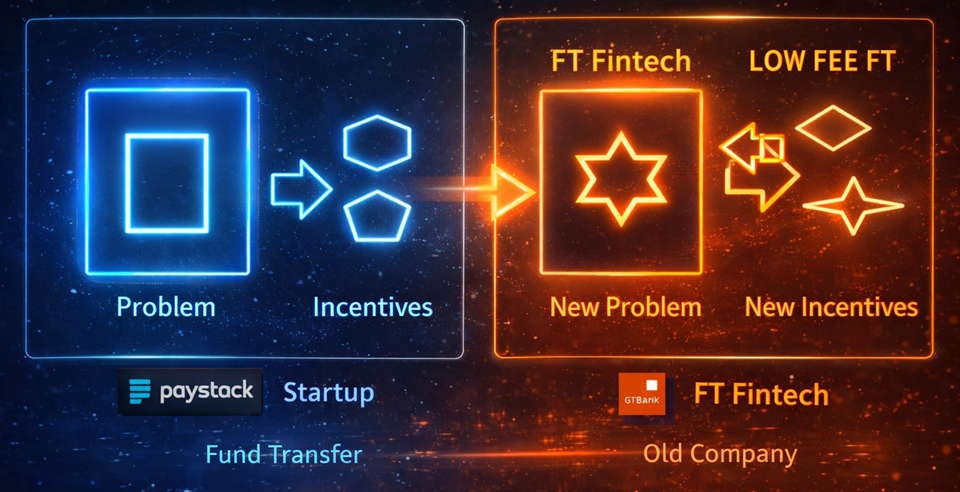
The competitive landscape of modern business often presents a paradox where small, underfunded startups consistently outperform established corporate giants that possess massive resources and decades of history. This phenomenon is explained through the Startup Incentive Construct, a framework I introduced, highlighting how success is driven by the alignment of incentives rather than just capital or legacy. At the heart of this construct is the realization that large companies often suffer from “Innovation Hangover” which creates a profound structural inertia.
This hangover occurs when a company’s existing, highly profitable revenue streams prevent it from pursuing new innovations that might cannibalize those very profits. For instance, a traditional bank generating significant revenue from a specific treasury operation would find it culturally and financially difficult to adopt a disruptive fintech solution that offers the same service at a fraction of the cost. Because the incumbent is incentivized to protect its current bottom line, it often ignores or suppresses innovations that would benefit the consumer but harm its own short-term earnings.
Consequently, when faced with new market frictions, these established organizations tend to adjust the problem to fit their legacy business models instead of solving the original friction. This misalignment means they end up solving a different, secondary problem that preserves their existing structure but fails to meet the actual needs of the consumer as effectively as a new entrant might.
Register for Tekedia Mini-MBA edition 20 (June 8 – Sept 5, 2026).
Register for Tekedia AI in Business Masterclass.
Join Tekedia Capital Syndicate and co-invest in great global startups.
Register for Tekedia AI Lab.
In contrast, startups operate with an entirely different set of incentives because they have no legacy systems to protect and nothing to lose by being disruptive. They are inherently aligned with the original friction of the market, allowing them to focus on pure problem-solving without the burden of a profit hangover.
While a major corporation might add complex features to a product just to justify a premium price and maintain its margin, a startup can win by focusing on the core simplicity and cost-effectiveness that users actually need. This agility enables new ventures to navigate the strategic blind spots of industry leaders, ultimately transforming an incumbent’s greatest strength, its current profitability, into its most significant competitive weakness.
For entrepreneurs, especially those in emerging markets, this framework serves as a strategic roadmap, proving that focused alignment with market needs can reliably overcome the sheer scale of established players.

Read more my thesis here with video
---
Connect via my
LinkedIn |
Facebook |
X |
TikTok |
Instagram |
YouTube