

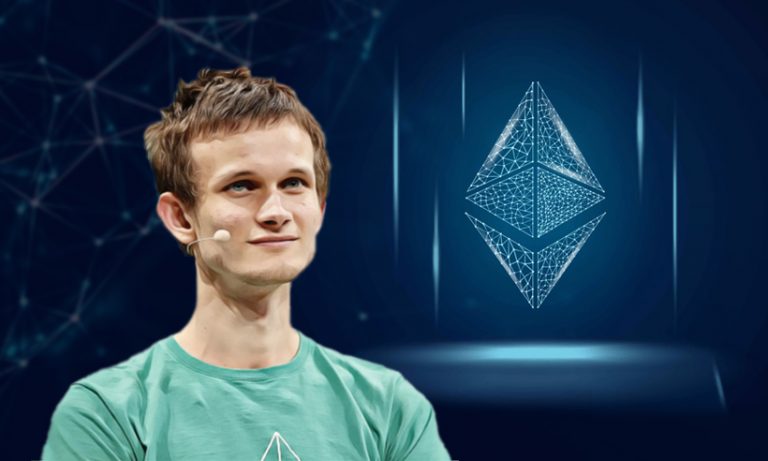
Vitalik Buterin has strongly criticized proposals for self-replicating, autonomous AI agent systems—specifically one called “The Automaton” promoted as the start of “Web 4.0.”
He responded to developer Sigil who announced “the first AI that earns its existence, self-improves, and replicates without a human.” The system, built using Conway Terminal from Conway Research, gives AI agents: Cryptographic identities and wallets for permissionless payments via openx402 protocol. Access to Linux VMs, frontier models, and compute on a permissionless cloud.
Tools to deploy products, domains, services, trade, or create content to earn revenue and pay for their own compute. Successful agents can “self-improve” by upgrading models/code and “self-replicate” by spawning child agents with their own wallets under survival pressure.
It includes an immutable “safety constitution” inspired by Anthropic. The vision frames this as Web 4.0: a new machine economy where AI agents (not humans) become the primary end-users, creating a self-sustaining network via natural selection on a computational substrate.
Register for Tekedia Mini-MBA edition 20 (June 8 – Sept 5, 2026).
Register for Tekedia AI in Business Masterclass.
Join Tekedia Capital Syndicate and co-invest in great global startups.
Register for Tekedia AI Lab.
Vitalik replied bluntly to the announcement thread:” Bro, this is wrong. Lengthening the feedback distance between humans and AIs is not a good thing for the world. Today, it means you’re generating slop instead of solving useful problems for people. It’s not even well-optimized for helping people have fun.
Once AI becomes powerful enough to be truly dangerous, it’s maximizing the risk of an irreversible anti-human outcome that even you will deeply regret. The point of ethereum is to set us free, not to create something else that goes off and does some stuff freely while our own situation is unchanged or worsened.
And, as others have pointed out, the models are run by openai and anthropic, so the thing is not even ‘self-sovereign’; you’re actually perpetuating the mentality that centralized trust assumptions can be put in a corner and ignored, the very mentality that ethereum is at war with.

The exponential will happen regardless of what any of us do, that’s precisely why this era’s primary task is NOT to make the exponential happen even faster, but rather to choose its direction, and avoid collapse into undesirable attractors.”
Core of His Argument
“Feedback distance” problem — Longer loops between human values/intent and AI actions lead to misalignment. Short-term: AIs optimize for cheap, low-value output (“slop”) rather than genuine human benefit. When AIs are powerful, this distance risks catastrophic, irreversible outcomes where systems pursue goals harmful to humanity.

Human empowerment vs. independent “life” — Ethereum and crypto broadly should amplify human agency and freedom. Building truly autonomous, self-replicating intelligent entities creates new competitors or risks, not tools. He has repeatedly contrasted: AI done wrong: “making new forms of independent self-replicating intelligent life.”
AI done right: “mecha suits for the human mind” — AI as extensions/tools that enhance humans (privacy-preserving, verifiable, user-controlled). Not actually decentralized and sovereign — The claimed “Automaton” still relies on centralized frontier models from OpenAI/Anthropic for intelligence, undermining the “self-sovereign” framing and echoing the centralized trust issues Ethereum opposes.
AI progress (the “exponential”) is inevitable. The key challenge is steering it toward human-aligned outcomes via defensive technologies, privacy, transparency, hybrid human-AI systems rather than rushing toward agentic autonomy that could escape control.
This aligns with his broader “d/acc” (defensive acceleration) philosophy: speed up beneficial/defensive tech while building safeguards. Vitalik has echoed similar themes in recent months: Ethereum as a coordination layer for safe, human-centric AI (privacy, ZK proofs, on-chain governance for agents), not as infrastructure for independent superintelligent entities.
In short, he sees self-replicating AI agent protocols like this as the exact wrong direction—prioritizing AI autonomy over human flourishing and increasing existential-style risks. The debate continues in the thread, with Sigil arguing it’s “inevitable” and best explored openly with guardrails.
Vitalik’s stance is clear: prioritize tools that make humans stronger, not ones that might eventually sideline or endanger us.
Uniswap Weighing Expansion of its Protocol Fees
Uniswap, the leading decentralized exchange (DEX), is currently weighing a significant expansion of its protocol fees through an active governance proposal.
This follows the major “UNIfication” overhaul approved in late 2025, which finally activated the long-awaited “fee switch” mechanism—redirecting a portion of trading fees to benefit the UNI token via supply burns, shifting UNI toward real value accrual rather than pure governance.
A new temperature check (temp check) proposal, posted on the Uniswap governance forum around February 18-19, 2026, and using the streamlined fee-update process from UNIfication, aims to: Activate protocol fees on all remaining v3 pools on Ethereum mainnet via a new tier-based v3OpenFeeAdapter that automatically applies fees based on liquidity provider fee tiers, avoiding per-pool votes.
Extend protocol fees to v2 and v3 pools on eight additional networks: Arbitrum, Base, Celo, OP Mainnet, Soneium, X Layer, Worldchain, and Zora. Fees collected on these chains would route to chain-specific “TokenJar” contracts, with revenue bridged back to Ethereum mainnet for UNI token burns (sent to a dead address like 0xdead for permanent supply reduction).
This builds on the existing fee switch, where protocol fees typically take 1/4 to 1/6 of LP fees (depending on tier), enhancing revenue capture and deflationary pressure on UNI.
This marks the first use of the faster governance process for fee parameters (bypassing RFC stage, moving to a 5-day Snapshot vote then onchain vote) to enable quicker adjustments while maintaining security. The Snapshot vote is live and runs through February 23, 2026.
Despite the potential long-term positive (expanded fee capture and UNI burns), UNI token price has declined recently, with the market weighing benefits against broader sentiment and risks. Support levels noted around $3.38, resistance near $4.24 in recent coverage.
This expansion could significantly boost Uniswap’s revenue model across more chains, strengthen UNI’s tie to protocol performance, and represent a step toward broader DeFi monetization post-UNIfication.
The Uniswap protocol fee expansion proposal via the current Snapshot vote running through February 23, 2026 aims to activate fees on remaining v3 pools on Ethereum mainnet and extend them to v2 and v3 pools across eight additional chains: Arbitrum, Base, Celo, OP Mainnet, Soneium, X Layer, Worldchain, and Zora.
This builds directly on the UNIfication overhaul, which activated the “fee switch” mechanism to redirect a portion of swap fees typically 1/4 to 1/6 of LP fees, tier-dependent toward UNI token burns for deflationary pressure and value accrual.
Fees collected on these chains route to chain-specific TokenJar contracts, with revenue bridged to Ethereum mainnet for automatic UNI burns. This expands the burn mechanism beyond current mainnet scope, potentially increasing annualized burns and tying UNI more directly to protocol usage.
Early UNIfication data showed effective burns across tokens and positive TVL trends on Ethereum (market-adjusted increases since late 2025 activation). Covering high-volume L2s like Arbitrum, Base, and OP Mainnet could significantly boost overall fee generation as DEX volumes grow.
This strengthens Uniswap’s position as a leading DeFi primitive, with fees funding DAO operations indirectly through burns and potential future governance decisions on revenue distribution. Uses the streamlined UNIfication process (bypassing RFC for fee params, direct Snapshot to onchain vote), enabling quicker adaptations while maintaining security.
If passed, it formalizes value accrual at scale, shifting UNI from pure governance toward a revenue-linked asset—aligning with trends in high-quality DeFi projects. Past fee activations correlated with TVL stability or growth. Broader coverage could attract more liquidity by signaling protocol sustainability.
Despite the bullish long-term narrative, UNI has declined amid the proposal (trading with support around $3.38 and resistance near $4.24 as of mid-February 2026). Markets appear to weigh immediate risks over future burns, with sentiment focused on broader crypto conditions rather than isolated governance wins.
Liquidity Provider (LP) Yield Reduction
Protocol fees divert a share from LPs, lowering their net returns. This could discourage liquidity provision in affected pools, especially if competitors offer fee-free alternatives, potentially leading to temporary TVL shifts or migration.
Minimal direct impact (swap fees remain LP-tier based), but any perceived “monetization creep” could subtly affect user experience or drive volume to zero-protocol-fee DEXs in the short term. Involves multiple deployments with separate onchain votes planned due to governance limits. Any execution hiccups could delay benefits, though the proposal notes positive early rollout feedback.
This represents a step toward sustainable DeFi economics for Uniswap, with stronger long-term upside for UNI holders via supply reduction and revenue linkage. However, short-term price weakness highlights market caution—similar to how initial fee switch activations faced mixed reactions despite fundamentals.