

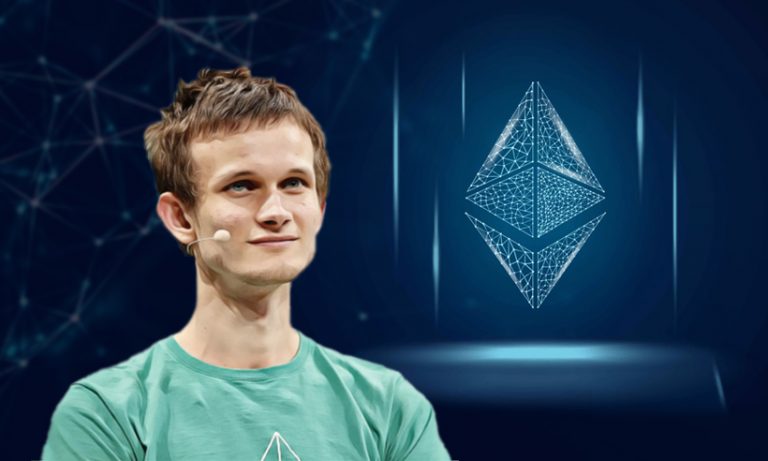
Ethereum co-founder Vitalik Buterin has introduced a new vision for the network’s future through what he describes as the Lean Ethereum roadmap. The proposal reflects a growing desire to simplify Ethereum’s architecture while preserving the decentralization, security, and flexibility that have made it the world’s leading smart contract blockchain.
Rather than continually adding complexity, the roadmap emphasizes efficiency, sustainability, and accessibility, ensuring Ethereum remains resilient as blockchain technology evolves. Over the years, Ethereum has undergone significant transformations.
The transition to proof-of-stake, improvements in scalability, and the rise of Layer 2 networks have expanded its capabilities but have also made the ecosystem increasingly sophisticated. While these innovations have enabled Ethereum to support decentralized finance, NFTs, gaming, and enterprise applications, they have also introduced greater technical complexity.
The Lean Ethereum roadmap aims to address this challenge by making the protocol easier to understand, maintain, and operate. At the core of the roadmap is the principle of simplification.
Register for the next Tekedia Mini-MBA.
Register for Tekedia AI in Business Masterclass.
Join Tekedia Capital Syndicate and co-invest in great global startups.
A leaner protocol reduces unnecessary features, minimizes redundant components, and focuses on the most essential functions. Simplicity is not merely an engineering preference; it is a security strategy. Systems with fewer moving parts are generally easier to audit, less vulnerable to software bugs, and more resistant to unexpected failures.
By streamlining Ethereum’s design, developers can improve reliability while lowering maintenance costs. Another major objective is to make running Ethereum nodes more practical. Decentralization depends on widespread participation, and that participation is strengthened when individuals can validate the network using affordable hardware.
If node operation becomes too resource-intensive, participation risks becoming concentrated among large organizations with substantial computing resources. Lean Ethereum seeks to reverse this trend by reducing hardware requirements and making network participation more accessible to everyday users.

The roadmap also aligns with Ethereum’s modular scaling philosophy. Rather than placing every function directly on the main blockchain, Ethereum increasingly relies on Layer 2 solutions to process transactions efficiently while the base layer prioritizes security and data availability.
A lean base layer provides a stronger foundation for these scaling solutions, allowing innovation to flourish without overburdening the core protocol. Security remains a central pillar of the proposal.
Ethereum secures billions of dollars in digital assets and supports thousands of decentralized applications worldwide. Every additional layer of complexity can create new attack surfaces and increase the difficulty of identifying vulnerabilities.
By simplifying protocol design, developers can more easily review code, improve formal verification, and strengthen long-term network resilience. The Lean Ethereum vision also reflects a broader philosophy of sustainable blockchain development.

Instead of pursuing rapid feature expansion, the roadmap prioritizes thoughtful optimization and incremental improvements. This approach recognizes that long-term success depends not only on innovation but also on stability, maintainability, and community trust.
For developers, businesses, and users, a leaner Ethereum could deliver meaningful benefits. Simpler infrastructure lowers barriers to entry, improves developer productivity, enhances security, and reinforces decentralization. As blockchain adoption continues to grow globally, maintaining these qualities will be essential to Ethereum’s competitiveness.
Vitalik Buterin’s Lean Ethereum roadmap is less about reducing ambition and more about refining focus. By emphasizing simplicity, efficiency, and decentralization, the proposal seeks to ensure Ethereum remains robust, adaptable, and secure for decades to come.
In an industry that often equates progress with increasing complexity, Lean Ethereum offers a compelling reminder that sometimes the strongest systems are those built with clarity, restraint, and elegant design.