

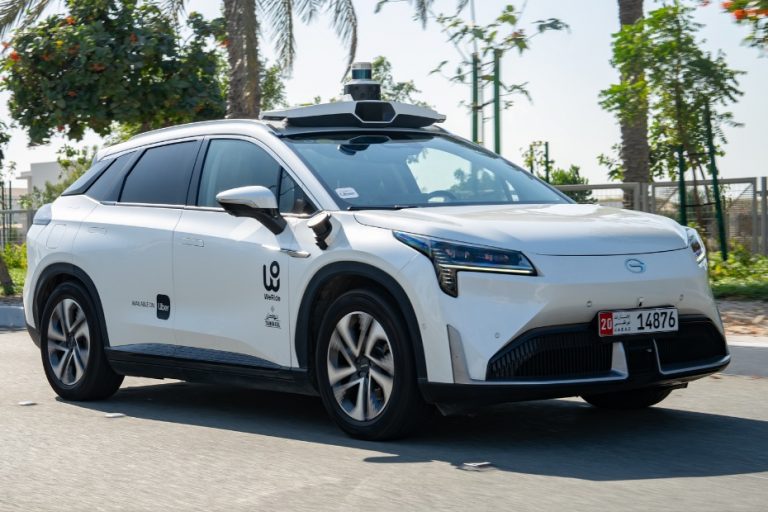
Chinese autonomous driving technology company WeRide will enter Denmark through a partnership with Danish electric mobility operator GreenMobility, expanding its European presence to six countries as Chinese self-driving firms accelerate overseas expansion amid intensifying competition and evolving regulatory frameworks.
The companies announced on Monday that, subject to regulatory approvals, they plan to launch a public robotaxi service in Denmark during the first half of 2027, marking WeRide’s latest effort to commercialize its autonomous driving technology outside China.
The move underscores Europe’s growing importance as a strategic growth market for Chinese autonomous vehicle developers, which are increasingly looking beyond their domestic market to diversify revenue streams, validate their technology internationally and gain an early advantage in regions gradually opening their roads to autonomous mobility.
Register for the next Tekedia Mini-MBA.
Register for Tekedia AI in Business Masterclass.
Join Tekedia Capital Syndicate and co-invest in great global startups.
WeRide’s entry into Denmark continues its rapid expansion across Europe. The company has already established autonomous driving projects in France, Belgium and Switzerland, while earlier this year it expanded into Spain and Slovakia.
Although most of its European operations remain focused on pilot programmes and testing, the company has already commercialized autonomous driving services in China and the United Arab Emirates, providing operational experience that could support broader international deployment.
The Danish partnership represents another step toward transitioning from demonstration projects to commercial robotaxi services across Europe. The region has become increasingly attractive as regulators gradually introduce legal frameworks governing autonomous vehicle testing and limited commercial deployment.

For Chinese developers, Europe also offers an opportunity to showcase their technology in mature automotive markets while reducing reliance on domestic demand, where competition has intensified significantly.
WeRide’s latest announcement comes amid a broader wave of international expansion by China’s autonomous driving industry. As commercialization opportunities inside China become increasingly competitive, leading developers are pursuing overseas markets to secure new customers, build regulatory experience and strengthen their global brands.
Rival Pony.ai announced in March that it would partner with Uber Technologies and Croatian autonomous mobility startup Verne to launch what the companies described as Europe’s first commercial robotaxi service.

Meanwhile, Baidu’s Apollo Go autonomous driving unit recently began road testing in London alongside Lyft-owned mobility platform FreeNow, extending its international presence beyond China.
Chinese autonomous driving startup Momenta has also secured permits to conduct autonomous vehicle testing on urban roads across Germany, one of Europe’s most important automotive markets. The growing number of announcements illustrates how Chinese autonomous driving companies are increasingly competing not only in technology development but also in securing regulatory approvals and commercial partnerships across international markets.
Regulatory Progress Supports Commercialization
Europe’s evolving regulatory environment has played a key role in attracting autonomous driving investment. While regulatory requirements remain stricter than in several other regions, European authorities have gradually expanded opportunities for testing and deploying self-driving vehicles under controlled conditions.
That regulatory progress has encouraged technology developers to establish pilot programmes with local governments, mobility operators and transport providers ahead of wider commercial rollouts. The partnership with GreenMobility is born out of this approach, combining WeRide’s autonomous driving technology with an established local mobility operator familiar with Denmark’s transportation ecosystem and regulatory environment.
Such partnerships are becoming more common as autonomous vehicle developers seek local expertise to accelerate market entry while addressing operational, legal and safety requirements.
The expansion has also added exposure to the competitive race to commercialize robotaxi technology globally. Developers are now seeking to move beyond limited testing programmes toward revenue-generating autonomous ride-hailing services, a milestone viewed by investors as critical to validating years of heavy research and development spending.
China has emerged as one of the world’s leading centers for autonomous driving innovation, supported by favorable domestic testing policies, large urban markets and substantial investment from technology companies and automakers.
However, geopolitical tensions and heightened regulatory scrutiny in some Western markets have encouraged Chinese firms to diversify internationally, with Europe and the Gulf region emerging as priority expansion markets.
In a nutshell, WeRide’s planned launch in Denmark signals that Europe’s autonomous driving market is entering a new phase, shifting gradually from pilot projects toward commercial deployment. For WeRide, expanding into a sixth European country strengthens its international footprint and provides another opportunity to demonstrate the commercial viability of its robotaxi platform outside China.