

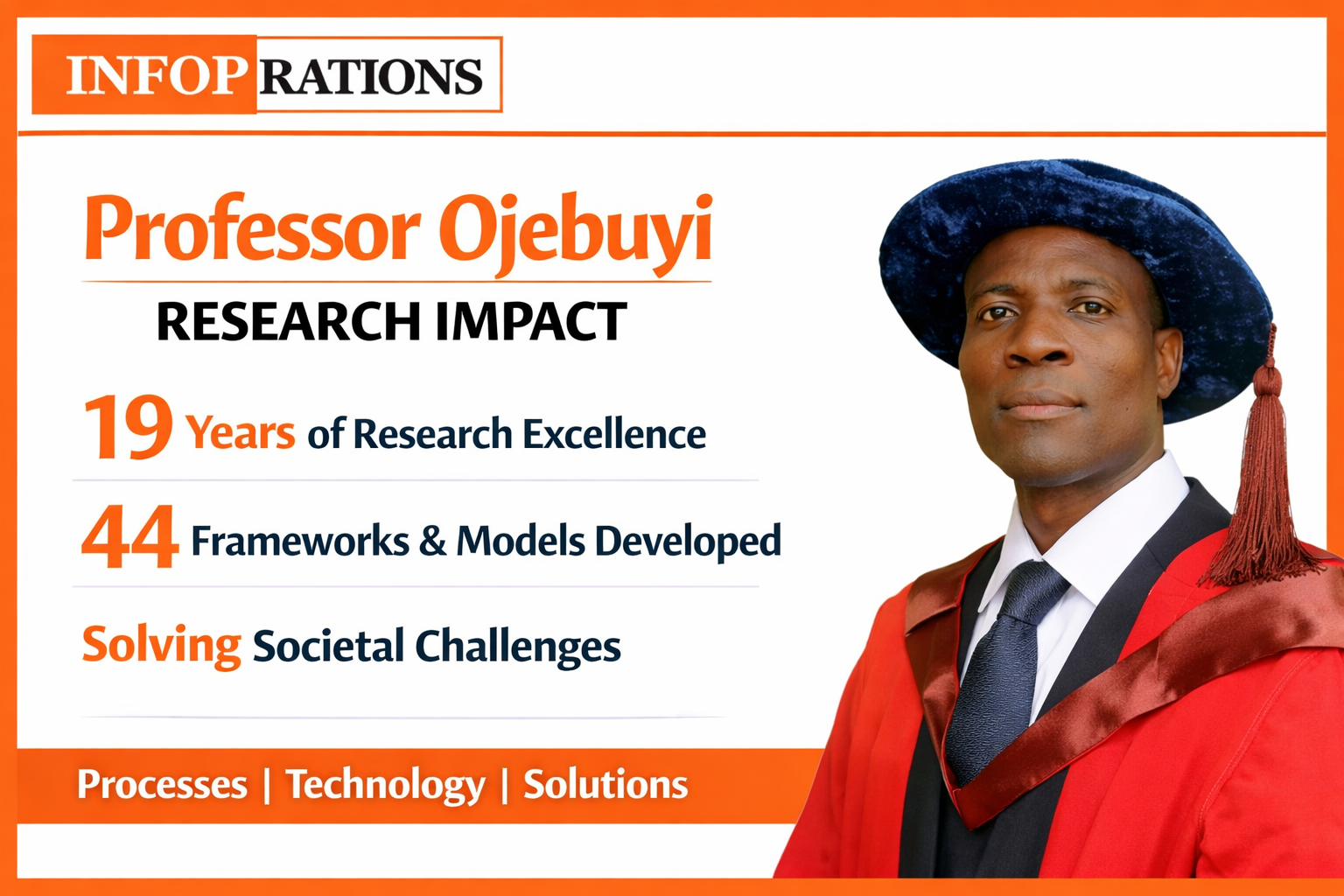
Many of society’s deepest problems do not begin with a lack of hospitals, policies, or programmes. Sometimes, they begin with silence. Silence between parents and children about sexuality and health. Silence between married couples about family planning. Silence created by fear and misinformation surrounding HIV/AIDS. Silence between institutions and young people struggling to find opportunities and direction. Silence between communities divided by misunderstanding and mistrust.
Across these seemingly different issues, the work of Professor Babatunde Ojebuyi indicates that communication is not simply the exchange of information. It is a practical tool for improving health, strengthening relationships, reducing stigma, empowering young people, deepening democratic participation, and promoting peaceful coexistence. Our analyst notes that his research consistently demonstrates that many social challenges can improve when communication improves.
As the first article in a five-part series on his work, this piece presents our analyst’s report on the outcomes of Infoprations’ deployment of the Impact Discovery Tool (IDT) to establish the benefits and main impacts of his studies over the past 19 years, with a focus on the people component of Nigerian society.
Register for the next Tekedia Mini-MBA.
Register for Tekedia AI in Business Masterclass.
Join Tekedia Capital Syndicate and co-invest in great global startups.
Communication-Based Family Health Intervention Model
For many Nigerian families, discussions about sexuality, contraception, HIV/AIDS, and reproductive health remain difficult. Parents often avoid such conversations because of cultural discomfort, fear, or uncertainty about how to begin. Yet avoiding these discussions can leave young people vulnerable to misinformation and risky behaviour.
Professor Ojebuyi’s research found that communication between parents and children about HIV/AIDS, family planning, and contraception in Nigeria remains generally low. Discussions about contraception were particularly rare, while girls were more likely than boys to receive reproductive health communication. Education, socio-economic status, age, and whether families lived in urban or rural areas also influenced the quality of communication.
Rather than treating this as a private family issue alone, the research reframes communication as a public health intervention. The implication is powerful: protecting adolescents requires more than healthcare services; it also requires equipping parents with the confidence and knowledge to have honest conversations at home. This model suggests that family-based communication programmes, parental communication training, and targeted reproductive health education, especially for poorer and less educated households, can reduce adolescent vulnerability and improve informed decision-making.

Communication-Driven Reproductive Health Model
Reproductive health is often approached through medical access alone. Public conversations frequently focus on clinics, contraceptives, or healthcare systems. However, Professor Ojebuyi’s research introduces a different but equally important dimension: communication between spouses.
Using nationally representative data, the research established a strong relationship between spousal communication and the adoption of modern contraceptives. Couples who openly discussed family planning and HIV/AIDS issues were more likely to engage in healthier reproductive behaviours.
This finding challenges the assumption that providing health products is enough. Access matters, but communication matters too. Even when services are available, couples may struggle to make informed decisions if difficult conversations are avoided. The communication-driven reproductive health model therefore positions dialogue between partners as a behavioural change mechanism. Rather than addressing individuals alone, family planning interventions become more effective when they encourage shared decision-making and open conversations within relationships.

Reading as Behavioural Health Communication Framework
Misinformation about HIV/AIDS has contributed significantly to fear, stigma, and discrimination. For many people living with HIV/AIDS, misunderstanding can become an additional burden alongside health challenges.
Professor Ojebuyi’s research demonstrated that reading can serve as an effective communication strategy for improving HIV/AIDS knowledge and correcting misconceptions. Exposure to structured reading materials significantly improved public understanding and helped reduce ignorance about the condition.
This framework transforms reading from an educational activity into a practical public-health intervention. Rather than relying only on awareness campaigns or clinical communication, educational texts and accessible reading resources can help communities gain accurate knowledge and challenge harmful assumptions. Public health institutions, schools, and community organisations can therefore use reading strategically to expand health education in affordable and sustainable ways.
Empathy-Oriented Communication Intervention Framework
Knowledge alone does not always eliminate stigma. People may know facts and still maintain prejudice. This is why Professor Ojebuyi’s work also highlights the importance of empathy in communication.
The research found that exposure to well-structured communication content reduced stigmatising attitudes towards people living with HIV/AIDS and improved social acceptance. By helping people understand the lived realities of vulnerable groups, communication became more than information-sharing—it became a tool for inclusion and healing.
This empathy-oriented communication intervention framework demonstrates that public communication should not only educate but also humanise. Through narrative communication, accessible stories, and carefully designed anti-stigma messaging, communities can move from fear to compassion. For advocacy groups, schools, healthcare communicators, and media organisations, this framework offers practical guidance for reducing discrimination and strengthening social acceptance.
Communication for Resilience-Building Framework
The disruptions caused by COVID-19 left many young Nigerians facing uncertainty about education, employment, and the future. Yet Professor Ojebuyi’s studies on youth resilience found that many young people still demonstrated strong adaptability despite difficult circumstances.
However, the research also showed that opportunities remained limited by structural and communication barriers. Young people often lacked the guidance, information, and engagement systems necessary to navigate uncertainty effectively.
This framework reframes youth unemployment and hardship as partly a communication challenge. Young people need more than jobs; they need communication systems that support aspirations, preparedness, and resilience. Policies become more effective when institutions communicate clearly with youth, align programmes with their realities, and actively involve them in shaping solutions.
Communication for Democratic Inclusion Framework
Young people are often described as politically indifferent, yet Professor Ojebuyi’s research suggests a more balanced reality. The studies found that social media and media literacy can strengthen political participation, civic engagement, and democratic involvement among youth populations.
Rather than dismissing digital platforms as distractions, this framework shows how communication technologies can convert passive audiences into active citizens. Electoral bodies, universities, and civic organisations can use participatory communication approaches to engage younger populations more meaningfully and encourage democratic involvement.
Communication for Peacebuilding Framework
Religious misunderstanding and intolerance continue to strain relationships across communities. Professor Ojebuyi’s research identified communication failures and socio-cultural misunderstandings as major drivers of interfaith tension.
The communication for peacebuilding framework argues that peaceful coexistence depends on dialogue. Through intercultural communication programmes, structured conversations, and peace-focused engagement, communities can reduce tension and strengthen mutual understanding.