

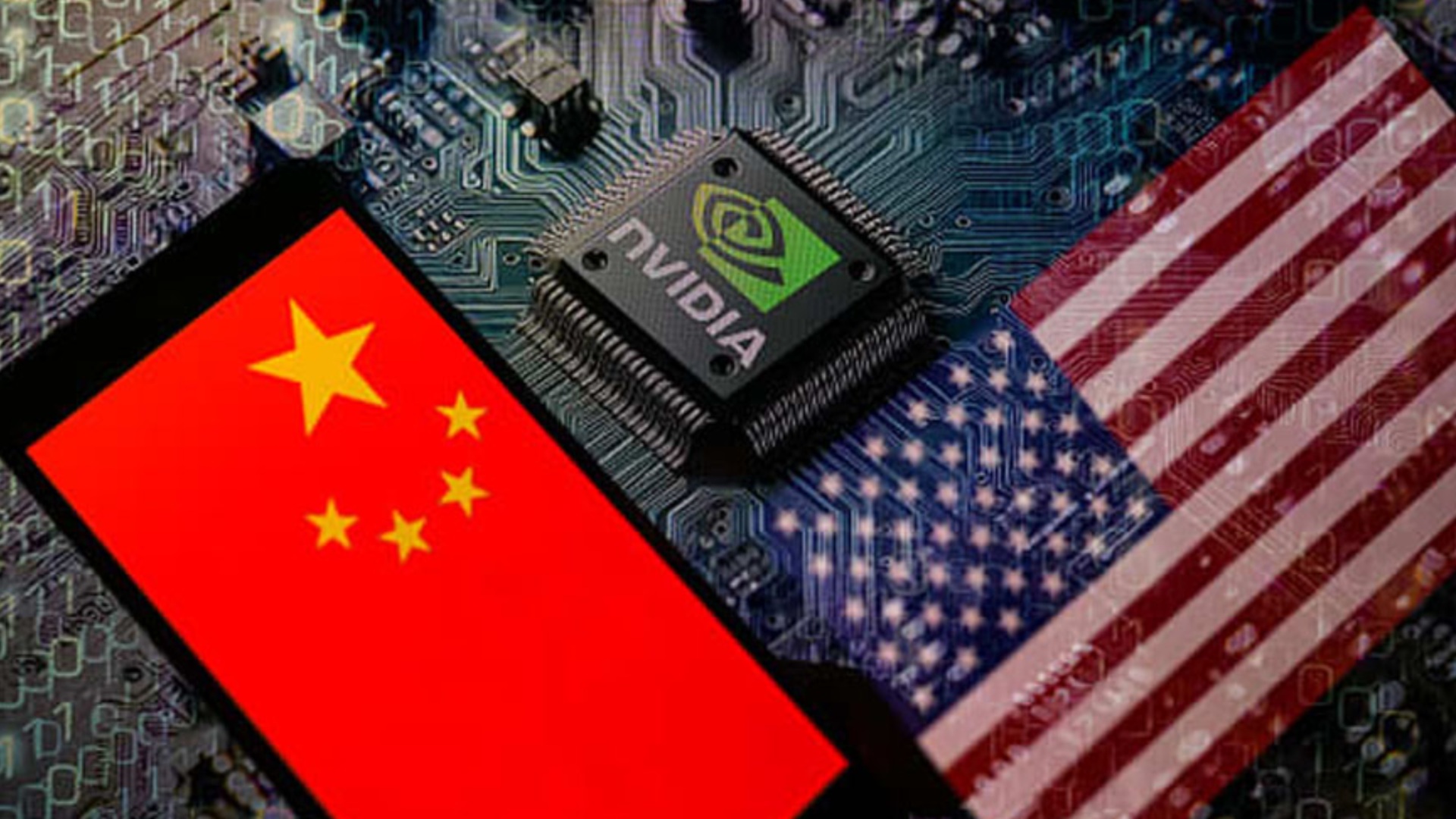
The White House has reportedly informed federal agencies that it will not permit Nvidia to sell its latest scaled-down AI chips to China, The Information reported on Thursday, citing three people familiar with the matter.
The decision adds new friction to the already tense technology standoff between Washington and Beijing, coming at a time when both sides are attempting to stabilize relations following a high-level meeting between U.S. President Donald Trump and Chinese President Xi Jinping in South Korea.
The chip at the center of the latest restriction, known as the B30A, was designed to comply with earlier U.S. export rules limiting the sale of advanced processors to China. Nvidia had reportedly provided samples of the chip to several Chinese companies before the White House intervened. The B30A can be used to train large language models when arranged in powerful data clusters—a capability that Chinese tech firms rely on to fuel the country’s fast-growing AI industry.
Register for Tekedia Mini-MBA edition 20 (June 8 – Sept 5, 2026).
Register for Tekedia AI in Business Masterclass.
Join Tekedia Capital Syndicate and co-invest in great global startups.
Register for Tekedia AI Lab.
An Nvidia spokesperson told Reuters that the company currently has “zero share in China’s highly competitive market for datacenter compute, and do not include it in our guidance.” The White House has not yet issued a formal comment.
Behind the scenes, political pressure in Washington is mounting on President Trump to maintain a hard line against Beijing on semiconductor exports. Several lawmakers from both the Republican and Democratic parties are reportedly backing a bipartisan move in Congress to block the sale of sophisticated U.S. chips—including Nvidia’s most powerful AI processors, such as those based on the Blackwell architecture—to China. Lawmakers argue that such exports could undermine national security by helping China strengthen its AI capabilities for military and surveillance purposes.
However, Nvidia CEO Jensen Huang has said publicly that the company has no plans to export its high-end Blackwell chips to China, noting that the firm is fully complying with U.S. export regulations.

Still, many in Washington and the business community fear that this latest escalation could jeopardize delicate negotiations between Beijing and Washington. The talks, brokered during President Trump’s visit to South Korea, were aimed at reducing tensions over technology transfers, trade tariffs, and market access for both nations’ firms. Analysts say the timing of the U.S. export ban risks derailing progress made during the Trump-Xi discussions.
Meanwhile, Nvidia faces increasing challenges in China beyond U.S. policy. Beijing has recently issued guidance requiring all new data center projects that receive state funding to use only domestically developed chips. Projects less than 30% complete must remove any installed foreign processors or cancel plans to purchase them, while more advanced projects will undergo case-by-case reviews.
This policy effectively excludes Nvidia from a major segment of the Chinese market, compounding the impact of Washington’s restrictions. It also reinforces Beijing’s drive to accelerate self-sufficiency in chipmaking, with domestic firms like Huawei, Biren, and Cambricon stepping up as alternatives.

With bipartisan pressure mounting at home and nationalist policies rising abroad, Nvidia—America’s most valuable company—finds itself trapped between two economic powers whose rivalry over chips is fast becoming the defining factor of the tech industry.