

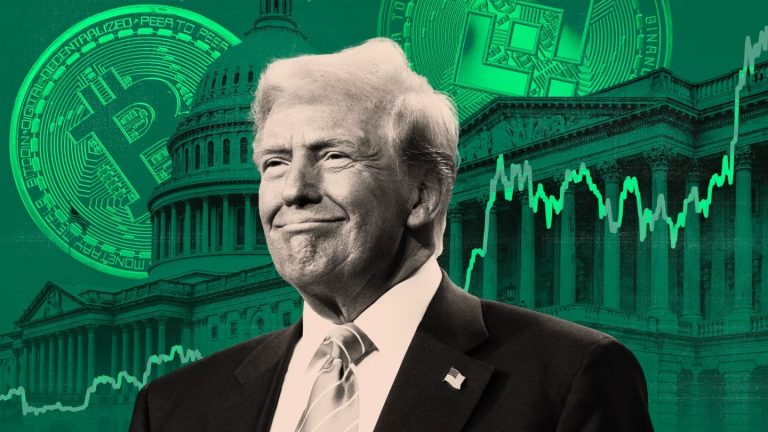
Donald Trump’s latest financial disclosure has put his trading activity in crypto-related equities under renewed scrutiny, revealing more than 1,000 transactions that included sales of Strategy and Coinbase shares before he later returned to Coinbase.
The filing offers a detailed glimpse into how the president managed positions tied closely to the cryptocurrency market during a period of heightened volatility and political attention surrounding digital assets.
According to the disclosure, Trump sold shares of Strategy, the company formerly known as MicroStrategy and one of the most prominent corporate holders of Bitcoin.
The filing records two Strategy sales, with each transaction falling within the disclosure’s reporting range of between $16,002 and $65,000.
Register for the next Tekedia Mini-MBA.
Register for Tekedia AI in Business Masterclass.
Join Tekedia Capital Syndicate and co-invest in great global startups.
Strategy’s stock has become closely associated with Bitcoin because of the company’s aggressive strategy of holding the cryptocurrency as a treasury asset. The filing also shows three separate Coinbase sales.
Those transactions were significantly larger, with reported values ranging from $116,003 to $315,000. Coinbase is one of the largest publicly traded cryptocurrency companies in the United States.
Making Trump’s trading activity particularly notable given his administration’s broader emphasis on creating a more favorable regulatory environment for digital assets. What makes the disclosure especially interesting is that Trump subsequently bought Coinbase shares again.

The filing indicates that he purchased between $50,001 and $100,000 worth of Coinbase stock after selling the company’s shares. He also made a smaller investment in Robinhood, another publicly traded platform with substantial exposure to cryptocurrency trading and digital-asset services.
The transactions do not necessarily indicate a deliberate attempt to time the cryptocurrency market. Financial disclosures generally provide transaction ranges rather than exact purchase or sale prices.
Making it difficult to determine the precise gains, losses or investment rationale behind individual trades. The sequence of sales followed by a Coinbase purchase is likely to attract attention because of the president’s prominent role in shaping U.S. crypto policy.

Trump has increasingly positioned himself as a supporter of the cryptocurrency industry, while companies such as Coinbase and Strategy have become important publicly traded proxies for different parts of the digital-asset economy.
Coinbase represents the infrastructure and trading side of crypto, while Strategy’s equity valuation has become heavily influenced by Bitcoin’s price and the company’s treasury strategy.
The disclosure therefore provides an unusual intersection between personal investment activity, public policy and the rapidly expanding cryptocurrency economy.
Investors may examine the transactions for clues about market sentiment, although the filing itself does not establish that Trump bought or sold based on expectations about Bitcoin or broader crypto prices.
The broader significance lies in how closely traditional financial markets and cryptocurrency markets have become intertwined. A portfolio containing Strategy, Coinbase and Robinhood shares reflects exposure to an ecosystem that has moved from the margins of finance toward mainstream capital markets.
As regulatory decisions continue to shape the industry, disclosures involving influential political figures are likely to receive increased attention. Trump’s latest filing does not explain his investment decisions.
But it demonstrates that crypto-linked equities have become significant enough to feature prominently in the financial portfolios of high-profile investors. For markets, the transactions are another reminder that cryptocurrency is no longer isolated from conventional stocks, politics and institutional finance.