

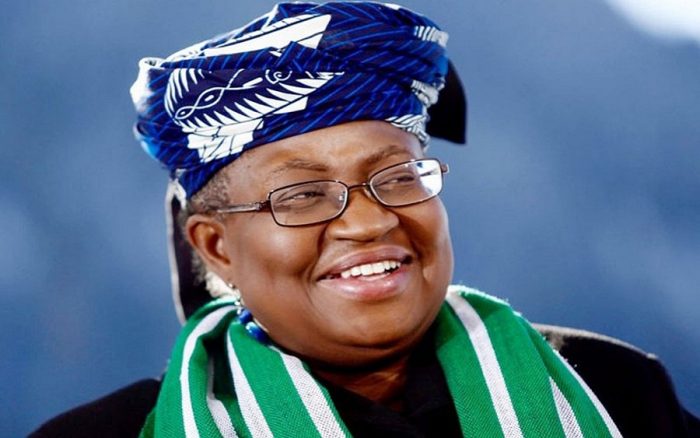
The World Trade Organization (WTO) is facing what its Director-General, Ngozi Okonjo-Iweala, describes as the biggest disruption to international trade rules since World War II, as the share of global trade conducted under the organization’s Most Favored Nation (MFN) principle drops to 72% from about 80%.
Reuters reports, citing WTO data, that since U.S. President Donald Trump began imposing higher import tariffs this year on most trading partners, the share of global trade conducted under the WTO’s Most Favoured Nation (MFN) terms has dropped from about 80%. The MFN principle requires members to treat one another equally in terms of tariffs and access, and the decline has stoked concerns that the 30-year-old organization, created to uphold free trade, is being sidelined.
“We’re experiencing the largest disruption to global trade rules, unprecedented in the past 80 years,” WTO chief Ngozi Okonjo-Iweala told Reuters in an interview at the start of her second term at the helm of the Geneva-based trade watchdog.
Register for Tekedia Mini-MBA edition 20 (June 8 – Sept 5, 2026).
Register for Tekedia AI in Business Masterclass.
Join Tekedia Capital Syndicate and co-invest in great global startups.
Register for Tekedia AI Lab.
“So it’s not surprising that some would question the global trading system… and predictability,” she said, adding: “As long as the majority of trade is taking place on MFN terms, I think we should celebrate that. We’re a long way from 50%.”
She also cautioned that the WTO has little leverage when tariffs are wielded as geopolitical weapons.
“If tariffs are used in a geopolitical and geostrategic manner, there’s nothing we can do about it,” she said.

Okonjo-Iweala further warned that world trade could feel the effects of tariffs “later down the line” into 2026, as the recent surge in global commerce—driven by frontloading of goods during the first half of the year—begins to subside. This uptick contributed to the WTO raising its global trade growth forecast from 0.2% to 0.9% in August.
“Possibly down the line, we’ll begin to see some other impacts, as the goods in the warehouses are exhausted, and impacts begin to come in, but we’ll see next year,” she said, noting that “some growth” was still expected.
US Funding Concerns
The WTO chief, a former Nigerian finance minister, also voiced concern at the Trump administration’s plans to slash $29 million in funding to the WTO, alongside other multilateral organizations.

“The announcement is concerning, but I think that I’ll just say this: we’re working with USTR (the U.S. Trade Representative),” she said, adding that she had not yet received any definitive pronouncement.
In March, Reuters reported that the U.S. had paused contributions to the WTO. The trade body had an annual budget of 205 million Swiss francs ($232.06 million) in 2024, of which Washington was due to contribute about 11%.
Trump’s Longstanding Hostility
The tension between Trump and the WTO leadership carries a deeper backstory. Trump was openly opposed to Okonjo-Iweala’s appointment as Director-General in 2020, insisting she was too aligned with global institutions he viewed as “anti-American.” His administration had backed a South Korean candidate instead, leaving her appointment uncertain for months until the Biden administration reversed the U.S. opposition in early 2021, clearing the way for her confirmation as the first woman and first African to lead the WTO.
There is a belief that this history underscores why Trump would not be swayed by Okonjo-Iweala’s concerns over his tariff policies. His decision to impose broad tariffs on allies and rivals alike fits his longstanding skepticism of multilateral bodies, and signals a willingness to ignore WTO rules outright.
China and Reform Hopes
Despite this backdrop, WTO reform remains a top priority for Okonjo-Iweala, and she said an openness from China to address industrial policies could help advance discussions.
“I feel that there’s a chance, there’s an opening on the part of many members, including China,” she said.
Documents seen by Reuters in July showed that WTO members are aiming to streamline decision-making processes and promote fairer industrial policies, including subsidies, amid a string of reform proposals.
Countries are trying to break years of paralysis in trade negotiations to revitalize a system which former WTO chief Robert Azevedo declared “dead” in April.
“I’m done with pessimism. I am done with fear. What we need to do is look at optimism and those who are trying to actually solve problems,” Okonjo-Iweala said, pointing to Britain, Australia, and the United Arab Emirates as examples of constructive engagement.