

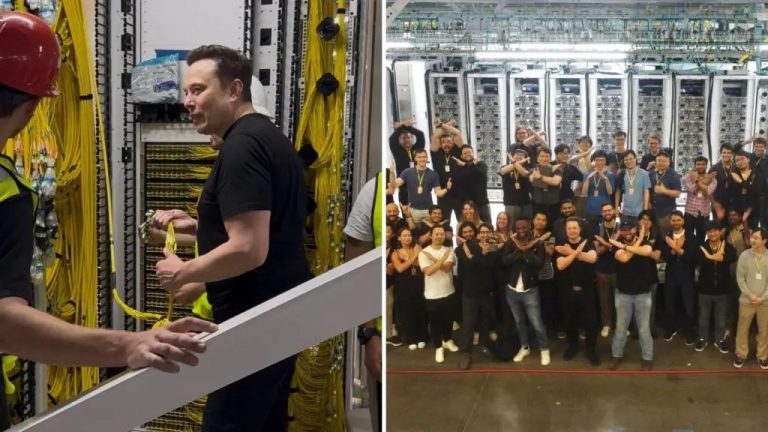
Elon Musk’s artificial intelligence startup, xAI, has secured a permit to operate natural gas-burning turbines at its controversial supercomputer facility in Memphis, Tennessee, despite mounting public opposition and legal pressure.
The permit, issued by the Shelby County Health Department on July 2, allows the company to power its Colossus datacenter using 15 gas turbines, which have become the focus of heated environmental and health concerns from residents and advocacy groups.
The approval comes after months of protests and public hearings during which local residents criticized the project’s effect on air quality in the surrounding neighborhood. Many said the operation of the turbines had already resulted in air pollution so severe that they could no longer open their windows or exercise outside without experiencing strong odors and discomfort.
Register for Tekedia Mini-MBA edition 20 (June 8 – Sept 5, 2026).
Register for Tekedia AI in Business Masterclass.
Join Tekedia Capital Syndicate and co-invest in great global startups.
Register for Tekedia AI Lab.
According to specifications from Solaris Energy Infrastructure (SEI), the Houston-based company installing the turbines, the machines emit pollutants including nitrogen oxides and formaldehyde—substances linked to increased respiratory illness and long-term health risks. Solaris markets itself as a rapid-deployment energy firm for data centers and industrial operations with large, immediate power needs.
The permit comes with strict conditions: xAI must adhere to emissions limits, conduct environmental testing, and meet regulatory deadlines or face penalties of up to $10,000 per day for each violation. However, many believe the enforcement mechanisms remain weak and the decision marks a disregard for community health.
Adding to the controversy, the Southern Environmental Law Center, which is representing the NAACP in an ongoing lawsuit against xAI, said satellite imagery taken on July 1—just one day before the permit was granted—showed “at least 24 turbines” on the property. That number exceeds the 15 turbines the permit allows to be operational.

The NAACP has accused xAI of violating the Clean Air Act, and the law center said it had previously documented more than 35 turbines at the site, many running simultaneously, in breach of environmental laws.
The permit also followed a leadership shake-up within the local health authority, with Bruce Randolph named interim director of the Shelby County Health Department just one day before the decision was announced.
xAI’s Response and Future Plans
xAI responded to the controversy on Wednesday, telling CNBC that it welcomed the decision by county officials. The company claimed the site would feature “state-of-the-art emissions control technology,” adding that Colossus would be the “lowest emitting of its kind in the country.”

Yet, the community remains unconvinced. Local residents and environmental activists point out that natural gas turbines—even with advanced control systems—still release significant pollutants, and their placement in a residential area raises questions about environmental justice.
Beyond Colossus, xAI is already plotting its next move. The company intends to build an even larger datacenter in the Memphis area, again with SEI providing the turbines. This expansion effort is being powered by a fresh round of capital: a combined $10 billion in debt and equity raised this week, led in part by Morgan Stanley.
xAI, which recently merged with Musk’s social media platform X in a deal valuing the combined entity at $80 billion, is working to compete directly with AI titans like Google’s Gemini and OpenAI’s ChatGPT. The Memphis facility serves as the backbone for the company’s AI chatbot, Grok, now integrated into X.
Tesla, another Musk-owned company, is also benefiting from the project. According to recent filings, xAI spent around $191 million in 2024 and another $36.8 million in early 2025 on Tesla’s Megapacks—large-scale battery systems used to store backup power for critical infrastructure.
Rising Tensions Over AI-Powered Infrastructure
The rapid buildout of energy-hungry data centers in urban and suburban areas has triggered widespread concern, with communities increasingly pushing back on the environmental costs of powering next-generation AI systems. While companies like xAI claim to be investing in clean energy innovations, critics argue the continued reliance on fossil fuels—even in “state-of-the-art” formats—is a step backward in the fight against climate change.
The Memphis case now joins a growing number of legal and social battles surrounding AI infrastructure, particularly in historically underserved communities. With lawsuits pending, further regulatory scrutiny likely, and construction still underway, Musk’s AI ambitions in Tennessee may face even more resistance before the supercomputers fully come online.