

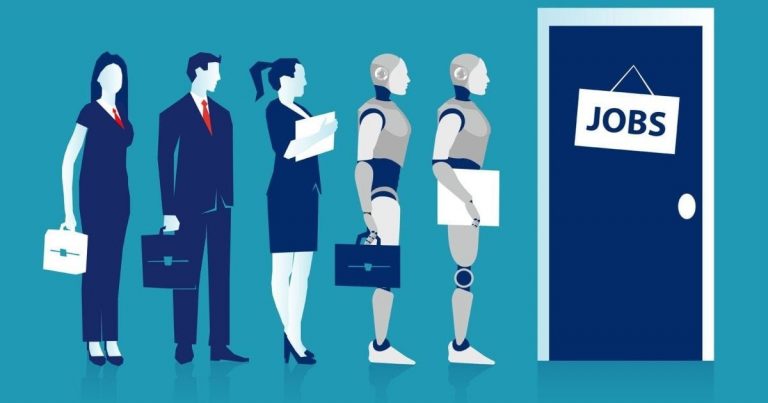
The latest American jobs data is challenging one of the most persistent assumptions surrounding artificial intelligence: that young workers will be among the first and biggest casualties of automation.
While AI is undoubtedly disrupting companies, occupations and traditional career paths, the labour market is telling a more complicated story. Rather than simply destroying jobs, AI is also creating new demand for workers with the skills needed to build, deploy and manage the technology.
America’s blockbuster jobs report last Friday offered an important indication of this shift.
Young workers, who have frequently been portrayed as particularly vulnerable to AI because they occupy many entry-level positions involving routine cognitive tasks, are holding up remarkably well.
Register for the next Tekedia Mini-MBA.
Register for Tekedia AI in Business Masterclass.
Join Tekedia Capital Syndicate and co-invest in great global startups.
This resilience matters because entry-level employment is often viewed as the first stage at which automation could reduce opportunities for inexperienced workers. If AI were rapidly eliminating junior jobs across the economy, youth employment should be among the clearest places to see the damage.
Instead, an AI hiring boom appears to be developing. The transformation is being driven by enormous corporate investment in artificial intelligence. Technology companies are spending heavily on computing infrastructure, data centres, chips, software and specialised talent.
Businesses outside the technology sector are also looking for employees who can incorporate AI into existing operations. The result is a new layer of economic activity around a technology that only a few years ago was largely confined to research laboratories and technology departments.

The Economist estimates that AI has so far created around 1m new jobs in America. That figure does not mean the technology has produced a net gain of one million jobs across the entire economy, nor does it suggest that disruption is harmless.
Rather, it illustrates an important economic principle: technological change can destroy particular jobs while simultaneously creating entirely new forms of employment. AI engineers, machine-learning specialists, data scientists and infrastructure experts are obvious examples.
But the employment effects extend beyond highly technical roles. Companies require people to evaluate AI outputs, manage implementation, oversee compliance, improve workflows and train employees. New opportunities are also emerging in areas such as AI safety, model evaluation, data management and human-AI collaboration.

Yet the benefits are unevenly distributed. Some workers face serious pressure as AI becomes capable of performing tasks that previously required human labour. Administrative work, customer support, basic content production, coding and other routine activities could experience substantial disruption.
Certain companies may respond by reducing headcount, while others may use AI to expand production without proportionately increasing their workforce. This makes the current employment picture less a victory over automation than an early chapter in a much larger transition.
For young workers, the central challenge will be adaptation. Their relative resilience suggests that AI has not yet closed the traditional entry points into the labour market. But the skills employers demand are changing quickly.
Workers who understand how to use AI effectively may increasingly have an advantage over those competing with it directly. The American jobs market therefore presents a more nuanced picture than the familiar narrative of machines replacing people.
AI is destroying some opportunities, transforming others and creating new ones. The crucial question is not whether artificial intelligence will change employment—it clearly will—but whether workers, educators and policymakers can adapt quickly enough to ensure that the new economy creates opportunity alongside disruption.