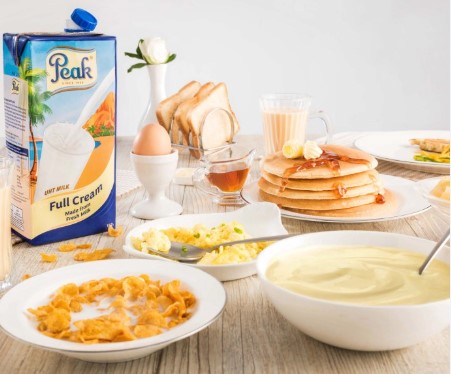
Brands often assume that a good recipe sells itself. Show consumers an attractive meal, explain why it tastes great, and position the featured product as the secret ingredient. Yet digital conversations show that recipes are not simply followed. They are interpreted, questioned, modified, and sometimes rejected. A recent Facebook campaign by Peak Milk promoting Alfredo pasta made with Peak UHT Full Cream Milk illustrates this reality.
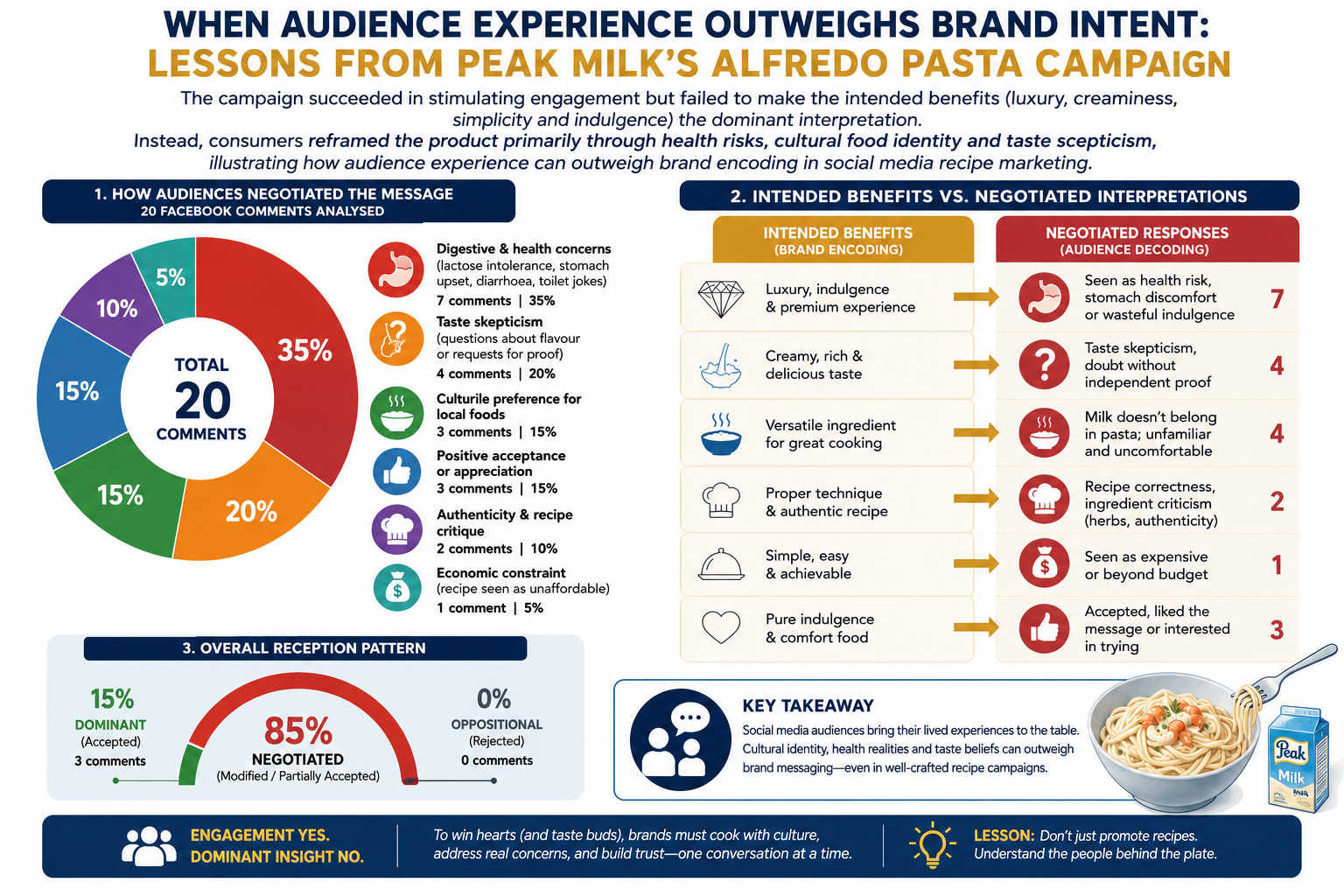
The campaign presented Alfredo as “real luxury” achieved through simplicity. Butter, garlic, herbs, parmesan, shrimp, and Peak UHT Full Cream Milk were positioned as the right combination for creating a smooth, creamy, and indulgent sauce. The message was carefully constructed to communicate versatility, premium quality, and culinary sophistication. However, the audience’s responses reveal that consumers evaluate recipe marketing through cultural identity, health experiences, affordability, and trust rather than through the product benefits alone.
The discussion demonstrates an important lesson for food marketers. Consumers do not simply decode advertising messages as brands intend. They negotiate them.
One of the strongest themes in the public responses was cultural negotiation. Many commenters compared Alfredo pasta with familiar Nigerian dishes, asking why anyone would replace stew-based pasta or traditional meals such as fufu and vegetable soup with a milk-based recipe. Others questioned why foreign recipes should receive attention when indigenous foods remain popular and meaningful. These reactions were not merely about taste. They reflected how food represents identity, tradition, and everyday culture.
This result suggests that introducing international recipes into local markets requires more than showcasing attractive food photography. Consumers need help understanding where the recipe fits within their existing culinary practices. Without this bridge, the product risks being perceived as culturally distant rather than exciting.
Health concerns formed another dominant interpretation. Peak Milk promoted creaminess as the defining characteristic of the recipe. Yet many Facebook users associated that same creaminess with digestive discomfort. Comments about lactose intolerance, stomach upset, diarrhoea, and repeated visits to the toilet appeared throughout the discussion. Some users even joked that the recipe would guarantee digestive problems before anyone could enjoy the meal.
These responses illustrate how consumers often evaluate food products through personal health experiences instead of advertised taste benefits. What the brand framed as indulgence was reinterpreted by some audiences as potential physical discomfort. This gap highlights the importance of recognising dietary diversity when promoting dairy-based recipes. Addressing common concerns or providing alternatives for lactose-sensitive consumers may reduce resistance and improve message credibility.
Authenticity also became a point of negotiation. While the campaign emphasised proper technique and the right ingredients, some commenters challenged the recipe itself, arguing that traditional Alfredo sauce contains only cheese, butter, and pasta water. Others questioned ingredient preparation, including the use of herbs with their stems.
These responses demonstrate that digital audiences increasingly possess culinary knowledge and are willing to challenge brand authority. Consumers no longer accept branded recipes as unquestionable expertise. Instead, they compare marketing claims with their own knowledge, online information, and lived experiences.
Economic realities further shaped audience interpretations. Although the campaign suggested that luxury comes from using quality ingredients rather than complicated cooking, one commenter admitted that financial constraints prevented them from experimenting with such recipes despite wanting to do so. The recipe therefore became symbolic of aspiration rather than accessibility.
This highlights an important consideration for premium food marketing in emerging markets. Consumers may admire a product while simultaneously recognising that it falls outside their current spending priorities. Aspirational marketing remains valuable, but it should acknowledge economic realities instead of assuming universal purchasing power.
Perhaps the most striking feature of the conversation was the role of humour. Rather than expressing outright hostility, many users relied on jokes, sarcasm, and playful exaggeration to communicate scepticism. Humour became a socially acceptable way to question unfamiliar ingredients, anticipated digestive effects, and the overall appeal of the recipe.
For marketers, humorous resistance should not be dismissed as meaningless entertainment. It offers valuable insight into the emotional and cultural barriers preventing message acceptance. In many cases, jokes reveal genuine concerns that consumers may hesitate to express directly.
The broader lesson extends beyond one advertising campaign. Social media has transformed consumers from passive recipients of marketing into active interpreters of brand messages. Every campaign enters a public conversation where audiences negotiate meaning according to their cultural values, health beliefs, financial circumstances, and everyday experiences. The intended message is only one version of reality. The audience ultimately decides whether to accept, modify, or reject it.
For brands operating in culturally diverse markets such as Nigeria, successful recipe marketing requires more than presenting visually appealing meals. It demands cultural sensitivity, nutritional awareness, authentic storytelling, and an understanding that consumers actively reshape promotional messages through their own lived realities.
Peak Milk’s Alfredo campaign demonstrates that the real challenge is not convincing people that a recipe tastes good. It is convincing them that the recipe belongs in their kitchens, aligns with their lifestyles, respects their cultural preferences, and addresses their practical concerns. In today’s digital environment, consumers do not merely consume recipes. They rewrite them, and in doing so, they also rewrite the meaning of the brand itself.