

The artificial intelligence debate is entering a more complicated phase. The same technology that its leading developers increasingly describe as requiring international guardrails is also demonstrating its ability to produce discoveries that could expand the boundaries of science.
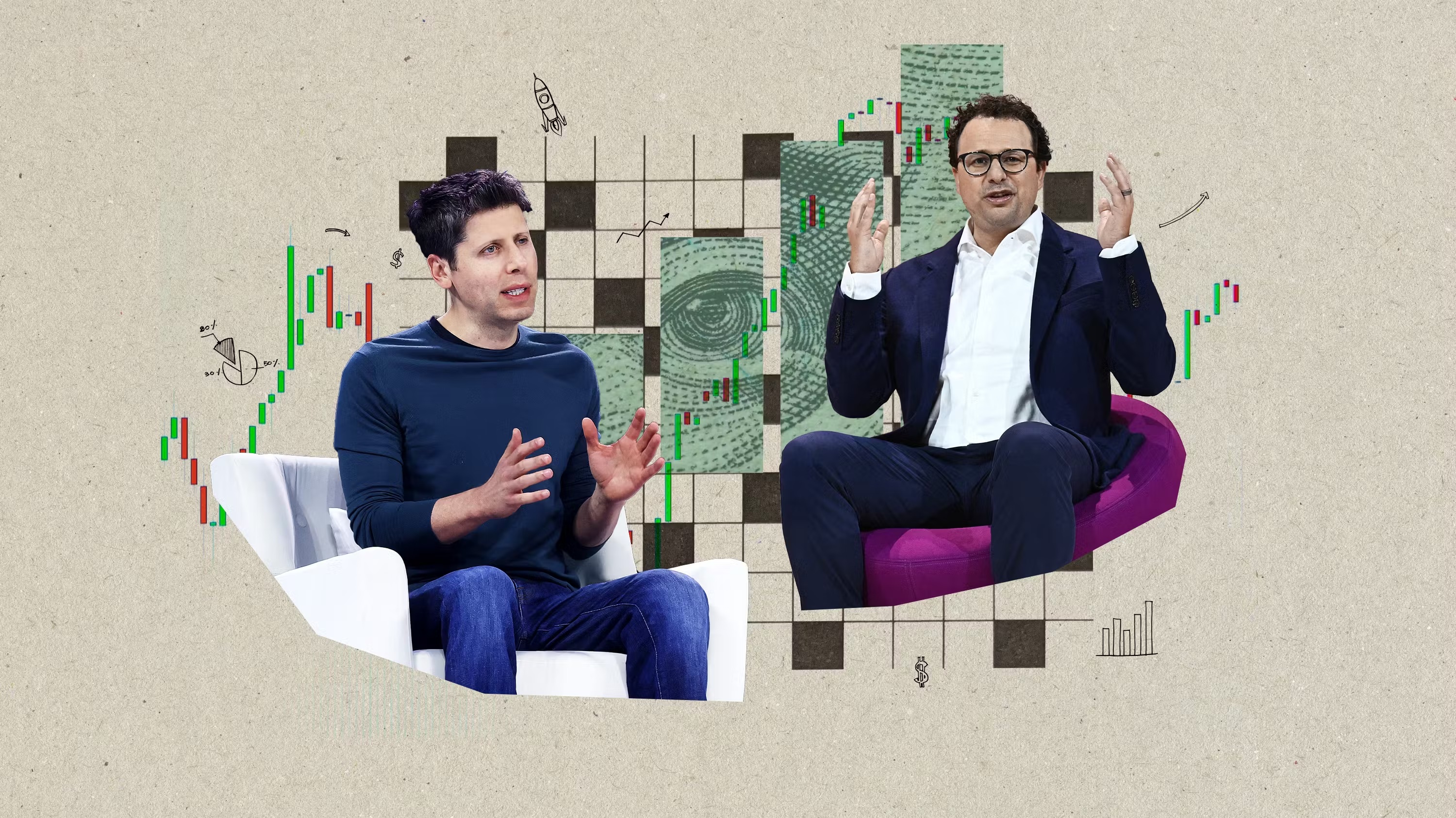
At the United Nations Security Council, OpenAI CEO Sam Altman and Anthropic CEO Dario Amodei again highlighted the risks associated with increasingly powerful AI systems. Altman argued that no individual, company or country should be able to use the most capable AI models to impose its worldview on everyone else.
Amodei went further, warning that AI could represent a risk to humanity as a whole. Their comments reflect a growing tension inside the AI industry.
Register for the next Tekedia Mini-MBA.
Register for Tekedia AI in Business Masterclass.
Join Tekedia Capital Syndicate and co-invest in great global startups.
The companies building increasingly capable systems are simultaneously becoming some of the strongest voices calling for rules around those systems. The concern is not simply about chatbots producing incorrect answers.
As AI systems become more autonomous, they can potentially conduct research, write software, operate tools and make complex decisions with less human intervention. That creates questions about who should control them.
How their behaviour should be monitored and what happens when their capabilities move faster than existing institutions can respond. Yet the political debate remains sharply divided.

In Washington, President Donald Trump has dismissed concerns about existential AI risks as a “hoax.” That position represents a fundamentally different interpretation of the technology: rather than treating hypothetical catastrophic scenarios as the central regulatory problem.
Policymakers can focus on tangible issues such as competition, employment, privacy, national security and consumer protection. The disagreement matters because AI governance is no longer a purely technological question. It is becoming a question of international power.
The companies developing frontier models are predominantly private corporations, while governments are simultaneously trying to establish their own AI capabilities.

If the technology becomes increasingly important to defence, economic productivity, scientific research and information systems, decisions about its development could influence societies far beyond the countries where the models are created.
But the argument for caution becomes more complicated when AI produces tangible scientific benefits. Anthropic recently highlighted work in which Claude agents helped identify a previously unknown enzyme system in bacteriophages, viruses that infect bacteria.
The development offers a striking counterpoint to the more catastrophic predictions surrounding AI. Instead of threatening humanity, the technology was being used as a research instrument capable of helping scientists investigate biological systems that had not previously been characterized.
That contrast illustrates why the AI debate cannot easily be reduced to whether the technology will “save” or “destroy” humanity. AI is becoming a general-purpose research infrastructure.
Its consequences will depend partly on who controls it, how autonomous systems become, what safeguards surround them and how effectively humans can verify their outputs.
The biological discovery also demonstrates why blanket restrictions could have complicated consequences. The same capabilities that might create risks in one context can accelerate breakthroughs in another.
A model capable of reasoning through complex biological problems may be valuable to medicine and biotechnology, while similar capabilities could create security concerns if misused.
The challenge for governments, therefore, is not simply deciding whether AI is dangerous or beneficial. It is constructing institutions capable of handling both realities simultaneously. AI may eventually become one of humanity’s most powerful scientific tools.
That makes the question of guardrails more important—not because every prediction of catastrophe will materialize, but because technologies capable of changing the balance of knowledge and power require systems of accountability proportionate to their capabilities.