

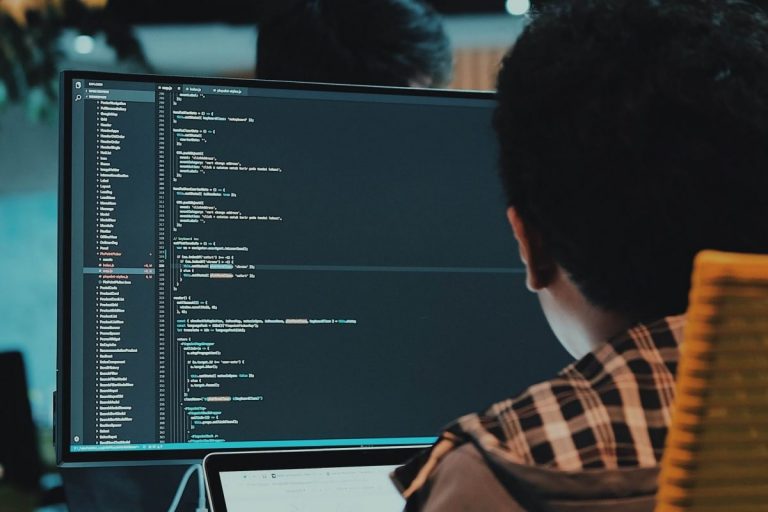
Autodesk CEO Andrew Anagnost has said that interdisciplinary thinking and systems-level understanding are now more critical than coding, as artificial intelligence increasingly takes over core programming tasks once reserved for software engineers.
Anagnost, who holds a Ph.D. in aeronautical engineering and computer science, said in an interview with Business Insider that the traditional emphasis on deep, narrow expertise is being upended by AI tools capable of generating code with minimal human input.
“If the coding models are going to be doing the code for you,” he explained, “what’s more important is that you understand there’s this whole notion of systems-level and interdisciplinary thinking.”
Register for Tekedia Mini-MBA edition 20 (June 8 – Sept 5, 2026).
Register for Tekedia AI in Business Masterclass.
Join Tekedia Capital Syndicate and co-invest in great global startups.
Register for Tekedia AI Lab.
His comments reflect a shifting philosophy in the tech world, where tools like OpenAI’s Codex and GitHub Copilot have made it easier for non-programmers to generate functional software. Anagnost argued that coding is no longer the sole domain of trained computer scientists and that the future belongs to what he called “creative orchestrators” — humans who manage outcomes across disciplines while using AI to execute the technical details.
AI Changes the Nature of Work
Anagnost’s remarks come at a time when artificial intelligence is disrupting the foundation of software development. AI-powered coding assistants now enable even those without computer science degrees to build applications, changing who gets to participate in software creation.
“There’s no doubt as we move into the future, more people are going to be generating code in some way that runs computers in new and interesting ways,” Anagnost said. “It’s just going to be different people.”

He believes that AI tools are democratizing software development, reducing the need for extensive coding education for many roles. Rather than focusing on syntax or algorithms, future tech professionals will need to understand the broader context: how products function, how to communicate across disciplines, and how to guide AI agents to deliver results.
A Shift in Hiring and Education
This shift is also transforming how companies think about hiring. According to Anagnost, software companies have traditionally relied on teams made up of product managers, designers, engineers, and QA testers. With AI systems increasingly handling the heavy lifting, those teams may shrink to just two key players: a designer and a human partner orchestrating AI systems.
“There’ll probably be less people with traditional computer science degrees in software companies,” he said, “but there’ll probably be more people creating product than ever before.”

That means the education system must also evolve. Anagnost called for schools and universities to focus on teaching critical thinking, creative problem-solving, and interdisciplinary collaboration — all skills that will become more vital as AI becomes more capable.
In particular, he emphasized the need for “total systems thinking” — the ability to understand how multiple systems interact to produce an outcome — as a defining trait of the next-generation tech workforce.
A Broader Conversation in Tech
Anagnost’s views mirror a growing sentiment across Silicon Valley, where executives and engineers alike are coming to terms with AI’s potential to eliminate or reshape traditional roles. Many tech leaders, including Elon Musk and Sam Altman, have warned that AI will redefine not just who builds software but how it is built, with broader implications for education, labor markets, and innovation.
Already, AI is powering everything from software testing to customer service and product design. As these tools continue to evolve, Anagnost believes that success in the industry will depend less on raw technical skills and more on the ability to manage and integrate diverse ideas, teams, and tools.
He said the world is moving into a future where creativity and coordination matter more than code.