

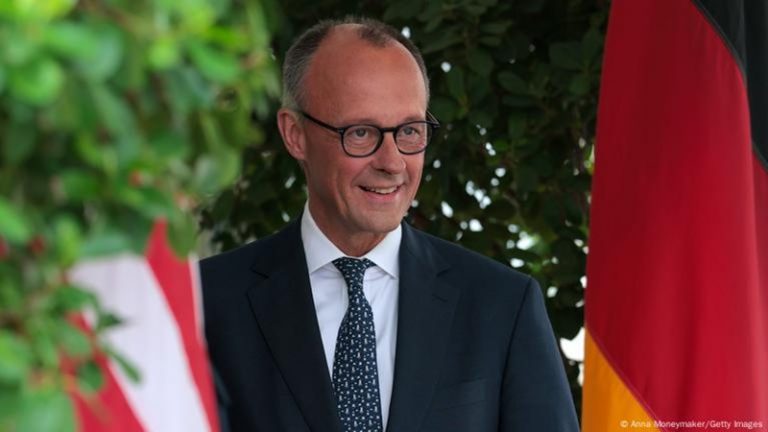
German Chancellor Friedrich Merz has pledged to bolster the Bundeswehr to make it Europe’s strongest conventional army, citing threats from Russia and the need to strengthen NATO’s defense capabilities.
During a visit to the German Navy on August 28, 2025, Merz emphasized the importance of defending NATO’s freedom, peace, and territorial integrity against daily Russian military actions testing the alliance’s readiness. He stressed that Germany, as Europe’s most populous and economically powerful nation, must meet the expectations of its allies to lead in defense efforts.
Merz’s plans include significant financial investment, with Germany already meeting NATO’s 2% GDP defense spending target in 2024, partly due to a €100 billion special fund established by his predecessor, Olaf Scholz, following Russia’s 2022 invasion of Ukraine. This fund is set to be exhausted by 2027, prompting Merz to push for further spending increases, including a constitutional reform to exempt defense spending above 1% of GDP from Germany’s “debt brake” fiscal rules.
He aims to raise defense spending to 3.5% of GDP by 2029 and meet a proposed NATO target of 5% by 2032, with 1.5% allocated to defense-related infrastructure. Merz has also introduced measures to boost military recruitment, as the Bundeswehr currently has around 182,000 soldiers and 49,000 reservists, far below the target of 260,000 troops and 200,000 reservists.
Register for Tekedia Mini-MBA edition 20 (June 8 – Sept 5, 2026).
Register for Tekedia AI in Business Masterclass.
Join Tekedia Capital Syndicate and co-invest in great global startups.
Register for Tekedia AI Lab.
Starting in 2026, a questionnaire will assess young Germans’ interest in military service, with mandatory medical examinations for men from 2027. While conscription was suspended in 2011, provisions for compulsory service are included if voluntary recruitment falls short.
Additionally, Merz inaugurated Germany’s first permanent foreign troop deployment since World War II, stationing a 4,800-soldier armored brigade in Lithuania to strengthen NATO’s eastern flank against Russian threats. He has also expressed concerns about Russia’s growing ties with China and rejected any “dictated peace” in Ukraine, reaffirming Germany’s commitment to supporting Kyiv.
Implications of Merz’s Pledge to Strengthen the German Military

Chancellor Friedrich Merz’s commitment to transforming the Bundeswehr into Europe’s strongest conventional army significantly bolsters NATO’s deterrence capabilities, particularly on its eastern flank. By deploying 4,800 troops to Lithuania—Germany’s first permanent foreign deployment since World War II—Germany signals a proactive stance against Russian aggression, reinforcing NATO’s forward presence in response to threats like those seen in Ukraine.
Increasing defense spending to 3.5% of GDP by 2029 and potentially 5% by 2032 requires substantial financial restructuring. Amending Germany’s “debt brake” to exclude defense spending above 1% of GDP could free up billions, allowing sustained investment in modernizing equipment, cyber defense, and infrastructure.
However, this may spark domestic debate over fiscal priorities, especially amid competing needs like social welfare and economic recovery. With the Bundeswehr currently understaffed at 182,000 active soldiers, Merz’s recruitment push—via mandatory questionnaires and medical exams starting in 2026-2027—aims to meet the 260,000 active and 200,000 reserve targets.

Reintroducing elements of conscription could reshape societal attitudes toward military service but risks political pushback, given Germany’s historical aversion to militarization. As Europe’s economic powerhouse, Germany’s military buildup positions it as a leading NATO player, potentially filling gaps left by uncertainties in U.S. commitment under shifting administrations.
This aligns with Merz’s call for European defense independence, though it may strain relations with allies skeptical of Germany’s historical restraint in military leadership. The permanent deployment in Lithuania and increased spending signal a shift from Germany’s traditionally cautious defense posture.
This could embolden other European nations to bolster their contributions, but it may also escalate tensions with Russia, which could perceive NATO’s strengthened eastern flank as provocative. Germany’s military buildup supports NATO’s strategic goal of collective defense, particularly in deterring Russian hybrid and conventional threats.
The Lithuanian deployment enhances the alliance’s rapid-response capabilities, complementing existing NATO battlegroups in the Baltics and Poland. Merz’s push aligns with broader European efforts to reduce reliance on U.S. forces, as seen in initiatives like the EU’s Permanent Structured Cooperation (PESCO) and the European Defense Fund.
A stronger Bundeswehr could drive joint European projects, such as shared procurement of advanced systems like the Future Combat Air System (FCAS). Germany meeting and exceeding NATO’s 2% GDP target sets a precedent, pressuring other European allies to increase defense budgets.
Increased defense spending will likely channel funds into Germany’s defense industry, fostering innovation in AI, cyber warfare, and green technologies for military use. This could position Europe as a leader in next-generation defense systems, reducing dependence on U.S. or Chinese technology.
Coordinating with France, a key advocate for EU strategic autonomy, will be critical to avoid duplicating efforts or creating competing frameworks within Europe. Merz’s plan elevates Germany’s role as a military pillar in NATO and Europe, enhancing deterrence and autonomy but requiring careful management of domestic, allied, and adversarial dynamics to reshape the European defense landscape effectively.
Germany’s Apprenticeship System Is Becoming a Vital Pathway for Foreigners
Foreigners are increasingly participating in Germany’s apprenticeship programs, known as “Ausbildung,” with a notable rise in recent years. According to the Federal Statistical Office, new apprenticeship contracts for young foreigners increased by 17% last year, while domestic apprentices saw a 4% decline.
Foreigners now account for 15% of all new apprenticeship entrants, nearly doubling since 2014. Vietnam, Syria, and Ukraine are among the top countries of origin. The share of foreign nationals in apprenticeships subject to social insurance contributions has grown steadily, rising from 6.3% in October 2013 to 13.2% in October 2023. Of the 213,000 foreign apprentices in 2023, about 49,000 were from EU countries, while 164,000 came from non-EU countries, with numbers from third countries more than doubling over the past decade.
Many foreign apprentices are employed in healthcare and nursing, with over 25% working in fields like healthcare, nursing, geriatric care, or as medical/dental assistants. Germany’s dual vocational training system, combining practical workplace experience with theoretical education, is a significant draw.
Apprenticeships are open to non-EU nationals with a foreign school-leaving certificate equivalent to 9th grade or higher, though German language proficiency is mandatory. Apprentices receive a monthly salary, no tuition fees, and potential access to the German labor market, including for their families.
To address skill shortages, Germany has increased apprenticeship wages in 2024 by 6.3%, averaging €1,133 per month in companies bound by collective agreements, with even higher raises in sectors facing applicant shortages.
Despite the rise, challenges remain. Some posts on X suggest concerns about integration, with claims that a third of asylum seekers in Germany lack sufficient literacy skills, potentially impacting their ability to participate in apprenticeships. Additionally, there are indications of labor shortages, with thousands of apprenticeship positions left vacant.
However, motivated foreign workers, such as those from Syria and Lebanon, have been noted for their language skills and work ethic, supporting their integration into the workforce. Germany’s apprenticeship system is becoming a vital pathway for foreigners, bolstered by rising wages and opportunities for cultural and professional integration.
With Germany facing significant skill shortages, particularly in healthcare, nursing, and trades, the influx of foreign apprentices helps fill vacant positions. In 2023, thousands of apprenticeship slots remained unfilled, and foreign workers are mitigating this gap, boosting productivity in critical sectors.
Apprenticeships provide foreigners with skills tailored to the German labor market, increasing their employability and reducing reliance on social welfare. The monthly salary (averaging €1,133 in 2024 for some sectors) supports their financial independence, contributing to local economies.
By training foreigners, Germany invests in a younger, diverse workforce, countering the challenges of an aging population and declining domestic apprenticeship participation. This supports long-term economic stability. Attracting motivated foreign talent, particularly from countries like Vietnam and Ukraine, strengthens Germany’s position as a hub for skilled labor, enhancing its competitiveness.
Apprenticeships facilitate language acquisition and cultural immersion, as foreign participants work alongside Germans and attend vocational schools. This fosters social cohesion, though challenges like literacy barriers could hinder full integration for certain groups.
The growing share of foreign apprentices diversifies workplaces, promoting cross-cultural understanding but potentially sparking tensions if integration efforts lag or if public perception turns negative. For non-EU nationals, apprenticeships offer a pathway to stable careers and residency, improving their quality of life and enabling family reunification.
The rise in foreign apprentices, especially from non-EU countries (164,000 in 2023), fuels discussions on immigration policies. While apprenticeships support controlled migration, concerns about literacy or cultural differences could amplify anti-immigration rhetoric.
To sustain this trend, Germany may need to streamline visa processes, enhance language training, and recognize foreign qualifications more efficiently. Recent wage increases reflect efforts to make apprenticeships more attractive, but further incentives may be needed.
The success of foreign apprentices could counter negative stereotypes about migrants, but vacant positions and integration challenges may fuel criticism of immigration policies, influencing political narratives, especially in election cycles.
Language proficiency and literacy issues, particularly for some asylum seekers, could limit the effectiveness of training programs, requiring targeted educational support. Increased foreign participation may pressure vocational schools and local infrastructure, particularly in regions with high migrant populations.
Germany’s dual system could serve as a blueprint for other countries facing similar labor shortages, showcasing how structured training can integrate migrants into the workforce. A diverse apprentice pool may bring new perspectives to industries, fostering innovation in sectors like healthcare and technology.
The rise in foreign apprentices strengthens Germany’s economy and workforce diversity but requires robust integration policies to address language barriers, public perceptions, and resource demands. Balancing these factors will be key to maximizing the benefits while minimizing potential social and political friction.