

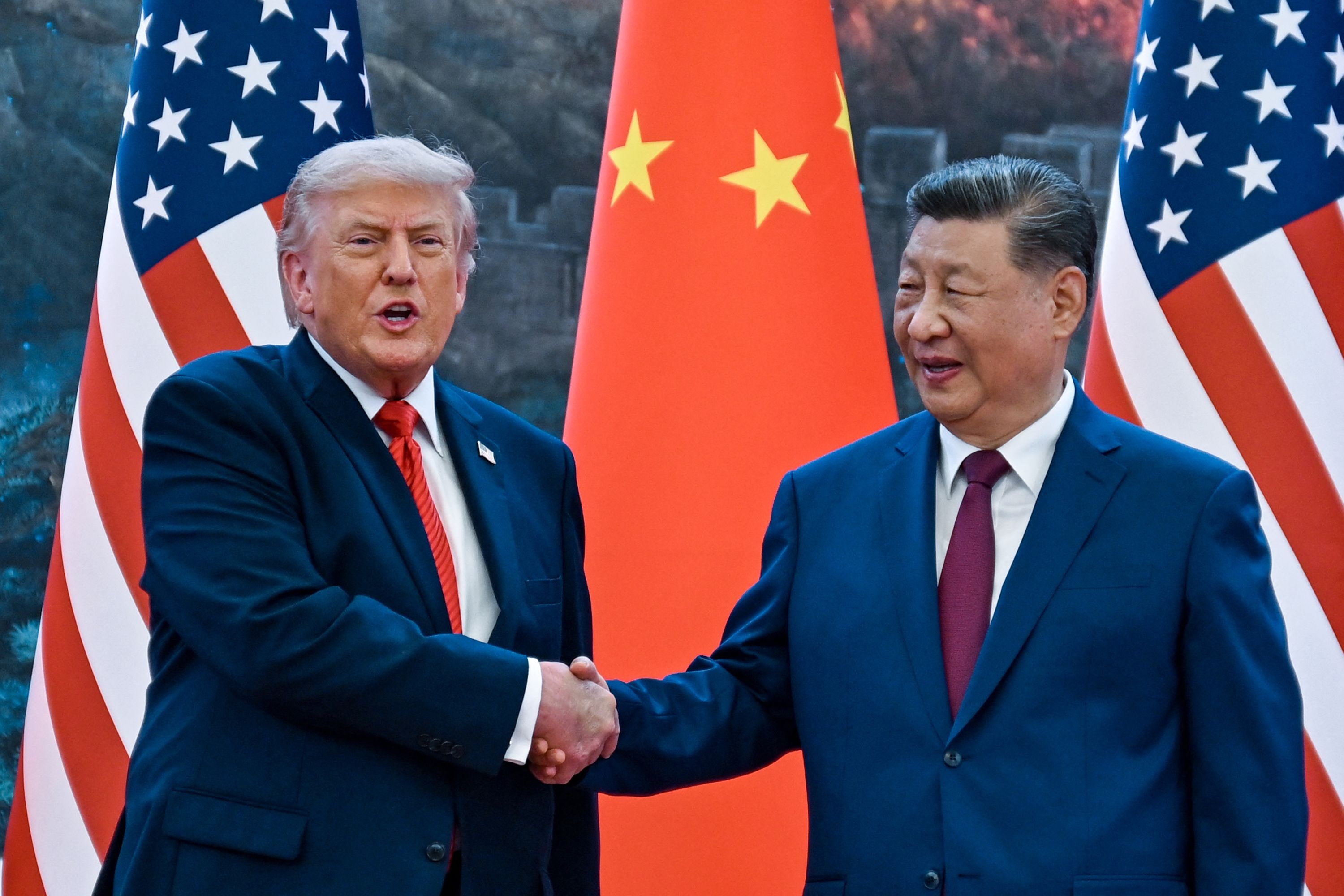
China has sought to temper expectations surrounding this week’s summit between Xi Jinping and Donald Trump, describing agreements on tariffs, agriculture, and aircraft purchases as only “preliminary” and still lacking finalized details.
The statement from the Ministry of Commerce of the People’s Republic of China on Saturday marked Beijing’s first formal characterization of the outcomes from Trump’s closely watched visit to China, where both leaders projected unusually warm rhetoric and emphasized stability in bilateral relations after years of trade tensions and technology disputes.
But the ministry’s language also underscored how little concrete substance has yet emerged from the summit, even as both governments attempt to signal progress and reduce fears of renewed economic confrontation.
Register for the next Tekedia Mini-MBA.
Register for Tekedia AI in Business Masterclass.
Join Tekedia Capital Syndicate and co-invest in great global startups.
Trump left Beijing on Friday after two days of meetings that featured ceremonial displays and repeated calls for stronger ties, but investors and analysts have continued to question whether the discussions produced meaningful commitments capable of reshaping trade flows between the world’s two largest economies.
In its statement, China said both sides agreed to establish an investment board and a trade board that would negotiate reciprocal tariff reductions on specific categories of goods as well as broader cuts covering agricultural products and other unspecified sectors.
However, Beijing avoided providing timelines, implementation mechanisms, or detailed product lists, reinforcing the sense that negotiations remain at an early stage. The ministry said the agreements would be “finalized as soon as possible,” suggesting that substantial bargaining still lies ahead.

The cautious wording reflects broader political and economic realities surrounding the U.S.-China relationship. While both governments appear eager to avoid another full-scale trade war, neither side wants to appear politically weak domestically by making sweeping concessions too quickly, especially in strategically sensitive sectors.
The negotiations, therefore, increasingly resemble a managed stabilization effort rather than a comprehensive trade reset.
Agriculture Takes Center Stage
Agriculture emerged as one of the clearest areas in which both sides are attempting to make incremental progress.

China said the two countries would work to expand agricultural trade through tariff reductions and efforts to remove non-tariff barriers and market access restrictions. The ministry specifically referenced longstanding Chinese concerns involving U.S. restrictions on dairy products, aquatic products, and bonsai exports, as well as Beijing’s efforts to secure recognition of Shandong province as free from avian influenza.
At the same time, China acknowledged U.S. concerns over approvals for American beef facilities and poultry exports.
The agricultural discussions carry significant economic and political importance because farm trade became one of the most heavily damaged sectors during the previous tariff battles between Washington and Beijing.
According to U.S. Department of Agriculture data, China’s imports of U.S. agricultural goods fell 65.7% year-on-year to $8.4 billion in 2025 after repeated rounds of retaliatory tariffs sharply curtailed trade. Even now, Chinese imports of American farm products remain subject to an additional 10% tariff introduced during last year’s trade disputes.
Analysts say any rollback in agricultural tariffs could quickly revive commercial trade flows that have remained heavily constrained.
China resumed limited purchases of some U.S. farm commodities after an October meeting, including soybean purchases linked to earlier commitments. Beijing has also resumed some wheat and sorghum imports from the United States.
Market participants now expect a possible 10% reduction in soybean tariffs, a move that could reopen large-scale commercial purchases by Chinese private crushers, many of whom were sidelined during last year’s harvest season while state-owned traders dominated imports.
Johnny Xiang, founder of Beijing-based AgRadar Consulting, said tariff reductions would effectively normalize bilateral agricultural trade again.
“Tariff reductions on agricultural products would mark a normalization of China-U.S. farm trade, allowing commercial buyers to re-enter the market,” Xiang said.
The resumption of agricultural trade would also carry political significance for Trump, who continues to rely heavily on support from rural farming states affected by earlier tariff battles. U.S. Secretary ?of Agriculture Brooke Rollins said China had agreed to implement beef-related commitments involving imports from 17 U.S. states.
Meanwhile, Beijing announced five-year registration extensions for 425 U.S. beef plants whose approvals had previously expired, along with new registrations for 77 additional American facilities. Those moves suggest both governments are prioritizing areas where trade can expand relatively quickly without directly touching more politically sensitive technology sectors.
Aircrafts Also Form Part of the Deals
Aircraft purchases formed another major topic during the summit. Trump said China agreed to buy 200 aircraft from Boeing, though analysts have questioned the absence of detailed timelines, financing structures, or delivery schedules.
China’s commerce ministry confirmed discussions involving purchases of U.S. aircraft and American assurances regarding aircraft engine and parts supplies to China, but again avoided providing specifics. The lack of detail has fueled skepticism among market observers who note that large aircraft transactions often take years to negotiate and implement.
The aviation discussions are especially important because China’s airline market remains one of Boeing’s most critical long-term growth opportunities at a time when the company continues recovering from production crises, regulatory scrutiny, and global supply chain disruptions.
For China, securing access to aircraft engines and components also remains important as Beijing attempts to expand domestic aviation manufacturing through companies such as Commercial Aircraft Corporation of China.
However, the broader significance of the summit may ultimately lie less in immediate commercial agreements and more in the apparent effort by both governments to stabilize relations ahead of several potentially volatile geopolitical and economic flashpoints. The Trump administration continues to maintain export controls targeting advanced semiconductors and artificial intelligence technologies, while China is accelerating domestic self-sufficiency efforts in strategic industries.
At the same time, both economies face slowing growth pressures and growing investor concerns about global fragmentation. That environment has increased incentives for limited economic cooperation even as rivalry intensifies.