

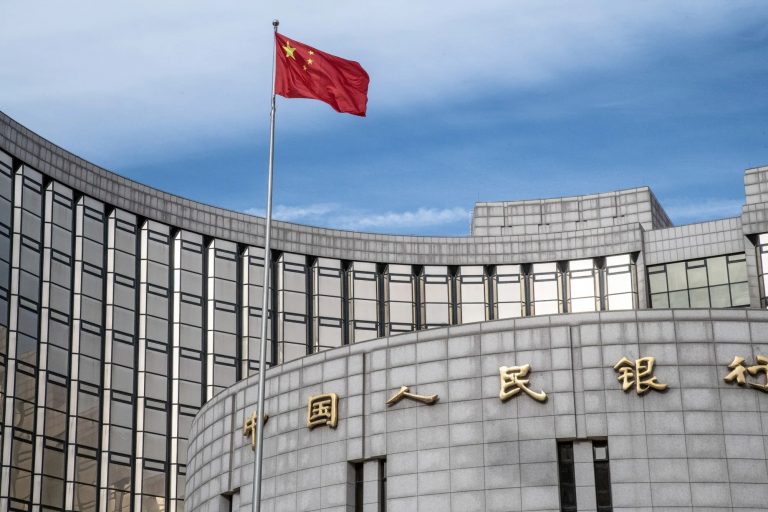
China’s economic growth showed clear signs of losing steam in April, with industrial production cooling sharply, retail sales plunging to their weakest pace in over three years, and fixed-asset investment contracting as the world’s second-largest economy struggles with subdued consumer confidence, a protracted property downturn, and rising external pressures from the Iran conflict.
The latest data from the National Bureau of Statistics, released on Monday, highlighted the uneven and fragile nature of China’s post-pandemic rebound. While exports provided some support, domestic demand remained soft, underscoring deep structural challenges that could complicate Beijing’s efforts to achieve stable growth this year.
Disappointing April Readings
Industrial Output: Grew 4.1% year-on-year, missing forecasts of 5.9% and marking the weakest expansion since July 2023.
Register for the next Tekedia Mini-MBA.
Register for Tekedia AI in Business Masterclass.
Join Tekedia Capital Syndicate and co-invest in great global startups.
Retail Sales: Rose just 0.2%, down sharply from 1.7% in March and the slowest since December 2022.
Fixed-Asset Investment: Contracted 1.6% in the first four months, reversing a 1.7% gain in Q1.
Unemployment Rate: Eased slightly to 5.2% from 5.4%.

Domestic car sales offered a stark illustration of consumer caution, falling 21.6% year-on-year for the seventh straight month despite aggressive overseas pushes by Chinese automakers.
Zhiwei Zhang, president and chief economist at Pinpoint Asset Management, captured the dynamic well.
“The strong performance of the exporters helped to mitigate the weaknesses in domestic demand, but not enough to fully offset it,” he said.

A Two-Speed Economy Takes Shape
Economists pointed to a clear divergence: export-oriented manufacturing, particularly in AI-related components and sectors stockpiling amid global uncertainty, showed resilience. In contrast, household consumption stayed fragile. Spending was concentrated in selective “upgraded” categories, small lifestyle improvements, tech gadgets, and discretionary items — while big-ticket purchases tied to housing, autos, and credit remained depressed.
Yuhan Zhang, principal economist at the Conference Board’s China Center, noted: “Retail sales growth in the first four months of 2026 points to still-weak household demand, with consumers concentrating spending on selective discretionary and upgrade categories rather than broad-based consumption.”
The property sector, long a key pillar of growth, continued to act as a drag. Property investment contraction widened in April, though new home prices fell at the slowest monthly pace in a year, hinting at tentative stabilization from local government measures aimed at boosting sales and restoring confidence.
Higher global energy prices linked to the Iran war have introduced fresh external risks. While domestic fuel pricing controls have shielded consumers from the full brunt of the shock, sustained elevated input costs threaten to squeeze already thin factory margins and further restrain spending if the conflict persists.
This comes as China’s first-quarter GDP growth of 5.0% sat at the upper end of the government’s full-year target range of 4.5–5.0%, but April’s data suggests that momentum is already fading. Beijing has so far shown limited appetite for large-scale stimulus, preferring targeted support.
However, ING’s chief China economist Lynn Song warned: “Weaker growth and rising inflation could complicate policymaking in the coming months. We’ve seen limited urgency for stimulus so far this year, but if data continue to deteriorate, this could change soon.”
Most analysts expect policymakers to maintain a wait-and-see approach until second-quarter GDP figures are released in July.
Chinese stocks largely shrugged off the weak data, remaining broadly flat as investor focus shifted to escalating Middle East tensions and global bond market volatility. The subdued April readings reinforce concerns that China’s recovery remains patchy and highly vulnerable to both domestic structural issues (high debt levels, property deleveraging, and weak private sector confidence) and global shocks.
The Trump-Xi summit delivered modest progress on agricultural trade and market access but fell short of delivering major breakthroughs. In response, Chinese leaders have intensified calls for energy security, technological self-reliance, and greater control over critical supply chains.
Longer term, the data highlights persistent structural challenges: a property sector that has yet to bottom out, weak private investment, demographic headwinds, and an ongoing shift from investment-led to consumption-driven growth that has proven difficult to engineer.
For the global economy, analysts predict a softer Chinese landing could mean reduced demand for commodities, slower growth in Asian supply chains, and less upward pressure on inflation. However, if Beijing eventually unleashes more aggressive stimulus, it could provide a tailwind for global risk assets and raw materials.