

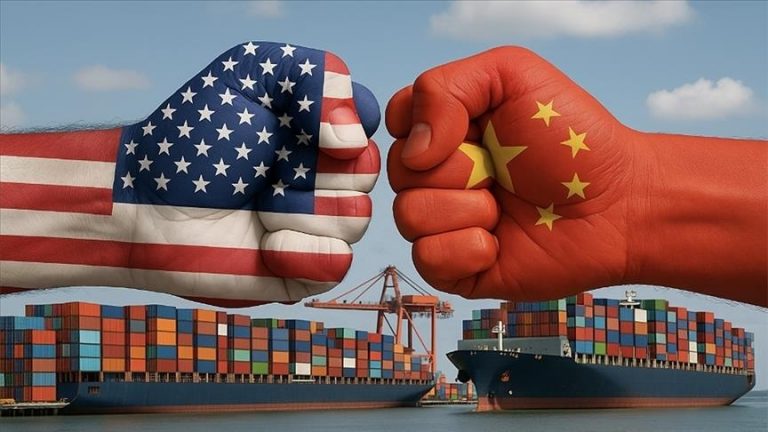
President Donald Trump and Chinese President Xi Jinping concluded their summit in Beijing on Thursday with an agreement to guide bilateral ties under a new framework of “strategic stability,” offering a pragmatic pause in years of intense friction over trade, technology, security, and human rights.
The meeting, characterized by cordial gestures and attended by top U.S. business executives, including Tesla’s Elon Musk and Nvidia’s Jensen Huang, produced several concrete discussion points while underscoring that fundamental differences, especially on Taiwan, remain unresolved.
Key Outcomes from the Summit
- New Guiding Framework: The two leaders agreed to pursue a “constructive China-U.S. relationship of strategic stability.” Xi described this as the overarching direction for the next three years and beyond, centered on cooperation paired with “measured competition” and “manageable differences.” He emphasized that the framework “must be translated into concrete actions.”
- Positive Momentum from Pre-Summit Talks: Xi noted that trade envoys achieved “overall balanced and positive outcomes” during preparatory meetings in South Korea. He welcomed greater U.S. commercial engagement, stating, “China’s door to opening up will only open wider.”
- Expanded Cooperation Areas: Both sides committed to better utilizing diplomatic and military communication channels. Discussions covered deeper economic and trade ties, agriculture, tourism, and market access. Trump pressed for stronger Chinese action against fentanyl flows into the U.S. and increased purchases of American agricultural products.
- Middle East and Energy Security: The leaders stressed that the Strait of Hormuz must remain open. Xi opposed the “militarization” of the waterway and “any effort to charge a toll for its use.” China expressed interest in buying more U.S. oil to reduce dependence on Middle Eastern supplies. Both countries agreed that “Iran can never have a nuclear weapon.”
- Taiwan Remains the Core Flashpoint: Xi reserved his strongest language for Taiwan, calling it “the most important issue in U.S.-China relations.” He warned: “Handle it well, the relationship holds; handle it badly, the two countries risk collision or conflict.”
Chinese markets reacted with cautious optimism. The Hang Seng Tech Index rose around 0.5%, and the broader Hang Seng Index gained roughly 0.3% on Thursday. While gains were modest compared to rallies in South Korea, Taiwan, and Japan, many investors viewed the summit as a tactical positive.
Register for the next Tekedia Mini-MBA.
Register for Tekedia AI in Business Masterclass.
Join Tekedia Capital Syndicate and co-invest in great global startups.
Goldman Sachs analysts had anticipated focused discussions on trade, tariffs, semiconductor restrictions, and rare earths. They expect China to ramp up purchases of U.S. agriculture, energy, and aircraft in exchange for avoiding escalated tariffs. The bank described the meeting as a potential “tactical catalyst” for the Chinese yuan and equities.
A notable development came shortly after the summit when Reuters reported that Washington cleared sales of Nvidia’s H200 AI chips to several major Chinese firms, including Alibaba, Tencent, ByteDance, and JD.com. This represents a meaningful breakthrough for China’s AI sector.
Jiong Shao, China internet analyst at Barclays, highlighted the stakes, saying: “The most important competitive arena today, especially between U.S. and China, is in AI, and the greatest bottleneck today in AI is compute.”

He added that access to Nvidia’s latest chips “is very, very critical for the Chinese players to compete on a global stage.”
Recent strong cloud and AI-related earnings from Alibaba and Tencent have also lifted sentiment. Analysts note that Chinese tech giants may be “a few quarters behind the U.S.” in realizing returns on their AI capital expenditure.
Despite the positive tone, investors remain selective. Dong Chen, chief investment officer at Bank J Safra Sarasin, sees the summit as a near-term catalyst but cautions that China’s equity market still faces an earnings problem.

“The problem with the Chinese equity market… is still earnings,” he said, noting a divergence between strong-performing mainland A-shares in hardware and AI versus many Hong Kong-listed internet firms.
Some traders adopted a wait-and-see approach. Jeff Mei, COO of BTSE Group, observed: “We believe that some traders are in a wait-and-see mode, taking profit and hedging their positions in the event that the U.S.-China summit fails to meet expectations.”
Economist Tianchen Xu of the Economist Intelligence Unit summarized the broader significance. He notes that while frictions will continue, the new framework provides “a guardrail, and things won’t spiral out of the two sides’ control as they nearly did in 2025.”
The Beijing summit indicates a mutual desire for stability rather than a fundamental thaw. It offers potential relief on inflation, supply chains, and fentanyl to the U.S. For China, it provides breathing room for economic recovery and technological development amid domestic challenges.
The presence of key American tech leaders and the swift Nvidia chip approval signal that both sides recognize the high costs of total decoupling in the critical AI domain. Yet the sharp language on Taiwan and the emphasis on “measured competition” make clear that rivalry remains the dominant underlying dynamic.
Markets will now watch closely for follow-through actions, increased agricultural and energy purchases, implementation of new export licenses, and whether this “strategic stability” can withstand inevitable future tests. For the time being, the world’s two largest economies have chosen managed coexistence over escalation.