

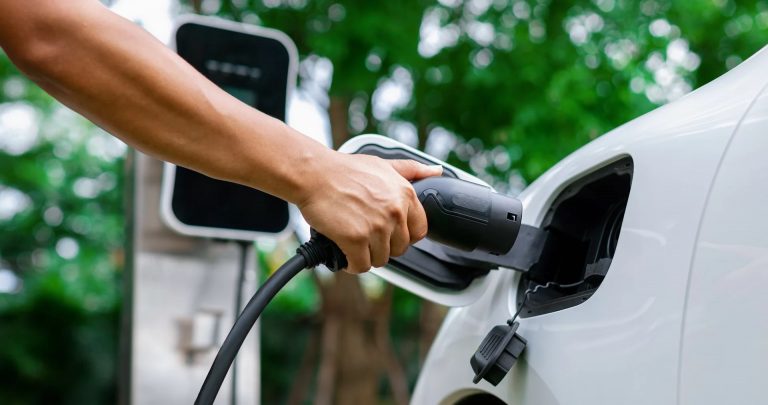
Europe’s electric vehicle market is gaining momentum, with record sales in 2026 as automakers expand their range of more affordable models to meet tightening European Union emissions requirements and respond to growing consumer demand.
Electric vehicle sales across the EU reached 1.64 million units in the first eight months of 2026, up 45% from the same period a year earlier, according to a report published Monday by Transport & Environment, a Brussels-based environmental advocacy group.
EVs accounted for 22% of new vehicle sales during the January-to-August period, six percentage points higher than a year earlier. The increase marks a significant acceleration after several years in which Europe’s transition to electric vehicles was constrained by high prices, limited model availability and uneven consumer demand.
Register for the next Tekedia Mini-MBA.
Register for Tekedia AI in Business Masterclass.
Join Tekedia Capital Syndicate and co-invest in great global startups.
Transport & Environment described 2026 as “a pivotal year for EV availability,” with the number of electric models on the European market increasing by 50% in a single year.
This expansion in choice is now considered necessary because the economics of the European EV market are changing. Automakers are introducing smaller and cheaper electric models that can appeal to a much broader customer base than the premium vehicles that dominated the market during the earlier phase of the transition.
Volkswagen, for example, is rolling out more affordable electric vehicles, including its all-electric Polo. The expansion allows the German automaker to address a previous shortfall against EU emissions requirements while reducing the risk of penalties.

The development also underpins how regulation is increasingly shaping product strategy across Europe’s auto industry. Carmakers are under pressure to reduce average fleet emissions, making affordable EVs a compliance tool as well as a potential source of future growth.
European manufacturers accounted for almost 60% of the available EV models in the first half of 2026 and added 16 new models during the period, according to the report.
Chinese manufacturers represented another 21% of available models and introduced 11 new vehicles, highlighting the growing competition facing European automakers in their home market. The expansion of Chinese offerings is significant because European carmakers are simultaneously trying to accelerate their own EV transition while protecting market share from manufacturers that have developed large-scale electric vehicle supply chains in China.

For consumers, the increase in model availability means the European EV market is gradually moving away from a situation in which buyers had relatively few choices, particularly at lower price points. More models across different vehicle categories could make electric cars accessible to households that previously considered them too expensive or impractical.
The shift is also occurring against a more challenging backdrop for conventional vehicles.
Rising fuel prices linked to the conflict in the Middle East are increasing the running costs of combustion-engine vehicles, potentially strengthening the economic case for switching to electric cars.
Transport & Environment said diesel prices have risen 38% since the war involving Iran began. A 50-litre tank now costs about €30 ($34) more than before the conflict, according to the report. That increase matters because fuel costs are one of the most visible and immediate expenses for drivers. Higher petrol and diesel prices can change the economics of vehicle ownership even when the initial purchase price of an EV remains higher than that of an equivalent combustion-engine car.
The effect could be relevant for diesel vehicles, which have historically been popular among European drivers because of their fuel efficiency and suitability for long-distance driving.
The combination of cheaper electric models, expanding choice, regulatory pressure and higher fuel costs is therefore creating several forces pushing the market in the same direction.
For automakers, however, the rapid increase in EV sales does not eliminate the challenges surrounding the transition. Manufacturers must continue investing in electric platforms, batteries, and supply chains while managing the profitability of vehicles that can be more expensive to produce than comparable combustion-engine models.
European manufacturers also face competition from Chinese companies that have expanded their presence in the global EV market through competitive pricing and a large domestic manufacturing base.
The fact that Chinese manufacturers already account for more than one-fifth of available EV models in Europe underscores the competitive pressure. European companies have to increase the availability of affordable vehicles without allowing rivals to capture the fastest-growing parts of the market.
The surge in sales suggests that availability is becoming less of a constraint than it was previously. The next test will be whether the growth can continue as the market moves beyond early adopters and into the much larger mass-market segment.
But analysts expect that to depend heavily on price, charging infrastructure, financing costs and consumer confidence, but the sharp increase in model availability is changing the competitive landscape.
The 2026 figures also show why Europe’s emissions targets are increasingly influencing the commercial decisions of automakers. Rather than treating compliance as a longer-term regulatory requirement, manufacturers are now bringing more electric vehicles to market as they attempt to meet targets while responding to changes in consumer economics.
Europe’s EV transition is consequently entering a more competitive phase. Sales are rising rapidly, the number of available models is expanding, and Chinese manufacturers are increasing their presence, while higher fossil-fuel prices are adding another incentive for drivers to consider electric alternatives.