

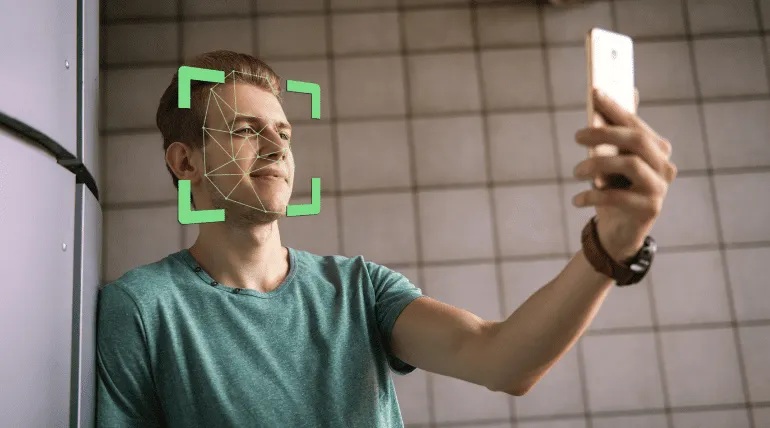
Face-based technologies are becoming a regular part of how systems operate, from mobile applications to security environments and customer analytics. But there’s often confusion between face tracking apps and face recognition—two approaches that serve different purposes and require different levels of complexity.
Most teams don’t struggle with the technology itself—they struggle with understanding where each piece fits. Face tracking and recognition both rely on computer vision to interpret what a camera sees, whether that’s following a face or identifying it. The challenge is knowing which one you actually need. That’s what we’ll unpack here.
Facial Tracking vs. Face Recognition: What’s the Key Difference?
The key difference lies in intent and complexity.
Facial tracking is about detection and motion analysis. Systems identify a face in an image and continuously update its position as it moves. This is what powers many android face tracking apps and face tracking video apps used in content creation or user interaction.
Face recognition builds on top of that. It extracts unique facial features and compares them against a database to confirm identity. This requires more processing, data, and accuracy.
What is a Facial Tracking App and How Does it Work?
A face tracking app does exactly what the name suggests—it finds a face and keeps track of it as it moves. Whether it’s in a live camera feed or a recorded video, the goal is to follow position, not identity.
You’ll see this in everything from social media filters to mobile camera features. An android face tracking app, for example, can keep effects aligned with your face, while a face tracking video app helps maintain focus on a subject without manual input.
What is Facial Recognition Technology? Definition and Use Cases
Face recognition is used when knowing who the person is actually matters. It moves beyond tracking and focuses on identification or verification.
You’ll see this in security systems, banking apps, workplace access control, and even customer personalization—anywhere identity needs to be confirmed quickly and without manual input.
The Role of Computer Vision in Facial Tracking and Recognition Systems
Computer vision provides the underlying capabilities that both tracking and recognition depend on. It handles everything from detecting a face to tracking its movement and analyzing key features, all as it happens.
It all runs in the background, helping a facial tracking app or face recognition system stay reliable when conditions change.
Key Technologies for Facial Detection, Tracking, and Identification
Under the hood, it’s a step-by-step process. First, the system finds a face. Then it keeps track of it as it moves. And if identity matters, it compares that face to known data.
Additional techniques, like mapping facial landmarks, help keep everything accurate even when conditions aren’t perfect.
Real-World Applications: From Mobile Apps to Security Systems
You’ve probably already used these technologies without thinking much about them. A face tracking video app might keep you centered in a frame or apply filters that move with your face. Many android face tracking apps use this to create interactive experiences.
Face recognition tends to show up in different places—like unlocking your phone or verifying your identity in apps. While tracking focuses on movement and interaction, recognition is about identity and access.
Privacy in Facial Recognition Technologies
The moment identity enters the picture, privacy follows. A facial tracking app might only process movement, but face recognition works with personal data.
In the end, it’s not only about getting it right—it’s about making sure systems are secure and clear enough that people understand what’s happening with their data.
When to Use a Face Tracking App vs Face Recognition
The decision is often simpler than it seems. If you only need to follow a face—how it moves or where it is—a face tracking app will do the job. That’s why it’s widely used in mobile apps and video tools.
Face recognition comes into play when you need to know who the person is. That’s a different level of responsibility, since it involves handling identity data.
In practice, it’s less about which technology is “better” and more about what fits the task.
Where Each Approach Fits
When you break it down, the difference is fairly straightforward. Face tracking follows movement. Face recognition confirms identity. Both rely on the same underlying capabilities, but they’re used in different ways.
In practice, it’s about choosing what fits. A facial tracking app works well for interactive features and real-time responsiveness, while face recognition is better suited for authentication and access.
Computer vision connects both, making it possible to turn visual input into something systems can actually use. The goal isn’t to use more technology—it’s to use the right amount for the problem at hand.