

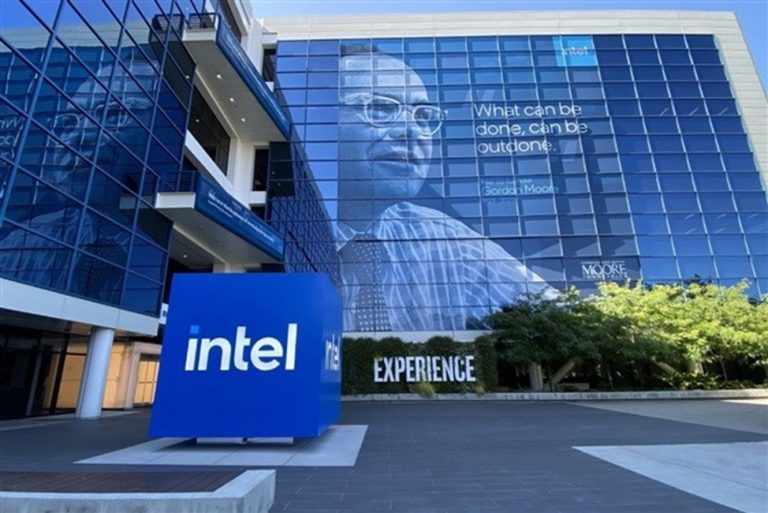
Intel’s second-quarter results may have topped Wall Street’s expectations on revenue, but the once-dominant chipmaker remains far from the powerhouse it used to be. The earnings report, released Thursday, came with a sobering reminder of the company’s long road to recovery — and its ongoing financial and operational overhaul under new CEO Lip-Bu Tan.
For the quarter ended June, Intel posted $12.86 billion in revenue, ahead of analysts’ estimates of $11.92 billion, according to LSEG. The company, however, recorded a net loss of $2.9 billion, or 67 cents per share, nearly double the $1.61 billion loss from the same period a year ago. Adjusted earnings showed a 10-cent loss per share, driven by an $800 million impairment charge related to idle tools, which alone knocked about 20 cents off the bottom line.
Still, the better-than-expected revenue and improved guidance for Q3 — $13.1 billion at the midpoint versus a $12.65 billion consensus — were enough to push Intel shares higher in extended trading. And for the market, it wasn’t just a matter of numbers beating expectations; it was the first concrete sign in months that Intel’s brutal slide may be slowing.
Register for Tekedia Mini-MBA edition 20 (June 8 – Sept 5, 2026).
Register for Tekedia AI in Business Masterclass.
Join Tekedia Capital Syndicate and co-invest in great global startups.
Register for Tekedia AI Lab.
Intel’s current position marks a stunning decline for a company that once defined the semiconductor industry. Just a decade ago, Intel was unshakable — the undisputed leader in central processing units (CPUs) and one of the most valuable tech firms in the world. But years of strategic missteps, delays in manufacturing innovation, and a failure to pivot fast enough to the AI and smartphone chip boom allowed competitors — particularly TSMC, AMD, and Nvidia — to eclipse it.
By 2024, Intel had not only lost its technological edge but had also tumbled out of the top 10 semiconductor companies globally — a humiliating milestone confirmed by its own chief.
“We are not in the top 10 semiconductor companies anymore,” Lip-Bu Tan told staff in a brutal internal assessment earlier this month.

The admission was a stark departure from the optimism that once characterized Intel’s ambitious foundry plans and efforts to recapture leadership in chip manufacturing.
The damage wasn’t just reputational. Intel’s stock plunged 60% in 2024, marking its worst performance in company history. Over-investment in chip factories that never found sufficient demand, rising competition, and lagging innovation in both PC and data center chips all contributed to the rout.
Lip-Bu Tan’s Tough Medicine
Tan, the former Cadence Design Systems chairman and a respected voice in Silicon Valley, took over from Pat Gelsinger in March with a mandate to stop the bleeding and refocus Intel’s operations. His approach has been anything but cosmetic.

In a memo to employees Thursday, Tan revealed that Intel has now “completed the majority” of planned layoffs, trimming its workforce by 15% — or around 13,000 jobs — and will close the year with approximately 75,000 employees. The move is part of a broader plan to slash operating costs by $17 billion by the end of 2025.
More drastically, Tan canceled large-scale chip fabrication (fab) projects in Germany and Poland, slowed down the $20 billion “Silicon Heartland” plant in Ohio, and consolidated testing and assembly lines in Vietnam and Malaysia. These changes hit at the heart of Intel’s once-ambitious global expansion strategy under Gelsinger, who sought to challenge TSMC as a contract chipmaker.
“Over the past several years, the company invested too much, too soon – without adequate demand,” Tan wrote in his memo. “Our factory footprint became needlessly fragmented and underutilized.”
Intel’s foundry unit — the linchpin of its outsourcing pivot — posted a $3.17 billion operating loss on $4.4 billion in revenue. Without a big external customer to anchor the business, the unit has continued to drain resources.
Tan made it clear that going forward, all investments must be backed by firm demand. “There are no more blank checks. Every investment must make economic sense,” he wrote. He also said he would personally approve all chip designs before tape-out, reflecting tighter control and a renewed focus on engineering discipline.
Turning A Corner?
While the overall business remains under pressure, the latest report does offer signs of stabilization. Sales from the Client Computing Group — which includes chips for personal computers — declined 3% to $7.9 billion, while the Data Center and AI Group grew 4% to $3.9 billion. The latter unit, though still lagging behind AMD and Nvidia, shows Intel is not entirely losing the AI race.
The financial outlook is also improving. After last year’s catastrophic drop, Intel shares are up roughly 13% year-to-date, suggesting some investor confidence in Tan’s turnaround strategy. The company’s Q3 forecast also hints at momentum — albeit fragile — heading into the second half of the year.
Intel’s second-quarter performance won’t erase years of setbacks. But it is perhaps the clearest indication yet that the company is starting to steady its footing under Lip-Bu Tan. The revenue beat and improved forecast may look modest on paper, but in the context of Intel’s recent history — and Tan’s own admission that it no longer ranks among the top 10 global chipmakers — it represents more than just a quarterly win.
Analysts believe that the recovery will depend not just on cost cuts and restructuring, but on whether Intel can once again deliver on innovation — and win back the customers it lost.