

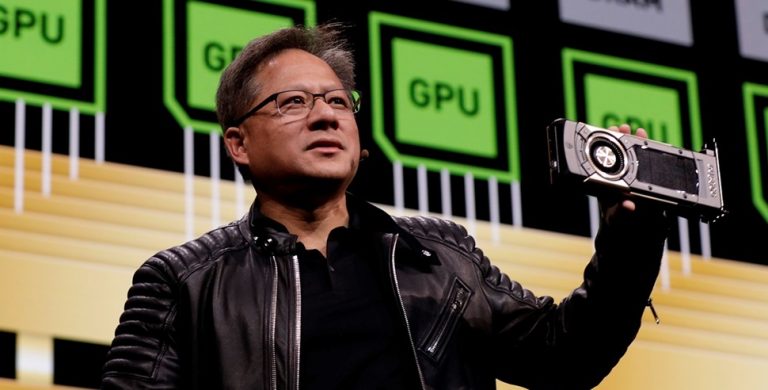
A U.S. federal judge in California certified a class-action securities lawsuit against NVIDIA and its CEO Jensen Huang. The suit alleges that the company concealed more than $1 billion in revenue from GPU sales to cryptocurrency miners during the 2017–2018 crypto boom, improperly booking it as standard gaming demand.
The class period covers investors who purchased NVIDIA stock between August 10, 2017, and November 15, 2018. Plaintiffs claim NVIDIA downplayed the role of crypto miners—who were snapping up GeForce gaming GPUs in massive quantities—while publicly attributing surging revenue to consumer gaming.
When mining demand collapsed in late 2018, NVIDIA issued weak guidance, and the stock dropped sharply. Key claims include: Internal documents, former employee testimony, and independent analyses suggest NVIDIA earned roughly $1.1–1.35 billion, some estimates up to $1.7 billion total crypto-related more from miners than it disclosed.
Register for Tekedia Mini-MBA edition 20 (June 8 – Sept 5, 2026).
Register for Tekedia AI in Business Masterclass.
Join Tekedia Capital Syndicate and co-invest in great global startups.
Register for Tekedia AI Lab.
Much of this came from miners purchasing consumer-grade GeForce cards often through resellers or indirect channels rather than dedicated mining hardware at the time. NVIDIA allegedly minimized crypto exposure in earnings calls and filings, creating a misleading picture of sustainable gaming growth.
This isn’t entirely new. The original complaint dates back to 2018, and the case has been winding through the courts. The recent development is class certification, allowing affected shareholders to sue collectively. A case management conference is set for April 21, 2026.
NVIDIA has faced scrutiny over crypto disclosures before. In 2022, the SEC fined the company $5.5 million for failing to adequately disclose the impact of cryptocurrency mining on its business in earlier periods.
During the 2017–2018 boom, GPU shortages were widespread, with miners competing against gamers. NVIDIA later introduced dedicated Crypto Mining Processors (CMPs) in 2021 to separate the markets, but the lawsuit focuses on the earlier period. NVIDIA has not yet issued a detailed public rebuttal to the latest certification but the company has historically argued that it disclosed material information and that crypto demand was part of broader market trends.

Companies in volatile sectors like semiconductors often face such suits when revenue shifts with external cycles. NVIDIA shares (NVDA) fell around 7% on the news of the certification, reflecting investor sensitivity to any reminder of past crypto volatility—especially as the company is now heavily tied to AI data center demand.
This is a long-running disclosure dispute from the last major crypto bull run, not a new operational scandal. It highlights how intertwined NVIDIA’s GPU business once was with cryptocurrency mining before AI became the dominant growth driver. The case will likely drag on, with potential for settlement or further appeals.
For current NVIDIA investors, the bigger near-term drivers remain AI chip demand, competition, and export restrictions rather than this 8-year-old episode. If you’re holding NVDA or following the stock, this adds some headline risk but doesn’t appear to change the fundamental AI trajectory.
Plaintiffs seek recovery tied to the stock price drop after NVIDIA’s November 2018 revenue warning; when the company finally flagged a sharp falloff in crypto demand. The stock fell ~28.5% over two trading days at that time. Damages in securities class actions are often calculated using out-of-pocket models based on inflated share prices during the class period.

While exact figures aren’t public yet, the scale could reach hundreds of millions to over a billion in a worst-case judgment or settlement, especially with a large certified class. NVIDIA already paid a modest $5.5 million SEC fine in 2022 for inadequate crypto mining disclosures in fiscal 2018 quarters.
This private lawsuit is separate and more significant because it involves investor damages rather than just regulatory penalties. Most securities class actions settle before trial to avoid uncertainty and legal costs. NVIDIA has signaled confidence in its disclosures; noting that long-term shareholders did incredibly well despite the 2018 dip.
A settlement could still cost tens to hundreds of millions, covered partly by insurance, but it would represent a non-operating hit. Shares showed mixed or mildly negative reactions around the March 25–26, 2026 certification news (reports of ~3–7% dips in some sessions, though offset by broader market moves and upcoming GTC conference optimism).
The reaction was muted overall, reflecting that this is an old issue from nearly a decade ago. It serves as a reminder of NVIDIA’s past cyclical volatility tied to crypto. However, today’s business is overwhelmingly driven by AI/data center demand which accounted for the vast majority of recent record revenue, e.g., $62B+ in a recent quarter.
The 2017–2018 gaming and crypto overlap feels distant to current holders focused on Blackwell, CUDA ecosystem dominance, and hyperscaler spending.