

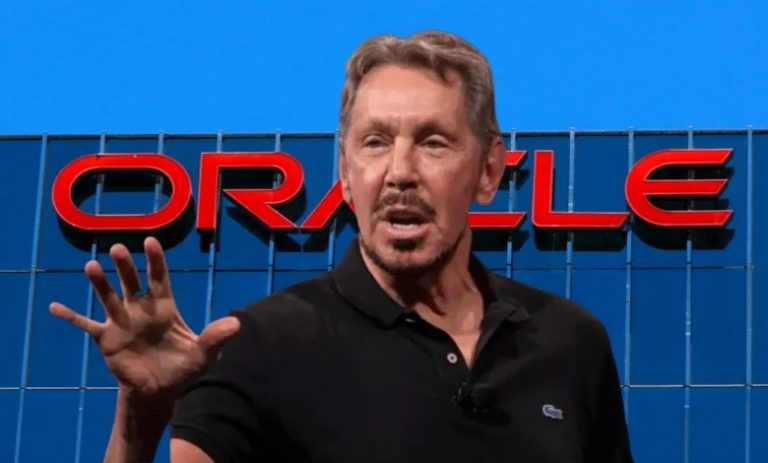
Oracle co-founder and Executive Chairman Larry Ellison has canceled a planned sale of 50 million Oracle shares worth about $7.5 billion, removing a potentially significant source of selling pressure on the technology company’s stock as it navigates a costly expansion into artificial intelligence infrastructure.
Oracle disclosed the change on Saturday, without providing a reason for Ellison’s decision.
“No Oracle stock was sold under that plan, and he has no other plans to sell any of his Oracle stock,” the company said.
Register for the next Tekedia Mini-MBA.
Register for Tekedia AI in Business Masterclass.
Join Tekedia Capital Syndicate and co-invest in great global startups.
Oracle had previously disclosed in a regulatory filing that Ellison intended to sell the shares, according to Reuters. The proposed transaction would have represented a substantial monetization of his stake, although it would not have changed his position as one of Oracle’s largest shareholders.
The cancellation comes as Oracle shares have faced a difficult year. As of Sunday afternoon, the stock was down about 22% since the beginning of 2026, reflecting investor concerns over the enormous capital requirements associated with the company’s push to become a major provider of AI computing capacity.
Oracle has been committing billions of dollars to data centers and related infrastructure as demand for AI computing accelerates. The company has emerged as an increasingly important cloud infrastructure provider, competing with much larger rivals while taking on substantial spending commitments to secure customers and computing capacity.

That expansion has created a complicated proposition for investors. Oracle is benefiting from one of the technology industry’s strongest growth opportunities, but the AI infrastructure business requires huge upfront investments in data centers, servers, networking equipment and power before the resulting revenue and cash flows fully materialize.
Ellison’s decision not to sell could therefore attract attention beyond the immediate reduction in the number of shares that might have entered the market.
For investors, insider transactions can carry a signaling effect, particularly when a founder and controlling shareholder chooses not to monetize shares after previously announcing a substantial sale. Ellison’s decision does not necessarily constitute a forecast for Oracle’s stock, and the company gave no explanation for the cancellation, but the absence of any new plans to sell removes one potential source of uncertainty around his holdings.

At the same time, Oracle’s falling share price highlights the broader tension surrounding its AI strategy. The company has been positioning itself to capture a larger share of the rapidly expanding market for AI computing while accepting much higher capital requirements than its traditional enterprise-software business.
The market has become increasingly focused on whether AI-related demand will generate sufficient returns to justify the infrastructure spending now taking place across the technology industry. For Oracle, that means investors must weigh its growing cloud and AI opportunities against the financing, depreciation and execution risks associated with building capacity at unprecedented scale.
Oracle has also become deeply involved in TikTok’s U.S. operations, emerging as one of the major owners and security partners for the social media platform’s American business. The relationship gives Oracle another significant technology asset, while adding to the company’s exposure to one of the most politically sensitive technology businesses in the United States.
Ellison’s financial interests extend well beyond Oracle. He has also used his considerable wealth to support his son David Ellison’s acquisition of Warner Bros., a deal that is currently being contested in court.
The decision to cancel the Oracle stock sale therefore comes at a point when Ellison’s personal wealth, Oracle’s capital-intensive AI expansion and his family’s broader investment activities are attracting considerable attention.
Still, the immediate message from Oracle is that Ellison did not sell any of the 50 million shares covered by the earlier plan and currently has no additional plans to sell Oracle stock. Ellison’s decision to retain his shares may remove one near-term supply concern, but it does not change the fundamental test of profit facing the company.