

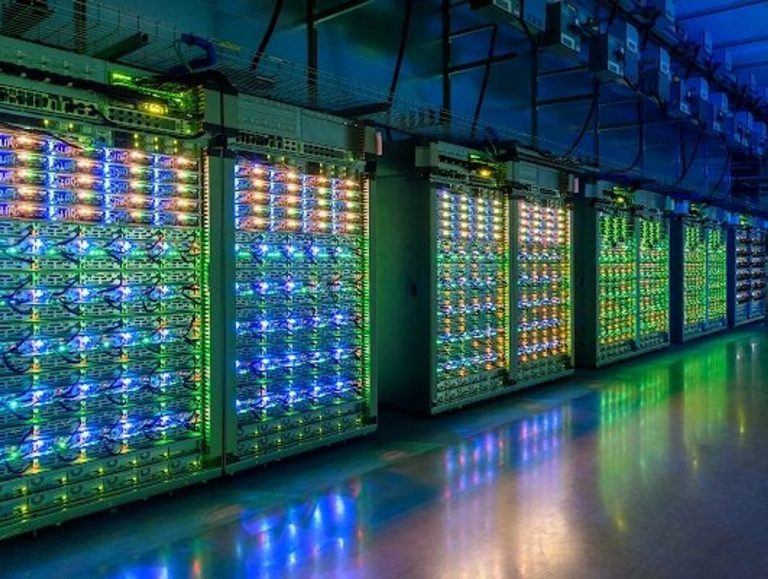
China’s Lenovo, the world’s largest personal computer maker, is sharpening its push into artificial intelligence by partnering with U.S. chip giant Nvidia to help AI cloud providers deploy data centers at unprecedented speed.
The company announced the tie-up on Tuesday at the Consumer Electronics Show (CES) in Las Vegas, framing it as a direct response to surging global demand for AI infrastructure. Lenovo said the partnership is designed to cut the time it takes to bring AI data centers online from months to just weeks, a critical advantage as competition intensifies among cloud providers racing to support large-scale AI workloads.
Under the programme, Lenovo will combine its liquid-cooled hybrid AI infrastructure with Nvidia’s computing platforms, offering what it described as an end-to-end solution for building so-called AI factories. Liquid cooling has become increasingly important as AI chips consume more power and generate more heat, turning thermal management into a key constraint on scaling.
Register for Tekedia Mini-MBA edition 20 (June 8 – Sept 5, 2026).
Register for Tekedia AI in Business Masterclass.
Join Tekedia Capital Syndicate and co-invest in great global startups.
Register for Tekedia AI Lab.
“Lenovo AI Cloud Gigafactory with NVIDIA sets a new benchmark for scalable AI factory design, enabling the world’s most advanced AI environments to be deployed in record-setting time,” Lenovo chief executive Yang Yuanqing said, speaking alongside Nvidia CEO Jensen Huang.
The language reflects a broader shift in the AI industry. As demand moves from experimentation to industrial deployment, speed of execution is becoming as important as raw computing power. Cloud providers are under pressure from customers building large language models and AI services to add capacity quickly, even as supply chains for chips, power, and cooling remain tight.
For Lenovo, the partnership also signals ambition beyond its traditional PC stronghold. While the company remains best known for laptops and desktops, it also has a sizeable server business and has been positioning itself as a full-stack AI infrastructure provider, spanning devices, data centers, and software.

That strategy was on full display at CES. Alongside the Nvidia announcement, Lenovo showcased an AI platform, a range of concept devices, and its first foldable smartphone under the Motorola brand, highlighting how it plans to weave AI across its entire product portfolio.
Yang also unveiled Qira, a personal AI system designed to operate across Lenovo and Motorola PCs, smartphones, tablets, and wearables. Unlike standalone assistants, Qira is intended to work continuously in the background and integrate third-party services. Lenovo said the system would be able to offer services from companies such as travel firm Expedia, suggesting a move toward an ecosystem model rather than a single-device assistant.
The approach mirrors a broader industry trend, where hardware makers are trying to differentiate themselves by embedding AI deeper into everyday use, rather than treating it as a bolt-on feature. Lenovo is aiming to lock users into its ecosystem while gathering data and usage patterns that can inform future products by controlling both the devices and the AI layer that runs across them.

Lenovo also used the event to showcase concept AI glasses, placing them alongside companies such as Alibaba and Samsung Electronics, which are also exploring AI-powered wearables. In addition, it previewed an AI assistant wearable under “Project Maxwell,” designed to offer users real-time assistance, another signal of how AI is spilling beyond screens into ambient, always-on devices.
The Nvidia partnership sits at the center of this broader push. Nvidia’s chips have become the backbone of AI computing globally, and aligning closely with the company gives Lenovo credibility with cloud providers looking for proven, scalable solutions. The tie-up extends Lenovo’s reach deeper into enterprise and cloud infrastructure by pairing its platforms with Lenovo’s hardware, integration, and global supply chain.
The announcement also comes at a time when geopolitical and supply-chain considerations loom large. A Chinese company working closely with a U.S. AI chip leader highlights how interdependent the global AI ecosystem remains, even as governments talk more openly about technological decoupling.
However, there is the challenge of execution for Lenovo. Competing in AI infrastructure means going head-to-head with established server and systems players, while also keeping pace with rapid advances in chips, cooling, and software. But by promising faster deployment and tighter integration with Nvidia’s platforms, Lenovo is aiming to become a practical partner for cloud providers under pressure to scale.
Lenovo’s message at the CES is that it no longer wants to be seen only as a PC maker adapting to the AI age. Thus, with Nvidia at its side and a growing lineup of AI-driven devices and platforms, it is trying to claim a seat at the table of companies shaping how AI is built, deployed, and used.