

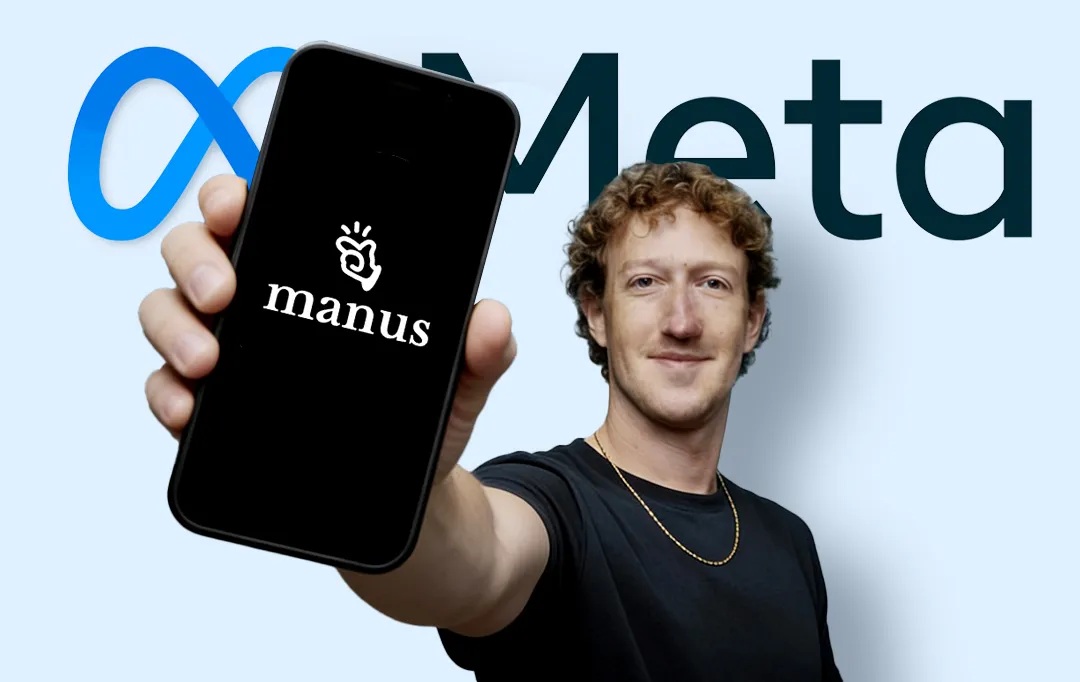
AI startup Manus is returning to independent operations after Chinese regulators forced U.S. technology giant Meta to unwind its more than $2 billion acquisition of the company, marking one of the clearest examples yet of how governments are tightening control over ownership of strategically important artificial intelligence technologies.
The company said Tuesday that the separation from Meta will also require the deletion of some user data as it disentangles its systems and operations from the U.S. technology group. Certain data generated by users on or after December 29, 2025, will be deleted later this month to comply with regulatory requirements in specific jurisdictions, Manus said.
Affected users will be notified through the Manus app and by email and will be given an opportunity to back up their information before the deletion takes effect.
Register for the next Tekedia Mini-MBA.
Register for Tekedia AI in Business Masterclass.
Join Tekedia Capital Syndicate and co-invest in great global startups.
“This is part of our separation from Meta,” the company said in a statement.
The announcement closes a remarkable chapter for Manus, which only months ago appeared destined to become part of Meta’s expanding artificial intelligence portfolio. Instead, the startup is being returned to independent ownership after Beijing concluded that the transaction could not proceed under China’s stringent rules governing foreign investment in companies developing advanced technologies.
Meta agreed to acquire Manus in a deal valued at more than $2 billion as part of its effort to strengthen its capabilities in advanced AI agents, software designed to carry out complex tasks with limited human supervision.

Chinese authorities ordered the transaction to be unwound in April after reviewing the ownership of technology developed by Manus and the implications of transferring control to a U.S. company. The decision came amid a broader tightening of China’s oversight of foreign investment in companies working on frontier AI, semiconductors and other strategically sensitive technologies.
The ruling underpins a shift in how Beijing views AI startups. While Chinese companies have historically welcomed foreign capital to accelerate growth, regulators are now treating advanced AI capabilities as assets with national strategic importance, making cross-border acquisitions far more difficult.
For Meta, the outcome marks an unusual reversal. Major technology companies routinely acquire promising startups and integrate their engineers and intellectual property into broader AI strategies. In this case, regulatory intervention effectively forced the company to dismantle an acquisition that had already been completed.

The planned deletion of user data offers a glimpse into the technical challenges involved in unwinding a major technology acquisition.
Separating cloud infrastructure, user records, software systems and compliance obligations is considerably more complex than simply changing ownership. Manus said the deletion is necessary to satisfy regulatory requirements in certain jurisdictions as it re-establishes itself as a standalone company.
Although the company has not disclosed the number of users affected, its decision to provide advance notice and a backup window is intended to allow customers to preserve information before the transition is completed.
Tencent Emerges As A Potential New Anchor Investor
Attention is now turning to what Manus will look like after its separation from Meta.
Chinese internet and gaming giant Tencent has been in talks to become Manus’ largest shareholder, according to Reuters, as the startup and its existing investors seek to restore an ownership structure following the collapse of the Meta transaction. The proposed arrangement would involve Tencent alongside existing backers such as ZhenFund and HSG.
A Tencent investment would provide Manus with substantial financial resources, cloud infrastructure and distribution capabilities while keeping the company outside the control of a U.S. technology group.
The discussions also emphasize how domestic investors in China are increasingly stepping in to support companies whose international ownership plans have been complicated by geopolitical tensions.
Manus attracted global attention after unveiling an AI agent designed to autonomously perform multi-step tasks, including research, coding and web-based workflows, with relatively limited user intervention.
The company quickly became one of the most closely watched startups in the emerging market for AI agents, a field that has attracted intense investment from companies including OpenAI, Anthropic, Google and Meta.
However, it is believed that the collapse of the Meta-Manus transaction is likely to resonate well beyond the two companies. The deal shows that AI acquisitions are now being judged not only on traditional competition grounds but also on questions of national security, technology transfer, data sovereignty and strategic industrial policy.
Governments in both China and the United States have introduced measures aimed at controlling investment in advanced technologies, creating a more complicated environment for multinational technology companies seeking to buy promising AI startups across borders.
The result is a global AI industry that is becoming more fragmented, with ownership, investment and access to technology shaped by geopolitical considerations as much as commercial strategy.
The immediate priority for Manus will be rebuilding as an independent company, reassuring users during the data transition and securing long-term financing. If Tencent’s investment proceeds, the startup could emerge from the failed Meta acquisition with a powerful domestic shareholder and a renewed mandate to compete independently in one of the technology industry’s fastest-growing markets.