

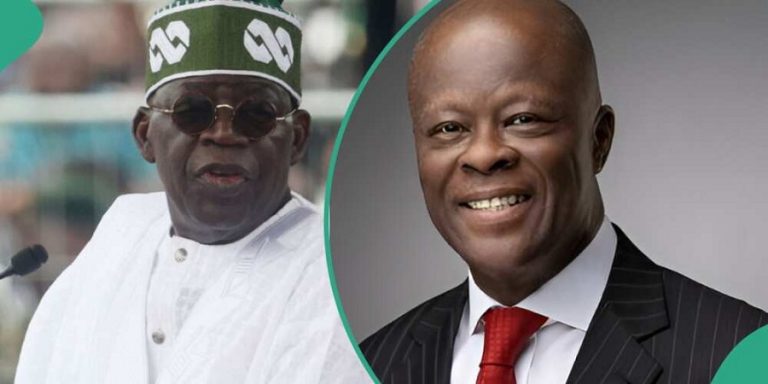
Nigeria’s Minister of Finance and Coordinating Minister of the Economy, Wale Edun, has stated that the government is aiming for a 7% annual GDP growth rate, significantly higher than the 4.6% projection for 2025.
The ambitious target, according to Edun, is necessary to reduce poverty and drive economic transformation, a goal the administration believes is essential for long-term stability and prosperity.
Speaking at the Arise/KPMG Budget Day on Monday, Edun expressed optimism about Nigeria’s economic trajectory, citing anticipated declines in inflation, improved macroeconomic stability, and a more favorable business environment as factors that will support economic expansion. However, the minister’s optimism comes at a time when Nigeria’s economic realities paint a more troubling picture, as businesses struggle with high inflation, rising costs, and foreign exchange volatility, all of which threaten economic growth prospects.
Register for Tekedia Mini-MBA edition 20 (June 8 – Sept 5, 2026).
Register for Tekedia AI in Business Masterclass.
Join Tekedia Capital Syndicate and co-invest in great global startups.
Register for Tekedia AI Lab.
Edun acknowledged that while a 4.6% GDP growth rate is expected in 2025, the government’s focus is on pushing it closer to 7% per annum, as only at that level can economic growth meaningfully lift millions of Nigerians out of poverty.
“We projected growth at 4.6%, but I think that is not our ambition. Our ambition is to, as soon as possible, get to about 7% per annum GDP growth, because it is at that level that you begin to really lift people out of poverty,” Edun remarked.
However, this projection is coming at a time when the Nigerian Economic Summit Group (NESG) has reported that over 7 million micro, small, and medium-sized enterprises (MSMEs) shut down between 2023 and 2024 due to Nigeria’s deteriorating business environment.

The NESG report noted that MSMEs serve as the backbone of Nigeria’s economy, contributing nearly 50% of the GDP and employing over 80% of the workforce. Their mass closure over the past two years has heightened concerns about rising unemployment, reduced productivity, and worsening economic hardship. Analysts have warned that if current conditions persist, even more businesses will collapse in 2025, which could further destabilize the economy and make the government’s growth targets highly unrealistic.
Government’s Strategy for Economic Growth
Despite the grim realities on the ground, Edun insists that several key factors will drive economic growth. He pointed to a stronger revenue performance, which he believes will boost government finances, as well as increased oil production as outlined in the 2024 and 2025 budget estimates.
The minister also emphasized that savings from the removal of fuel subsidies will help fund critical projects and stabilize government finances. But many analysts argue that the impact of subsidy removal has largely been negative for the average Nigerian, as it has led to skyrocketing fuel prices, increased transportation costs, and higher inflation across all sectors.

Edun stressed that creating a conducive environment for private-sector investment remains a priority. The government, he said, recognizes that Nigeria’s $100 billion annual infrastructure deficit cannot be addressed through public funds alone and must involve private capital. He highlighted recent Federal Executive Council (FEC) decisions, which he said had removed bureaucratic bottlenecks to allow private sector-led projects, such as the construction and management of the Benin-Asaba Highway and the Lagos-Abeokuta Road under public-private partnerships (PPPs).
These projects, he claimed, would lead to a 75% reduction in travel time, improving productivity and economic efficiency.
However, many business owners remain skeptical about the government’s reliance on the private sector to drive economic recovery when millions of businesses are shutting down due to unbearable operational costs, foreign exchange instability, and declining consumer purchasing power. The manufacturing sector, in particular, has been heavily affected by forex volatility, with many companies unable to import raw materials due to the Naira’s depreciation and dollar scarcity.
But Edun pointed to several positive macroeconomic indicators, including a stable exchange rate, a trade surplus equivalent to 13% of GDP, and foreign reserves exceeding $40 billion. He attributed these improvements to the Central Bank of Nigeria’s efforts to stabilize the foreign exchange market and enhance fiscal transparency.
He also revealed that the government has adjusted its budget funding structure, shifting away from 80% domestic financing to a more balanced mix of 40% domestic, 40% foreign, and 20% from other sources. This approach, he explained, would free up domestic credit markets, allowing the private sector greater access to funding, which could encourage more investments.
While Edun speaks of a stable exchange rate, the Naira continues to weaken, hovering above N1,500 per dollar, making imports more expensive and pushing inflation higher. The cost of diesel and electricity tariffs has surged, further increasing production costs for businesses already struggling to stay afloat.
Against this backdrop, many believe that the reality for Nigerian businesses does not align with the government’s optimistic projections. The NESG report on 7 million MSME closures in 2023 and 2024 underscores the harsh economic climate that businesses are facing.
MSMEs are particularly vulnerable because they rely heavily on local markets, informal lending, and domestic supply chains, all of which have been severely impacted by the government’s economic policies. With high interest rates, businesses are unable to access loans, and with rising production costs, many cannot break even, forcing them to close down or downsize their workforce.
Can Policy Reforms Reverse the Decline?
In January 2024, Edun claimed that the government’s economic reforms had stabilized Nigeria’s economy, reclaiming 5% of GDP lost to inefficiencies within government agencies. Speaking to Bloomberg at the World Economic Forum (WEF) in Davos, he cited the removal of wasteful subsidies, market-driven pricing for petroleum products and foreign exchange, and fiscal transparency as major achievements.
To achieve meaningful growth, the government has been advised to go beyond macroeconomic projections and address key structural challenges, including the high cost of doing business, forex instability, and inflationary pressures. Experts have warned that without addressing these structural challenges, Nigeria may find itself heading toward an even deeper economic crisis in 2025, rather than the transformational growth that Edun envisions.