DD
MM
YYYY

PAGES

DD
MM
YYYY

spot_img

PAGES

Home Blog Page 10

World App Reinvents as ‘Super App,’ Blending Encrypted Chat, Global Crypto Payments, and Biometric Identity

0

World, the ambitious biometric identity verification project co-founded by OpenAI CEO Sam Altman and Alex Blania, has unveiled a major upgrade to its mobile application, transforming it into a decentralized “super app” for the AI era.

The newest version of the World App, developed by the startup Tools for Humanity, deeply integrates high-utility features, including a Signal-equivalent encrypted chat service and vastly expanded cryptocurrency payment capabilities, with its core mission: to provide digital “proof of human” tools to distinguish real people from increasingly sophisticated bots and AI-generated digital fakery.

At a gathering at World’s headquarters, Altman and Blania framed the project as a necessary solution in an age of AI, growing out of conversations about creating a new economic model built on Web3 principles. Altman acknowledged the fundamental difficulty, stating, “It’s really hard to both identify unique people and do that in a privacy-preserving way.”

The flagship new feature is World Chat, a fully end-to-end encrypted messenger that utilizes the XMTP protocol and is designed to meet or exceed the security standards set by privacy-focused messengers like Signal, notably without requiring a phone number or collecting messaging metadata.

World Chat is built to foster trust by leveraging the underlying World ID system to visually and cryptographically verify the identity of chat participants. The platform uses a clear, color-coded system for verification status.

Blue Speech Bubbles with a unique World ID gem indicate a contact has been verified as a unique human via the biometric Orb system.

Gray Speech Bubbles denote an unverified user.

This feature, originally launched in beta in March, is explicitly designed to incentivize verification by allowing users to instantly confirm the authenticity of their chat partner, addressing the rising problem of synthetic accounts, spam, and digital impersonation. According to Tiago Sada, World’s Chief Product Officer, the chat tool was added to create a more interactive experience, fulfilling the demand for a “more social World app” while providing a secure communication method akin to WhatsApp or Telegram, but with Signal-level encryption. Furthermore, messages, media, and crypto payments can all be sent directly from within the chat interface, which also supports Mini Apps for group functionality like polls and games.

Global Financial Access and Seamless Crypto Integration

The second major pillar of the upgrade is a dramatic expansion of the app’s financial utility, converting the World App into a comprehensive global crypto wallet and payment system. The expanded digital payment system allows for seamless Venmo-like capabilities to send and receive over 100 cryptocurrency tokens, including USDC, EURC, and wrapped Bitcoin and Ethereum.

This integration significantly lowers the barrier to financial access for global users:

  • Users can now create virtual bank accounts to receive paychecks directly into the World App.
  • Users can easily make deposits from their external bank accounts.
  • All funds can be instantly converted into crypto via the native USDC and Circle’s Cross-Chain Transfer Protocol (CCTP V2) integration, simplifying global financial access.

Crucially, users do not need to be verified by the World ID authentication system to utilize these expanded financial and transfer features. The platform is actively working on integration for merchant payments and supports the growing ecosystem of over 300 Mini Apps that leverage the World App wallet for decentralized finance (DeFi), gaming, and social media.

Scaling the Biometric “Proof of Human” Network

Despite the focus on new utility, the project’s ultimate success hinges on scaling its unique identity verification layer, the World ID. This requires users to undergo an iris scan via the Orb—a specialized, purpose-built device utilizing NVIDIA Jetson processors and AI models—which converts the iris’s unique pattern into a secure, encrypted digital code (an IrisCode). This World ID then allows users to interact with services that require “Proof of Personhood,” without revealing their personal data through the use of zero-knowledge proofs (ZKPs).

While the company aims to verify billions of people, Tools for Humanity claims to have already surpassed 27 million users and is rapidly expanding. To overcome the logistical and psychological barriers of the fixed-location Orb, the company is actively developing solutions to streamline verification.

The introduction of the Orb Minis—portable, smartphone-like verification devices—will allow verification to scale by a factor of ten, bringing the technology directly into people’s hands and homes. The company plans to deploy 7,500 Orbs across the United States alone by the end of 2025 as part of a significant global expansion effort.

The long-term plan involves potentially turning the Orb Minis into mobile point-of-sale devices or licensing the ID sensor technology to device manufacturers, which would drop the verification barrier significantly and accelerate global adoption.

The rollout of these social and financial features aims to build retention and utility, making the World App an indispensable daily platform and furthering its mission to establish a global, privacy-preserving identity primitive for the age of advanced AI.

Do Kwon to Be Sentenced in New York After TerraUSD Crash That Wiped Out $40bn and Shook the Global Crypto Industry

0

Do Kwon, the South Korean cryptocurrency entrepreneur whose TerraUSD and Luna tokens imploded in 2022 and erased an estimated $40 billion in market value, is scheduled to be sentenced on Thursday in a New York federal court.

The hearing before U.S. District Judge Paul A. Engelmayer is set for 11 a.m. local time (1600 GMT) in Manhattan, marking a decisive moment in one of the largest crypto fraud cases to reach the U.S. courts.

Kwon, 34, co-founded the Singapore-based Terraform Labs and developed TerraUSD, a so-called algorithmic stablecoin that he claimed would hold its $1 value even in volatile markets. He also created Luna, the token that was designed to help maintain TerraUSD’s peg. He previously pleaded guilty to two criminal counts — conspiracy to defraud and wire fraud — and admitted he misled investors about the stability mechanisms supporting the coin.

“I made false and misleading statements about why it regained its peg by failing to disclose a trading firm’s role in restoring that peg,” Kwon said in court. “What I did was wrong.”

The sentencing follows a sweeping set of charges filed by U.S. prosecutors in January, which originally included nine counts covering securities fraud, wire fraud, commodities fraud, and money laundering conspiracy. Prosecutors say Kwon’s actions inflicted massive losses on investors around the world and set off a chain reaction in the crypto market. When TerraUSD collapsed in 2022, the shockwave contributed to the downfall of some of the industry’s most prominent firms and accelerated a slide in digital asset prices that wiped out tens of billions more.

Kwon’s case sits at the center of a broader crackdown on cryptocurrency executives after the market’s dramatic downturn. Multiple companies failed in rapid succession in 2022, and several top industry figures have since faced criminal prosecution or regulatory action. The Justice Department has argued that these cases demonstrate the extent to which fraud had spread across the sector during its boom years.

Prosecutors have asked the court to impose a sentence of at least 12 years, saying the magnitude of the losses and the market disruption justify a substantial prison term. They argue that Kwon’s manipulation of TerraUSD’s value in 2021 — when he told investors that a computer algorithm known as the Terra Protocol had restored the coin’s peg, even though a high-frequency trading firm had secretly been enlisted to buy millions of dollars’ worth of tokens — was a deliberate and calculated deception.

Kwon’s lawyers are pushing for a sentence of no more than five years, saying he needs to return to South Korea to face separate criminal charges there. As part of his plea agreement, U.S. prosecutors said they would not oppose a request for Kwon to be transferred abroad after he serves half of his U.S. sentence.

His legal problems extend beyond the criminal case in New York. In 2024, Kwon agreed to pay an $80 million civil fine and accept a ban on crypto-related activities as part of a sweeping $4.55 billion settlement reached with the U.S. Securities and Exchange Commission alongside Terraform Labs. He also remains wanted in South Korea, where authorities have pursued him since the crash and accused him of violating financial laws.

The sentencing marks the culmination of a saga that reshaped global attitudes toward digital assets. TerraUSD’s collapse became a turning point for regulators worldwide, prompting tighter scrutiny over stablecoins, greater demands for transparency, and mounting pressure on exchanges and crypto issuers to prove the legitimacy of their reserves and business models.

For many investors burned in the collapse, Thursday’s hearing is the closest step yet toward accountability in a market that operated for years with minimal oversight.

Google Launches Gemini Deep Research, Locking Into a New-Era AI Arms Race with OpenAI Hours After GPT-5.2 Launch

0

Google on Thursday rolled out a revamped version of its Gemini Deep Research agent, rebuilding the tool on top of Gemini 3 Pro, the company’s latest flagship foundation model.

The new system is designed not only to generate long-form research reports, but also to function as an embeddable research engine that other developers can plug directly into their own applications.

The timing was not lost on anyone in the industry. What once looked like a broad field of AI competitors is becoming narrowed into a head-to-head sprint between two giants that now announce upgrades within the same news cycle, each determined to stay a step ahead in the escalating race for model dominance.

Google’s upgraded Deep Research system is no longer just a tool for generating polished research reports. It has broadened into a programmable research agent suited for large-scale information synthesis, built to survive massive context loads and long reasoning cycles that would normally push an LLM into error territory.

The company is positioning it as a backbone for due diligence review, drug toxicity evaluation, and other high-precision analytical tasks. The major engineering shift was the introduction of Google’s new Interactions API — a feature aimed at letting developers embed Deep Research-grade capabilities into their own products and control the agent layer more directly.

Google also disclosed plans to integrate Deep Research into a series of its core services, including Search, Finance, the Gemini app, and NotebookLM. It is edging toward an internet where people no longer hunt for information themselves; they dispatch an agent trained to do it for them. Google leaned heavily on the claim that Gemini 3 Pro is its “most factual” model so far, tuned to lower hallucination rates in long-chain reasoning tasks where a single incorrect step can ruin the entire output.

To back its performance claims, Google introduced a new benchmark called DeepSearchQA, intended to test how well an agent handles complex, multi-step information missions. It was released as open source. The company also tested the system on Humanity’s Last Exam, a notoriously difficult general-knowledge benchmark filled with obscure tasks, and on BrowserComp, which evaluates an AI agent’s ability to carry out browser-based operations.

In addition to the widely-praised Gemini 3, Deep Research topped the leaderboard on Google’s own benchmark and on Humanity’s. But OpenAI’s ChatGPT 5 Pro landed close behind in both tests and overtook Google on BrowserComp. Even those results barely had time to settle. Hours later, OpenAI announced GPT-5.2, which the company said outperforms rivals — including Google — across a wide suite of standard benchmarks.

This back-to-back rollout marked another escalation in a rivalry that has grown unusually public. The industry now watches releases from both companies like heavyweight rounds. Each upgrade arrives with the sense of a reply to the other.

Google introduced a package that pushes its agentic vision further, giving developers a programmable research companion and moving the company closer to agent-based search. OpenAI countered with a model built to strengthen its leadership in reasoning, speed, and multimodal performance.

The speed of these releases also signals how aggressively both companies are trying to define the next phase of AI development. The focus is shifting from raw model power to advanced agents that can plan, browse, run tools, complete tasks over long stretches, and handle increasingly complex workloads with minimal supervision. Whoever builds the most reliable and scalable agent layer stands to redefine how people use software, how information moves across the web, and how organizations make decisions.

For now, Google seems to be pushing deeper into agentic research systems integrated across its own ecosystem, while OpenAI continues to refine its core model lineup and deploy it across consumer and enterprise channels. Each announcement seems to trigger the next. Each benchmark update sets off another. And as these systems continue to evolve in public view, the industry’s center of gravity keeps shifting toward a true duel for AI supremacy.

Dangote Refinery Cuts Ex-Gantry Petrol Price to N699 per liter, Reshaping Competition for Importers

0

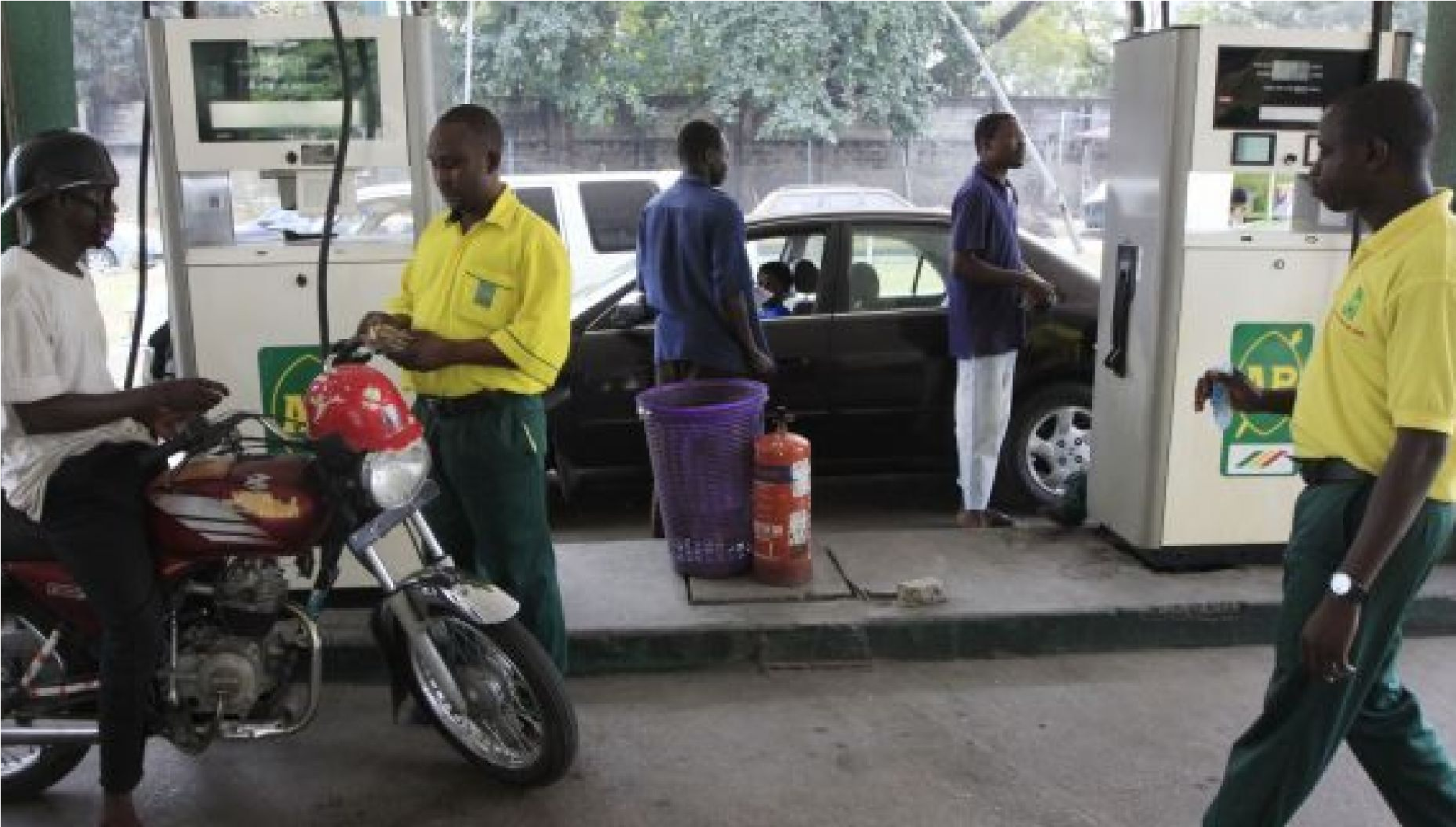
The Dangote Petroleum Refinery has cut its ex-gantry petrol price to N699 per liter, a reduction of N129 from the previous N828, and a move that is already reshaping competition in a market long dominated by import-driven pricing.

Sources inside the refinery confirmed the adjustment, and the Independent Petroleum Marketers Association of Nigeria (IPMAN) later validated it.

“The refinery reduced the price to N699 per liter and told marketers that we can start buying the product for the festive season,” IPMAN’s national president, Abubakar Garima, told TheCable.

The price cut has added to the growing shift in Nigeria’s petroleum market. For decades, petrol prices in Nigeria were heavily anchored to the cost of imported products. Dangote’s arrival has tilted that equation. By lowering its ex-depot price to N699, the refinery is setting a benchmark that importers cannot match under current global and domestic conditions.

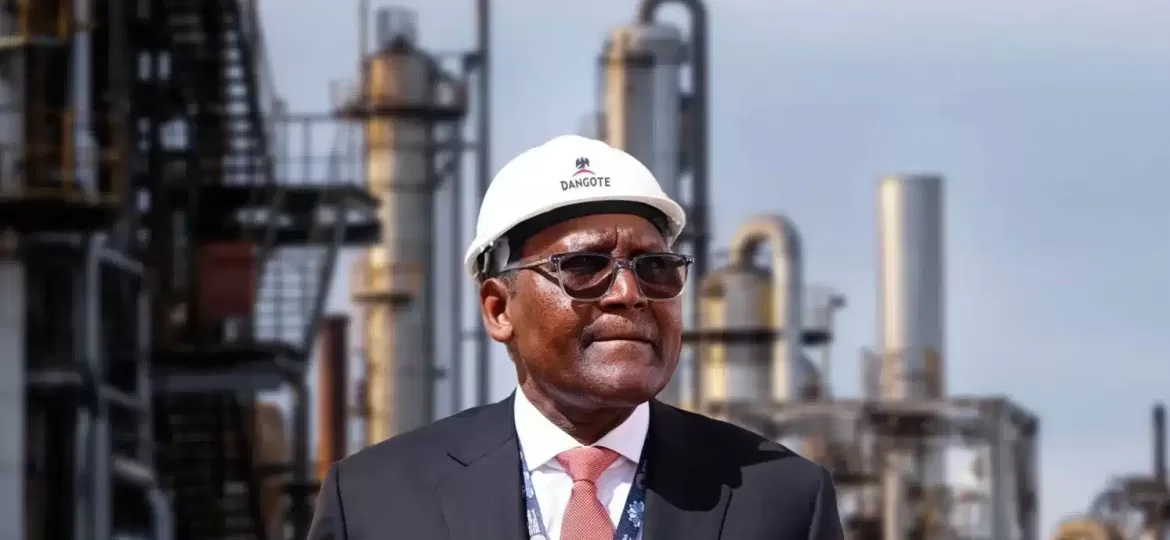
Aliko Dangote, who has repeatedly expressed the refinery’s goal to dominate the local market, is competing directly with importers.

“Prices are going down. The reason why prices have to go down is because we have to also compete with imports,” he said, adding that both diesel and petrol “will continue to be sold in the market at a very reasonable price.”

The cut is already putting pressure on the Nigerian National Petroleum Company Limited (NNPC), which reduced pump prices across its Lagos and Abuja retail stations in late November to N900 and N940 per liter. Industry sources say that although the NNPC and independent marketers will be forced to make further adjustments once Dangote’s new price filters through the market, they will not be able to compete.

Nigeria’s long-standing dependence on imported petrol is mired in exorbitant import costs. Even when global prices eased, Nigeria faced elevated landing costs because of the weaker naira, freight charges, insurance, and port fees. During late 2024, the landing cost oscillated between N829 and N976 per liter. In November 2024, figures widely circulated by market operators, including the Major Energy Marketers Association of Nigeria (MEMAN), put the landing cost in the N970s. By October 2025, updated industry data showed a drop to the low N830s as global prices cooled and shipping routes stabilized.

Those figures explain why imported fuel cannot compete with Dangote’s new pricing. At N699, the refinery is offering a product more than N130 below the best-case import landing cost and nearly N280 below the high end seen in late 2024. This leaves NNPC and independent importers in no position to bring in foreign petrol and sell at affordable rates without incurring heavy losses.

Against this backdrop, Nigeria’s petrol import is expected to drop further. Nigeria spent N1.28 trillion on petrol imports in the third quarter of 2025, down from N2.3 trillion in Q2, but it remains a major burden on foreign exchange reserves. The drop in Q3 was tied to lower global price averages and occasional improvement in refined product availability. Nigeria’s import bill remains large because domestic output has only recently begun to scale.

In 2020, petrol imports cost N2.01 trillion. By 2021, that figure rose sharply to N4.56 trillion. In 2022, it hit N7.71 trillion. In 2023, it eased slightly to N7.51 trillion. Then came the surge in 2024: N15.42 trillion, driven by a more than 40 percent slide in the naira and higher global shipping and insurance fees.

These costs created long-standing volatility in Nigeria’s retail petrol market, forcing pump prices to chase global dynamics. With Dangote offering large volumes priced locally, that structure is beginning to shift. The refinery’s latest cut puts pressure on all fuel retailers — including NNPC — to align with domestic, rather than imported, pricing.

That shift is happening as Dangote pursues an ambitious expansion plan. The refinery, currently rated at 650,000 barrels per day, is already producing diesel, aviation fuel, and petrol. Work is ongoing to raise total output to 1.4 million barrels per day within three years, a scale that would make it the world’s largest single-site refinery.

The Federal Government has welcomed this expansion, calling it a “game-changer” with the potential to lift West Africa’s entire energy landscape. Beyond stabilizing domestic supply, the government sees Nigeria becoming a regional export hub, with refined products heading to neighboring countries and beyond.

There is also reprieve for one of the refinery’s biggest challenges. OPEC’s latest data shows Nigeria pumped 1.436 million barrels per day in November 2025, up from 1.401 million barrels per day in October. That trend gives the country more room to allocate crude for domestic refining.

Meanwhile, Nigeria’s national petrol consumption has slowed. Federal data shows average daily usage fell to 52.9 million liters in November 2025. Analysts say this is linked to earlier high pump prices, changing transport habits, and the gradual entry of Dangote’s products, which are expected to stabilize supply and lower retail prices in 2026.

With the N699 price now in play, traders say the market has entered a new phase. The days when imported fuel determined domestic pricing are fading. As Dangote ramps up production in 2026, the downstream sector is shifting toward a new price anchor — one set inside Nigeria rather than offshore. However, energy analysts warn that this will be impacted by international oil prices.

Dangote’s Dollar Dividend Playbook and the Redesign of Nigeria’s Capital Market

0

Aliko Dangote has unveiled one of the boldest ideas in his business playbook career, and it has little to do with building factories. Instead, it is about re-engineering Nigeria’s capital market through a play of currency. Dangote has announced plans to list 10 percent of his $20 billion refinery on the Nigerian Exchange in 2026, a move that could fundamentally reshape the market and attract global investors seeking hard-currency returns.

He revealed this at the unveiling of the Dangote Vision 2030 roadmap in Lagos, outlining a long-term strategy centered on massive revenue growth, aggressive expansion in petrochemicals, and most notably a shift toward dollar-denominated dividends. The message was unmistakable: Dangote is positioning his companies for far greater international relevance. He confirmed that discussions are already advanced with the Nigerian Exchange and the Securities and Exchange Commission to finalize the structure of the offering, alongside engagements with the Ministry of Finance to secure approvals for the proposed dividend framework. As he put it succinctly: “You buy in naira, but you get dividends in dollars.”

If this plan succeeds, it will trigger a tectonic shift in Nigeria’s capital market. It will set a new benchmark that leading Nigerian banks, many of which already earn substantial dollar revenues through their African subsidiaries, will be forced to match or risk losing investor interest. In a market where capital seeks protection from currency risk, USD-denominated dividends will become a powerful magnet. If Dangote delivers this model, investors will naturally gravitate toward it, compelling others to follow. This is not just a listing; it is a strategic redesign of how value is captured and distributed in Nigeria’s financial markets.

It may not be bad for Naira provided the equities are paid for in Naira even as the dividends come in USD.

“You Buy In Naira, But You Get Dividends In Dollars”: Dangote Affirms Plan Of Refinery’s Historic NGX Listing In 2026