DD
MM
YYYY

PAGES

DD
MM
YYYY

spot_img

PAGES

Home Blog Page 1025

Goldman Sachs Says Trump’s Trade Policies Aren’t Hurting the Global Economy—Yet

0

President Donald Trump’s sweeping trade overhaul has shaken the global order and alarmed economists around the world, stoking widespread fears that his hardline stance on tariffs and trade renegotiations would derail economic growth.

Despite the fears which have remained unabated, analysts at Goldman Sachs say the global economy remains largely unscathed—for now.

In a note released Thursday, the investment bank said it sees “very few signs that uncertainty is taking a toll on activity,” even as Trump continues to upend decades of trade policy with aggressive protectionist moves, including steep tariffs, abrupt deal withdrawals, and nationalist rhetoric that has disrupted long-standing global supply chains.

Tariffs, Nationalism, and “Liberation Day”

Since returning to the White House for a second term, Trump has moved swiftly to escalate his “America First” economic agenda. He has introduced new rounds of tariffs on key imports from China, the European Union, and Mexico, while threatening to pull the United States out of long-standing multilateral trade frameworks like the WTO. His administration has also canceled trade benefits to countries he accuses of taking unfair advantage of the U.S. market and has demanded one-on-one trade deals on American terms.

One of the most dramatic moments came in April when Trump declared “Liberation Day,” a policy pivot he framed as a move to “reclaim America’s economic sovereignty.” The announcement rattled financial markets as it came with hints of massive new tariffs and stricter foreign investment rules. Economists warned that it would likely trigger retaliation from other countries, increase business costs, and discourage investment.

Business leaders and analysts braced for a slowdown, especially in trade-exposed sectors such as manufacturing and tech. Some companies, anticipating higher import duties, accelerated shipments to the U.S. in a rush known as “front-loading,” which briefly inflated trade volumes. There were also concerns that this artificial bump was masking an underlying decline in economic momentum.

Goldman Sachs Allays The Fears

Contrary to those fears, Goldman Sachs says the data shows no major economic hit. Since late 2024, factory hiring, private investment, consumer spending, and broader activity have all held steady or even strengthened. Forecasts for both second-quarter and full-year GDP growth have been revised upward in key markets, including the U.S., Germany, India, and Brazil.

The bank attributes this resilience partly to the fact that trade-exposed investment accounts for only a modest slice of GDP in most economies—typically between 0.2 and 0.3 percentage points. So even where factory investment has slowed, particularly in emerging markets, the macroeconomic effect has been minimal.

Moreover, global financial conditions have remained surprisingly loose. Interest rates are stable, credit is flowing, and corporate borrowing costs have dipped slightly, aided by strong liquidity. This has made it easier for businesses to secure financing and maintain capital spending plans, even in uncertain times.

“Uncertainty usually bites hardest when financial conditions tighten,” the analysts wrote. “But this year, the opposite has happened. Liquidity has improved, and that’s helped cushion the fallout.”

Trump’s trade policies have undeniably created an atmosphere of uncertainty. Goldman’s proprietary uncertainty index jumped sharply after his re-election and remained elevated through the first quarter of 2025. But the report noted that uncertainty has begun to ease in recent months, partly due to signs that Trump is willing to negotiate new trade deals with allies and rivals alike.

Some businesses have been adapting. While front-loading distorted short-term trade data, Goldman said even after adjusting for those effects, there is little evidence of a drag on investment or hiring. Analysts found no substantial differences in performance between countries that ramped up exports to the U.S. and those that didn’t, suggesting that the impact of uncertainty has been broadly muted.

“While we continue to expect that tariffs will slow activity later this year, we expect this will be mostly driven by the direct impacts of tariffs rather than uncertainty around trade policy,” the report concluded.

Job Gains and Market Highs

Adding to the picture of economic strength, the U.S. posted stronger-than-expected jobs data in June. The economy added 147,000 jobs, and the unemployment rate dipped from 4.2% to 4.1%. The labor force participation rate also edged higher, suggesting more Americans are returning to the workforce despite fears that trade disruptions would trigger layoffs.

Financial markets have responded with optimism. The S&P 500 and Nasdaq hit record highs this week, buoyed by investor belief that Trump’s protectionism may ultimately boost domestic industry—at least in the short term—and by the perception that the worst-case trade war scenarios have not yet materialized.

Still a Long Road Ahead

While the short-term outlook appears stable, Goldman warns that challenges remain. The full effects of Trump’s second-term tariffs are still unfolding, and economists caution that any prolonged escalation—especially if China or the EU retaliates—could eventually weigh down investment, trigger inflation, and erode global growth.

“The uncertainty drag, therefore, appears smaller than feared,” Goldman wrote.

For now, though, the world economy appears to be weathering the Trump trade storm better than many feared.

How Nigeria Paused A Dynamic Startup Ecosystem [Podcast]

0

The Nigerian startup ecosystem, once a beacon of entrepreneurial spirit and a magnet for foreign investment, has experienced a significant downturn since May 2023. The primary catalyst for this decline was the government’s decision to float Naira without sufficient underlying economic structures to support its value. This led to a drastic currency devaluation, which in turn eroded startup valuations, deterred foreign and local investors, and ultimately froze capital flow.

The consequences have been severe: many promising startups have become “zombie companies” or have shut down, and there has been a significant “brain drain” as talented founders and innovators seek opportunities abroad. The current landscape is dominated by external-facing businesses, particularly in remittances, with little focus on internal economic development. This shift raises critical concerns about Nigeria’s ability to build a sustainable domestic economy and provide opportunities for its growing population if the fundamental issue of currency instability is not addressed.

In this podcast, I discuss this paralysis and the way forward for the Nigerian startup ecosystem.

A summary of the podcast is available here.

From Monday, the videos will move to Blucera.com exclusively.

About Tekedia Daily

To read our short introduction of Tekedia Daily – podcasting revelations on business, click here.

How To Listen to Tekedia Daily

At Blucera, home of Blucera WinGPT (AI personal educator and coach), eVault Legal Custodial services (store vital personal, family and business documents securely), business tools to grow enterprises, and global archives of Tekedia courses and libraries, Ndubuisi Ekekwe podcasts every week day. Some Tekedia Institute programs offer bonus access to Tekedia Daily or one can register at Blucera for the podcast.

On God, The Spirit of the Market and Entrepreneurship Hell

0

One of my most redeeming attributes as a person is my ability to take feedback – this is true, regardless of how harsh it is, I prefer to be plainly told that “what you did makes absolutely no sense”, than for negative feedback to be sugarcoated (or worse still – withheld) to avoid hurting my feelings. The philosophy behind this is pretty straightforward – most decisions in life have an inelastic component to them – you keep doing stupid things and nothing happens until one day all your transgressions compound and you’re in a pit so deep you can’t dig yourself out. To avoid precarious situations of this nature, I prefer to be told the truth so I can adjust effectively, and avoid irredeemable mistakes. You are not kind to me by being nice.

My second most redeeming attribute is my ability to ignore feedback. Everyone’s opinion doesn’t matter, and all counsel (as far as I’m concerned) is context-oriented. Regardless of how smart and knowledgeable they are, swallowing everyone’s counsel hook, line, and sinker is generally a bad idea. You want to objectively listen to everyone, thank them for their counsel, filter out what is irrelevant, identify what is useful, and adjust as may be necessary. Any other approach is counter-productive and will put you in a lot of problems.

My third most redeeming attribute (not necessarily redeeming depending on who you ask) is I prefer to be judged by the market. Not by people (who are mostly subjective), but by the raw authenticity of the market.

Understanding the market

The concept of “The market” is pretty common in entrepreneurship circles – it is generally defined as the audience you’re building for or the opportunity you’re trying to capture, but what really is the market? Well, for one (and depending on the nature of the business you operate), the market is NOT your individual customer. If you’re in B2G (Business to Government) or High-value B2B (Business to Business) where a single customer’s revenue contribution to your bottom line is consequential, then the market is probably your customer. However, if you’re in B2C or small-scale B2B where a single customer cannot necessarily influence the trajectory or sustainability of your business (unless that single customer is VeryDarkMan or some other controversial fellow), then the market is not just your customer; the market is the collective proclivity of the users you’re targeting.

It’s easy to assume they’re one and the same, but they aren’t; if your customer is a large government agency that makes up 40% of your revenues and they want a certain feature, you are obligated to give that to them (regardless of what your personal reservations concerning that feature are) to avoid losing that account. This is common in large-ticket B2B models, where your client is the Alpha and Omega, the beginning and the end, they ask you to jump, and you ask how high.

In more distributed models, the Market is more often than not the collective whims of your users; If a customer wants a certain feature, the real question is how many other users are clamoring for this feature, and how aligned is this feature to the overall direction the spirit of the market (more on this later) is been pulling you in? In other words, you don’t move at a single customer’s insistence, you need a stronger, more compelling and collective signal to move. A relatable example; assuming you run a mobile payments business with one million active users, and you decide to push pop-up ads to your customers every now and then to maximize engagement or draw user attention to certain features within your application, some users may find those pop-ups repulsive and go as far as deleting your application because of them. Now, if 20,000 users (a large number to be clear) delete your application because of that pop-up, 200,000 users engage with those pop-ups actively and contribute to new revenue (that probably covers up for the 20k users you lost), and the other 780k users couldn’t be bothered, you may have lost customers, but the spirit of the market is clearly in support of the direction you have treaded on and is probably imploring you to move on.

There are multiple examples of pockets of users despising a certain feature and being entirely wrong about it in the long run. Designers initially berated Figma (specifically the browser-based collaborative functions), today Figma is the gold standard for creating delightful digital experiences. There was a mini-revolt when Facebook introduced the NewsFeed in 2006, today that is a standard feature on every social media platform and people weren’t too happy when Google decided to display ads in search results, that decision (along with a plethora of other great choices) led to a US$200 billion a year ad business.

Understanding what the market really is, and how to separate signal from noise when trying to identify its pull, is a key requirement for people planning to build products that serve it.

On God

The most important attribute of the Christian faith is the existence of God – the Almighty Being who sits in the Heavens and exhibits Omnipresence, Omniscient, and Omnipotency. The Christian faith also provides additional context about God – he is the creator of the heavens and the earth, he loves his children (those who are “Born Again”) and he provides instructions to his children on the path they should tread on, disobeying those instructions is termed Sin, and disobedience to those instructions is usually linked to hurting other humans; lying, stealing, murder, etc are all neurotic behaviors he strictly advises his children against adopting. Similarly, he also tells his children to give to the needy, forgive offenders, treat everyone they meet with love, and even advises them to pray for their enemies – counsel that creates good outcomes in the world and is generally good for humanity.

If his children obey his instructions, they are promised heaven (streets of gold, mansions, pearly gates etc.), if they don’t, they may end up in hell (fire, brimstones, torment and things of that nature). Because they don’t want hell, they do the right thing (or at least try to), and the world is generally a better place because of that. There is a market version of this.

The Market

For one, who is God in this context? God is the market. Similar to how God is described as an omnipresent, omniscient, and omnipotent being that sits on a throne in the heavens, the market also has certain characteristics:

  1. The Market is a beast: the market is entirely illogical and can act in seemingly unpredictable ways in the short run. This is why certain counter-intuitive ideas and initiatives can enjoy broad-based market adoption, while other seemingly sensible ones flounder.
  2. The Market is unemotional: unfortunately, the market doesn’t care whether the money you invested in it was your house rent, kids’ school fees or your mother’s medical bill; it will always act in whichever way it deems to be right.
  3. The Market only responds to value: The market doesn’t care about how articulate you are, the market doesn’t care about how hard working or consistent you are, the only thing the market cares about is whether you are bringing value to the table or not. You can artificially insulate yourself from the market (by raising venture capital at a lopsided valuation), but the market will always catch up to you, regardless of how long it takes.
  4. The Market provides feedback: The market tells you when you’re going wrong (although it has to work on its communication skills) and when you’re doing the right thing. The sign you’re wrong is usually (but not always) silence, no revenue, and customer churn; the sign you’re doing the right thing is customer pull and revenue.

It is important to note that the market is not your enemy, neither is the market your friend, The market is just what it is – the market. It’s similar to water and fire – water can quench your thirst and also quench your life (by drowning you). The same fire that cooks your food can also burn your house. This is also how the market behaves – helping you or destroying you is not necessarily its objective, your alignment with it, however, is what guarantees which of the two outcomes becomes your fate.

The Spirit of the Market

So, what is the spirit of the market? Similar to how God gives his children instructions, the spirit of the market is the market’s method of transmitting information to builders (its children). The best way to think of the market is as an artist. The market has a clear picture of what it wants a certain industry to look like, and it gives instructions to builders via its spirit to enable them paint that picture. The builder (entrepreneur, intrapreneur, etc.) holds the paint brush, while the spirit of the market guides them on what strokes to make to stay aligned with the market’s picture (this is what we call market feedback).

It is very important that we do not “Fear” the market, we are to embrace the market. Fearing the market and avoiding its feedback doesn’t make you noble; it’s just a subtle way to send yourself to entrepreneurship hell (more on that later).

Similar to how God anoints people and calls them “Chosen”, the spirit of the market also anoints people and calls them chosen. These anointed ones are the entrepreneurs who have a clear vision for an industry and push the world to align with that vision. Unlike others who have to iteratively figure out what picture the market is trying to paint, these ones seem to have that image naturally embedded within them and have an innate ability to push the world to accept that picture. These are the Steve Jobs of this world that ignore all conventional advice and build a closed operating system (iOS) when it made no sense at the time to do so, these are the Elon Musk’s of this world that against all odds (and Harvard professor perspectives) build a successful Electric Vehicle company, the Brian Chesky’s of this world who against rational thinking build a business that allows total strangers stay in the homes of other total strangers.

This is where the concept of founder-market fit comes in, a person the market has anointed and given a vision to build within a certain vertical. Similar to how God anoints Moses, David, and Jesus in the Bible, these men/women are anointed and given a special “grace” that empowers them to build and prosper within certain markets against all odds.

While Christians serve God, Entrepreneurs serve the spirit of the market.

Entrepreneurship Hell

The main difference between the biblical hell and entrepreneurship hell (excluding the fire and all) is that biblical hell is for eternity, entrepreneurship hell is not. Entrepreneurship hell is similar to the “Go to Jail” space in the monopoly board game – you may become docile for a while, but you don’t have to remain there forever.

Similar to how biblical Hell is reserved for those who disobey God’s instructions, entrepreneurship hell is reserved for those who disobey the market. Those who the market via feedback were told to get left, but either due to stubbornness, or an inability to decipher what the market was saying, went right, and kept moving in that direction until they fell into a pit they couldn’t dig themselves out of. Almost all entrepreneurs have spent some time in entrepreneurship hell – Reid Hoffman (SocialNet), Travis Kalanick (Scour Inc), and Stewart Butterfield (Ludicorp), to name a few, spent some time in entrepreneurship hell before bouncing back and starting the ventures (Linkedin, Uber and Slack respectively) that made them household names.

While avoiding entrepreneurship hell is a noble cause, you want to make sure you only end up there once, learn the required lessons and come out on the other side stronger, smarter and a much more pious disciple of the market ready to take another stab at value creation, and more than willing to pay attention to the cues of the market and act accordingly.

The self-regulating nature of the spirit of the market is a good thing; when we obey it, we create value for consumers, the broader industry, and our shareholders. When we disobey it, we eviscerate shareholder value and punish customers with substandard products and experiences. This is why the market punishes dissidents after a while for disobedience by destroying their companies and sending them to entrepreneurship hell, where they get to learn how to be better and come back stronger.

Conclusion

Entrepreneurship and building are, in my honest opinion, the highest calling of mankind. Understanding the nature of the market and orienting yourself to build in line with the spirit of the market plays a key role in birthing successful and consequential businesses that have an indelible impact on the trajectory of humanity.


Inspired By The Holy Spirit

Flutterwave Launches Send App in 34 U.S. States, Enabling Seamless Money Transfers to Africa

0
Flutterwave team

Flutterwave has officially announced the launch of its Send App in the United States, unlocking faster, more secure, and user-friendly money transfers for individuals across 34 U.S. states.

This expansion marks a major step in the company’s mission to simplify cross-border payments for the African diaspora. The app simplifies the process of sending funds to support family, pay school fees, or assist friends in Africa, requiring only a few taps on a mobile device.

Speaking on this, CEO Olugbenga Agboola emphasized the significance of the launch via a post on LinkedIn stating,

“I am proud to share that Flutterwave has received 20 additional Money Transmitter Licenses (MTLs) in the United States of America, which means Send App, is officially back and better in the US. We are just as committed to our goal of simplifying cross-border payments for the vibrant African diaspora, making it easier for people abroad to send money back home to Nigeria, Ghana, Egypt & Cameroon.

“These licenses are a testament to our mission of connecting Africa to the world. Whether by helping global businesses collect or make payments across Africa, empowering African enterprises to expand globally, and making it easier for people to send money back home, the goal remains unchanged.”

With this launch, users in eligible U.S. states can now send money to friends and family in several African countries, including Nigeria, Ghana, Egypt, Cameroon, and more. The Send App is designed to support a variety of financial needs, from school fees and family support to emergency funds or gifts of love. Transfers can be completed in just a few taps directly from a smartphone, offering both speed and convenience.

Flutterwave’s expansion into the U.S. makes it possible to send money from key states such as Georgia, Illinois, Michigan, Maryland, North Carolina, Arizona, Washington, Minnesota, Mississippi, Missouri, Nebraska, New Hampshire, New Mexico, and many others. The service also extends to the District of Columbia and Puerto Rico. The company has assured users that more states will be added soon as regulatory approvals are finalized.

Recognizing the diverse financial habits across the African continent, the Send App accommodates both mobile money wallets and traditional bank accounts, ensuring that recipients can receive funds in the way that works best for them.

To ensure the safety and compliance of transactions, users are required to verify their identity with a government-issued ID during the sign-up process. This one-time verification step aligns with U.S. regulations and enhances the overall security of the service. For returning users who have already verified their accounts, no additional steps are needed.

Flutterwave has also clarified that only U.S.-issued Visa and Discover cards are currently supported. Cards issued outside the United States are not eligible for use at this time.

The reactivation of Send App in the U.S. signals Flutterwave’s continued commitment to providing accessible, reliable financial services to the African diaspora empowering them to stay connected and support loved ones across borders.

With this launch, Flutterwave continues to simplify and secure cross-border money transfers, making it easier for users to stay connected with their loved ones in Africa.

J.P. Morgan Cuts 2028 Stablecoin Market Forecast to $500bn, Says Trillion-Dollar Bets Are Overblown

0

J.P. Morgan has sharply lowered its projections for the global stablecoin market, forecasting that the total value of stablecoins in circulation will only reach $500 billion by 2028.

The estimate, released Thursday, counters far more bullish forecasts by other market watchers, including Standard Chartered and Bernstein, who see the stablecoin market growing as high as $2 trillion and even $4 trillion over the next decade.

In a note to investors, J.P. Morgan analysts said expectations that stablecoins would revolutionize mainstream payments are “far too optimistic,” pointing to persistent structural challenges, limited real-world use cases, and a lack of regulatory clarity as key obstacles.

“The idea that stablecoins will replace traditional money for everyday use is still far from reality,” the brokerage firm stated.

Limited Real-World Use

According to J.P. Morgan, stablecoin usage remains heavily concentrated within the crypto ecosystem. The bank estimates that only 6% of current demand—about $15 billion—is related to payments, while the overwhelming majority of stablecoins are still being used in crypto trading, decentralized finance (DeFi), and as collateral on exchanges.

That puts a ceiling on their current utility in broader financial markets. “Payments adoption is minimal,” the analysts noted, adding that the notion of stablecoins overtaking traditional money remains “speculative at best.”

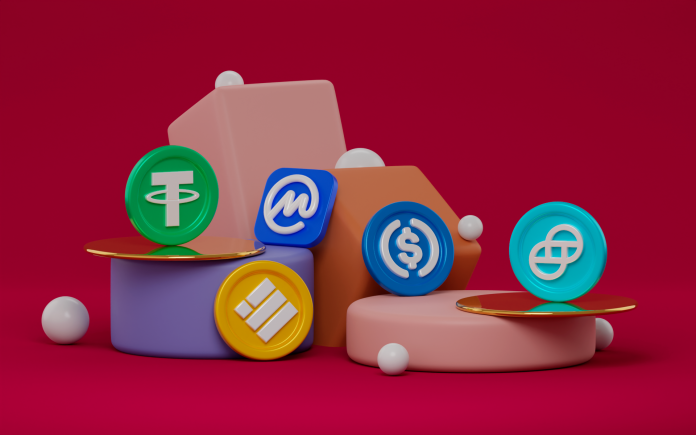
The report pegs the current stablecoin market size at around $250 billion—halfway to its 2028 projection. That figure aligns with data from blockchain analytics platforms, which track the combined market capitalization of top stablecoins such as Tether (USDT), USD Coin (USDC), and DAI.

A Stark Contrast with Bullish Forecasts

J.P. Morgan’s conservative view contrasts sharply with earlier predictions. Standard Chartered in May said the market could grow to $2 trillion by 2028 if stablecoins are increasingly used for remittances, digital payments, and smart contracts. Bernstein, in a note dated June 30, projected the market could hit $4 trillion within the next 10 years—assuming regulatory clarity and adoption by banks and fintechs accelerate.

Those optimistic forecasts have been fueled by developments such as the U.S. Senate’s passage of the GENIUS Act, a bipartisan bill designed to provide a regulatory framework for stablecoins. Analysts have touted the bill as a potential catalyst for greater investment and adoption of stablecoins in payment systems, settlement rails, and cross-border transfers.

But J.P. Morgan is urging caution. It says the GENIUS Act, while a step forward, has yet to translate into real-world use or regulatory alignment across key jurisdictions.

Regulatory Uncertainty, Global Competition

Beyond the U.S., global competition and regulatory fragmentation continue to slow adoption. In June, China’s central bank reaffirmed its commitment to expanding the international use of the digital yuan (e-CNY), the country’s central bank digital currency (CBDC). Beijing sees e-CNY as a strategic alternative to dollar-based stablecoins, especially for cross-border trade and Belt and Road economies.

Meanwhile, Chinese fintech giant Ant Group—an affiliate of Alibaba—said last month it would seek a license to issue stablecoins through its Hong Kong-based arm, Ant International. The move underscores growing interest in stablecoin issuance from established players in the digital payments space.

Still, J.P. Morgan downplayed the potential impact of both e-CNY and platforms like Alipay and WeChat Pay as models for global stablecoin growth.

“Neither the rapid expansion of e-CNY nor the success of Alipay and WeChat Pay represent templates for stablecoin expansion in the future,” the firm said.

Market Focus Remains Crypto-Native

For now, the stablecoin market remains mostly crypto-native. Tether (USDT), the largest stablecoin, dominates trading volumes and reserves, despite persistent concerns over transparency and reserve audits. USD Coin (USDC), backed by U.S.-based Circle, has tried to position itself as the more regulated and transparent option, but even it has seen usage fluctuate amid market volatility and U.S. banking sector risks.

J.P. Morgan noted that while stablecoins have appeal as digital cash equivalents, their ability to displace traditional payments is constrained by:

  • Low or no yield for holders,
  • Regulatory risk,
  • Limited merchant acceptance,
  • Poor on/off ramp infrastructure for converting to and from Fiat,
  • And the dominance of well-established real-time payment systems in countries like India, Brazil, and China.

The firm’s $500 billion estimate reflects a more cautious but realistic trajectory for stablecoins. Growth will likely continue but at a moderate pace, concentrated in crypto-native applications and niche financial services. Broader adoption as a payments tool will require both technological improvements and a more uniform global regulatory environment—both of which are still developing.