DD
MM
YYYY

PAGES

DD
MM
YYYY

spot_img

PAGES

Home Blog Page 105

Crypto Prediction Markets Aren’t Just Fancy Gambling; They’re a Revival of an Ancient Human Superpower

0

Prediction markets tap into the oldest human edge: the ability to read patterns, weigh risks, and bet your own skin on what comes next.

Hunters who could forecast animal migrations ate. Traders who smelled a drought coming got rich. Generals who guessed the enemy’s next move won wars. Being right about the future used to be the ultimate status signal, because it was directly tied to power, resources, and survival.

Modern life mostly killed that feedback loop. You can be the smartest macro guy in your hedge-fund pod, nail the Fed’s next move six months early, and your reward is… a slightly fatter bonus that lands a year later while your managing director takes credit on CNBC.

The signal gets smothered in bureaucracy, politics, and slow payout schedules. Most people never even find out you were right.

Crypto prediction markets like Polymarket, Kalshi, Manifold, etc. rip all that insulation away. You put money down, publicly, in real time. If you’re right, the payoff is immediate and undeniable.

If you’re wrong, everyone sees it instantly. Reputation travels at the speed of a screenshot. It’s brutal, but it’s honest. For the first time since maybe the medieval wheat-futures pits in Venice, being good at seeing the future again feels primal and high-status.

That’s why you see these platforms absolutely explode during chaotic events elections, wars, rate decisions. It’s not just gambling fever; it’s millions of people suddenly remembering they have an ancient muscle that’s been atrophying for decades and finally getting to flex it in public.

We’re watching the return of the oracle class: anonymous degens whose entire social capital is “this guy has been directionally right about everything for 18 months straight.” In a world drowning in narrative noise, that’s starting to feel like a superpower again.

So yeah, calling it “fancy gambling” is like calling a spear “a pointy stick.” Technically correct, but misses the deeper thing it’s re-awakening.

~6000 years ago —Mesopotamia: Clay tablets record forward contracts for grain delivery at future dates. 12th–13th century Japan D?jima Rice Exchange, Osaka. The world’s first true organized futures market. Samurai received stipends in rice and wanted price certainty.

Merchants created “rice tickets” standardized contracts traded in a central warehouse. Clearing, margins, and daily mark-to-market settlement were all invented here by the 1730s—centuries before Chicago.

Europe1500s–1600s Tulip mania is often mislabeled as a futures market. It was mostly forward contracts, not standardized futures. 1688 Antwerp’s “windhandel” trading in the wind. peculative forward contracts on East India Company shares.

1730s London’s Royal Exchange starts trading “time bargains” essentially forwards on commodities and stocks. Chicago was exploding as a grain hub because of canals and railroads, but prices swung wildly with harvests and lake shipping seasons.

1865 CBOT creates the first standardized futures contracts: fully interchangeable, graded grain, fixed sizes, delivery months. This is the key innovation that turns forwards into futures. 1870s–1880s Margins, clearinghouses, and daily settlement become standard.

The clearinghouse acts as counterparty to every trade—eliminating default risk and making contracts truly fungible. 1898 Butter-and-egg merchants in Chicago form what eventually becomes the Chicago Mercantile Exchange (CME). Starts adding pork bellies, onions banned in 1958 after cornering scandals, live cattle, etc.

20th Century Expansion 1936 U.S. Commodity Exchange Act brings federal regulation after decades of bucket-shop frauds and cornering attempts. 1970s Financial futures revolution. 1972 CME launches first financial futures.

Prediction-Style Markets in History1884 Wall Street betting pools on U.S. presidential elections essentially pari-mutuel markets run by bookies. 1940s–1980s Iowa Electronic Markets academic “play money” prediction markets on elections—still running.

Polymarket explodes especially 2024 U.S. election—$3.3B+ wagered, Kalshi gets CFTC approval for event contracts in the U.S., Manifold/Predict; It-style play-money platforms thrive. Every major leap in futures/prediction markets happened when three things aligned.

Volatile prices or uncertain outcomes people desperately wanted to hedge or speculate on. A critical mass of people with skin in the game (money, rice, tulips, crypto). A technological or legal breakthrough that reduced counterparty risk and standardized contracts.

Crypto prediction markets are just the latest iteration: global, 24/7, permissionless, with built-in clearing via blockchains. Same ancient impulse be right about the future, get rewarded instantly, now running on code instead of rice tickets or trading pits.
Eight Months Early, Elon Musk’s DOGE Vanishes: Inside the Quiet Collapse of Trump’s Federal Cost-Cutting Experiment

0

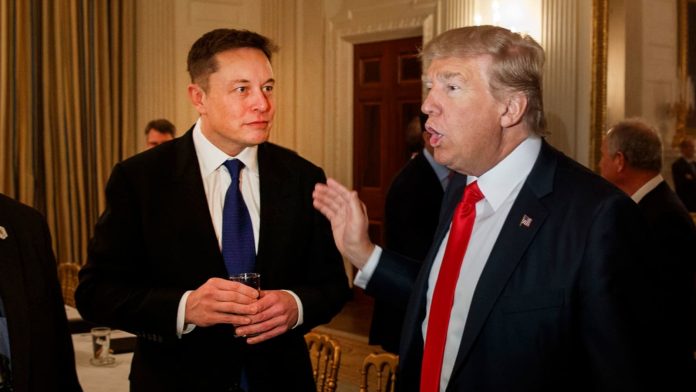
When Donald Trump returned to the White House vowing to gut federal bureaucracy, the Department of Government Efficiency — DOGE — was supposed to be the spear tip.

For months, it dominated political conversation, powered by Elon Musk’s celebrity and the administration’s promise to rip out “waste” at historic speed. But behind the spectacle and the chainsaw theatrics that Musk exhibited to mark the beginning of what would be the biggest cut-cutting measure in U.S. history, something else was brewing: disorder, stalled projects, and a mounting bill. Now, less than a year after it launched, DOGE has quietly vanished.

Reuters reported that the agency has been disbanded eight months ahead of schedule. The announcement arrived not through a formal White House declaration but through an unexpectedly candid remark from Office of Personnel Management Director Scott Kupor. When asked about DOGE’s current status, he replied, “That doesn’t exist,” adding, “There is no target around reductions.”

Trump’s second-term opening act was defined by DOGE’s aggressive drive to cut the federal workforce and halt spending. Musk, appointed as a special government employee, was placed at the helm with sweeping authority over staffing and budget reviews. The rollout was loud — from his chainsaw appearance at CPAC to fiery rhetoric about overhauling Washington — but the results were messy.

One of the most striking reversals came in September, when tens of thousands of federal workers fired under DOGE were asked to return. For many, the mass dismissal had effectively functioned as a months-long paid vacation, given the complexities of federal severance rules and unresolved disputes over the legality of the firings. Meanwhile, federal agencies scrambling to restart frozen contracts reported that the government had incurred millions of dollars in interest and penalty fees from stalled projects.

Inside DOGE itself, eyebrow-raising staffing decisions triggered questions about competence and oversight. Some employees with minimal experience — including the widely publicized 19-year-old staffer Edward “Big Balls” Coristine — were earning six-figure salaries to perform functions that seasoned civil servants typically handle.

The financial ledger contradicted the agency’s mission. According to The Wall Street Journal, federal spending rose by about $220 billion this fiscal year — excluding interest — during Musk’s stewardship. A July report from minority staff on the Senate Permanent Subcommittee on Investigations estimated that DOGE had generated roughly $21.7 billion in waste in just six months.

Musk exited the agency early. His status as a special government employee expired in late May, four months after DOGE’s creation. Not long after, tensions with Trump broke into public view. The administration’s Big Beautiful Bill exposed deeper policy disagreements, which escalated into personal clashes. Musk had publicly denounced the bill, warning that it would significantly increase U.S. debt – undermining the very essence of DOGE.

That didn’t go down well with Trump.

The president threatened Musk’s government contracts; Musk responded by claiming Trump’s name appeared in the so-called “Epstein files.” What had begun as a strategic partnership dissolved into a feud.

Vice President JD Vance and Chief of Staff Susie Wiles are now reportedly working to repair the damaged relationship between Trump and the billionaire — a notable priority given Musk’s influence and his companies’ federal footprints.

Even as the agency dissolves, many of its prominent staffers are being shuffled into other parts of the government. DOGE Administrator Amy Gleason has become an adviser to Health and Human Services Secretary Robert Kennedy. Airbnb co-founder Joe Gebbia now leads Trump’s newly created National Design Studio, tasked with “beautifying” government websites. Coristine, the teen DOGE staffer who became a symbol of the agency’s chaotic hiring, has taken a job at the Social Security Administration after resigning in the summer.

The White House insists the overall effort continues. In a statement to Reuters, spokeswoman Liz Huston said: “President Trump was given a clear mandate to reduce waste, fraud and abuse across the federal government, and he continues to actively deliver on that commitment.”

DOGE may have disappeared from the federal landscape — replaced quietly, without ceremony — but the fallout remains. What began as a bold government-shrinking experiment ended as a lesson in how quickly disruption can turn into disorder, leaving agencies scrambling, workers confused, and taxpayers holding a larger bill than before.

The Smart Home Frontier: Why Automated Access Control is the Next Big Tech Upgrade

0

The concept of the smart home has evolved rapidly over the last decade. We have moved from simple programmable thermostats to fully integrated ecosystems where lighting, security, and climate control talk to one another. Yet, in many high tech households, one massive component remains stuck in the analog era. The garage door often relies on technology that has not changed significantly since the 1990s. As the primary entry point for a majority of modern families, bridging the gap between mechanical function and digital automation is the next logical step in home evolution.

For tech enthusiasts and homeowners alike, the garage door represents a unique convergence of heavy industrial hardware and sophisticated software. It is the largest moving object in the home, weighing hundreds of pounds, yet it must operate with the precision of a Swiss watch. Upgrading this system is not merely about convenience. It is a strategic move to enhance physical security, improve energy efficiency, and integrate the home into the broader Internet of Things ecosystem.

The Shift from RF to IP Based Control

Historically, garage door openers operated on simple radio frequencies. A handheld remote sent a signal, and the motor engaged. While effective, this system had security flaws and offered zero feedback to the user. If you drove away and forgot to close the door, you had no way of knowing until you returned.

Modern access control systems have migrated to IP based connectivity. Wi Fi enabled openers connect directly to the home network, transforming the motor into a smart device. This shift allows for two way communication. The door does not just receive commands; it sends status updates. Users can verify the position of the door in real time via smartphone apps. This eliminates the anxiety of the “did I close it?” moment and provides a digital log of every entry and exit, which is invaluable for security audits.

Integration with the IoT Ecosystem

A standalone smart device is useful, but a connected ecosystem is powerful. The true value of updating garage access lies in its ability to play nice with other platforms. Modern openers can integrate with voice assistants like Amazon Alexa and Google Home, allowing for hands free operation.

Furthermore, geofencing technology uses the GPS location of a user’s smartphone to automate the process. As a vehicle approaches the driveway, the system can trigger the door to open, turn on the garage lights, and even adjust the home thermostat to a comfortable temperature. Conversely, as the user leaves the geofence perimeter, the system can ensure the door is secured and arm the home security system. This level of automation removes friction from daily routines and ensures that security protocols are followed without human intervention.

The Hardware Reality Behind the Software

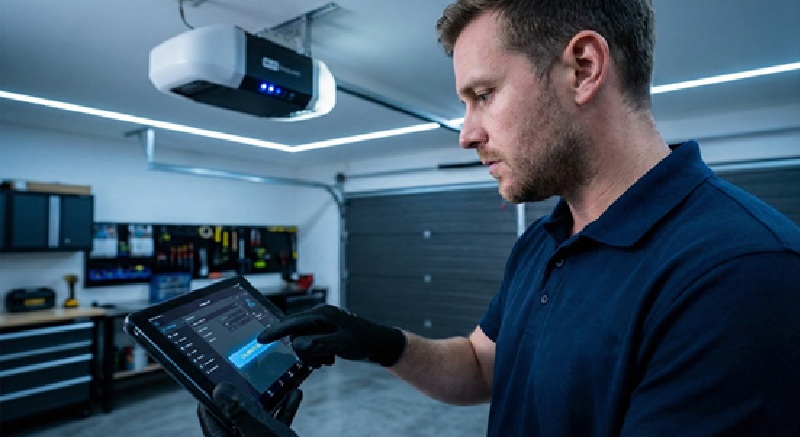
While the software capabilities are impressive, they rely entirely on the mechanical integrity of the system. A smart opener cannot lift a door with a broken spring, nor can a safety sensor detect an obstruction if the tracks are misaligned. The physical infrastructure must be as robust as the digital layer.

In tech forward cities, residents are increasingly recognizing that smart homes require smart maintenance. The most advanced algorithm cannot compensate for physical wear and tear. When mechanical friction increases or components fatigue, the smart motor works harder, leading to burnout. This is why proactive residents frequently seek out garage door repair dallas to ensure that the hardware is balanced and capable of responding to digital commands instantly. The synergy between well tuned springs and a high tech opener is what delivers a seamless user experience.

Energy Efficiency as a metric of Home Performance

In the tech and business world, efficiency is a key performance indicator. The same logic applies to the home envelope. The garage door is often the largest opening in the house, acting as a massive thermal bridge. In climates with extreme temperature variances, a standard uninsulated metal door allows heat transfer that can destabilize the temperature of the entire home, especially if there are living spaces above the garage.

Upgrading to a high performance insulated door is an investment in energy efficiency. These doors utilize polyurethane foam injected between steel layers to create a thermal break. This construction significantly raises the R value of the door, minimizing heat transfer. For homeowners using the garage as a workspace or gym, this thermal regulation is essential. Even for those using it strictly for parking, maintaining a stable temperature protects vehicle batteries and tire pressure, extending the life of automotive assets.

Advanced Security Protocols

The digital age has brought new security challenges. Early garage door openers used fixed codes that could be intercepted and replayed by tech savvy thieves using code grabbers. The industry responded with rolling code technology.

Every time the remote is pressed, the transmitter and receiver generate a new, non repeating code from billions of possible combinations. This encryption makes replay attacks virtually impossible. Additionally, many smart openers now feature a “lock mode” that can be activated via app, which physically disables the remote receiver when the homeowner is on vacation. This ensures that even if a physical remote is stolen, it cannot be used to gain entry.

The Adoption of Smart Access Trends

The transition to smart garage access is accelerating. Market data suggests that homeowners are prioritizing retrofits that offer connectivity and enhanced safety features. This is not limited to early adopters; it is becoming a standard expectation in the real estate market.

This trend isn’t just theoretical; it is happening on the ground. Recent reports indicate that Dallas Homeowners Are Investing in Smarter, Safer Garage Doors to protect their assets and integrate their homes into the modern IoT ecosystem. This shift underscores a broader consumer desire for homes that are not just shelters, but responsive environments that actively contribute to the safety and efficiency of the household.

Safety Mechanisms in an Automated World

Automation requires redundancy to ensure safety. Since the garage door is a heavy, moving object, automated closure systems must have fail safes. The primary defense remains the photo eye sensor system, which projects an invisible beam across the opening.

In a smart garage setup, these sensors do more than just reverse the door. If an obstruction is detected, the smart system sends an immediate alert to the user’s phone, notifying them that the closure failed. This prevents the user from assuming the door is closed just because they tapped a button. Regular testing and alignment of these sensors are critical. A smart system is only intelligent if its inputs are accurate. Ensuring the lenses are clean and the alignment is precise guarantees that the automation logic functions correctly.

The Future of Home Access

As we look toward the future, the garage door will continue to integrate more deeply with logistics and lifestyle services. In garage delivery services are already allowing couriers to place packages securely inside the garage, mitigating package theft. Future iterations may include biometric authentication or license plate recognition for frictionless entry.

However, the foundation of this high tech future remains the reliability of the mechanical system. For the technology to deliver on its promise of convenience and security, the underlying hardware must be maintained with professional rigor. By combining robust physical maintenance with cutting edge digital tools, homeowners can transform their garage from a simple storage space into a secure, intelligent entry point that adds tangible value to their digital life.

Musk Moves to Turn Tesla Into a Chip Factory – Ramps Up Hiring, Pushes for Annual AI Chip Releases

0

Elon Musk is making his boldest move yet to make Tesla a chipmaking powerhouse. He has placed himself at the center of the company’s next technological leap, turning Tesla into something that looks as much like a semiconductor powerhouse as an automaker.

In a late-night post on X on Saturday, Musk threw the doors open to engineers who want to join the company’s AI chip team, and he made the invitation unusually personal: applicants should email Tesla directly with three short lines demonstrating their “exceptional ability.”

The tone of the message wasn’t corporate. It sounded more like a founder rallying a handpicked group of specialists for a mission running on limited time and endless ambition.

“We are particularly interested in applying cutting-edge AI to chip design,” Musk said, laying out a goal that puts Tesla in contention with the biggest names in the semiconductor world.

He didn’t leave the timeline vague. Tesla, he said, aims to bring “a new AI chip design to volume production every 12 months,” a cadence that would outpace the entire industry.

“We expect to build chips at higher volumes ultimately than all other AI chips combined,” he added — a declaration that underscores how Tesla’s hardware push has swollen far beyond the confines of electric vehicles.

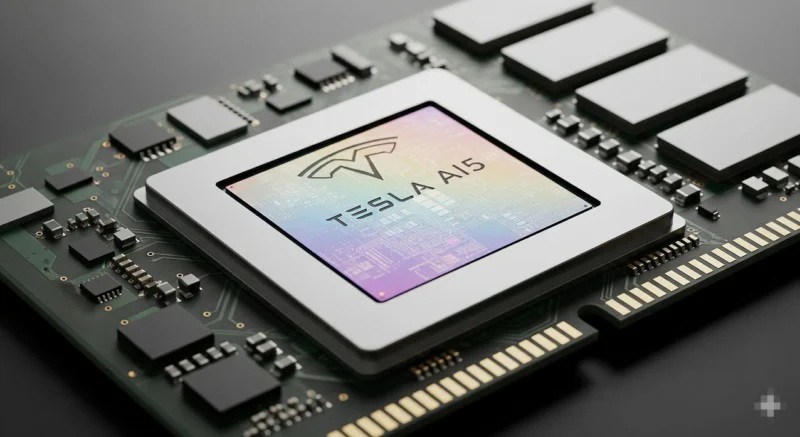
Inside Tesla’s cars today is the AI4 chip. Musk says the company is “close to taping out AI5,” the final stage before manufacturing begins. Work on AI6 has already started. Each generation is designed to push Tesla’s ambitions further into two domains Musk considers central to the company’s future: safer autonomous driving and advanced robotics.

“These chips will profoundly change the world in positive ways, saving millions of lives due to safer driving and providing advanced medical care to all people via Optimus,” Musk said.

Optimus is Tesla’s humanoid robot initiative, a long-running project that Musk believes could eventually become as important to Tesla’s operations as cars.

Over the past year, Tesla has rapidly elevated its hardware strategy. In July, the company signed a $16.5 billion deal with Samsung to manufacture the A16 chip at the tech giant’s new plant in Texas. It’s a partnership big enough to reorder chipmaking capacity in the United States, and, in July, Musk said he would personally oversee work at the plant. The Texas facility, located in the town of Taylor, is scheduled to open in 2026.

“This is a critical point, as I will walk the line personally to accelerate the pace of progress,” he wrote then, noting that the site is “conveniently located not far from my house.”

Tesla’s hiring push reflects the intensity of the project. The company has posted openings for engineering roles in its Palo Alto, California base, including positions for physical design engineers and signal and power integrity engineers who will help design, validate, and refine Tesla’s next-generation AI chips.

The physical design role carries high expectations: candidates need at least a decade of experience in integrated circuit design, the foundational work of chipmaking. The job involves crafting and integrating the building blocks that form Tesla’s AI hardware. It pays about $152,000 to $264,000 a year, plus cash, stock, and benefits.

The signal and power integrity engineer role covers chip testing and validation, and serves both Tesla vehicles and the Optimus robot program. That job pays between $120,000 and $318,000 a year, again including cash and stock options.

One thing Musk made clear is that he isn’t hovering above the engineering teams — he is sitting in the room with them.

“Deeply involved in the chip design,” he said, before noting that he holds design meetings “every Tuesday and Saturday.”

According to him, the Saturday meetings are focused on the intense short-term cycle needed to finish AI5, and they will taper off once that chip is taped out.

The habit is in line with the hands-on approach that has defined Musk’s management style for more than a decade. During Tesla’s Model 3 production crunch in 2018, he slept on the factory floor. When he took over Twitter (now X) in 2023, he ran the company’s reorganization by personally rewriting systems and restructuring internal teams.

What is different now is scale. Tesla is no longer only trying to build cars; it is trying to assemble a semiconductor ecosystem capable of producing proprietary AI chips at industrial volumes. If Musk delivers on the timeline he laid out, the company will be releasing new chips every year — a pace more commonly seen in consumer electronics, not autonomous vehicles or robotics.

His call for applicants hinted at the urgency. Tesla needs more engineers, more chip designers, more specialists capable of matching the world’s top semiconductor talent. And Musk is treating the recruiting drive as a personal project, the same way he is treating the architecture of Tesla’s AI hardware.

A few years ago, Tesla’s foray into chips looked like a supporting act for its self-driving goals. Now it resembles an entirely separate force inside the company — a fast-moving, CEO-led operation that Musk believes will shape Tesla’s future even more than new car models.

Upbit Exchange Pursues Nasdaq Listing After Naver Acquisition

0
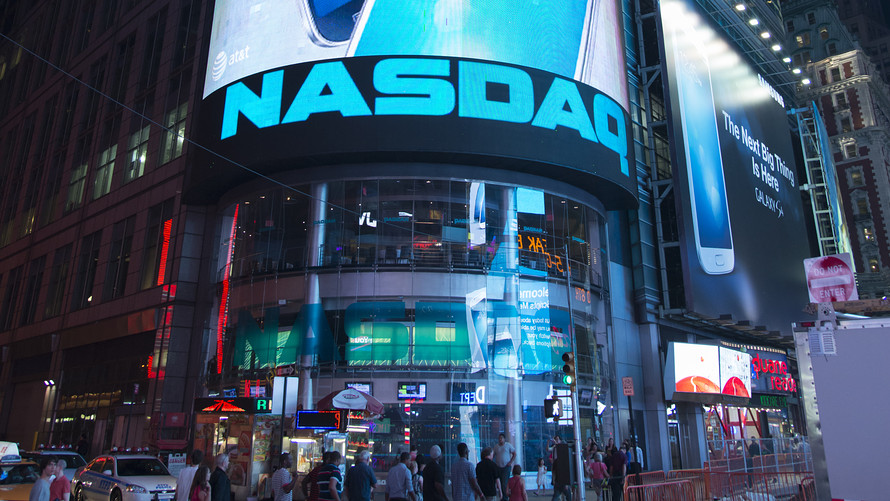
NASDAQ

South Korea’s leading cryptocurrency exchange, Upbit operated by Dunamu, is advancing plans for a Nasdaq initial public offering (IPO) following a major acquisition by tech conglomerate Naver.

This positions the merged entity as a potential fintech powerhouse bridging traditional finance and crypto, with a targeted U.S. listing as early as 2026—contingent on market conditions and regulatory approvals.

Naver, South Korea’s dominant internet and tech firm valued at over $30 billion, is acquiring Dunamu through its financial arm, Naver Financial. The deal is structured as a stock-swap merger, where Dunamu shareholders exchange shares for Naver Financial stock at a ratio of approximately 1:3.3–3.4, making Dunamu a wholly owned subsidiary.

The combined entity is initially valued at around $13.8 billion (20 trillion KRW). Post-merger and upon a successful Nasdaq IPO, analysts project a valuation exceeding $34 billion (50 trillion KRW), driven by synergies in payments, blockchain, and stablecoin infrastructure.

Merger announcement and board approvals expected next week around November 27, 2025, with a joint press conference at Naver’s headquarters. Regulatory reviews by South Korea’s Financial Supervisory Service and Fair Trade Commission, focusing on market dominance Upbit holds ~70–80% of domestic crypto trading volume and financial stability.

Nasdaq IPO groundwork laid for 2026, aligning with U.S. regulatory preferences for established corporate structures over standalone crypto firms. The merger integrates Upbit’s crypto trading dominance with Naver Pay’s massive payment ecosystem handling $58 billion annually, creating a hybrid platform for digital assets, stablecoins, and Web3 services.

This “politically safer” structure is seen as more appealing to Nasdaq regulators amid global crypto scrutiny. Upbit’s push for a U.S. listing reflects Korea’s accelerating crypto ambitions, especially as rivals like Bithumb second-largest exchange, ~25% market share prepare their own public market entries.

The move could mark Asia’s first major crypto exchange debut on Nasdaq, following recent U.S. listings by firms like Circle, Bullish, and Gemini. 70–80% of KR crypto volume; standalone exchange. Integrated with Naver’s 80T KRW payments; fintech-crypto hybrid.

Attracts institutional investors; valuation boost to $34B+. Monopoly concerns; recent $24M fine for compliance issues. Regulatory hurdles on dominance and stablecoins. Enhanced governance for U.S. compliance; easier audits

Triple-digit profit growth; blockchain tools. Stablecoin issuance; global expansion. Access to U.S. capital; competition with Binance, Coinbase. This acquisition not only addresses domestic regulatory pressures but also catapults Upbit into global competition, potentially reshaping Korea’s $1.1 billion crypto market by 2026.

While no formal IPO filing has been submitted, market reactions—Dunamu shares hitting a 3-year high and Naver stock surging 20%—signal strong investor confidence. Updates are anticipated from the November 27 press conference.

As South Korea’s dominant cryptocurrency exchange holding 70-80% of domestic trading volume, Upbit—operated by Dunamu—has faced escalating regulatory scrutiny in 2025. This stems from the country’s stringent Virtual Asset User Protection Act, which enforces rigorous Anti-Money Laundering (AML), Know Your Customer (KYC), and Travel Rule compliance.

These measures aim to curb illicit finance but have led to fines, suspensions, and operational disruptions for Upbit. Upbit’s challenges primarily revolve around AML/KYC lapses, market dominance concerns, and transaction reporting failures. Regulators, including the Financial Intelligence Unit (FIU) and Financial Services Commission (FSC), have cited incomplete user verifications, blurry ID documents, and unmonitored high-risk transactions.

Failure to verify user identities properly, process transactions with incomplete docs, and flag suspicious activities. Regulators identified 500,000-700,000+ compliance gaps.
Feb 2025: 34,777 KYC violations flagged, including 5,785 cases of missing/inaccurate addresses.

Neglect in reporting high-risk or unregistered provider transactions under the Travel Rule requiring data sharing for transfers >1M KRW/~$750. Integration delays with providers like BDACS and Custella; temporary KRW deposit/withdrawal halt due to banking inspections. Enhanced scrutiny; potential for broader sanctions if unresolved.

Upbit’s 72% market share raises monopoly concerns, prompting investigations into fair competition and stablecoin issuance. Ongoing FIU/FSC probes since H2 2024; warnings escalated in 2025. Delays in merger approvals; risk of forced divestitures or caps on growth.
Other Compliance Hurdles

FSC warns of KYC shortcomings; FIU inspections reveal initial violations, leading to a court-ordered new user onboarding suspension. FIU imposes 3-month partial business ban; Upbit appeals, securing temporary relief from Seoul Administrative Court by late March.

Trading volumes drop 70% during peak enforcement. KRW services suspended briefly; Upbit integrates Travel Rule tools but faces antitrust probes. $24.35M fine issued; delistings continue amid merger talks. Despite this, Upbit lists compliant tokens like Worldcoin and YGG, signaling adaptation.

Appealed FIU decisions, arguing prior compliance upgrades (e.g., enhanced AML audits) warrant leniency. Won temporary stays, allowing continued operations. Rolled out layered KYC capping unverified withdrawals at ~$850, real-name bank transfers, and partnerships with K Bank for verification.

Public apologies, user communications, and internal audits to rebuild trust. CEO Lee Sirgoo emphasized user safety in March statements. The Naver acquisition integrates Upbit with Naver Pay’s ecosystem, potentially easing compliance via shared resources and a “safer” fintech structure for Nasdaq.

These challenges highlight South Korea’s role as a global crypto regulatory bellwether—strict rules protect users but stifle innovation, pushing exchanges toward institutional-grade compliance.

For Upbit, they’ve dented short-term growth, but long-term resilience shines: 2024 profits surged 85% despite hurdles, and market share held at 69% by Q2 2025.

The Nasdaq IPO targeted 2026 could unlock $34B+ valuation if regulators view the Naver merger as a compliance boon. However, further violations risk penalties up to $34B, underscoring the high-stakes balancing act.

Upbit’s adaptations position it for recovery, but ongoing FIU reviews and EU-aligned rules (e.g., 2027 privacy coin bans) demand vigilance. Investors should monitor the post-merger press conference for updates.