DD
MM
YYYY

PAGES

DD
MM
YYYY

spot_img

PAGES

Home Blog Page 11

Bhutan Sells 400 BTC Worth $30.62 Million as Bitcoin Reserves Decline

0

Bhutan’s latest Bitcoin transfer is putting renewed attention on one of the most unusual sovereign crypto stories in the world.

The Royal Government of Bhutan has reportedly moved another 400 BTC, worth roughly $30.62 million, from wallets associated with Druk Holding, according to blockchain intelligence platform Arkham.

The transaction is more than a routine wallet movement. It adds another chapter to Bhutan’s gradual decision to monetize a Bitcoin reserve that once became extraordinarily large relative to the country’s economy.

Bhutan’s Bitcoin strategy began quietly through state-backed mining, taking advantage of the country’s abundant hydropower resources. Rather than relying entirely on conventional foreign-exchange reserves.

Bhutan effectively converted surplus renewable electricity into Bitcoin. That strategy became increasingly significant as Bitcoin appreciated and the country accumulated thousands of coins. At its peak in late 2024, Bhutan was estimated to hold around 13,000 BTC.

At Bitcoin’s higher valuations, that stash was worth more than $1.4 billion—an extraordinary figure for a small Himalayan economy. The reserve was reportedly equivalent to more than 40% of Bhutan’s gross domestic product.

Illustrating just how consequential the digital asset had become to the country’s balance sheet. But the strategy has increasingly shifted from accumulation to realization. Throughout 2026, Bhutan has reportedly been selling Bitcoin in relatively modest increments.

With transactions often structured in $5 million to $10 million clips through over-the-counter desks. The approach matters because OTC transactions can allow a large holder to dispose of substantial amounts without immediately flooding public exchange order books.

For a sovereign seller, that can reduce visible market impact while converting digital assets into conventional liquidity. The latest 400 BTC transfer therefore fits a broader pattern rather than representing an isolated event.

At roughly $30.62 million, the transaction is large enough to attract attention but still consistent with the measured sales strategy that Bhutan has followed this year.

Arkham’s more consequential observation concerns the potential endgame. If Bhutan continues selling at approximately $50 million per month, its sovereign Bitcoin holdings could potentially be exhausted by the end of September.

That projection, if the current pace persists, would mark a remarkable transformation from one of the world’s most notable government Bitcoin holders into a state with little or no Bitcoin exposure.

Bhutan’s selling is important for a reason beyond the absolute size of the transactions. Sovereign Bitcoin holdings are closely watched because governments are generally considered long-term holders rather than short-term market participants.

When a government begins systematically reducing its position, traders may interpret the activity as a signal about liquidity needs, portfolio management or changing attitudes toward Bitcoin.

However, Bhutan’s situation should not automatically be interpreted as a rejection of Bitcoin. The country’s original mining strategy demonstrated a willingness to embrace the asset at a national level.

Selling can simply represent portfolio monetization: transforming an exceptionally successful digital-asset position into cash or funding other economic priorities.

The bigger story is therefore not merely that Bhutan is selling 400 BTC. It is that a country that once accumulated Bitcoin through renewable-energy infrastructure is now methodically unwinding a reserve that became enormous relative to its economy.

If the current pace continues, September could represent the final stage of Bhutan’s sovereign Bitcoin experiment—or simply the end of one chapter before a new strategy begins.

China Accuses G20 of Protectionism as Trade Tensions Escalate Over Its Export Surge

0

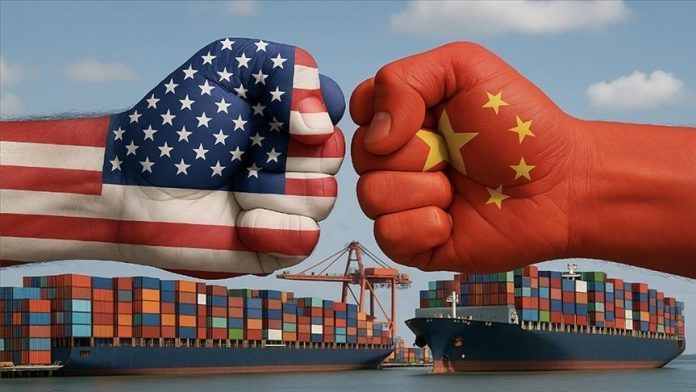
China has accused other G20 economies of using concerns over trade imbalances and industrial overcapacity to justify protectionist measures, escalating a dispute over Beijing’s growing export dominance as the United States and Europe push for greater access to the Chinese market.

The confrontation followed comments by U.S. Treasury Secretary Scott Bessent on Tuesday that 19 of the G20 members had agreed to address what he described as an “unsustainable equilibrium” created by a “stream of cheap exports.” China was the only member to dissent from a joint statement because of references to economic “imbalances.”

China’s Commerce Ministry rejected the criticism on Thursday, noting that the growing focus on overcapacity and trade imbalances was being used as a pretext to restrict Chinese companies.

“China believes that taking advantage of the G20 and other multilateral mechanisms to hype up so-called ‘economic imbalances’ and ‘overcapacity’ is essentially promoting protectionism,” Commerce Ministry spokesperson Ling Huang said at a weekly press conference.

“China is firmly opposed,” she said. “This will only disrupt the global economic and trade order, and harm the healthy development of the global economy.”

The dispute has added to the widening fault line in the global trading system. The U.S. and European governments have been warning that China’s vast manufacturing capacity, government support for strategic industries and weak domestic demand are generating exports at prices that put pressure on producers abroad.

Beijing, however, has consistently rejected claims that its exports are driven primarily by excess capacity or unfair state support. Chinese officials say that the country’s industrial competitiveness is the result of investment, technological development and supply-chain efficiency, and that foreign governments are seeking to protect domestic industries from Chinese competition.

The disagreement is emerging as China faces pressure on multiple trade fronts and as a series of diplomatic and economic meetings fuel anticipation of Chinese President Xi Jinping’s expected trip to Washington later this month.

Iran Sanctions Add Another U.S.-China Flashpoint

The trade dispute is also unfolding alongside a separate confrontation over U.S. sanctions related to Iran. Asked by CNBC about the latest U.S. sanctions targeting Iran, Huang called on Washington to reverse what Beijing considers unlawful measures and remove sanctions imposed on Chinese companies and citizens.

“Despite repeated requests from China, the U.S. has used Iran as an excuse for repeatedly imposing sanctions on Chinese companies and citizens, to which China is strongly dissatisfied and firmly opposes,” Huang said.

Bessent announced early last week that entities, including Chinese banks, that facilitate money laundering or sanctions evasion on behalf of Iran could be cut off from the U.S. financial system.

The threat is significant because access to the U.S.-dominated financial system remains a critical pressure point for Chinese financial institutions with international operations. Any escalation could therefore extend the bilateral dispute beyond tariffs and industrial policy into banking and cross-border finance.

France Becomes Latest Target of Beijing’s Trade Warnings

China also criticized France over a new law intended to curb the low prices charged by Chinese e-commerce companies such as Temu.

Huang urged Paris to halt implementation of the measure and warned that Beijing could retaliate if France proceeded.

“If France persists in its course of action, China will take necessary measures to safeguard the legitimate rights and interests of Chinese enterprises, and France will bear all consequences,” she said.

The warning adds another layer to the difficult relations between Beijing and European capitals. European governments have sought to reduce their dependence on China in strategic industries while simultaneously attempting to address a rapidly widening trade imbalance.

The European Union and China have been engaged in trade discussions throughout the summer, with Brussels seeking progress toward reducing its record trade deficit with Beijing by October.

EU Trade Commissioner Maroš Šef?ovi? said in an interview with Euronews this week that China would need to produce “concrete results” by October or face “harsher measures.”

Huang said China remained willing to work with the European Union but rejected what Beijing views as unilateral demands. China, she said, is prepared to cooperate with the EU, but “demands should not be made unilaterally, and threats should not be made to close markets.”

At the heart of the dispute is China’s transformation into a manufacturing and export powerhouse at a time when demand inside the country has struggled to absorb its industrial output.

Chinese manufacturers have become competitive across sectors including electric vehicles, batteries, solar equipment, machinery and consumer goods. Their ability to produce at scale and sell into overseas markets has generated significant export growth, but it has also triggered defensive measures from trading partners.

The concern is about the effect of China’s industrial model on their own manufacturing bases in the U.S. and Europe. For Beijing, restrictions on Chinese products threaten the export markets that have become an important outlet for its manufacturing sector.

That backdrop creates a difficult policy dilemma for both sides. China needs access to overseas markets as it seeks to sustain growth and support manufacturers, while its trading partners want to prevent a flood of low-priced imports from weakening domestic producers.

China’s rejection of the G20 language indicates little appetite in Beijing to accept international pressure framed around “imbalances” or “overcapacity.” At the same time, the growing number of trade restrictions and warnings from the U.S. and Europe suggests that the issue is unlikely to disappear through diplomatic negotiations alone.

The risk is that the disagreement could develop into a broader cycle of tariffs and retaliatory measures, fragmenting supply chains and making it harder for multinational companies to operate across the world’s two largest economic blocs and their major trading partners.

Pons Fees Surge, Robinhood Chain Sets New DEX Volume Record, OpenSea Backs Arc and Backpack Adds Samani

0

The rapid expansion of onchain finance is increasingly being reflected in the fees generated by emerging blockchain platforms, and the latest figures from Pons and Robinhood Chain highlight just how quickly the market is evolving.

Pons reportedly reached a record $5.95 million in daily fees, placing it fourth overall and allowing it to overtake Robinhood while generating more fees than Hyperliquid, Polymarket and Fomo combined.

At the same time, Robinhood Chain recorded an all-time high of $2.67 billion in 24-hour decentralized exchange volume. The Pons milestone is significant because fees provide a useful indication of economic activity occurring on a network or application.

Reaching $5.95 million in a single day suggests substantial demand for the services being provided and places Pons among a relatively small group of crypto platforms capable of generating millions of dollars in daily economic activity.

Its ranking above several established names also illustrates how quickly competitive positions can change across decentralized finance.

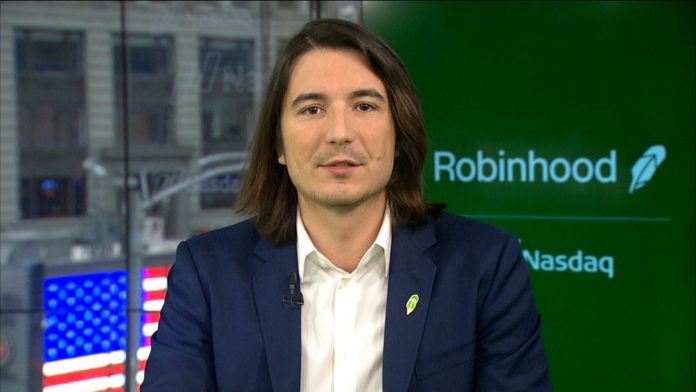
Robinhood Chain’s record DEX volume adds another dimension to the story. A $2.67 billion daily trading volume indicates that tokenized assets and crypto markets are attracting substantial liquidity through Robinhood’s blockchain infrastructure.

The figure demonstrates that decentralized trading is becoming an increasingly important component of the broader brokerage and financial ecosystem. Perhaps the most important development, however, is Robinhood’s position in tokenized stocks.

The company has reportedly become the largest tokenized-stock issuer, with 862,800 holders. That figure represents a major distribution footprint for blockchain-based representations of traditional equities and suggests that tokenization is moving beyond an experimental financial technology into a product category capable of reaching a large user base.

Tokenized stocks attempt to bring traditional securities onto blockchain infrastructure, potentially enabling more flexible settlement, broader accessibility and around-the-clock trading.

For platforms such as Robinhood, combining a large retail customer base with blockchain infrastructure creates the possibility of connecting traditional financial markets with decentralized liquidity.

The combination of record DEX volume and a rapidly expanding holder base therefore matters beyond Robinhood itself. It points toward a broader convergence between traditional brokerage services and onchain markets.

If users can trade tokenized equities alongside crypto assets within blockchain-based environments, the distinction between conventional financial markets and decentralized finance could become increasingly blurred.

Competition will nevertheless remain intense. Pons’ fee performance demonstrates that new platforms can rapidly capture economic activity, while Robinhood’s volume and tokenized-stock distribution show the advantage of combining established brand recognition with blockchain technology.

Other decentralized exchanges and financial protocols are likely to respond by competing for liquidity, users and tokenized assets. The latest figures suggest that the next phase of blockchain adoption may be driven less by speculation alone and more by financial infrastructure.

Record fees, billions of dollars in DEX volume and hundreds of thousands of tokenized-stock holders indicate that users are increasingly interacting with financial products through onchain systems. Pons’ $5.95 million daily-fee milestone and Robinhood Chain’s $2.67 billion DEX volume therefore represent more than isolated records.

They highlight an increasingly competitive onchain economy in which decentralized trading, tokenized securities and traditional financial platforms are converging at unprecedented speed.

Crypto Infrastructure Gains Momentum as OpenSea Backs Arc and Backpack Adds Samani

The crypto industry is entering another phase of infrastructure expansion, with established platforms increasingly positioning themselves around blockchain networks and institutional governance.

Two developments highlight this shift: OpenSea’s decision to support Arc mainnet from its launch day on September 16, and Backpack’s appointment of Multicoin Capital co-founder Kyle Samani to its US board of directors.

The moves demonstrate how exchanges, marketplaces, investors, and blockchain infrastructure are becoming increasingly interconnected.

OpenSea’s backing of Arc from day one is particularly significant because the NFT marketplace remains one of the most recognizable gateways into digital assets.

By supporting the mainnet at launch, OpenSea signals confidence in Arc’s ability to attract users, applications, and liquidity. A major marketplace providing early infrastructure support can help a new blockchain overcome one of the biggest challenges facing emerging networks.

The need to establish meaningful activity immediately after launch. For Arc, having OpenSea involved could provide an important bridge between blockchain infrastructure and consumer-facing digital asset markets.

Mainnet launches are often judged not only by technical performance but also by whether developers and users have practical reasons to participate.

Early support from an established marketplace can strengthen that ecosystem by giving creators, collectors, and traders a familiar environment through which to interact with assets built on the network.

The September 16 launch therefore represents more than another blockchain release. It illustrates the growing competition among networks seeking to capture activity across decentralized applications, digital collectibles, tokenized assets, and broader Web3 use cases.

As the market matures, infrastructure providers are increasingly expected to deliver usable ecosystems rather than simply launch technically sophisticated blockchains.

Meanwhile, Backpack’s appointment of Kyle Samani to its US board introduces a different but equally important dimension: institutional expertise. Samani, co-founder of Multicoin Capital, has been closely associated with investments and strategic development across the crypto ecosystem.

His addition to Backpack’s US board gives the company access to an experienced investor with a deep understanding of blockchain markets, venture capital, and crypto-native business models.

The appointment comes as Backpack continues developing its position in the competitive digital-asset trading sector. Board-level experience from an established crypto investment firm can help the company navigate regulatory considerations, market expansion, institutional relationships, and strategic capital allocation in the United States.

The two developments show that crypto infrastructure is increasingly being built around strategic partnerships rather than isolated products. OpenSea’s early support for Arc strengthens the network’s potential distribution and liquidity, while Samani’s board appointment strengthens Backpack’s strategic leadership as it expands its US presence.

The broader implication is that the next stage of crypto competition may be determined less by individual products and more by ecosystems. Marketplaces need strong networks, networks need applications and users, and trading platforms need institutional credibility and strategic expertise.

With Arc preparing for its September 16 mainnet launch and Backpack strengthening its US leadership, both developments underscore a market that continues to professionalize.

The focus is shifting toward infrastructure, distribution, governance, and long-term ecosystem development—areas that could ultimately determine which crypto platforms and networks remain relevant as adoption expands.

Kalshi Moves Beyond Prediction Markets With WTI Perpetual Futures

0

Kalshi is pushing deeper into the world of regulated derivatives with plans to seek approval from the U.S. Commodity Futures Trading Commission (CFTC) for a perpetual futures contract tied to West Texas Intermediate (WTI) crude oil.

The proposed product would represent another major expansion for the prediction-market operator, which is increasingly positioning itself as a broader financial exchange rather than a platform focused exclusively on event contracts.

According to Reuters, Kalshi is preparing to file for approval of the WTI perpetual, potentially making it the first perpetual oil futures product offered through a regulated U.S. platform.

The proposed contracts would allow traders to maintain positions without the traditional expiration and rollover requirements associated with conventional futures. They could trade 24 hours a day, five days a week, while also providing leveraged exposure to movements in crude oil prices.

The move follows Kalshi’s successful expansion into perpetual futures earlier this year. In May, the CFTC approved KalshiEX’s BTCPERP contract, a perpetual futures product referencing Bitcoin’s spot price.

The regulator determined that the contract complied with the Commodity Exchange Act and applicable CFTC regulations. The approval also opened the door for market participants to submit additional perpetual products for regulatory review.

WTI is a particularly significant target because it is one of the world’s most closely watched crude-oil benchmarks.

Oil prices influence inflation, transportation costs, industrial production and monetary policy, making WTI exposure relevant not only to energy traders but also to investors attempting to hedge broader macroeconomic risks.

Kalshi already has experience offering WTI-related event contracts. Its existing regulatory filings describe contracts based on whether the settlement price of WTI crude oil futures reaches specified levels by particular dates.

The proposed perpetual product would represent a substantial evolution from those binary-style contracts toward a more conventional continuous trading instrument. The timing is also notable.

The CFTC has been examining the regulatory framework surrounding perpetual contracts and around-the-clock commodity trading. Earlier efforts by CME Group to introduce 24/7 crude-oil futures encountered regulatory resistance.

While the CFTC has separately opened discussions around perpetual contracts involving physical or storable energy commodities. Securing approval would strengthen its argument that prediction-market infrastructure can evolve into a broader regulated derivatives marketplace.

The company has already filed proposals involving perpetual futures linked to other asset classes, including equities, foreign exchange and interest rates. Its August filing for equity-index perpetuals demonstrated its ambition to compete more directly with traditional financial exchanges.

However, the proposal will likely face significant scrutiny. Oil is a highly liquid and systemically important commodity, and regulators must consider leverage, market manipulation, price formation, liquidity and risk-management mechanisms.

Perpetual contracts introduce different risks from traditional futures because positions can remain open indefinitely. If approved, Kalshi’s WTI perpetual could nevertheless mark an important development in the convergence between prediction markets and conventional derivatives.

It would give traders a regulated U.S. venue for continuously managing directional exposure to crude oil without the mechanics of repeatedly rolling expiring futures. More broadly, the initiative reflects Kalshi’s transformation. Its original model centered on contracts tied to real-world events.

But its recent expansion suggests a much larger ambition: building a regulated marketplace where participants can express views on prices, economic indicators, financial assets and major events.

The proposed WTI perpetual is therefore more than another product launch. It is another step in Kalshi’s attempt to redefine what a modern financial exchange can look like.

SEC Chair Atkins Expects CLARITY Act to Clear Senate by September 15

0

U.S. Securities and Exchange Commission Chair Paul Atkins has expressed confidence that the Digital Asset Market CLARITY Act could advance through the Senate this month, identifying September 15 as a critical date for the legislation and the future of cryptocurrency regulation in the United States.

His comments have renewed attention around a bill that has become central to Washington’s effort to establish a clearer regulatory framework for digital assets.

Atkins reportedly told Fox Business that he anticipates and hopes the CLARITY Act will pass the Senate and eventually reach President Donald Trump’s desk for signature.

The Senate is scheduled to take up a procedural vote on September 15, although that vote is not itself final passage. The measure must first overcome the Senate’s procedural requirements before lawmakers can move toward a final vote.

The distinction is important for crypto markets. The September 15 vote is expected to test whether lawmakers can secure the 60 votes needed to advance the legislation. Industry participants therefore view the date as a major political milestone rather than an automatic indication that the bill will immediately become law.

At the heart of the CLARITY Act is an attempt to resolve one of the cryptocurrency industry’s longest-running regulatory problems: determining which digital assets fall under the jurisdiction of the SEC and which should instead be overseen by the Commodity Futures Trading Commission.

Greater clarity could provide exchanges, token issuers, developers and investors with more predictable rules for operating in the American market.

For years, uncertainty over whether particular tokens should be treated as securities or commodities has generated disputes between regulators and the crypto industry.

A statutory framework could replace much of that uncertainty with clearer classifications and defined responsibilities. The legislation is therefore being watched not simply as another crypto bill, but as a potential foundation for America’s broader digital-asset market structure.

Atkins’ support also comes as the SEC pursues its own regulatory initiatives. The agency has proposed a broader framework known as “Regulation Crypto Assets,” which Atkins has described as an important step toward modernizing the rules governing digital assets.

The proposal includes exemptions and regulatory approaches that are intended to align with the framework contemplated by the CLARITY Act. This parallel approach could prove significant if Congress fails to complete the legislation.

Atkins has indicated that the SEC can continue developing crypto rules under its existing authority even without congressional action. Legislation would provide a stronger statutory foundation and could make the resulting framework more durable across future administrations and changes in SEC leadership.

For the cryptocurrency industry, the potential passage of CLARITY represents more than regulatory housekeeping. Clearer rules could influence where exchanges establish operations, how companies raise capital.

How tokens are listed and traded, and whether institutional investors feel comfortable expanding their exposure to digital assets. The September 15 Senate vote will therefore be closely monitored by both Wall Street and the crypto sector.

Atkins’ optimism signals growing confidence within the regulatory establishment, but significant political hurdles remain. Until the Senate actually advances and ultimately passes the legislation, the CLARITY Act remains a work in progress.

If lawmakers succeed, the bill could mark one of the most consequential developments in U.S. crypto policy, potentially replacing years of regulatory uncertainty with a more defined market structure. For an industry seeking mainstream adoption, September 15 could become a pivotal date in that transition.