DD
MM
YYYY

PAGES

DD
MM
YYYY

spot_img

PAGES

Home Blog Page 11

Global Oil Price Skyrocket After Trump’s Rhetoric “Clock is Ticking”

0

Oil markets surged sharply after Donald Trump warned Iran that the clock is ticking, reigniting fears of a broader geopolitical confrontation in the Middle East and raising concerns over global energy security. The statement, posted on Truth Social following reports of stalled negotiations between Washington and Tehran, immediately shook financial markets, sending Brent crude above the $110 per barrel level while traders rushed to price in the risk of supply disruptions through the Strait of Hormuz.

The reaction illustrates how sensitive oil markets remain to geopolitical rhetoric involving Iran. The country sits at the center of one of the world’s most strategically important energy corridors. Roughly one-fifth of global oil supply moves through the Strait of Hormuz, meaning any threat of military escalation or prolonged instability can rapidly tighten global supply expectations. Trump’s warning intensified fears that diplomatic channels may be collapsing, especially after reports that ceasefire negotiations and nuclear discussions had stalled.

Financial markets responded almost instantly. Brent crude climbed more than $2 per barrel in early trading, while U.S. benchmark West Texas Intermediate also surged. Analysts noted that investors are increasingly betting on a higher-for-longer oil environment if tensions persist. Some forecasts now suggest crude prices could remain above $100 for an extended period should the conflict widen or if shipping through Hormuz becomes further constrained.

The market panic was amplified by reports of a drone strike near the United Arab Emirates’ nuclear facility, an event that heightened concerns that the regional conflict could spread beyond Iran and Israel into broader Gulf infrastructure. Even though there were no reports of nuclear leakage or major casualties, the symbolism of attacks near critical energy and infrastructure sites rattled traders already on edge.

Beyond oil, the surge in crude prices triggered wider economic concerns. Rising energy prices often feed directly into inflation by increasing transportation, manufacturing, and consumer costs. Bond markets reacted negatively as investors feared central banks may be forced to keep interest rates elevated for longer. U.S. Treasury yields climbed while stock futures weakened across major indexes, reflecting fears that another energy-driven inflation shock could slow global economic growth.

Trump’s rhetoric also demonstrates the enormous influence political communication can have on commodity markets. Even without immediate military action, strong language from major global leaders can reshape expectations, alter trading behavior, and increase volatility across oil, equities, currencies, and bonds. Markets are no longer reacting solely to physical disruptions; they are reacting to probabilities, headlines, and perceived risks.

At the same time, some analysts caution that oil’s rally may remain volatile rather than permanent. Iran has reportedly floated diplomatic proposals through mediators, leading to brief pullbacks in crude prices as traders weighed the possibility of negotiations resuming. This creates a market environment driven heavily by uncertainty, where prices can swing dramatically on every political statement or military development.

The latest oil spike reflects more than just a reaction to one statement. It underscores the fragile balance between geopolitics and global energy markets. As tensions between the United States and Iran intensify once again, investors are preparing for the possibility that the Middle East could become the central driver of inflation, market volatility, and economic uncertainty throughout 2026.

Meta Deepens Workforce Cuts as AI Investments Reshape Workforce Strategy

0

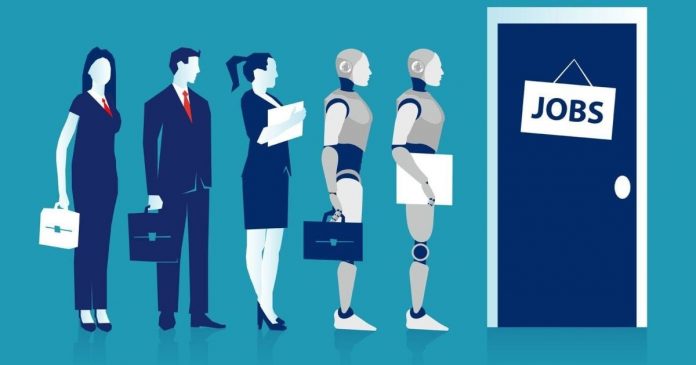
Meta is set to begin another major round of layoffs this week, with approximately 8,000 employees expected to lose their jobs starting Wednesday as the company intensifies its aggressive pivot toward artificial intelligence.

The layoffs, which represent roughly 10% of Meta’s workforce, come alongside plans to eliminate 6,000 open positions that were previously slated for hiring. According to internal memos cited by Bloomberg and CNBC, the company is also reassigning about 7,000 workers into AI-focused roles as part of CEO Mark Zuckerberg’s broader strategy to position Meta as a dominant force in the rapidly expanding AI sector.

Meta leadership described the move as part of an ongoing “efficiency” initiative designed to redirect resources toward AI investments while trimming operational costs. In an Internal memo sent last month, the tech giant stated that it is reducing its workforce and cutting unfilled job positions to save money and operate more efficiently.

Part of the internal memo reportedly stated,

“Over the last few weeks, we have been working on some changes to our organization that will result in us laying off around 10% of the company on May 20, and closing about 6,000 open roles. We’re doing this as part of our continued effort to run the company more efficiently and to allow us to offset the other investments we’re making.”

The latest cuts mark a significant shift in tone from Zuckerberg’s earlier approach during Meta’s first major post-pandemic layoffs in 2022. At the time, the CEO publicly accepted responsibility for overexpansion during the Covid-era hiring boom, telling employees, “I got this wrong, and I take responsibility for that,” after announcing 11,000 job cuts that eventually expanded to 21,000 positions.

By early 2023, Zuckerberg had branded the restructuring effort as Meta’s “year of efficiency.” He disclosed that Meta is focusing on the long term as it invests in tools that become effective over the years, including its development of AI tools. “Our single largest investment is in advancing AI and building it into every one of our products,” he said.

However, more than three years later, current and former employees reportedly describe growing anxiety inside the company, with concerns that additional rounds of layoffs may arrive later in the year, including possible cuts in August and beyond.

The restructuring reflects a broader transformation unfolding across the technology industry as companies increasingly prioritize AI expertise while reducing headcount in traditional roles.

A 2026 study by Motion Recruitment found that hiring for entry-level and general IT positions has slowed considerably, while demand for specialized AI talent continues to rise. The report also noted that salary growth has largely stagnated outside high-demand areas such as machine learning engineering and advanced AI development.

The rise of automation and AI tools is also changing how startups operate. Venture investors increasingly report that companies can now generate tens of millions of dollars in revenue with significantly smaller teams than previously required, fundamentally reshaping expectations around productivity and workforce size.

Notably, across the tech sector, many employees are watching companies slash jobs even as stock prices climb and AI startups attract massive valuations. According to data from Layoffs. fyi, nearly 110,000 tech workers have already been laid off across 137 companies in 2026 alone, approaching the pace seen during the peak layoffs of 2023, when more than 260,000 tech jobs were eliminated industrywide.

Outlook

Meta’s latest restructuring signals that the competition for AI dominance is entering a more aggressive phase, with major technology companies increasingly willing to sacrifice workforce expansion in favor of long-term AI investment.

Analysts believe the company’s strategy could strengthen its position in areas such as generative AI, advertising automation, smart devices, and virtual platforms, particularly as rivals like Microsoft, Google, and OpenAI continue to intensify spending in the sector.

However, the restructuring also highlights growing concerns about the future of traditional tech employment. Industry experts warn that while AI may create new high-paying specialized roles, it could simultaneously reduce demand for many conventional operational and administrative positions.

OpenAI defeats Musk in landmark trial, clearing Altman as jury rejects fraud claims

0

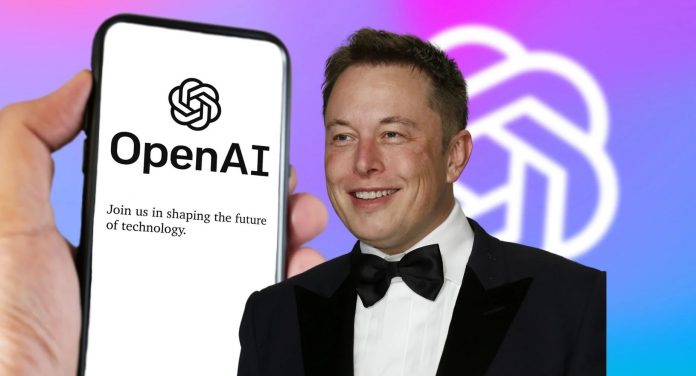
A California jury has handed a sweeping legal victory to OpenAI and Chief Executive Sam Altman, rejecting claims by billionaire entrepreneur Elon Musk that the artificial intelligence company defrauded him by abandoning its original nonprofit mission in pursuit of profit.

After less than two hours of deliberation on Monday, jurors in an Oakland federal courtroom found Altman, OpenAI President Greg Brockman, and OpenAI itself not liable in the closely watched case that has become one of Silicon Valley’s most consequential corporate battles.

The jury also cleared Microsoft of allegations that it knowingly assisted OpenAI leaders in violating charity laws through their multibillion-dollar partnership.

Rather than ruling directly on whether OpenAI betrayed its founding principles, jurors determined Musk had waited too long to file his claims, concluding that he had known key details underlying his allegations as early as 2021 and therefore missed the legal deadlines required to pursue the case.

That procedural finding effectively ended Musk’s attempt to dismantle OpenAI’s for-profit structure and halted a scheduled hearing that would have considered financial penalties and possible restructuring remedies.

U.S. District Judge Yvonne Gonzalez Rogers accepted the jury’s unanimous findings and indicated she would not overturn the verdict.

The decision marks a major turning point in the increasingly bitter rivalry between two of artificial intelligence’s most influential figures and removes a significant legal overhang for OpenAI as it moves closer to a potential public offering that analysts believe could eventually value the company at around $1 trillion.

The verdict also strengthens Altman’s position inside Silicon Valley after years of criticism from Musk and former OpenAI insiders who questioned his leadership style, governance practices, and commitment to the company’s founding ideals.

Outside the courthouse, OpenAI lead attorney William Savitt described Musk’s lawsuit as “a hypocritical attempt to sabotage a competitor.” Savitt added that OpenAI now intends to pursue counterclaims accusing Musk of abusing the legal system through the litigation.

The jury’s ruling represents not just a courtroom win for OpenAI but also a symbolic validation of the company’s transformation from nonprofit research lab into one of the world’s most commercially powerful AI firms.

OpenAI was founded in 2015 by Musk, Altman, and several other technology figures as a nonprofit organization intended to develop artificial intelligence for the benefit of humanity rather than private shareholders. At the time, the founders viewed Google’s DeepMind division as a potential concentration risk if artificial general intelligence was controlled by a single dominant corporation.

Musk’s lawsuit alleged that Altman and Brockman later betrayed that founding mission by building a for-profit structure around OpenAI and aligning the company closely with Microsoft, which has invested tens of billions of dollars into the AI firm.

According to Musk, OpenAI effectively transformed charitable donations, including his own reported $38 million contribution, into the foundation of a commercial empire benefiting private investors and executives.

OpenAI countered that Musk had long understood the need for large-scale corporate financing to sustain advanced AI development and had himself pushed for more aggressive commercialization while still involved with the organization.

During testimony, Altman portrayed Musk as a controlling figure who wanted to dominate OpenAI rather than preserve its nonprofit ideals.

The trial provided a rare public look inside one of the world’s most secretive and strategically important technology companies. Witness testimony included appearances from Microsoft Chief Executive Satya Nadella, former OpenAI board members, and senior executives who discussed internal conflicts surrounding Altman’s temporary removal as CEO in 2023, an episode insiders referred to as “The Blip.”

Musk himself testified that placing untrustworthy leadership at the center of AI development represented a danger to humanity.

Altman, meanwhile, defended OpenAI’s structure as necessary to secure the immense capital and computing infrastructure required to compete in the escalating global AI race.

The ruling now removes one of the largest immediate threats to OpenAI’s corporate structure at a critical moment for the artificial intelligence industry.

OpenAI has become central to a broader technology arms race involving Microsoft, Google, Meta, Amazon, and Musk’s own AI venture, xAI, now integrated into his broader SpaceX-linked artificial intelligence ambitions.

Although Musk lost this round, the legal and public battle is unlikely to end soon.

Outside the court, Musk’s attorney Marc Toberoff called the verdict “a tragedy” and said OpenAI had effectively been allowed to escape accountability for abandoning its nonprofit roots. Musk later wrote on X that the jury “never actually ruled on the merits of the case, just on a calendar technicality,” adding that he would appeal to the Ninth Circuit Court of Appeals.

The appeal ensures the conflict between Musk and OpenAI will continue even as the company consolidates its position at the center of the global artificial intelligence boom.

HSBC Unveils $4bn Green Finance Push for Chinese Firms as AI, EV, and Energy Demand Reshape Global Capital Flows

0

British universal bank and financial services group HSBC has launched a dedicated $4 billion credit facility to support the international expansion of mainland Chinese companies operating in sectors tied to clean energy, electric vehicles, artificial intelligence, and digital infrastructure, positioning the bank to capitalize on the accelerating global race for low-carbon and AI-linked industrial growth.

The new Sustainability and Transition Credit Facility, announced Monday, is aimed at helping Chinese firms scale overseas operations across industries, including renewable power, battery manufacturing, data centers, and advanced manufacturing technologies.

The move comes as global capital increasingly shifts toward energy transition assets amid rising geopolitical instability, surging electricity demand from artificial intelligence infrastructure, and renewed concerns over long-term fossil fuel dependence following the Iran conflict.

China has emerged as the dominant global supplier of several clean-energy technologies, including solar panels, batteries, and electric vehicle supply-chain components, as Beijing aggressively expands industrial influence across Asia, Europe, the Middle East, and parts of Africa.

HSBC’s facility reflects how major international banks are repositioning themselves around the growing overseas ambitions of Chinese industrial and technology companies, particularly as demand for low-carbon infrastructure accelerates globally.

Under the programme, HSBC said it will provide tailored financing structures, faster credit approvals, and extended lending support for eligible Chinese firms pursuing international growth.

Natalie Blyth said the initiative is designed to support a new generation of globally expanding Chinese industrial companies.

“China is home to some of the world’s most dynamic low-carbon companies that are setting new benchmarks in high-end manufacturing,” Blyth said.

“As they scale internationally, they need financial partners with the global reach and expertise to support them. This facility is designed to provide exactly that.”

Chinese companies have sharply accelerated overseas investment in recent years as Beijing seeks to export industrial capacity, deepen trade influence, and reduce dependence on Western markets constrained by tariffs and geopolitical tensions.

According to Australian research group Climate Energy Finance, Chinese firms have committed more than $180 billion to overseas clean-technology investments since 2023.

Those investments span solar manufacturing, battery production, EV assembly plants, renewable infrastructure, and critical mineral processing facilities across emerging and developed markets.

The financing push also aligns with growing global demand for electricity infrastructure. HSBC research projects global electric vehicle sales will surpass 26 million units in 2026, while the International Energy Agency estimates electricity consumption from data centres could nearly double by 2030 to 945 terawatt hours as AI adoption accelerates.

That trend is rapidly reshaping global energy demand patterns. Massive AI data centers require stable, high-volume electricity supplies, intensifying investment in renewable generation, battery storage, and transmission infrastructure. Financial institutions increasingly see those sectors as long-duration growth markets tied both to decarburization and the AI economy.

Iran Conflict Reinforces Shift Toward Energy Security

HSBC’s announcement also comes against the backdrop of elevated geopolitical risk in global energy markets. The ongoing Iran conflict and concerns over oil supply disruptions have renewed interest in energy diversification and domestic electricity resilience, particularly in Europe and Asia, where governments remain vulnerable to fossil-fuel price shocks.

Renewable technologies such as solar and wind have become increasingly attractive not only for climate reasons but also because, in many regions, they now offer cheaper and more stable long-term energy costs than imported fossil fuels.

That shift has strengthened the strategic importance of Chinese clean-tech manufacturers, which dominate large portions of the global solar, battery, and EV supply chain. At the same time, the expansion of Chinese industrial influence is generating geopolitical sensitivity in Western economies.

The United States and parts of Europe have introduced tariffs, investment restrictions, and subsidy programmes aimed at reducing dependence on Chinese supply chains, particularly in electric vehicles, semiconductors, and critical energy technologies. Yet global banks and multinational investors continue positioning themselves to benefit from China’s manufacturing scale and export reach.

However, HSBC is notably pivoting toward Asia with the new credit facility, where it generates most of its profits and sees the strongest long-term growth opportunities. The lender has increasingly focused on trade finance, wealth management, and sustainable infrastructure tied to Asian industrial expansion.

Data centers powering AI systems require enormous electricity capacity. Electric vehicle adoption requires battery supply chains and charging infrastructure. Renewable-energy deployment requires large-scale financing and industrial manufacturing capability.

Chinese companies currently sit near the center of all three trends.

Global Workforce Entering Most Transformative Period in Modern Economic History Courtesy of AI

0

The rapid acceleration of artificial intelligence is no longer a theoretical discussion confined to research labs or science fiction. It is becoming a defining force in the global economy, reshaping industries, labor markets, and the very nature of professional work. Recent comments from leaders in technology and finance have intensified this debate.

The CEO of Microsoft AI suggested that virtually all white-collar jobs could be fully automated within the next eighteen months, while the CEO of Citadel revealed that AI systems are already completing complex financial tasks in hours that once required weeks or even months of work from highly trained PhD-level professionals. Together, these statements reflect a dramatic shift in how corporations perceive productivity, expertise, and the future of human labor.

For decades, automation primarily affected blue-collar and repetitive factory work. Machines replaced physical labor in manufacturing, logistics, and industrial production. White-collar professionals, however, were generally considered protected because their roles relied on creativity, judgment, communication, and advanced analytical thinking.

Artificial intelligence is now challenging that assumption. Modern AI models can draft legal contracts, write software code, analyze financial markets, summarize research papers, generate marketing campaigns, and even assist in medical diagnostics with remarkable speed and accuracy. The implications are profound. In finance, for example, hedge funds and investment firms increasingly rely on AI-driven systems for market analysis, risk modeling, and portfolio management.

Tasks that once demanded teams of quantitative analysts and economists can now be performed in a fraction of the time. Citadel’s CEO emphasized this transformation by noting that AI can accomplish in hours what elite finance professionals would previously spend months completing. This is not merely an incremental productivity improvement; it represents a structural redefinition of knowledge work itself. Technology companies are equally aggressive in deploying AI across operations.

From customer service chatbots to AI-assisted programming tools, businesses are discovering that automation dramatically reduces costs while increasing efficiency. AI systems do not sleep, take vacations, or require the same operational overhead as human employees. For corporations under pressure to maximize margins and remain competitive, the incentive to automate is overwhelming.

However, the prediction that all white-collar jobs could disappear within eighteen months may be overly aggressive. While AI capabilities are advancing rapidly, many professions still require emotional intelligence, human trust, ethical accountability, and nuanced decision-making. Lawyers, doctors, educators, consultants, and executives often operate in environments where interpersonal relationships and contextual understanding are essential.

AI can augment these professions, but fully replacing them remains significantly more complex than automating repetitive administrative work. Instead of outright elimination, a more realistic scenario may involve workforce compression. Companies may require fewer employees to achieve the same output because AI enhances the productivity of existing workers.

One software engineer equipped with advanced AI coding tools may accomplish the work that previously required an entire team. One analyst supported by AI research systems may outperform several traditional researchers. This creates economic pressure that could reduce hiring across many professional sectors, particularly for entry-level workers.

The social consequences of such disruption could be enormous. White-collar employment has long been associated with economic stability, middle-class growth, and professional identity. If AI reduces demand for millions of office-based jobs, governments and institutions may face rising unemployment, widening inequality, and political instability. Education systems may also need radical restructuring, as traditional career pathways become less reliable in an AI-dominated economy.

History suggests that technological revolutions also create new industries and opportunities. The internet destroyed certain jobs but gave birth to entirely new sectors, from digital marketing to app development and creator economies. AI could similarly generate demand for new professions centered around AI supervision, ethics, cybersecurity, human-machine collaboration, and creative direction.

The rise of artificial intelligence signals that the global workforce is entering one of the most transformative periods in modern economic history. Whether AI becomes a tool that empowers humanity or a force that displaces millions will depend on how governments, businesses, and societies adapt to the unprecedented speed of technological change.