DD
MM
YYYY

PAGES

DD
MM
YYYY

spot_img

PAGES

Home Blog Page 114

Bitcoin’s Brutal Flash Crash is A Deleveraging Bloodbath

0

Bitcoin (BTC) endured a savage intraday plunge, briefly dipping to as low as $80,000 on derivatives platforms like Hyperliquid before stabilizing around $81,000–$82,000.

This marked the asset’s steepest 2–4 hour drop since April 2025 lows, erasing all of its 2025 gains and pushing year-to-date performance into negative territory down ~11% overall.

The move wiped out over $1.9 billion in leveraged positions across the crypto ecosystem in the past 24 hours alone, with data from Coinglass showing totals reaching $1.91–$1.97 billion and affecting 391,000+ traders—primarily those betting on upside longs accounted for ~$1.78 billion of the carnage.

This liquidation cascade amplified the volatility, creating a feedback loop of forced selling that echoed the chaos of past bear phases. The crash wasn’t isolated—it’s the culmination of mounting pressures that have battered risk assets all month.

Fed minutes revealed hesitancy on a December rate cut odds now at 37.6%, fueled by a strong U.S. jobs report. Surging Japanese 10Y yields and a robust dollar index added global liquidity squeezes.

Drove risk-off sentiment, with BTC down 25–30% from its October peak of $126,000. Crypto Fear & Greed Index hit “extreme fear” 11–15, lowest since late 2022. U.S. spot Bitcoin ETFs saw $903 million in net outflows on November 21 BlackRock’s IBIT: -$355M; Grayscale: -$199M; Fidelity: -$190M, part of $3.79 billion for the month.

Institutional retreat signaled fading appetite, with open interest in perpetual futures down 35% from October highs, thinning liquidity and worsening the slide.

A “mechanical glitch” in auto-deleveraging systems may have sparked the initial wick, liquidating $210–$250 million in minutes. Hyperliquid saw five $10M+ accounts wiped, including one $36.78M hit.

Turned a 7–8% dip into a full-blown flash crash; total crypto market cap fell below $3 trillion for the first time in five months down 8–9% in 24 hours. Ether (ETH) dropped 10–14% to ~$2,700; Solana (SOL) -10%; XRP, BNB, and Cardano -8–15%. Smaller caps like INJ and NEAR fell 16–18%.

Broader market lost $450 billion in value over the past week, with $1 trillion erased since October highs. Traders are calling it a “sentiment shock” and “bear trap,” with posts highlighting the $1B+ liquidations and ETF exodus as the “true carnage.”

One analyst noted: “This is the exact moment the market decides whether this is a healthy correction… or the beginning of a multi-month liquidation cascade.”

The most alarming signal? Bitcoin’s realized losses—profits or losses locked in when coins move on-chain—have exploded to levels unseen since the FTX implosion in November 2022, when BTC cratered below $16,000.

Glassnode data reveals: Short-term holders STHs, coins held <155 days now sit on 2.8–5.4 million BTC underwater, with 99% of their supply in loss up 24.7% since August. Daily STH realized losses hit $523 million 7-day EMA, the highest since FTX, driven by panic unwinding below the 200-day moving average.

STH profit/loss ratio flipped to -1.4, mimicking the 2022 capitulation and creating a “feedback loop” of falling prices triggering more sales. In contrast, long-term holders (LTHs) have offloaded ~452,000–815,000 BTC since July now at 14.3 million total, but their realized cap remains at all-time highs, suggesting underlying cycle confidence.

Institutions like whales are dipping in, with some buying the panic (e.g., $903M ETF outflows offset by on-chain accumulation). This feels like classic bull-market deleveraging: Sharp, painful, but often followed by rebounds once weak hands are shaken out.

Historical parallels like post-FTX lows show such extreme fear levels precede swing bottoms, with BTC’s momentum now 3.5 standard deviations below its 200-day MA—a rare setup for mean reversion.

Key levels to watch: Support: $80K Hyperliquid low or $74K next major liquidation cluster; breach could target $82K “True Market Mean.” Resistance at $86K–$88K active investors’ realized price; break above could signal stabilization.

Whales and LTHs absorb supply; Fed pivot or ETF inflows could spark a “dead cat bounce” to $100K+.  Persistent outflows and macro tightening drag to $74K, prolonging the “mild bear” phase.

X chatter is split: Some see it as the “final flush” before a rally “once that wick appears, we’ll know the rally is about to kick off”, while others warn of “multi-month liquidation.” UBS calls it a “flush of excessive leverage,” hinting at upside if sentiment holds.

This is capitulation theater—painful, but often the setup for the next leg up. HODL if you’re in for the cycle; scale out leverage if you’re not.

6 Heavily Undervalued Tokens Set to Boom Over the Next 6 Months: Shiba Inu, Cardano, Little Pepe (LILPEPE) Lead

0

The cryptocurrency landscape often hides explosive opportunities beneath mainstream noise. Over the coming six months, a group of tokens stands out as particularly attractive: Shiba Inu, Cardano, Little Pepe, Brett, Pump.fun, and Flare.  Each brings a distinct narrative, from infrastructure upgrades and burning mechanics to a hyperactive presale and emergent memecoin ecosystems, that together create asymmetric upside potential for those watching closely.

1. Little Pepe (LILPEPE)

Little Pepe’s presale metrics read like a launchpad success story. The token is deep into its presale, trading in Stage 13 at $0.0022 while having already sold more than 16.6 billion tokens and raised north of $27.4 million across stages.  That level of capital accumulation and stage progression signals intense market appetite ahead of exchange listings and suggests substantial initial liquidity when trading opens. LILPEPE is positioned as one of the leading candidates for significant gains over the next 6 months, during which it translates from presale to top-tier exchange listing.

2. Shiba Inu (SHIB)

Beyond its meme origins, Shiba Inu has added utility, which has fueled its bullish momentum. When a popular token combines utility expansion with periodic supply reduction, price elasticity to renewed demand tends to be high. Shiba Inu’s technical setup and burn activity position it as a poster child for how a large-cap meme asset can reignite a rally when the network’s utility finally catches up with market expectations.  SHIB is one to buy over the next 6 months as it takes a shot at regaining its all-time high.

3. Cardano (ADA)

Cardano’s roadmap over the past year has been focused on DeFi primitives, real-world asset integration, and tooling that appeals to institutional-grade users. That slow, methodical roll-out is now entering phases where tangible products, stablecoin frameworks, improved smart contract capabilities, and RWA integrations become marketable advantages. The result is a classic undervaluation setup: a fundamentally capable layer-one network trading below the valuation warranted by its upcoming utility. As developer activity and adoption metrics tick upward, Cardano’s price sensitivity to positive news should be amplified, making ADA a strong candidate for meaningful appreciation in the medium term.

4. Brett (BRETT)

Brett occupies a different space: a community-driven memecoin that has already secured listings and liquidity on major aggregators, trading with significant volume and a sizable circulating supply.  Tokens like Brett benefit from momentum cycles; when social sentiment, exchange visibility, and on-chain transfers align, substantial percentage moves can unfold quickly. Given Brett’s current market profile and the broader appetite for narrative-led tokens, a strategic reacceleration in social traction or a high-visibility listing could act as a catalyst for outsized returns relative to its entry price.

5. Pump.fun (PUMP)

Pump.fun is not merely a token; it is a platform enabling creators to mint and launch memecoins under a single interface. That product-market fit has translated into rapid user adoption and sizable on-platform trading activity.  Platforms that lower the barrier to token creation while taking a small revenue share can scale quickly and incubate multiple viral coins in parallel, each of which feeds back into platform valuation and utility. The resulting flywheel often yields multiple asymmetric bets for token holders as successful launches cascade into higher platform demand and deeper liquidity.

6. Flare (FLR)

Flare’s recent mainnet milestones and work on cross-chain interoperability create a compelling value proposition for DeFi composability, particularly for assets like XRP seeking liquid staking and smart-contract extension.  As Flare rolls out features that enable novel staking and cross-chain flows, the token’s role as an infrastructure layer becomes more evident, and total value locked (TVL) and developer activity could follow. Infrastructure tokens that successfully anchor new DeFi rails often see steady appreciation when usage ramps, and Flare’s technical progress places it on that pathway.

Conclusion

These six tokens form a diversified cross-section of crypto opportunity, and they have a common thread: undervaluation relative to likely near-term catalysts. Investors who care to accumulate them now have a good shot at massive gains over the next 6 months.

For more information about Little Pepe (LILPEPE) visit the links below:

Website: https://littlepepe.com

Whitepaper: https://littlepepe.com/whitepaper.pdf

Telegram: https://t.me/littlepepetoken

Twitter/X: https://x.com/littlepepetoken

$777k Giveaway: https://littlepepe.com/777k-giveaway/

21Shares Launches 2x Leveraged Dogecoin ETF (TXXD), as Taurus Integrates with Kaiko

0

Crypto asset manager 21Shares announced the launch of the 21Shares 2x Long Dogecoin ETF (ticker: TXXD), providing investors with leveraged exposure to Dogecoin (DOGE) through a regulated U.S.-listed product on Nasdaq.

This marks 21Shares’ first leveraged ETF and expands its U.S. lineup to 16 crypto exchange-traded products (ETPs) globally. The debut coincides with the finalization of 21Shares’ acquisition by FalconX, a leading digital asset prime brokerage managing over $8 billion in assets, which is expected to enhance liquidity and global distribution for such products.

Seeks to deliver 200% (2x) of Dogecoin’s daily price performance, before fees and expenses. Due to daily compounding, returns over periods longer than one day may significantly differ from 2x the underlying asset’s return—making it suitable only for short-term trading.

Designed for sophisticated, active investors comfortable with high volatility and leverage risks. It’s not intended for buy-and-hold strategies. Fees: Annual expense ratio of 1.89%, issued by 21Shares US LLC.

Tradable like a stock via banks or brokers; no direct crypto wallet needed. Builds on 21Shares’ collaboration with the House of Doge official arm of the Dogecoin Foundation, following their earlier launch of Europe’s first endorsed Dogecoin ETP.

21Shares manages >$11B across 55 products as of September 2025. High volatility; compounding effects; suitable for short-term only. DOGE Price ~$0.15, down ~5-8% amid broader market pressure.

This launch reflects Dogecoin’s maturation from a meme coin to an asset with institutional appeal, driven by its vibrant community and real-world adoption. Analysts see it as a sign of growing demand for altcoin derivatives, potentially spurring similar products from competitors.

However, DOGE’s price has declined over 50% from its 2021 peak, trading in a falling wedge pattern that could signal a rebound if ETF inflows materialize. The FalconX acquisition announced earlier in 2025 allows 21Shares to operate independently under CEO Russell Barlow while leveraging FalconX’s infrastructure for better trading and expansion in the U.S., Europe, and Asia-Pacific.

For investors, TXXD offers a convenient way to amplify DOGE bets without direct crypto handling, but experts emphasize monitoring positions closely due to leverage’s amplifying losses in downturns. If you’re considering investing, consult a financial advisor—leveraged products carry substantial risks.

While the ETF debuted amid a DOGE price dip down ~5-8% to around $0.147 on launch day, its implications extend far beyond immediate market reactions. As the first leveraged DOGE ETF in the U.S., TXXD could attract significant capital from risk-tolerant traders, potentially driving DOGE demand through underlying swaps, futures, and derivatives.

Analysts at Traders Union note that expanding ETP access, combined with ongoing holder accumulation DOGE’s HODL rate remains high at ~70%, lays a “foundation for future upside” despite short-term weakness. Early trading data shows modest initial volumes, but if inflows mirror those of recent Solana or XRP ETFs.

DOGE could see a 10-20% rebound, especially if it breaks its falling wedge pattern. DOGE has declined ~53% YTD, trading below key moving averages, but the ETF’s 2x daily reset could exacerbate swings—gains compound in uptrends, losses in downtrends.

TXXD elevates DOGE from “social media novelty” to a tradable asset class, signaling regulators’ comfort with altcoin derivatives. This follows 21Shares’ FalconX acquisition $8B AUM prime broker, enabling deeper liquidity and global distribution—potentially unlocking $1B+ in institutional flows across 21Shares’ 16 ETPs.

Experts like Federico Brokate emphasize its role in “simplifying participation” for pros, while House of Doge CEO Marco Margiotta calls it a boost for community-driven growth. The launch coincides with Solana and XRP ETF approvals, hinting at a “flurry” of meme/altcoin funds.

This could pressure the SEC to fast-track non-leveraged DOGE ETFs, fostering a more mature crypto derivatives market but raising concerns over speculative bubbles. TXXD allows 2x DOGE exposure via standard brokerage accounts—no crypto wallets or margin hassles—targeting “sophisticated investors” comfortable with volatility.

Leverage isn’t for buy-and-hold; daily compounding can erode returns in choppy markets, a 10% DOGE drop becomes ~20% for TXXD, plus decay. 21Shares warns of “significant deviation” over multi-day holds, making it ideal for day traders only.

In a downturn, this could accelerate liquidations, as seen in past crypto winters. Deepens 21Shares’ tie-up with House of Doge, advancing “institutional adoption and real-world utility beyond meme status.” This could spur ecosystem growth—more devs, payments integrations, and community tools—while FalconX’s infrastructure aids expansion into Europe/Asia.

Marks 21Shares’ first U.S. leveraged product, positioning it as a leader in high-vol altcoin ETPs >$11B AUM globally. Competitors like Bitwise or VanEck may follow with similar DOGE/SHIB funds, intertwining tradfi and crypto further.

TXXD could catalyze DOGE’s resurgence by injecting institutional capital and credibility, but its leveraged nature demands caution—volatility cuts both ways. For context, DOGE’s market cap ~$21B trails ETH but outpaces many alts; sustained ETF success might close that gap.

Taurus Integration with Kaiko Aggregator Reflect on Blockchain’s Interoperability

Swiss-based digital asset infrastructure provider Taurus announced a strategic integration with Kaiko, a leading cryptocurrency data analytics firm.

This move embeds Kaiko’s standardized pricing and liquidity data feeds directly into the Taurus platform, enhancing its offerings for institutional clients like banks. The partnership aims to deliver “regulator-ready” market information to support key operations in digital assets, including custody, trading, valuation, and compliance.

Kaiko aggregates and standardizes data from over 100 centralized and decentralized exchanges, covering pricing, liquidity metrics, trade volumes, and order books. This data will now be accessible in real-time within Taurus’s infrastructure, streamlining processes and reducing reliance on fragmented sources.

Taurus serves nearly 40 top-tier financial institutions, including State Street and Deutsche Bank. The integration helps these clients meet governance standards amid growing demand for tokenized assets and crypto trading, while minimizing operational costs and risks.

Taurus, founded in 2018, raised $65 million in a 2023 Series B round led by Credit Suisse now part of UBS to fuel global expansion, including a recent U.S. office launch. Kaiko, which secured $53 million in 2022 funding, has established itself as a go-to provider for institutional-grade crypto data.

Elodie De Marchi, COO of Kaiko: “Market data is the foundation of every digital asset transaction. By partnering with Taurus, we are embedding our data into a trusted infrastructure already used by leading banks and financial institutions.”

Taurus Executives: The integration aligns with Taurus’s mission to provide a “strongest possible foundation” for digital asset strategies, reflecting the industry’s shift toward transparent, compliant data as institutional adoption accelerates.

This collaboration underscores the maturing crypto ecosystem, where reliable data is critical for bridging traditional finance (TradFi) and digital assets. As stablecoins and tokenization gain traction—e.g., recent reports highlight stablecoins as a liquidity backbone amid market volatility—partnerships like this could accelerate capital inflows while prioritizing regulatory alignment.

Taurus’s earlier launches, such as the interbank Taurus-NETWORK in April 2025 for seamless digital asset settlement, further position it as a key enabler for global banks.

Tokenization means converting real-world assets (RWAs) or financial instruments into digital tokens on a blockchain. These tokens represent ownership or rights and can be traded, settled, or used as collateral 24/7 with programmable features.

Why traditional finance is embracing tokenization nowInstant (T+0) or atomic (DvP) settlement ? Reduces counterparty risk and frees up billions in collateral BCBS estimates $100 bn+ capital relief possible globally.

A $100 million private-credit deal can now be sliced into $100 tokens and traded globally 24/7. ? Whitelisting, KYC/AML baked into smart contracts (e.g., BlackRock BUIDL only allows approved addresses).

Tokenized Treasuries or MMFs are now accepted as collateral on DeFi protocols (Aave, Morpho, Ondo, etc.) and in tri-party repo with traditional custodians. Regulatory green lights like the MiCA + DLT Pilot Regime. Banks, OCC and Fed signals on stablecoins and blockchain pivots

Siemens issues €60m digital bond on Polygon. Mar 2024 – BlackRock launches BUIDL on Ethereum ? becomes fastest-growing tokenized fund ever. Nov 2024 – UBS issues first cross-border tokenized bond under Swiss DLT law.

Tokenization has moved from pilot to production. The biggest drivers are no longer crypto-native firms but the world’s largest asset managers like BlackRock, Franklin Templeton, universal banks, and central securities depositories.

The integration of institutional-grade data feeds is one of the final pieces making tokenized assets truly “regulator-ready” for global banks. Expect 2026–2027 to be the breakout years for tokenized private credit and corporate bonds.

Foxconn Says $1.4bn Nvidia-Backed Supercomputing Center to Be Ready H1 2026

0

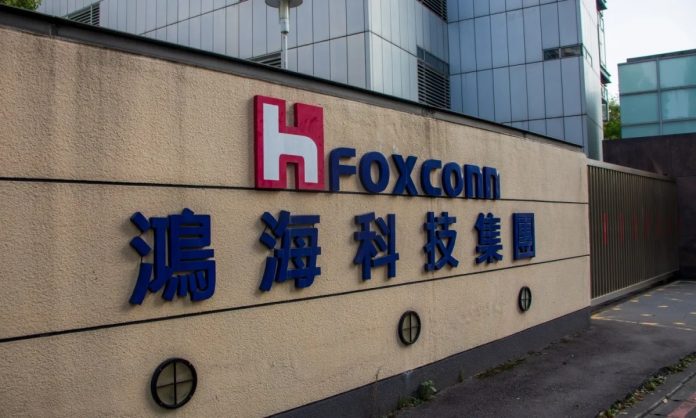
Foxconn said on Friday that the $1.4 billion supercomputing center it is building with Nvidia will be ready in the first half of 2026, signaling its tightening grip on the AI hardware world.

When completed, it will stand as Taiwan’s largest advanced GPU cluster, underscoring just how fast the AI race is turning into a full-blown infrastructure sprint.

The 27-megawatt facility will run on Nvidia’s new Blackwell GB300 chips. Neo Yao, who leads Visonbay.ai — Foxconn’s newly created unit for AI supercomputing and cloud operations — said the center will also become Asia’s first GB300 AI data facility. The announcement was made at Foxconn’s tech day, attended by key partners including Nvidia, OpenAI, and Uber.

At the event, Nvidia vice president Alexis Bjorlin pointed to an accelerating shift in how companies use AI infrastructure.

“As GPU technology accelerates, building individual facilities may no longer make economic sense,” she said.

Renting compute power, according to her, could offer a stronger return by letting organizations scale usage based on product cycles and business demands.

Foxconn already plays a central role in the industry as Nvidia’s main manufacturer of AI racks — the server assemblies that house GPUs, cabling, and other specialized equipment needed for high-intensity AI workloads. This positioning has made the iPhone assembler one of the prime beneficiaries of the global boom in data center construction, as cloud firms funnel extraordinary amounts of money into AI research and infrastructure expansion.

The momentum inside the sector is unmistakable. Foxconn issued a positive outlook last week, saying AI orders will be a major driver of growth heading into 2026. In an interview with Reuters published earlier on Friday, Chairman Young Liu said Foxconn plans to invest $2 billion to $3 billion each year in AI. He added that the company now has the ability to produce 1,000 AI racks per week, a number that is expected to rise sharply next year.

The tech day also featured an appearance by Foxconn founder Terry Gou and by Spencer Huang, a product line manager in Nvidia’s robotics division, and the son of Nvidia founder Jensen Huang. He said Nvidia is working with Foxconn to bring AI into factories and manufacturing lines, a partnership that ties directly into Foxconn’s ambition to broaden its industrial footprint.

The wide-ranging event included a push into electric vehicles, a sector Foxconn sees as another pillar of its transformation. Liu said EV volumes are reaching the threshold where automakers can now outsource more production to Foxconn. The company showcased its “Model A” electric vehicle on stage, with Chief Strategy Officer Jun Seki explaining that the EV was designed by Japanese engineers.

Foxconn intends to create a dedicated unit in Japan for customers there, and production of the Model A will move to Japan in the future, Liu added.

Across the tech world, the speed of investment has raised discussion about whether an AI-driven infrastructure bubble is forming. The race to build ever-larger GPU clusters is pushing companies to spend at levels rarely seen in such a short period. Investors are piling in with the hope of catching the next frontier of computing, while cloud providers and enterprises are scrambling to secure enough capacity to stay competitive. Analysts say the mismatch between projected long-term AI demand and the near-term flood of spending is stirring familiar questions about sustainability.

Foxconn, like several others, is sprinting ahead, positioning itself right at the center of the global buildout. The company has moved far beyond its identity as Apple’s top iPhone assembler, recasting itself as a heavyweight in AI infrastructure, EV manufacturing, and industrial automation.

Nigeria Orders Immediate Shutdown of 41 Unity Schools as Fresh Waves of Abductions Reignite National Fear

0

The Nigerian government has ordered principals of 41 Federal Unity Colleges to shut down the schools immediately. The directive, dated November 21, 2025, came from the Federal Ministry of Education and carried the approval of Education Minister Tunji Alausa.

With the country once again reeling from a resurgence of school attacks, the circular said the closure was necessary in light of “recent security challenges” and the urgent need to “prevent any security breaches.”

Hajia Abdulkadir, Director of Senior Secondary Education, signed the memo on behalf of the minister. The document instructed heads of the affected schools—spread across the North-West, North-East, North-Central, and parts of the South—to enforce the shutdown without hesitation.

It was a move that instantly sent shockwaves through parents’ groups, staff unions, and education circles, capturing the sense of a government scrambling to get ahead of a threat it has battled for more than a decade.

The government’s decision follows a grim week in which the country once again became the stage for coordinated assaults on schools. The latest attacks have revived painful memories that never fully faded: Chibok in 2014, Dapchi in 2018, Kankara in 2020, Jangebe in 2021, Tegina, Birnin Yauri, and now a fresh round of kidnappings unfolding almost in real time.

In Niger State, gunmen struck St. Mary’s Primary and Secondary School in Papiri on Friday. The attackers—witnesses counted more than 60 motorcycles—stormed the compound with precision, shot the gatekeeper (who was left critically injured), and abducted an unspecified number of students.

Barely days earlier, another group of assailants seized 25 schoolgirls during an attack in Maga town, Kebbi State. The tempo of the assaults has unsettled communities across the northern belt, where fear now travels even faster than official information.

In Nasarawa, panic sparked by rumours of two abducted pupils at St. Peter’s Academy in Rukubi spread quickly across WhatsApp groups and community radio stations. The police moved to quash the story, calling the report “false and not reflective of the true state of affairs,” but the speed at which the rumor travelled underlined the anxiety in the air.

With tension rising, President Bola Tinubu directed the Minister of State for Defence, Bello Matawalle, to relocate to Kebbi immediately to coordinate rescue operations. The president also postponed his planned trips to Johannesburg and Angola, signaling the seriousness with which the administration is treating the latest wave of attacks.

Officials familiar with the matter said the presidency is worried about an escalation if security agencies do not regain momentum quickly. The northern states have been the epicenter of school kidnappings for years, and the renewed violence threatens to undo the limited progress made in securing schools under the Safe Schools Initiative.

Education, Interrupted — Again

Federal Unity Colleges have long been symbols of national cohesion—institutions meant to mix students from different ethnic and religious backgrounds. Their shutdown is another unfortunate episode of education interruption, orchestrated by insecurity, which has continued to erode the country’s education system, particularly in regions where children already face steep barriers to learning.

The ministry’s directive did not specify how long the schools would remain closed or whether remote learning arrangements would be put in place. For students preparing for examinations, it raises the specter of yet another disrupted academic calendar.

Nigeria has been here before—too many times. Since 2014, learning institutions have become recurring targets for armed groups seeking ransom, attention, or leverage. The pattern has become grimly familiar: attackers on motorcycles, under-protected schools, frantic rescue operations, traumatized students, and parents left waiting for news.

Global organizations, including UNICEF, have repeatedly condemned the recurring abductions and urged the government to secure schools and prioritize the safety of children. Despite years of advocacy, Nigeria’s learning spaces remain deeply vulnerable.

For many communities, the question now is not how this happened again, but whether the latest wave will finally force a different level of response. The recent wave of insecurity in Nigeria has attracted the attention of the U.S. government, with President Donald Trump threatening to order military action in the country if the government fails to act fast to protect lives, especially targeted Christians.