
DD
MM
YYYY

PAGES

DD
MM
YYYY

spot_img

PAGES

Home Blog Page 1143

Dubai Records $399M In Tokenized Real Estate Sales

0

In May 2025, Dubai recorded approximately $399 million in tokenized real estate sales, representing 17.4% of the total real estate transactions for the month. This aligns with the emirate’s broader push toward real estate tokenization, exemplified by the launch of the Prypco Mint platform by the Dubai Land Department (DLD). The platform, built on the XRP Ledger, enables fractional ownership of properties starting at AED 2,000 (about $540), with transactions conducted in UAE Dirhams.

The $399 million figure is part of Dubai’s real estate market, which saw a total sales value of $18.2 billion (AED 66.8 billion) across 18,700 transactions in May, reflecting a 44% year-on-year increase in transaction value and a 6% rise in volume. Tokenization, supported by regulatory updates from the Dubai’s Virtual Assets Regulatory Authority (VARA)  and partnerships like the $3 billion agreement between MultiBank Group, MAG, and Mavryk, is driving this growth by enhancing liquidity and accessibility for investors.

The DLD projects that tokenized assets could represent 7% of Dubai’s real estate market by 2033, equivalent to $16 billion. However, some skepticism exists. Tokenization may primarily address accessibility rather than fundamentally altering market dynamics, as high property prices in Dubai remain a barrier for many, and fractional ownership doesn’t necessarily reduce costs but redefines ownership structures. Regulatory clarity and investor education will be critical to sustaining this momentum.

The $399 million in tokenized real estate volume in Dubai during May 2025 highlights both the transformative potential and the challenges of real estate tokenization, creating a divide in implications for investors, the market, and society. Tokenization allows fractional ownership, lowering the entry barrier for investors. With platforms like Prypco Mint enabling investments as low as AED 2,000 ($540), smaller retail investors can participate in Dubai’s high-value real estate market, previously dominated by wealthy individuals or institutions.

Tokenized assets are more liquid than traditional real estate, as they can be traded on blockchain platforms, potentially attracting global investors and increasing market efficiency. The $399 million represents 17.4% of May’s $18.2 billion in total real estate transactions, signaling strong adoption. The Dubai Land Department’s projection of tokenized assets reaching $16 billion by 2033 (7% of the market) suggests sustained growth.

Blockchain-based platforms like the XRP Ledger ensure transparency, security, and faster transactions, fostering trust and encouraging further adoption. Partnerships, such as the $3 billion MultiBank Group-MAG-Mavryk deal, underscore institutional confidence. Dubai’s Virtual Assets Regulatory Authority (VARA) provides a clear framework, positioning the emirate as a global leader in tokenized real estate. This regulatory clarity attracts foreign investment and aligns with Dubai’s vision to be a blockchain and fintech hub.

Tokenization could diversify Dubai’s economy, reducing reliance on traditional real estate cycles and enhancing resilience against market downturns. Tokenization democratizes access, allowing middle-class or retail investors to own fractions of premium properties. This could reduce the wealth gap by enabling wealth creation through real estate.

High property prices in Dubai (e.g., average villa prices at AED 6 million) mean tokenization doesn’t lower the underlying cost—it just splits it. Investors still need significant capital for meaningful returns, and the poorest may remain excluded. Tech-savvy and younger investors benefit from the ease of trading tokenized assets on digital platforms, potentially broadening the investor base. Tokenization requires understanding blockchain, digital wallets, and regulatory risks, which may alienate less tech-literate or risk-averse investors, creating a knowledge divide.

Increased liquidity and global participation could stabilize the market by diversifying ownership and reducing reliance on local economic conditions. Tokenization may fuel speculation, as fractional ownership lowers barriers to speculative trading, potentially inflating prices or creating volatility, especially if regulatory oversight lags. Dubai’s tokenized real estate market could attract international capital, boosting its global financial status.

Local residents may face stiffer competition from foreign investors, driving up prices and exacerbating affordability issues for Dubai’s middle and lower classes. Tokenization in Dubai’s real estate market is a game-changer, enhancing accessibility, liquidity, and innovation while aligning with the emirate’s tech-forward vision. However, it risks deepening divides—between those who can leverage the technology and those who cannot, and between global investors and local residents.

Paramount Cuts Another 3.5% of U.S. Workforce as Legacy TV Declines Deepen— It Isn’t an AI-Driven Layoff

0

Paramount Global is eliminating 3.5% of its U.S. workforce in another round of job cuts, the latest signal of deepening distress within the traditional media industry as audiences continue to migrate away from cable television.

This marks the company’s second major workforce reduction in a year, following a far more sweeping 15% cut in 2024, and comes as Paramount attempts to stabilize its balance sheet and sharpen its focus on streaming.

Although the broader corporate world is in the midst of a wave of AI-induced layoffs—with major firms citing automation and artificial intelligence as reasons for shrinking headcounts—Paramount’s decision appears to be more closely tied to structural shifts in its business model rather than AI replacing jobs. According to internal sources, the reductions are aimed at streamlining operations as revenue from its legacy television businesses continues to shrink.

“These changes are necessary to address the environment we are operating in and best position Paramount for success,” wrote Paramount’s co-CEOs George Cheeks, Chris McCarthy, and Brian Robbins in a memo to staff.

Old Media, New Pressures

Paramount, which had 18,600 employees globally as of the end of 2024, is one of several legacy media companies now in a second wave of painful downsizing. In recent days, Disney and Warner Bros. Discovery have also cut staff to adapt to the collapsing economics of linear TV. Despite continuing to generate cash, the traditional television model—based on bundled cable subscriptions and advertising—is rapidly being eclipsed by streaming.

This media-wide reset has led Warner Bros. Discovery and Comcast to announce plans to spin off their linear TV units into standalone businesses, essentially severing their ties to a once-core revenue stream now seen as a drag on long-term growth.

Paramount, which owns CBS and MTV among other channels, hasn’t announced a spinoff. Instead, it is attempting to reposition through a proposed merger with Skydance Media—a deal that is now being closely watched not just by investors but also by regulators and political stakeholders, given CBS’s entanglement in a legal dispute involving President Donald Trump and the network’s flagship news magazine, 60 Minutes.

Not an AI Story—This Time

The latest round of job cuts comes as companies across industries have begun pointing to AI technologies as a reason for reducing their workforces. From Big Tech firms like Google and Meta to banks and even media outlets, automation and generative AI tools have started to replace certain roles—particularly in support, administrative, and content production teams.

However, Paramount’s cuts appear to be motivated more by macroeconomic pressure and declining linear revenue than by any direct AI rollout, according to executives familiar with the matter. While the company has invested in streaming innovation, there’s no indication that artificial intelligence played a central role in the latest round of layoffs.

Even so, the timing of the announcement—at a moment when AI is making headlines for reshaping job markets—raises broader questions about how the entertainment industry will evolve as automation capabilities mature.

Leadership Shakeup & Strategic Uncertainty

The restructuring follows a major leadership shakeup. CFO Naveen Chopra has exited to join Roblox, a gaming and social platform. Paramount has appointed Andrew Warren—a longtime advisor to the CEO’s office—as interim finance chief. Meanwhile, the company is also reeling from the recent departures of Wendy McMahon and Bill Owens, two top news executives who reportedly quit over frustrations tied to CBS’s handling of the Trump legal saga.

Paramount executives have emphasized that despite the challenges, the company continues to post streaming success. Recent hits such as Mission: Impossible — The Final Reckoning, MobLand, and the NCAA Tournament have delivered strong performances on Paramount+, the company’s flagship streaming platform.

However, streaming has only recently begun to turn a profit, and with mounting regulatory hurdles for its merger, internal leadership gaps, and the ever-present risk of political interference, Paramount is under pressure to show that it can transition away from its decaying legacy model without losing its creative edge—or its talent.

The company says the layoffs may also eventually impact international staff, pending local laws. In the U.S., most affected workers are being notified this week.

Paramount will reduce its U.S. workforce by 3.5%, affecting several hundred employees, according to an internal memo reviewed by several news outlets. The news comes shortly after reported headcount reductions at rivals Disney and Warner Bros. Discovery. Last June, Paramount announced a plan to cut jobs and reduce spending; in August, the company cut 15% of its U.S. workforce. Paramount’s pursuit of regulatory approval for a proposed merger with Skydance Media, meanwhile, has been held up by a legal battle between CBS and the federal government.

“Next Year 60% will be looking for work:” Vista’s CEO Says AI Will Displace Most Finance Workers

0

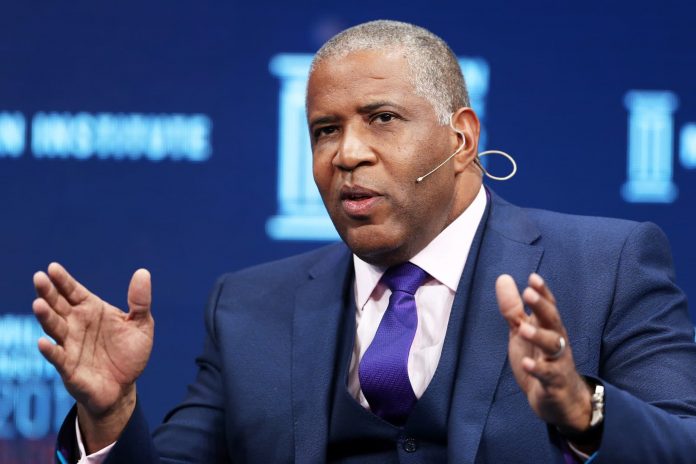
Robert F. Smith, CEO of Vista Equity Partners, has issued a warning about the fate of finance jobs in the age of artificial intelligence, predicting that a majority of professionals in the sector may soon be out of work as AI tools take over critical functions.

Speaking Thursday at the SuperReturn International private capital conference in Berlin, Smith told a crowd of more than 5,500 private equity leaders that the job market is on the brink of a sweeping transformation—and the disruption is coming faster than most expect.

“We think that next year, 40% of the people at this conference will have an AI agent, and the remaining 60% will be looking for work,” Smith said, referencing autonomous software programs capable of executing complex, multi-step financial tasks.

The conference, regarded as the world’s largest private equity gathering, included senior executives from global investment giants like Goldman Sachs, BlackRock, and KKR. Smith’s remarks hit close to home for many in the audience, particularly as AI deployment across banking and finance accelerates.

A Shared Warning from the Top

Smith is far from alone in sounding the alarm. JPMorgan Chase CEO Jamie Dimon said in October 2023 that AI could one day lead to a 3.5-day workweek as it replaces jobs and boosts productivity. While he acknowledged its benefits, he emphasized the societal challenges posed by mass displacement. Similarly, IBM CEO Arvind Krishna stated in May 2023 that the company was pausing hiring for roles that AI could replace, estimating that nearly 30% of back-office jobs, such as HR and administrative positions, could be automated within five years.

These high-level concerns are no longer theoretical. Layoffs attributed to AI and automation are already underway in some of the world’s most powerful financial institutions and tech-adjacent firms.

Earlier this year, JPMorgan Chase eliminated hundreds of jobs across its tech and operations divisions, part of a broader effort to streamline functions that AI can now handle. While the bank did not explicitly state AI as the reason, it has significantly ramped up its investment in AI tools—including building its own ChatGPT-like platform, “IndexGPT,” to serve clients.

Goldman Sachs laid off over 3,000 employees in early 2023, citing a shift in business priorities. Analysts say the move also aligned with the firm’s internal automation efforts to reduce redundancy in middle-office operations, especially in areas like compliance and risk modeling.

In the tech world, Google’s parent company, Alphabet, confirmed in January 2024 that it had let go of employees in its advertising sales unit as part of a restructuring effort heavily influenced by automation and AI-driven ad tools. Meta (Facebook’s parent company) also cited automation when it cut tens of thousands of jobs during its “year of efficiency.”

These moves echo Smith’s core argument: AI is not just changing jobs—it is eliminating them.

“All of the jobs that the one billion knowledge workers do today will change,” Smith told the Berlin audience. “I’m not saying they will all go away, but they will all change. You will have hyperproductive people in organizations, and you will have people who will need to find other things to do.”

Finance Faces the Frontline

The financial industry is uniquely exposed to this disruption. A June 2024 report from Citigroup found that 54% of jobs in finance—particularly those in accounting, trading, and portfolio management—have a “high potential for automation.” Another 12% could be significantly “augmented” by AI, with humans working alongside machines.

Citi’s report also projected that global banking profits could jump from $1.7 trillion to nearly $2 trillion by 2028, largely because of productivity gains from AI. However, that boost in profits will likely come at the cost of headcount.

In a survey released in January by Bloomberg Intelligence, Wall Street firms said they expect as many as 200,000 job cuts in the next five years due to AI—targeting roles in research, compliance, risk, and even dealmaking.

Preparing for the Inevitable

Smith, whose firm Vista Equity Partners manages more than $100 billion in assets and specializes in software and tech companies, has a front-row view of this shift. His message to industry professionals is that AI adoption will create a smaller, more efficient workforce and those who fail to adapt may find themselves outpaced and unemployed.

The implications reach far beyond finance. Smith’s call to action, alongside similar warnings from other business titans, suggests a future in which AI not only changes how work gets done but who gets to do it.

The question now is how institutions, regulators, and workers themselves will respond as AI redefines the structure of global employment—and whether those left behind will have a place in the next chapter of the economy.

8 Flawless Solana Methods Explained Through Neo Pepe Token Insights 

0

Memecoins have been stealing the spotlight lately on the Solana network—but have you noticed something curious? Besides flipping meme tokens, a vast majority of Solana users don’t use the network for much else. This hyper-fixation on memecoins has created an environment rich in opportunity, especially for tokens like Neo Pepe Coin, which combine humor with groundbreaking utility.

Brace yourself, because we’re about to dig into why Neo Pepe Coin is catching the interest of everyone—from casual traders to Bitcoin whales.

Why Bitcoin Whales Are Secretly Buying Neo Pepe Coin

What if the next big crypto trend isn’t a serious powerhouse like Bitcoin or Ethereum, but a playful, frog-inspired memecoin? Neo Pepe Coin turns heads by blending the viral appeal of a meme with functionality-driven innovations.

Here’s the kicker: Bitcoin whales, notorious for their keen sense of long-term value, are quietly jumping aboard the Neo Pepe train. What’s drawing them in? It’s a mix of deflationary tokenomics, smart contract ingenuity, and a presale packed with perks.

Solana Meme Craze, Neo Pepe’s Unique Appeal

Solana’s network has become synonymous with memecoins. Most activity revolves around trading the next big meme sensation. This creates a volatile space filled with pump-and-dump schemes, which can scare off serious investors.

But Neo Pepe Coin is breaking this pattern. It promises more than hype, combining memecoin energy with robust features that attract investors looking for something sustainable. While other memecoins focus solely on trends, Neo Pepe charts its own course with practical, real-world applications and transparency.

Lessons from Pi Coin/Neo Pepe Difference

Pi Coin might ring a bell for those who’ve been in the crypto game for a while. Its mobile-first mining idea initially captured widespread enthusiasm. Fast forward, and many are now questioning its legitimacy. Could it be the rug pull of the year?

Enter Neo Pepe Coin with a promise of delivering where Pi Coin failed. Here’s how it ensures authenticity and longevity:

  1. Utility-Focused Innovation: Neo Pepe integrates tangible applications like DeFi, NFTs, and gaming.
  2. Community Governance: Token holders actively shape the project’s future, fostering trust.
  3. Stability Over Flash: While the memes stay strong, the tokenomics ensure gradual growth instead of explosive, unsustainable spikes.

Standout Features of Neo Pepe Coin

Neo Pepe Coin distinguishes itself by blending humor with cutting-edge technology. Let’s break down what makes this token a complete game-changer for Solana users and crypto enthusiasts alike.

Smart Contract Functions That Go Beyond Memes

At Neo Pepe’s core are smart contracts designed to deliver unmatched efficiency and security. Here’s what they power within the ecosystem:

  • Staking and Farming

Earn passive income by staking your Neo Pepe tokens in DeFi. This not only increases liquidity but also rewards loyal holders with attractive yields.

  • NFT Access and Trading

Neo Pepe makes NFTs seamless, allowing token holders to trade rare and limited-edition collectibles. Imagine a meme-based NFT marketplace driven by secure smart contracts!

  • Play-to-Earn Gaming

The gaming economy is thriving in crypto. Neo Pepe adds value with a transparent P2E framework that ensures fair and secure in-game rewards, creating a win-win for gamers and developers.

Ethereum Liquidity Pool Integration

Neo Pepe takes another step forward by integrating with Ethereum liquidity pools, unlocking exceptional trading capabilities.

Here’s how it benefits investors:

  • Reduced Slippage

Smoother transactions with minimal price changes during high-market volatility.

  • Dual Ecosystem Leverage

By linking to Ethereum, token holders indirectly gain exposure to one of the most reliable networks in crypto.

  • Enhanced Visibility

Access to Ethereum pools creates new opportunities for collaboration and investment from a broader community.

Deflationary Tokenomics Building Scarcity

Neo Pepe’s deflationary tokenomics set it apart in a crowded field of inflationary tokens. Scarcity is built into its DNA, driving sustainable growth over time.

  1. Token Burning

Regularly reducing token supplies ensures every Neo Pepe token increases in value.

  1. Price Stability

With demand increasing and supply decreasing, the tokenomics create reliable price tension.

  1. Community-Driven Rewards

Long-term holders benefit most, as the ecosystem prioritizes loyalty.

Why Whale Investors Are Taking Notice

Bitcoin whales are often ahead of the curve, and their interest in Neo Pepe shouldn’t go unnoticed. Whales look for opportunities with high growth potential at minimal entry costs, and Neo Pepe ticks all the boxes:

  • Early-Buyer Perks

Whales love getting in during presales when tokens are undervalued. Neo Pepe offers early-bird token prices paired with exclusive bonuses.

  • Smart Contract Innovation

Whales understand the role of automation in creating sustainable ecosystems. Neo Pepe’s smart contracts power DeFi, NFTs, and gaming in ways that attract veteran investors.

  • Growth Across Markets

Pioneering utilities in multiple sectors like gaming and DeFi give Neo Pepe more staying power than traditional memecoins.

Why Neo Pepe’s Presale is a Golden Opportunity

The Neo Pepe Coin presale is creating buzz for all the right reasons. Here’s what’s making it irresistible to both small-scale traders and whales:

  • Exclusive Pricing

Purchase tokens at a fraction of their post-launch cost.

  • Lucrative Bonuses

Get extra tokens, early governance privileges, and even access to NFT drops.

  • Position for High ROI

The presale positions you to enjoy massive rewards once Neo Pepe goes live on exchanges.

How to Join the Presale

Jumping into the Neo Pepe presale is easy and risk-free:

  1. Visit the official Neo Pepe website.
  2. Connect your wallet (MetaMask or Trust Wallet recommended).
  3. Select your investment amount.
  4. Complete your transaction and secure your tokens.

[Join the Presale Now and Secure Your Spot]

Maximizing Humor and Utility

Neo Pepe proves that memecoins can be more than just a punchline. By blending advanced features like smart contracts, Ethereum integration, and deflationary tokenomics with its playful vibe, Neo Pepe Coin shatters the notion that memecoins can’t offer real value.

Whether you’re a retail investor or a Bitcoin whale, this might just be the investment to watch. Turn your LOLs into ROI today by joining the presale before it’s too late!

[Reserve Your Neo Pepe Tokens Today]

Beginner’s Guide to Filecoin With Neo Pepe Protocol’s Game-Changing Tactics

0

Cryptocurrency and blockchain technology are no longer relegated to niche communities; they’re becoming the buzzwords of global finance and technology. But among all the tokens and protocols out there, two players have caught the discerning eye of the cryptocurrency world lately: Filecoin, pioneering decentralized data storage, and Neo Pepe Coin, a bold new contender in the meme coin arena with innovative governance and utility functionalities.

This guide will compare both projects while spotlighting why the Neo Pepe Coin presale could be the most exciting meme coin drop of 2025.

Diving Into Filecoin

What Is Filecoin?

Filecoin is a decentralized storage network designed to store humanity’s most important information. Essentially, Filecoin is like Airbnb for data storage. Instead of using a centralized service like Google Drive or Dropbox, users pay to store their files across a network of decentralized nodes.

Key Features of Filecoin

  • Decentralized Data Storage:

Data is stored across multiple decentralized nodes, reducing the central risks of outages or hacks.

  • Ownership of Data:

Filecoin flips the narrative by giving users complete control of their data, something you’re unlikely to get from centralized storage services.

  • Opportunities for Miners and Users:

Filecoin’s unique architecture allows “miners” (storage providers) to earn tokens by offering unused hard drive space to the network.

Filecoin is changing the game with its storage-as-a-token model, but does it offer democracy in financial governance and a sense of community ownership? Not quite. That’s where Neo Pepe Coin steps up to the plate.

Allure of Neo Pepe Coin

Neo Pepe Coin isn’t just another meme coin; it’s the meme coin of tomorrow. With its playful branding, forward-thinking technology, and community-first governance, Neo Pepe is giving the meme coin narrative a revolutionary shake-up.

Community Governance DAO

At the heart of Neo Pepe Coin is a Community Governance DAO (decentralized autonomous organization). DAO means every major decision, particularly about a community-controlled treasury, is voted on by YOU, the token holders.

Here’s why this matters:

  1. Treasury Control:

Funds in Neo Pepe’s treasury cannot be touched, accessed, or moved without a binding community vote. Unlike traditional cryptocurrencies with centralized development funds, here everyone’s vote counts.

  1. True Decentralization:

Want funds allocated to marketing? Community decides. Want to fund a new utility project? Community votes. This radically democratic governance ensures that no one entity holds the reins of decision-making.

“Think Swiss democracy meets Web3 vibes—but way more fun!”

Smart Contract Powerhouse

Neo Pepe takes its meme coin status a step further with smart contract functionalities to add real-world utility to the ecosystem. From staking rewards to decentralized transactions, Neo Pepe ensures security and engagement for its users.

But there’s more…

Why Neo Pepe Coin Presale Is Grabbing Headlines

The Neo Pepe Coin Presale is making waves as possibly the biggest meme coin presale of 2025. Ever wondered what it would’ve been like to join Dogecoin or Shiba Inu before they skyrocketed? This could be the next big opportunity.

Why This Presale Stands Out:

  • Web3 Enthusiasm Meets Humor:

Neo Pepe blends meme culture with technological substance, making it both fun and practical.

  • Hottest Token Presale of 2025:

FOMO is real! Traders and speculative investors are buzzing about Neo Pepe being the best meme presale of the year.

  • Groundbreaking Utility:

Unlike typical meme coins, Neo Pepe offers true use cases with security, governance, and community-driven allocation of funds.

With a presale built on fairness, transparency, and accessibility, getting a slice of Neo Pepe now could potentially result in massive gains later.

Comparing Filecoin, Neo Pepe Coin

Where Filecoin excels with utility in decentralized data storage, Neo Pepe Coin flips the script by revolutionizing how a meme coin interacts with its community and offers governance.

Feature Filecoin Neo Pepe Coin
Core Functionality Decentralized data storage network Meme coin with governance and utility
Community Governance No Yes (via DAO)
Treasury Management Not Applicable Community-controlled treasury
Token Use Case Pay for data storage Trading, staking, voting, and more
Speculative Opportunity Medium High (especially during presale)


Filecoin leads in decentralized data but lacks the humor-utility combo Neo Pepe Coin offers. Both cater to very different markets, but for meme coin enthusiasts, Neo Pepe offers an unprecedented level of involvement in decision-making.

Neo Pepe Coin Speculation 2025

Why do we think Neo Pepe Presale could be the biggest meme coin presale of 2025?

  1. Unique Branding

Neo Pepe combines the familiarity of a beloved meme (Pepe the Frog) with forward-looking innovation. When fun meets function, the results are electric!

  1. Evolving Community Trends

Investors are increasingly interested in meme coins that go beyond the joke. Shiba Inu proved this demand. Neo Pepe coins could take that evolution even further.

  1. Early Adoption Advantage

Early adopters of Dogecoin and Shiba Inu could barely imagine their portfolios exploding as they did. Neo Pepe offers another chance to lock in those early-bird price advantages before things skyrocket.

How to Get Started

Sounds like something you don’t want to miss?

  1. Visit the Neo Pepe Coin Website.
  2. Follow the simple guidelines to participate in the Neo Pepe Presale.
  3. Vote alongside other community members and start shaping the future of the token.

Begin Your Journey Today

Meme coins don’t just stop at jokes anymore. Neo Pepe Coin is proof that community, utility, and fun can coexist. Whether you’re all in on decentralized storage with Filecoin or ready to join the hottest token presale of 2025 with Neo Pepe, the future is happening now.

Don’t miss out. Join Neo Pepe Protocol Presale Now!