DD
MM
YYYY

PAGES

DD
MM
YYYY

spot_img

PAGES

Home Blog Page 119

Saudi Stocks Extend Rally as Oil Surge Shields Energy Giants Amid Escalating Middle East War

0

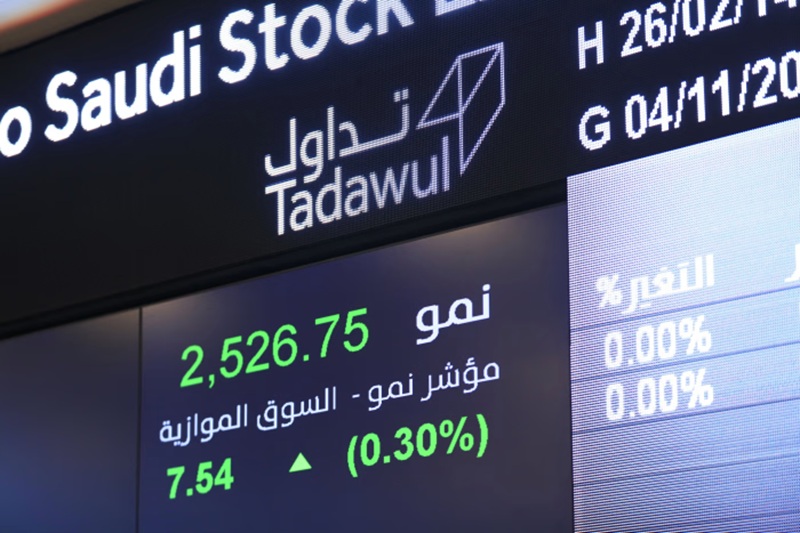
Saudi Arabia’s stock market extended its rally into a fifth consecutive session on Sunday, supported by strong gains in energy stocks as surging oil prices boosted investor confidence in the kingdom’s energy-heavy market.

The benchmark Tadawul All Share Index rose 2.1%, with every constituent stock posting gains during the session. The rally was led by energy and petrochemical companies, which are particularly sensitive to movements in global crude prices.

Shares of Saudi Aramco jumped 4.1%, marking the company’s strongest intraday percentage gain in nearly four years. Petrochemical producer Yanbu National Petrochemical Company surged 10%, reflecting strong investor demand for companies expected to benefit from higher oil and energy prices.

The rally comes as global oil prices climbed sharply amid escalating geopolitical tensions in the Middle East. Benchmark Brent crude surged above $90 per barrel on Friday for the first time since April 2024, as supply disruptions linked to the expanding conflict involving the United States, Israel and Iran rattled energy markets.

Energy rally turns Saudi market into a hedge

Analysts say the sharp rise in oil prices has transformed Saudi Arabia’s stock market into a relatively safe haven within the region.

Ahmad Assiri, research strategist at Pepperstone, said the Saudi market displayed unusual resilience despite the rising geopolitical tensions across the Middle East.

“In a week defined by escalating regional geopolitical risks, the Saudi equity market has provided outstanding financial resilience,” Assiri said.

He noted that the initial selloff triggered by the conflict earlier in the week quickly faded as investors reassessed the implications of rising oil prices.

“The initial selloff last Sunday proved short-lived as institutional and retail sentiment stabilized by midweek,” he said.

According to Assiri, the surge in crude prices helped drive the rebound, as investors shifted funds into energy-related stocks that stand to gain from higher oil revenues.

The dominance of large energy firms such as Saudi Aramco means the Saudi market often moves in tandem with oil prices. As crude prices rise, investors tend to view the Saudi exchange as a natural hedge against geopolitical shocks affecting global energy supply.

Regional markets show mixed reaction

Across the wider Gulf region, stock markets delivered mixed performances as investors balanced the benefits of higher oil prices against the broader risks posed by the expanding conflict.

Oman’s benchmark index on the Muscat Stock Exchange climbed 2%, supported by gains in financial and industrial stocks.

Bahrain’s market on the Bahrain Bourse added 0.2%, reflecting modest investor optimism tied to stronger oil revenues.

However, other markets showed signs of caution.

The benchmark index on the Qatar Stock Exchange slipped 0.1%, dragged down by a 1.4% decline in Qatar Islamic Bank and a 4.8% fall in Qatar Aluminium Manufacturing Company.

Meanwhile, the main index on Boursa Kuwait edged down 0.3%, with most stocks ending the day in negative territory.

The divergence highlights how the conflict is affecting Gulf economies in different ways. Oil-exporting markets such as Saudi Arabia may benefit from the surge in crude prices, while countries facing direct security risks or shipping disruptions could experience greater volatility.

Energy supply disruptions intensify

Concerns about global energy supply intensified after Kuwait Petroleum Corporation announced it had begun cutting oil production and declared force majeure on some operations. The move follows earlier reductions in oil and gas output in Qatar as maritime disruptions in the region prevented shipments from leaving the Gulf for the eighth consecutive day.

Energy traders say the crisis has severely disrupted shipping through the Strait of Hormuz, the narrow waterway that handles roughly one-fifth of the world’s oil trade.

With tanker traffic slowing dramatically and shipowners increasingly reluctant to enter the high-risk zone, some oil-producing countries have been forced to cut output because storage tanks are filling up with crude that cannot be exported.

The disruption has also begun affecting refined fuel markets, where diesel and jet fuel prices have surged amid refinery shutdowns in parts of Asia and the Middle East.

Outside the Gulf, equity markets appeared more vulnerable to the regional tensions. Egypt’s benchmark EGX 30 Index fell 1.6%, with most blue-chip companies posting losses.

Shares of Commercial International Bank dropped 3.2%, while fintech firm Fawry for Banking Technology and Electronic Payment declined 4%.

Analysts say markets like Egypt’s tend to react more negatively to geopolitical instability because they do not directly benefit from rising oil prices and may instead face higher import costs and economic uncertainty.

Outlook tied to oil and geopolitics

Investors across the region are now closely watching the trajectory of the conflict and its impact on global energy supply. If disruptions to Gulf shipping routes persist or expand to major production facilities, oil prices could climb further, strengthening energy-linked stocks across the region.

Several investment banks have warned that crude could reach $100 per barrel or higher if the Strait of Hormuz remains partially closed for an extended period. However, analysts caution that prolonged conflict could also undermine broader economic confidence, disrupt trade flows, and increase financial market volatility.

Saudi Arabia’s stock market currently appears to be benefiting from its deep exposure to the energy sector, with rising oil prices providing a buffer against the geopolitical turmoil reshaping markets across the Middle East.


AI Is Becoming Heavy Industry, and the Real Race Is Now Copper, Concrete, Cooling, and Power Deals

0

AI used to feel weightless: models in the cloud, prompts on a screen, growth measured in tokens. That story is fading. The next phase of AI looks like industrial expansion—bounded by electricity, grid hardware, construction timelines, and the contracts that secure it all. Whether it is OpenAI scaling inference or Nvidia shipping new accelerators, the limiting factor is increasingly the site that can power them.

AI’s footprint is turning into a procurement problem

The popular mental image of AI is silicon and software. The real build-out is silicon plus everything around it: transformers, switchgear, busbars, backup systems, heat exchangers, chilled-water loops, and the fiber that connects a site to the outside world.

That is why headlines now feature “gigawatts” as often as “parameters.” The scale jumps fast, and it is easy to lose intuition when numbers balloon into the billions. Even communicating the basics can turn into an order-of-magnitude exercise, where a quick scientific notation calculator helps keep the math readable.

AI is also joining a crowded queue for physical inputs. The energy transition wants copper. Utilities want transformers. Cities want housing. AI now competes for many of the same materials and factories—and that competition shows up as longer lead times and higher project costs.

Copper, concrete, and grid hardware are the hidden constraints

As compute density rises, the data center starts looking like a light industrial plant. Floors must carry heavier loads. Mechanical systems scale up. Substations and feeder upgrades move from nice-to-have to required.

The bottlenecks hide in boring places. A delayed transformer can stall an entire project. A shortage of switchgear can push commissioning out by quarters. Those delays become financing problems: firms with stronger balance sheets can order early and absorb slippage; everyone else waits, pays more, or scales down.

Here is where basic electrical relationships become business-relevant. Cable sizing, losses, heat, and protection equipment tie back to the current. Converting apparent power into current is the kind of check that clarifies whether a proposed upgrade is realistic for a site, and a simple  kVA to amperage calculator makes that relationship intuitive when teams are debating redundancy and distribution upgrades.

Cooling turns electricity into local politics, too. Higher density increases heat; managing that heat can mean water-intensive systems, closed-loop designs, or more expensive liquid cooling. In drought-prone regions, water use can become the flashpoint that forces redesigns.

The International Energy Agency has tried to frame the scale of what is coming. In its report on energy supply for AI, the IEA projects that electricity generation to supply data centers could rise from about 460 TWh in 2024 to over 1,000 TWh by 2030 in the base case.

Power contracts are becoming the moat

Once we start treating AI as heavy industry, electricity stops looking like an operating expense and becomes a strategic asset. Power purchase agreements (PPAs), interconnection rights, and proximity to generation become competitive moats. They determine whether GPUs run at high utilization or sit idle behind a grid constraint.

Tekedia has tracked how hyperscalers are leaning into long-term deals and capacity arrangements to secure power for AI growth. Meta’s move into multi-gigawatt agreements is a clean illustration of the shift: the AI roadmap now comes with a power roadmap.

Others are pairing compute with on-site generation as a blunt answer to long interconnection queues. Tekedia’s reporting on xAI’s footprint expansion captures the logic of siting near generation and planning new capacity alongside compute.

Why Nigeria should care, even if the biggest clusters sit elsewhere

Nigeria’s stake is not primarily hosting the world’s largest training clusters. It is exposure to the same global constraints—plus a local reliability premium.

When global demand tightens the supply of transformers, switchgear, and generation equipment, grid modernization slows and becomes more expensive. Businesses that cannot wait default to costly workarounds—such as diesel generation, oversized backup, and redundant networks—raising the cost of doing digital business and compressing margins across the ecosystem.

There is also an opportunity angle. If AI is becoming industrial infrastructure, then the advantage shifts to places and firms that can reliably deliver power, cooling, and connectivity—through embedded generation, industrial parks, and well-run colocation. That makes local policy choices more consequential: credible tariffs, bankable contracts, and faster permitting can decide whether investment lands locally or routes around the market.

A practical way to follow the story is to watch signals that used to be utility news but now move AI economics:

  • Transformer and switchgear lead times, not just GPU shipment schedules.
  • The mix of PPAs versus self-built generation in new AI campuses.
  • Cooling choices that shift from water-heavy to closed-loop or hybrid designs.
  • Policy pushback where data centers concentrate, and resource trade-offs become visible.

AI will keep producing software breakthroughs. But the bottlenecks are increasingly physical. The question is not only who has the best model; it is who can build, power, cool, and permit the industrial stack that makes those models run at scale.

We Help Universities Across Africa To Establish Embedded Systems and AI Labs

0

For more than a decade, First Atlantic Semiconductors and Microelectronics Ltd (FASMICRO) has served as an Intel Technology Partner across Africa, providing advanced microelectronics and engineering solutions that help institutions and industries build modern technology systems. As Africa’s only Altera programmable microprocessor knowledge partner, FASMICRO supports organizations in designing, developing, and deploying embedded and intelligent systems that power sectors such as telecoms, energy infrastructure, industrial automation, and smart devices.

Today, many African governments are making significant investments to strengthen the technical and research capabilities of universities. At FASMICRO, we see this as a powerful opportunity to help universities transform their laboratories into innovation hubs that align with real industry needs. Our message to universities is simple: we are here to help you build world-class Embedded Systems and Artificial Intelligence laboratories.

Through our approach, we bring industrial intelligence directly into university laboratories, ensuring that what students learn reflects the real technologies shaping global markets. From Physical AI and robotics to PCB design, embedded systems engineering, FPGA development, and edge computing, our labs cover the full stack of modern hardware innovation.

Importantly, this effort is strengthened through a strategic partnership between FASMICRO and Tekedia Institute. Together, we develop the courseware, manuals, design kits, and operational materials required for universities to run these laboratories effectively. The goal is not only to install equipment but also to create a complete academic ecosystem that enables teaching, experimentation, and research.

This mission is deeply personal to me. Many years ago, during my NYSC service, I remember waking up to a radio announcement on Radio Nigeria by Orji Ogbonnaya Orji that the government under President Olusegun Obasanjo had released funds to support university lecturers and professors. Inspired by that moment, I began visiting faculty homes, helping professors acquire and install their first personal computers. Within weeks, we had assembled and installed dozens of systems for teachers. That initiative even helped me raise enough capital to purchase my first car, an old Honda Accord imported from the Netherlands.

Today, hearing that universities again have access to funding to improve their infrastructure brings back that same spirit of opportunity, only this time at a much larger scale. Our team is currently in Owerri and available to meet with institutions interested in upgrading their technical infrastructure. From Kwame Nkrumah University of Science and Technology to the University of Nairobi, Usmanu Danfodiyo University, and many other institutions, FASMICRO has proudly served the African continent.

Let more here.

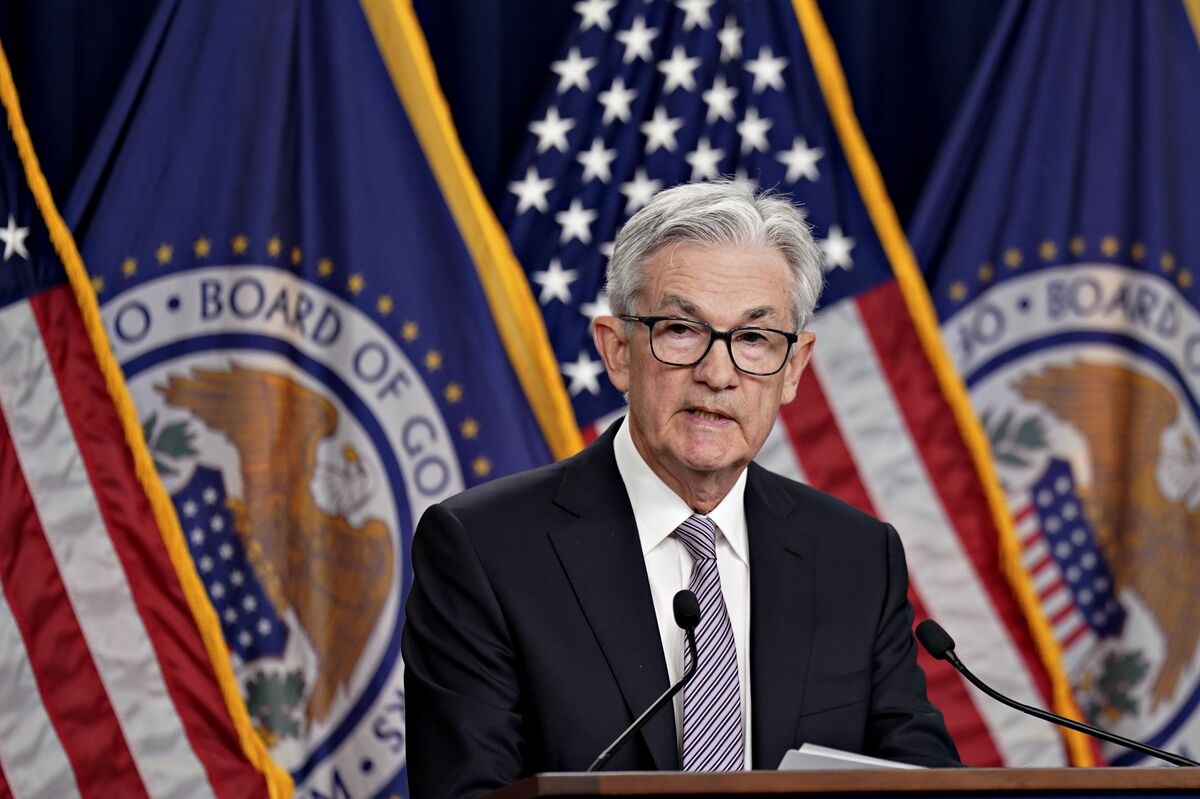
Fed Caught Between Weak Jobs and Rising Oil Prices as War Shock Revives Stagflation Risks

0

Officials at the Federal Reserve are confronting a policy dilemma that economists have long warned about, but policymakers hoped to avoid: a slowing labor market colliding with a fresh wave of inflation pressure driven by geopolitical shocks.

New data released Friday showed the U.S. job market unexpectedly weakened in February, even as energy prices surged in the wake of the escalating U.S.–Israeli conflict with Iran. The conflicting signals are forcing central bank officials to weigh whether to keep interest rates elevated to restrain inflation or cut borrowing costs to support a labor market that may be losing momentum.

For now, policymakers appear inclined to wait.

At the center of the debate is the possibility that the United States could drift toward stagflation — a rare and difficult economic environment marked by sluggish growth, rising unemployment, and persistent inflation.

“We need to keep our eye on both,” Mary Daly said in an interview with CNBC, referring to the central bank’s dual mandate of stable prices and maximum employment. “Both of our goals are risks now.”

A labor market that may be turning

The February employment report provided the first clear sign this year that the U.S. labor market could be losing strength. Employers unexpectedly cut jobs during the month, and the unemployment rate climbed to 4.4%, according to the Labor Department. While a single report rarely changes the Fed’s policy outlook, the broader trend is raising concerns.

Private-sector employers have added fewer than 300,000 workers across all of 2025 so far. Excluding the economic collapse during the COVID-19 pandemic in 2020, that would make this the weakest year for job growth since 2009, when the U.S. economy was still emerging from the global financial crisis.

Part of the decline reflects temporary factors. Labor strikes in the healthcare sector disrupted hiring, while the federal government continues to shrink its workforce through spending cuts and restructuring. Yet even when January’s stronger report is averaged with February’s weaker one, job growth appears to be running below the pace required to keep unemployment stable.

Daly estimates the U.S. economy needs roughly 30,000 new jobs per month simply to hold the unemployment rate steady. The latest figures suggest hiring is falling short of that threshold.

War-driven oil surge complicates inflation fight

At the same time, the inflation battle that has dominated Fed policy for years is far from over.

Energy markets have been rattled by the expanding conflict between the United States, Israel, and Iran. Oil prices climbed close to $90 per barrel this week, raising fears that the conflict could disrupt supplies across the Middle East.

The impact on consumers has been immediate. Average gasoline prices in the United States jumped from roughly $3 per gallon to $3.32 within a week. Such spikes often ripple through the broader economy. Higher energy costs increase transportation and manufacturing expenses and can push up the price of goods ranging from food to airline tickets.

The Fed’s preferred inflation measure was running at 2.9% in December, and economists expect the next report to show little improvement. That remains significantly above the central bank’s 2% target — a goal the Fed has failed to achieve consistently for five years.

Fed Governor Christopher Waller said the oil spike might ultimately prove temporary if geopolitical tensions ease.

“If it’s unwound in a couple of weeks or even two months, it’s not going to be a big factor down the road,” Waller said in an interview with Bloomberg Television.

But he acknowledged the risks if the conflict drags on.

“If it becomes more permanent, then it’ll start bleeding through to other parts of the economy.”

Policy crossroads inside the Fed

The diverging economic signals are intensifying debate within the central bank.

Some officials believe the weakening labor market will ultimately require lower interest rates to support economic growth. Others argue that easing policy too quickly could reignite inflation, especially if oil prices remain elevated.

Stephen Miran, who has advocated rate cuts since joining the central bank last year, said rising energy prices could strengthen the case for easing.

Higher fuel costs act like a tax on households, forcing consumers to divert spending away from other parts of the economy.

“It pulls demand out of the economy as people have to spend more on energy products,” Miran said in an interview with CNBC. “If anything, it biases me toward even more dovish policy.”

Yet other policymakers remain wary of declaring victory over inflation too soon.

Beth Hammack said she believes policy should remain unchanged until inflation clearly moves closer to the Fed’s target.

“Under my base case, I think policy should be on hold for quite some time as we see evidence that inflation is coming down and the labor market stabilizes further,” she said.

Susan Collins similarly urged patience, calling for a “deliberate approach” as policymakers navigate a highly uncertain environment.

Markets betting on rate cuts

Financial markets, however, are increasingly betting that the Fed will soon be forced to ease policy.

After the weak jobs data, traders raised the probability of a rate cut in June to roughly 51%. Another reduction is widely expected by the end of the year.

The timing could coincide with a leadership change at the central bank.

President Donald Trump has nominated former Fed governor Kevin Warsh to replace current chair Jerome Powell. Warsh is expected to assume the role in June if confirmed. The transition could shape the next phase of monetary policy, particularly if economic conditions deteriorate further.

For Fed officials, the current moment carries echoes of past economic crises.

Periods when inflation rises while growth slows are among the most challenging environments for central banks. Tightening policy risks deepening the slowdown, while easing policy could fuel additional price increases.

For now, policymakers appear likely to hold interest rates steady at their upcoming March 17–18 meeting while they gather more data. But with hiring weakening, oil prices climbing, and geopolitical tensions rising, the Fed may soon face a difficult decision: whether to prioritize the fight against inflation or move quickly to prevent the labor market from slipping into a broader downturn.

TUI Cruise Passengers from the Middle East Arrived Back in Germany 

0

Hundreds of cruise passengers from the Middle East have arrived back in Germany amid an ongoing crisis in the region, specifically due to the escalating war involving Iran, and US vs Israel.

Around 640 passengers from the TUI Cruises ship Mein Schiff 4 landed at Frankfurt Airport. They had been stranded in the Gulf region (the ship was originally in Abu Dhabi, UAE, but evacuations routed through places like Muscat, Oman).

TUI Cruises chartered flights to bring them home, with passengers flown out in groups. This is part of a larger repatriation effort: TUI Cruises has two affected ships: Mein Schiff 4*(previously in Abu Dhabi) and Mein Schiff 5 (in Doha, Qatar).

Thousands of passengers estimates around 5,000–7,000 on these ships alone, plus more German tourists in the region totaling up to ~30,000 were stranded due to airspace closures, flight cancellations, Iran’s actions including threats/blockades in the Strait of Hormuz, and broader military tensions involving Israel, the US, and Iran.

Cruise itineraries in the Persian Gulf/Red Sea were canceled or halted for safety. Evacuations involve chartered flights some via Emirates or other carriers, others government-assisted, with groups arriving in cities like Frankfurt, Munich, and others. Earlier groups included smaller flights and more repatriations are ongoing, though some passengers remain awaiting flights.

Passengers described anxious waits on board, with routine cruises turning into tense situations involving security alerts and uncertainty. Relief was evident upon arrival, with some reports noting emotional reunions. This appears to be a developing story tied to the regional conflict disrupting travel. More arrivals are expected in the coming days as TUI and authorities continue operations.

The ongoing escalation in the Middle East conflict—specifically the US-Israeli war with Iran that began around late February 2026—has significantly disrupted global oil supplies, primarily through attacks on shipping, threats to energy infrastructure, and the effective closure (or severe restriction) of the Strait of Hormuz.

This chokepoint handles about 20% of global seaborne crude oil trade and a similar share of liquefied natural gas (LNG) exports, mainly from Gulf producers like Saudi Arabia, Iraq, UAE, Qatar, and others. Iran’s retaliatory actions, including missile strikes on ships and facilities, plus vows to target vessels attempting passage, have halted most tanker traffic for several days, stranding vessels, forcing rerouting, and slashing exports from the region.

Brent crude has risen dramatically since the conflict intensified around February 28–March 1, 2026. Early March saw spikes of 7–13% in single sessions, with Brent briefly exceeding $82/barrel initially. By March 6, 2026, Brent settled around $92–93 per barrel; up ~8–9% in one day in some reports, with highs near $94, marking levels not seen since late 2022 or early 2025 peaks.

West Texas Intermediate has followed suit, reaching around $90–91 per barrel in recent trading up over 12% in sessions, its highest in years. Markets have baked in a substantial “risk premium” estimates from Goldman Sachs and others: $10–$18+ per barrel to account for supply fears.

Prolonged disruptions could push prices toward or above $100 per barrel, per analysts from Wood Mackenzie, Citi, and others. Natural gas prices especially in Europe surged 30–40%+ initially due to LNG flow risks from Qatar. Gasoline prices in the US rose above $3/gallon in places, with knock-on effects to shipping costs, fertilizers, and commodities like sugar and soy.

Direct hits on tankers, five reported attacked. Production cuts; Iraq reduced output due to export issues. Saudi Arabia and others seeking alternative routes (limited capacity). No quick resolution in sight, as the conflict enters its second week with ongoing strikes.

Prices remain highly volatile, with daily swings tied to news on Hormuz flows, military developments, and any de-escalation signals. Analysts note that even brief disruptions cause spikes, but a full, extended closure unlikely long-term due to economic self-harm to Iran and potential military response could trigger a more severe shock.

Some forecasts suggest prices could moderate if flows partially resume soon, but sustained issues risk higher inflation globally, slower growth, and pressure on consumers and emerging markets especially Asia, heavily reliant on Gulf imports.

This ties directly into travel disruptions like the cruise evacuations from the Gulf, as airspace and shipping fears compound the energy crisis. The situation is fluid—monitor real-time market data for the latest.