DD
MM
YYYY

PAGES

DD
MM
YYYY

spot_img

PAGES

Home Blog Page 13

Cramer Urges Nvidia to Launch $500bn Buyback as AI Growth Fails to Lift Shares

0

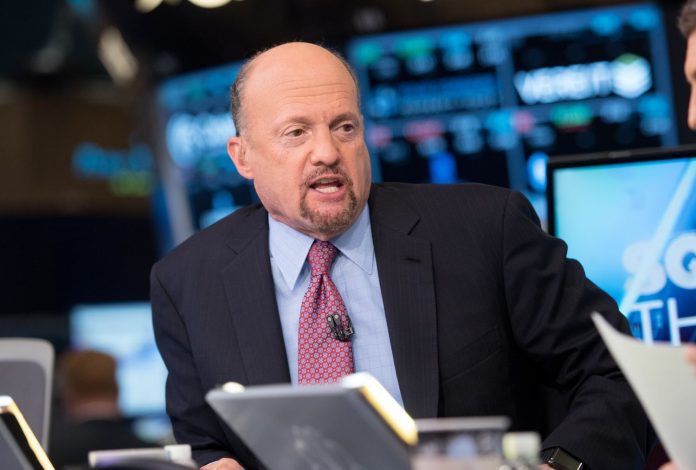
CNBC’s Jim Cramer is calling on Nvidia to dramatically expand its share-repurchase program, noting that the artificial intelligence chipmaker’s extraordinary growth is not being adequately reflected in its stock price.

“I think, from Nvidia’s perspective, there’s nothing more valuable in this market than Nvidia,” Cramer said Monday on CNBC’s “Mad Money.”

His argument comes as Nvidia’s fundamentals continue to strengthen while its shares have delivered comparatively modest gains. The company has repeatedly raised its expectations for future AI demand, yet investors have become increasingly focused on valuation, the sustainability of AI infrastructure spending and Nvidia’s growing involvement in financing the customers that purchase its products.

Cramer believes the company should respond by making its own shares one of its largest capital-allocation priorities.

“I’d quintuple the buyback authorization, announce a monster half trillion dollar buyback and repurchase a tenth of the company in a fairly aggressive fashion, every day, clockwork, and get bigger on the down days,” he said.

Nvidia has already accelerated its buybacks. Its board approved an additional $80 billion authorization in May, without an expiration date, on top of funds remaining under its previous program. The company repurchased nearly $40 billion of its stock during the first two quarters of fiscal 2027, according to FactSet, bringing the pace of repurchases close to the entire amount spent during fiscal 2026. Nvidia bought back roughly $34 billion of shares in fiscal 2025.

Nvidia Chief Financial Officer Colette Kress said on the company’s most recent earnings call that the company was returning more cash to shareholders than its stated target.

“Relative to our plan to return 50% or more of free cash flow, we returned 60% on a year-to-date basis,” Kress said. “And going forward, we intend to increase and return excess free cash flow net of strategic uses.”

The scale of Cramer’s proposal, however, would represent a major escalation. A $500 billion authorization would be several times larger than Nvidia’s existing additional authorization and would potentially allow the company to retire a substantial portion of its outstanding shares if executed at favorable prices.

The attraction for shareholders is straightforward: buying back stock reduces the number of shares outstanding, increasing each remaining shareholder’s proportional ownership of the company and potentially boosting earnings per share.

Nvidia’s growth is accelerating, but the stock is not keeping pace.

Cramer’s argument rests largely on what he sees as a widening gap between Nvidia’s operating outlook and its share-price performance.

Since Nvidia’s October 2025 GTC conference in Washington, the company has provided strong visibility into future AI infrastructure demand. Its latest outlook calls for roughly 70% revenue growth in fiscal 2028, compared with an approximately 45% growth rate that analysts had previously anticipated.

Yet the stock has failed to sustain the gains investors might expect from such an outlook.

Nvidia shares have risen only about 8% since the Oct. 28, 2025 GTC event, according to the figures cited by Cramer, compared with roughly an 11% gain for the S&P 500.

“Whatever Nvidia’s doing, it simply is not being rewarded by Wall Street,” Cramer said.

That disconnect matters because Nvidia’s valuation is increasingly being judged against expectations several years into the future. Investors are no longer simply asking whether AI demand is strong. They are assessing how long hyperscalers will continue spending at extraordinary levels, whether returns on AI infrastructure will justify those investments, and how much of Nvidia’s future growth is already embedded in its valuation.

A large buyback could give Nvidia a way to capitalize on what management believes is a mismatch between the company’s intrinsic value and its market price.

The Circular-Financing Problem

Nvidia’s capital-allocation decision is becoming more complicated because the company has moved beyond simply selling chips into helping finance the broader AI infrastructure ecosystem.

Nvidia has invested in or provided financial support to companies involved in building AI data centers and computing capacity. The arrangements are designed to help customers obtain the enormous amounts of capital required to purchase Nvidia’s GPUs and construct the infrastructure needed to deploy them.

The strategy has raised concerns about so-called circular financing. The concern is that Nvidia could provide capital or financial support to companies that subsequently use that money to purchase Nvidia’s own hardware, creating a feedback loop that makes AI demand appear stronger than it otherwise would.

That issue has become a point of scrutiny as the AI infrastructure boom absorbs hundreds of billions of dollars in capital.

Cramer rejected the idea that Nvidia’s financing activities should automatically be viewed as a vulnerability. He argued that Nvidia’s underlying collateral gives the company an advantage that conventional lenders may not have because its GPUs retain significant value and can potentially be redeployed.

“Worst case scenario, they repossess the GPUs, maybe even at the price they sold them for,” Cramer said.

The argument highlights that Nvidia’s financial exposure is not necessarily equivalent to an unsecured loan to an AI startup. High-end computing infrastructure can retain substantial economic value, although its resale value would depend on the hardware’s age, technological relevance, configuration, and the state of the AI market.

Why Apple Is The Model

Cramer pointed to Apple as an example of how aggressive buybacks can benefit shareholders when management believes the market is undervaluing the company.

Apple has spent hundreds of billions of dollars repurchasing its own shares during Tim Cook’s tenure. According to FactSet, the company has bought back more than $800 billion of stock over Cook’s roughly 15 years as chief executive, reducing the share count by about 40% during that period.

“That’s why they should do like Apple, which also was valued incorrectly, and repurchase a spectacular amount of stock,” Cramer said.

The comparison is relevant but not exact. Apple generates enormous and relatively predictable free cash flow, while Nvidia is operating in a rapidly expanding but more capital-intensive AI ecosystem. Nvidia is simultaneously funding its own research and development, expanding its computing ecosystem and supporting infrastructure investments that could create future demand for its products.

A massive buyback would therefore involve an opportunity cost. Every dollar spent repurchasing shares is a dollar that cannot be deployed toward acquisitions, strategic investments, infrastructure partnerships, or other initiatives that could strengthen Nvidia’s long-term competitive position.

The more important question for Nvidia is consequently not whether buybacks create value. They can, particularly when shares are genuinely undervalued. The question is how aggressively the company should repurchase stock while the AI industry remains in the middle of an unprecedented infrastructure buildout.

For now, Nvidia has indicated that shareholder returns will remain a major use of excess free cash flow. Cramer wants the company to go considerably further, betting that the most effective way to convince investors of Nvidia’s long-term value may be for Nvidia itself to become one of the largest buyers of its shares.

If the company eventually adopts a dramatically larger program, the impact could extend beyond earnings per share. A sustained reduction in Nvidia’s share count would increase the ownership concentration of remaining investors and could provide a powerful signal that management views the stock as undervalued.

But the size and timing of any such program will ultimately depend on how Nvidia balances shareholder returns against the enormous capital requirements of maintaining its dominance in the AI computing market.


Adobe Acquires Indian AI Marketing Startup Rilo to Expand Automated Workflow Tools

0

Adobe has acquired India-based marketing intelligence startup Rilo in a deal that combines technology licensing with the acquisition of the startup’s six-member team, giving the software giant additional technology for automating increasingly complex marketing and customer-experience workflows.

The financial terms were not disclosed. Adobe confirmed the acquisition but declined to provide further details.

The transaction marks Adobe’s second acquisition from India after the company bought video technology startup Rephrase.ai in 2023, and comes as Adobe intensifies its push to integrate artificial intelligence into its marketing, creative and customer-experience products.

Rilo was founded in 2025 by Indian Institute of Technology alumni Georgi Boby and Dhruv Jaglan. The startup raised $1 million from Peak XV Partners, DeVC and Day Zero Ventures at a reported valuation of $10 million.

A source told TechCrunch that Rilo’s investors will receive an exit as part of the transaction, while Adobe plans to incorporate some of Rilo’s intellectual property into its products. Rilo itself will shut down following the acquisition, and its service will no longer be available to existing customers.

The startup developed software designed to allow go-to-market teams to build and automate customized workflows covering tasks such as competitor intelligence, content repurposing and distribution, and sales-call analysis.

Its technology also allowed businesses to construct workflows similar to those emerging around AI agents, enabling software to move beyond generating content or answering questions and instead execute sequences of tasks based on instructions.

That capability is expected to become a big boost to Adobe as businesses seek to automate marketing operations across multiple stages of a campaign, from content creation and distribution to performance monitoring and follow-up actions.

Adobe Targets The Next Phase Of AI-Powered Marketing

The acquisition reflects a broader shift in enterprise software toward agentic workflows, where AI systems can coordinate multiple tasks rather than operate as standalone assistants.

Marketing teams, for example, now want AI systems that can analyze a sales call, identify follow-up actions, generate appropriate content, distribute that content across relevant channels, and monitor the resulting engagement. Companies are also looking for tools that can track how their brands appear in responses generated by AI assistants such as ChatGPT, Gemini and Claude.

Rilo’s workflow technology could give Adobe additional infrastructure for addressing those requirements within its broader customer-experience and marketing ecosystem.

Rahul Mathur of DeVC said Rilo could fit into Adobe’s customer-experience and marketing products by handling complex workflows and giving customers greater visibility into actions performed across Adobe’s platform.

The strategic value for Adobe therefore extends beyond acquiring a six-person team. The company is gaining intellectual property that could accelerate development of AI-driven automation without having to build every component internally.

Rahul Gupta, managing partner at Day Zero Ventures, said Rilo’s workflow-builder technology was “way ahead of the curve” and could help Adobe improve customer experience and productivity.

Adobe has been expanding its marketing technology portfolio through acquisitions as it attempts to connect its creative tools with the increasingly automated digital-marketing stack.

In 2025, the company agreed to acquire SEO and digital-marketing platform Semrush for $1.9 billion. That transaction gave Adobe access to technology focused on search visibility, content optimization, and digital marketing intelligence.

Rilo adds a different layer to that strategy: workflow automation.

The combination could potentially allow Adobe to move from helping customers create and optimize marketing content toward helping them automate the operational processes surrounding that content.

AI has been changing how marketing organizations are structured. Generative AI has made content production faster, but businesses still need systems capable of deciding what should be produced, where it should be distributed, who should act on the results, and how performance should be measured.

Adobe’s broader opportunity is to make its Creative Cloud, Experience Cloud and AI capabilities part of that automated workflow.

Competition Is Intensifying

Adobe is not pursuing this market alone.

Canva has expanded its marketing capabilities through acquisitions and new product development, while Amazon, Google and Meta have built sophisticated AI-powered advertising and marketing infrastructure.

The competition is shifting from individual creative and advertising applications toward integrated AI systems that can manage larger portions of the marketing lifecycle.

This creates both an opportunity and a strategic challenge for Adobe. Its existing customer base provides a major distribution advantage, but the company must ensure that AI agents and workflow tools become deeply integrated into products customers already use rather than emerging as disconnected features.

Rilo’s technology could help accelerate that transition.

The acquisition also underpins the growing importance of India’s startup ecosystem as a source of specialized AI and enterprise software talent. Rilo was founded only in 2025 and raised $1 million before being acquired, illustrating how quickly large technology companies are moving to absorb small teams with technology aligned with strategic AI priorities.

The transaction is ultimately less about Rilo’s existing customer base, which will disappear with the shutdown of the startup, than about its technology and people. Adobe is effectively buying a compact engineering team and intellectual property that could be incorporated into a much larger software platform.

As Adobe competes to make AI a central layer of its marketing and customer-experience business, acquisitions such as Rilo’s could provide a faster route to agentic automation while allowing the company to leverage its existing enterprise distribution and customer relationships.

Palo Alto Networks Sees $1 Trillion Cybersecurity Upgrade Wave as AI Accelerates Attacks

0

Palo Alto Networks Chief Executive Nikesh Arora said Tuesday that the rapid adoption of artificial intelligence is forcing companies to reconsider roughly $1 trillion of cybersecurity infrastructure built for a pre-AI environment, as automated attacks increasingly operate at speeds that legacy defenses were never designed to handle.

“Nothing that was deployed seven or 10 years ago is prepared or ready to handle AI at machine speed,” Arora told CNBC’s Jim Cramer on “Mad Money.” “You have to rethink your cyber architecture.”

He made the assertion as Palo Alto reported quarterly results that beat Wall Street expectations and issued a strong outlook for its new fiscal year, suggesting that the security spending Arora describes as necessary is already beginning to translate into commercial demand.

The company estimates that there is approximately $1 trillion in accumulated global “cybersecurity debt” that organizations will need to modernize to defend against automated threats.

“There’s approximately $1 trillion of global cybersecurity debt that must be modernized to defend against automated threats because they operate instantaneously,” Arora said on Palo Alto’s earnings call.

The argument marks a notable shift in the market’s perception of AI and cybersecurity.

Earlier this year, cybersecurity stocks came under pressure as investors worried that capable AI models could automate security functions, reduce demand for conventional cybersecurity software and ultimately disrupt established vendors.

That concern has increasingly given way to a different view: AI is becoming a force multiplier for both attackers and defenders. The same technology that can help security teams identify vulnerabilities and automate responses can also enable attackers to discover weaknesses, develop exploits, and move across networks far faster than human operators.

“You cannot deploy AI successfully if you don’t get cybersecurity right,” Arora said.

From AI Threat to AI Growth Opportunity

Arora described the change in investor sentiment as a dramatic reversal from earlier in the year.

“Nine months ago, … we were guilty and convicted of near death because AI was going to eat our lunch, breakfast, and dinner,” he told Cramer. “It seems like that’s not the case. It seems like we’re going to have to have the feast with them.”

He identified the emergence of Anthropic’s Mythos model earlier this year as an important turning point in the industry’s thinking. The model demonstrated how advanced AI could be applied to cybersecurity operations, including the identification and exploitation of software vulnerabilities, intensifying concerns among businesses about whether their existing defenses could withstand machine-driven attacks.

“I’ve been trying for eight years to tell customers they’re not ready, and [Anthropic CEO Dario Amodei] did it in one event, just by launching Mythos,” Arora said.

Palo Alto’s stock has gained 113% since April 7, reversing losses accumulated earlier in 2026 as investors reassessed the impact of AI on the cybersecurity industry.

The change in sentiment reflects a broader realization that AI does not necessarily eliminate the need for cybersecurity software. Instead, it can increase the volume, speed, and sophistication of attacks, potentially expanding the amount companies need to spend to protect increasingly automated and interconnected systems.

Palo Alto Targets Legacy Infrastructure

Arora said Palo Alto has spoken with roughly 2,000 companies about its Frontier AI Critical Defense Program, an initiative designed to use advanced AI models to test corporate defenses, uncover vulnerabilities and help organizations modernize their security architecture.

Palo Alto formally introduced the programme in August.

The initiative is aimed at a growing problem for corporate IT departments: many security systems were designed around threats that moved at human or network speeds, while AI-enabled attacks can potentially scan environments, identify weaknesses and attempt exploitation almost instantaneously. That creates a widening gap between the speed at which an organization can detect and respond to a threat and the speed at which an automated attacker can exploit it.

For companies deploying AI agents that can access internal systems, customer information, financial data, or business applications, the stakes are even higher. A security failure could potentially give an autonomous system a pathway into sensitive corporate infrastructure, turning AI adoption itself into a new attack surface.

Opportunity Will Take Years to Materialize

Arora cautioned that the projected $1 trillion opportunity should not be interpreted as an immediate spending surge.

“Not everything’s going to happen next quarter,” he told Cramer. “But all I say is this changes the long-term growth rate and duration of cybersecurity, not just for Palo Alto, but as an industry.”

The opportunity will likely emerge through years of replacing legacy systems, deploying AI-specific security controls, and integrating cybersecurity into new AI infrastructure rather than through a single wave of spending. It also suggests that cybersecurity could become a prerequisite for enterprise AI deployment rather than a separate IT expense.

As companies increasingly use AI agents capable of taking actions without constant human supervision, security architecture will have to evolve from simply protecting users and devices to controlling what autonomous systems can access, execute, and modify.

Palo Alto’s strong results and outlook indicate that investors are beginning to price in that structural shift. The company’s central thesis is that AI may not be the technology that displaces cybersecurity; instead, it could be the technology that makes a much larger cybersecurity investment unavoidable.

Russia-Iran Missile Cooperation and Hawkish Fed Put Global Markets Under Pressure

0

The global economy is entering a period in which geopolitical risk, political instability and monetary tightening are increasingly colliding. Markets already have plenty to worry about, but fresh revelations about Russia’s military assistance to Iran, uncertainty surrounding the US military establishment and a hawkish Federal Reserve are creating a more complicated environment for investors.

A Financial Times investigation has revealed that Russia has secretly assisted Iran in developing advanced supersonic cruise-missile technology through a programme known as C430L.

The project, which began in 2023, reportedly involves Russian missile specialists helping Tehran develop ramjet propulsion capable of sustaining flight at several times the speed of sound.

Although there is no evidence that a Russian-assisted missile has entered operational service, Iranian engineers have reportedly built and flight-tested the propulsion system. The significance extends beyond another weapons-development programme.

Supersonic cruise missiles can reduce the reaction time available to air and missile-defence systems, potentially creating a serious challenge for US naval forces operating in the Middle East.

The cooperation also illustrates how the relationship between Moscow and Tehran is evolving from conventional military support toward deeper technological integration. That development arrives as the conflict involving the United States and Iran continues to threaten energy markets and global risk appetite.

Any further escalation around the Strait of Hormuz could disrupt energy flows, pushing oil prices higher and creating another inflationary shock for economies already struggling with elevated price pressures. The combination of higher energy costs and geopolitical uncertainty is particularly uncomfortable for central banks.

Washington is facing its own questions about institutional stability. The resignation of the US Army chief introduces another layer of uncertainty at a moment when American military forces are already heavily exposed to developments in the Middle East.

Leadership changes do not necessarily imply operational weakness, but markets tend to react negatively when senior institutional changes coincide with active military confrontations and heightened strategic tensions.

The most important issue is the possibility that these risks reinforce one another. A geopolitical escalation can lift oil prices. Higher oil prices can strengthen inflation. Persistent inflation can prevent central banks from easing monetary policy. Higher interest rates can then weaken economic growth, corporate earnings and risk assets.

The Federal Reserve’s posture therefore matters enormously. Chair Kevin Warsh has recently emphasized that inflation remains uncomfortably high and indicated that interest-rate increases could be necessary if price pressures persist. His hawkish stance has reinforced concerns that monetary policy may remain restrictive for longer than investors expect.

The uncomfortable possibility is that the Fed may be willing to tolerate weaker growth, and potentially even a recession, to restore price stability. That would represent a difficult environment for equities, credit markets and speculative assets such as cryptocurrencies.

Higher yields increase the opportunity cost of holding riskier investments while tighter financial conditions can reduce liquidity across markets. This creates a three-front threat: geopolitical escalation, institutional uncertainty and restrictive monetary policy.

None of these risks alone guarantees a market downturn. But together, they make the investment environment considerably less forgiving. Markets have spent much of the post-pandemic era learning to absorb wars, inflation shocks and aggressive monetary policy.

The current challenge is that these forces are increasingly arriving simultaneously. Investors may therefore need to prepare for greater volatility, wider risk premiums and sharper reactions to every development from Tehran, Washington and the Federal Reserve.

BlockDAG Buybacks Go Live, While Sui Crypto & Worldcoin Advance: What You Need to Know

0

A sharp split now characterizes the digital asset landscape. Market participants actively compare short-term chart patterns against structural growth trends when evaluating top crypto coins. Projects like Sui Crypto and Worldcoin demonstrate robust fundamental expansion, even as their token valuations undergo temporary consolidation phases.At the same time, alternative protocols draw substantial market attention by launching specialized liquidity initiatives and operational mainnet infrastructure. BlockDAG (BDAG) leads this movement after officially launching its priority buyback campaign. The activation of Batch 1 buybacks, combined with exclusive promotional codes, reflects a growing industry trend of pairing immediate participant rewards with long-term network utility.

Sui Crypto: Short-Term Headwinds Countered by Long-Term Bullish Signals

Sui Crypto presents a striking contrast between short-term valuation struggles and underlying structural resilience. SUI remains constrained within a daily downtrend around $0.76, holding near critical exponential moving averages beneath a descending Supertrend channel. However, deeper technical indicators present a far stronger narrative. A clear bullish RSI divergence on the SUI/BTC trading pair hints at an upcoming trend reversal as Bitcoin consolidates, signaling potential capital rotation into altcoins.

On-chain metrics further reinforce this optimistic outlook for Sui Crypto. Spot SUI ETFs have logged 12 consecutive weeks of net inflows, accumulating over 9.3 million tokens. Network usage recently hit a 90-day high of 8.5 million daily transactions. Although users face a September 24 deadline to transition assets from Phantom Wallet to alternative Sui-compatible wallets, steady institutional accumulation and high transaction volume demonstrate that SUI maintains strong underlying momentum beneath current market volatility.

Worldcoin News: Institutional Interest Accelerates Alongside Mass Adoption

Worldcoin news highlights a major disconnect between expanding operational adoption and short-term price consolidation. Global user adoption for Worldcoin (WLD) continues to scale rapidly, surpassing 25 million total users across more than 100 countries. Nearly 12 million of these individuals have completed biometric verification using Orb technology. Crucial infrastructure updates, such as open-sourcing the GKR prover for on-device private AI verification and initiating Phase 2 of the World ID Trusted Setup, continue to solidify the protocol’s privacy-first identity framework.

Commercial backing and institutional support remain exceptionally firm. Nasdaq-listed Eightco Holdings anchors its corporate treasury strategy around WLD, holding nearly 302 million tokens as its primary reserve asset. Deep institutional liquidity continues to grow through new exchange trading pairs and increased over-the-counter activity.

Although short-term price action encounters persistent resistance between $0.3800 and $0.4000, rising real-world utility and sustained institutional backing emphasize Worldcoin’s role as a resilient digital identity network.

BlockDAG Priority Buybacks Go Live: Unlocking Priority Access & 250% BDAG Bonuses

BlockDAG is capturing significant participant interest across top crypto coins following the official rollout of its priority buyback system. Investors are securing allocations in Batch 1 by using the special promotional code “BUYBACK250”. This code unlocks a 250% bonus on BDAG purchases along with accelerated token minting priority.

Operating on a strict first-in, first-paid model, this initial phase caps total participation at $5 million before transitioning to a second batch. The promotional structure pairs an entry purchase price of $0.00000007 per BDAG with a targeted exit buyback level of $0.04 over a defined window. Because total purchase volume using the priority code directly determines queue placement, early entry remains vital for maximizing allocation advantages.

Beyond aggressive incentive programs, BlockDAG continues to advance its underlying technology stack. The operational mainnet currently provides a stable foundation for decentralized applications and high-throughput transaction execution. Simultaneously, an active crypto Casino platform drives immediate platform utility and ongoing user interaction.

Development across software and hardware layers maintains strong momentum. The team plans to launch the BlockDAGX ecosystem shortly, while engineers finish work on a Super App designed to combine asset management, network services, and spending tools into one central hub. Combined, these continuous technical deliverables and targeted incentive programs establish BlockDAG as a key protocol within the digital asset market.

Evaluating Market Divergence and Future Utility Initiatives

The overall cryptocurrency landscape reflects distinct paths forward across major network architectures. Sui Crypto displays long-term fundamental strength despite temporary technical overhead, while Worldcoin news shows how real-world utility in identity verification can pull in institutional capital through periods of market consolidation.

In contrast, BlockDAG demonstrates how high-yield incentives can drive direct participant engagement. By pairing structured programs like Batch 1 access and the BUYBACK250 code with ongoing mainnet expansion, the project links short-term growth strategies to long-term technical utility.

As top crypto coins navigate shifting capital flows, sustained adoption will favor protocols that balance compelling tokenomic incentives with functional blockchain delivery.

Presale: https://purchase.blockdag.network

Website: https://blockdag.network

Telegram: https://t.me/blockDAGnetworkOfficial

Discord: https://discord.gg/Q7BxghMVyu