
DD
MM
YYYY

PAGES

DD
MM
YYYY

spot_img

PAGES

Home Blog Page 13

Polymarket Diving into Perp Futures for Long and Short Assets Trading 

0

Polymarket announced they’re launching perpetual futures (perps), letting users go long or short on assets; crypto like BTC, equities like NVDA, commodities like gold with leverage at least 10x mentioned in reports, 24/7, no expiry. We price the future, Now you can lever it. It’s a direct expansion beyond binary event contracts.

This move and Kalshi racing them on similar perps plans shows smart business: Prediction markets excel at high-conviction, event-driven pricing—crowd wisdom on discrete outcomes with clear resolution. Perps shine for continuous directional trading, leverage, and scalping without waiting for expiry.

Perps are a monster volume driver in crypto; on-chain perps did hundreds of billions monthly. Prediction markets have massive engagement spikes (elections, big events) but can be lumpy. Adding 24/7 levered trading on known markets keeps users sticky and multiplies activity.

You can already express nuanced views on Polymarket. Perps let you lever those convictions or hedge them indefinitely. High-frequency traders get micro-edges amplified; conviction holders get size without tying up huge capital in illiquid binaries. Kalshi’s crypto push forced their hand.

Both are evolving from event betting toward fuller trading platforms. Polymarket’s user base, hundreds of thousands MAU + perps could challenge pure perp DEXs like Hyperliquid in certain flows. Perps aren’t eating prediction markets. Perps are great for ongoing price exposure but they suck at many things prediction markets handle cleanly:

Binary or multi-outcome events (election winner, “will this bill pass”, sports results, obscure news). Information aggregation on low-liquidity or narrative-driven stuff where expiry forces resolution. Pure “will this happen?” conviction without constant funding rates or liquidation drama.

Perps can approximate some of this like event-linked perps, but the mechanics differ—funding rates, margin, no natural resolution. Prediction markets are basically event derivatives with built-in oracle resolution. They’re complementary: perps for flow and leverage, preds for discovery and truth-seeking on real-world outcomes.

Crypto history shows this pattern—DEXs added perps for volume, but spot, options, and niche products including event contracts still grew. Polymarket isn’t pivoting; they’re layering a high-margin, high-engagement product on their core strength; pricing the future via crowd bets. Derivatives keep winning because speculation is sticky, leverage amplifies everything, and platforms want to own more of the user’s wallet and time.

The launch comes amid intense competition with Kalshi another prediction market platform also eyeing perps and crypto trading. Polymarket appears to have beaten Kalshi to the public announcement, escalating a rivalry in both event-based and continuous derivatives. It aligns with Polymarket’s broader growth: Explosive volume in 2025–2026, fueled by high-profile events like elections and geopolitical news.

Reports of ambitious fundraising: aiming for ~$400M at a potential $15 billion valuation. Regulatory progress, including CFTC-related developments, positioning it for U.S. and global expansion while staying crypto-friendly. But calling it perp over prediction market is like saying options killed spot trading. Both thrive when the underlying; real events, price discovery is interesting. Prediction markets proved they can pull real money and attention on big macro and political calls.

Perps will probably boost Polymarket’s overall volume and make it a stickier app. Expect more hybrid stuff: levered event exposure, perpetual prediction-like contracts, etc. Bullish for the whole ecosystem—more tools for expressing views on the future, whether discrete or continuous.
Germany’s Johann Wadephul Rejected Proposals for Broad Sanctions Against Israel

0

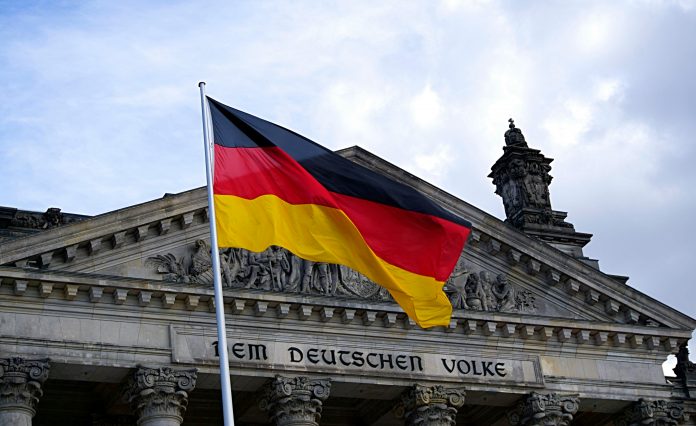
German Foreign Minister Johann Wadephul rejected proposals for broad or far-reaching EU sanctions against Israel, including suspension of the EU-Israel Association Agreement, during an EU foreign ministers’ meeting in Luxembourg.

Several EU countries—particularly Spain, Ireland, and Slovenia—pushed for a debate on suspending or partially limiting the EU’s association agreement with Israel. This pact provides preferential trade access and broader cooperation. Critics cited concerns over Israel’s military operations in Gaza, actions in Lebanon, and settlement policies in the West Bank, describing some conduct as unacceptable.

Germany and Italy blocked the move. Wadephul called broad measures like withdrawing free trade benefits inappropriate and instead advocated for critical, constructive dialogue with Israel on key issues. He emphasized talking directly rather than punitive steps. The proposal lacked the needed support; full suspension requires unanimity; partial measures need a qualified majority, which Germany and Italy helped prevent.

The meeting highlighted deep EU divisions on the Middle East. Other ideas, such as targeted sanctions on extremist Israeli settlers or individuals, were discussed separately but not the focus of this rejection. Signed in the 1990s and upgraded over time, it covers trade, political dialogue, and cooperation.

Suspending it would be a significant escalation, affecting economic ties, Israel is an important EU partner in tech, security, and research. Past EU actions have included sanctions on violent settlers and criticism of policies, but broad trade penalties have faced resistance from countries like Germany, Italy, Hungary, and the Czech Republic, who favor engagement over isolation.

Germany has long viewed Israel’s security as a core interest, shaped by historical responsibility post-Holocaust. Successive governments including under the current foreign minister have supported Israel’s right to self-defense while criticizing specific policies, such as settlement expansion or humanitarian access issues in Gaza.

Wadephul’s comments align with preferring diplomacy and dialogue over sanctions that could undermine a two-state solution or regional stability. Earlier foreign minister Annalena Baerbock had expressed similar caution on broad measures while occasionally supporting targeted sanctions on extremists.

This outcome reflects ongoing EU splits: some member states push for stronger pressure on Israel amid the humanitarian situation and conflicts, while others prioritize strategic partnership, countering Iran/Hezbollah threats, and avoiding measures they see as one-sided or ineffective.

Successive governments, including under former Chancellor Olaf Scholz and current Chancellor Friedrich Merz have repeatedly stated that Germany stands by Israel, especially after the October 7, 2023, Hamas attacks. Official statements emphasize that no state can tolerate terrorist attacks involving murder, kidnapping, and torture, and that Germany’s historical legacy makes solidarity with Israel non-negotiable.

Germany advocates for a negotiated peace leading to an independent, democratic, and viable Palestinian state living alongside Israel in peace and security. Recognition of Palestinian statehood is viewed as a final step after direct negotiations, not a unilateral move. Berlin criticizes Israeli settlement expansion in the West Bank as a violation of international law and an obstacle to peace.

Germany has rejected accusations that Israel’s actions in Gaza constitute genocide, describing them instead as self-defense. It has opposed efforts to characterize the conflict in those terms. No major new sanctions were adopted; the focus remains on dialogue and possible narrower measures.

Russia Lower Parliament Approves the Digital Currency and Digital Rights Bill

0

Russia’s State Duma, lower house of parliament just approved the On Digital Currency and Digital Rights bill in its first reading on April 21, 2026. This is not final passage into law yet—Russia’s legislative process requires second and third readings in the Duma, then approval by the Federation Council and the President’s signature.

The bill is on track for full adoption by July 1, 2026, with enforcement elements possibly rolling out later. Digital assets are legally recognized as property. Owners can defend them in court, include them in bankruptcy, inheritance, or divorce proceedings. Domestic use still strictly banned. The ruble and eventually the digital ruble remains the only legal tender for payments inside Russia.

Cross-border and foreign trade settlements: This is the big shift. Businesses and companies can use approved cryptocurrencies for international trade payments, including for goods, services, securities, intellectual property, etc. It’s explicitly designed to help bypass Western sanctions by providing an alternative to restricted banking channels.

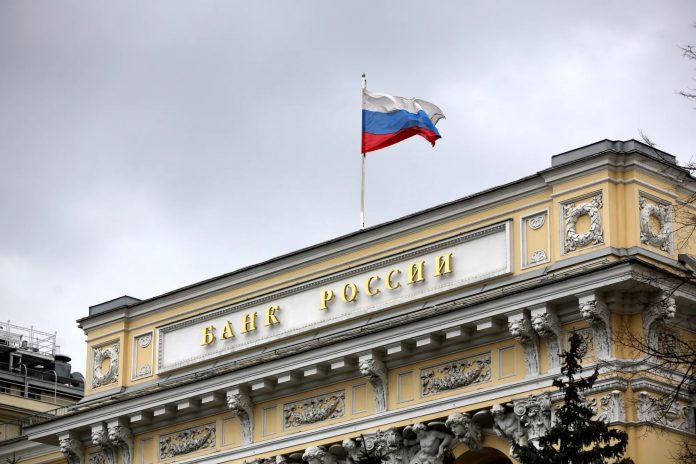
The Bank of Russia (CBR) gets strong oversight. It will license intermediaries, exchanges, brokers, custodians, approve or ban specific assets and transactions, and set strict rules. Transactions without licensed Russian intermediaries are generally prohibited. Non-qualified investors face caps around 300,000 rubles/~$3,800 annually after risk tests. Qualified and professional players have fewer restrictions.

Residents must notify tax authorities about foreign crypto wallets and transactions. Reports indicate the CBR will maintain a whitelist of approved cryptocurrencies based on strict criteria: high average market cap, high daily trading volume >1 trillion rubles, and a long trading history.

Bitcoin and Ethereum  are widely expected to qualify first, along with possibly a few others like SOL, BNB, or TRON. No broad free-for-all—only top-tier liquid assets initially. This formalizes what Russian exporters and importers especially in oil, grain, metals, have already been doing informally or experimentally to keep trade flowing with partners in Asia, Middle East, Africa, and elsewhere despite sanctions.

Bullish for adoption, It gives crypto real utility in global trade and sanctions circumvention. Russia has been pushing this direction for years; experimental regimes started earlier, mining legalized in 2024, etc. Other sanctioned or BRICS-adjacent countries may watch closely. Domestic ban stays firm, and heavy regulation and centralized control remains. It’s pragmatic crypto as a tool under state oversight, not libertarian decentralization.

Markets are reacting positively today to the news, with talk of structural demand for BTC/ETH from Russian trade flows. But remember, this is still early-stage legislation—full effects depend on implementation details, whitelisting, and how counterparties abroad engage. Russia is turning sanctions pressure into a feature for crypto integration in foreign trade.

It’s a meaningful step toward mainstreaming digital assets in international settlements, even if tightly controlled. If you’re trading or holding $BTC/$ETH, this adds another layer of nation-state utility narrative on top of existing institutional momentum. Keep an eye on the next readings for confirmation.

For Russia, it provides a practical workaround for sanctioned trade. Crypto offers pseudonymous, borderless settlement without relying on traditional dollar-based rails. It adds another large economy with real trade volume legitimizing and potentially increasing demand for BTC, ETH, and other assets in real-world international commerce. This fits a pattern of countries exploring crypto for de-dollarization or sanctions evasion.

It’s not full crypto legalization as money inside Russia. Capital controls, tax reporting including foreign wallets, and penalties for unlicensed activity are tightening alongside this. Implementation details especially national security aspects of cross-border flows remain somewhat opaque.

This is still in the legislative process — first reading is progress, but amendments and second and third readings could tweak it. Markets often react positively to such headlines as signals of growing institutional adoption, though actual on-the-ground impact will depend on how quickly the Central Bank operationalizes licensing and approvals.

Volo Protocol Suffered a $3.5M Exploit Targeting Sui Blockchain

0

Volo Protocol suffered a $3.5M exploit on April 21, 2026, targeting three vaults on the Sui blockchain. About $500K has already been frozen, and the team pledged to absorb all losses without passing them to users. Roughly $28M in other vaults remains secure.

Key Details of the Exploit

Amount stolen: ~$3.5 million, assets affected are Wrapped Bitcoin (WBTC), XAUm (gold-backed token), and USDC stablecoin, 3 specific vaults; all others remain secure with ~$28M TVL. Vaults frozen to prevent further drainage ~$500K of stolen assets successfully frozen within 30 minutes, 19.6 WBTC blocked from being bridged out, now under protocol control.

Volo confirmed no losses will be passed to users; the protocol will absorb the financial hit. Collaboration with the Sui Foundation and ecosystem partners. On-chain investigators working to recover remaining funds, XAUm token backing confirmed intact by Matrixdock, NAVI Protocol paused operations as a precaution.

April 2026 has seen over $600M in DeFi losses, including: $292M exploit on Kelp DAO linked to LayerZero vulnerability. $285M exploit on Drift Protocol. Highlights vulnerabilities in cross-chain bridges and non-EVM chains like Sui. Sui ecosystem sentiment: Short-term bearish pressure expected due to shaken confidence.

Volo’s commitment to cover losses may help restore trust and limit contagion risk across the Sui DeFi ecosystem. The Volo Protocol hack exploited vulnerabilities in three vaults holding WBTC, XAUm, and USDC on the Sui blockchain. Attackers attempted to bridge stolen assets out, but ~$500K was frozen and 19.6 WBTC blocked. The team pledged to absorb all losses, protecting users.

This incident highlights systemic risks in DeFi, especially around cross-chain bridges and non-EVM ecosystems. Three vaults on Volo Protocol (WBTC, XAUm, USDC). While the exact technical flaw is still under investigation, early reports suggest a vault-specific vulnerability rather than a protocol-wide issue.

Attackers drained ~$3.5M from the vaults. Attempted to bridge 19.6 WBTC out of Sui. Volo intercepted and froze those funds, plus ~$500K in related assets. All vaults frozen pending a full post-mortem. Collaboration with the Sui Foundation and ecosystem partners to recover funds. Volo confirmed users will not bear losses; the protocol itself will absorb the financial hit.

Absorbing losses may help preserve user confidence. Vaults remain frozen until remediation is complete. Need for stronger audits and vault isolation mechanisms. Short-term bearish pressure on SUI token due to shaken confidence. $28M in unaffected vaults shows the exploit was isolated. NAVI Protocol paused operations; Matrixdock confirmed XAUm backing.

April 2026 has seen over $600M in DeFi exploits, including Kelp DAO ($292M) and Drift Protocol ($285M). Bridging Bitcoin (WBTC) to non-EVM chains like Sui introduces new attack surfaces. Reinforces the need for stricter cross-chain security audits and supply chain integrity checks. Vault-specific vulnerability, not systemic. No losses passed to users; Volo absorbs the hit.

Independent on-chain analyses from firms like GoPlus Security, ExVul, and Bitslab attribute the breach to a compromised high-privilege vault admin private key, likely via social engineering or fraud—not a smart contract bug in the audited code. The attacker used privileged functions to drain the vaults. Recovery efforts have been proactive: ~$500K in stolen assets frozen within ~30 minutes via ecosystem partners.

A subsequent attempt to bridge out 19.6 WBTC (~$2.1M) was blocked; those funds are now under team/partner control and are being worked on for return to the protocol. Volo has explicitly committed to absorbing the loss internally and is preparing a full post-mortem with remediation plans. All vaults remain frozen for now while fixes are implemented. Short-term trust damage, long-term recovery depends on transparency and stronger security. DeFi protocols must prioritize bridge security and isolated vault design to reduce contagion risk.

Gold Extends Rally as Iran Ceasefire Holds Uneasily, Dollar Softens, and Markets Reprice Geopolitical Risk

0

Gold prices climbed on Wednesday, extending gains as easing market stress following the extension of the Iran ceasefire reduced forced selling across asset classes and supported a broader rebound in commodities and equities.

Spot gold rose 0.9% to $4,751.57 per ounce by 1153 GMT, while U.S. gold futures for June delivery gained 1.1% to $4,770.10. The move came as investors recalibrated positions after days of volatility driven by shifting expectations around the conflict between the United States and Iran.

The immediate catalyst was the decision by Donald Trump to extend the ceasefire with Iran to allow further peace talks. The announcement helped ease fears of imminent escalation, but uncertainty remains over whether Iran or Israel, a key U.S. ally in the conflict, will formally accept the extension.

In parallel, risk assets strengthened, and the U.S. dollar softened, creating a supportive backdrop for bullion. Oil markets remained elevated, with prices hovering just under $100 per barrel, as supply disruptions persisted following the continued closure of the Strait of Hormuz, a critical transit route for global crude flows.

Market participants say gold’s latest move is less about fresh demand and more about the unwinding of forced liquidation that had previously weighed on prices during periods of acute volatility.

“Gold seems to be rallying with pretty much all the risk assets right now,” said Nitesh Shah. “When other assets come under pressure, gold has been liquidated, and when that liquidation pressure eases, gold has now got a chance to rise.”

That dynamic reflects a broader shift in positioning across global markets. As volatility moderates, investors are rebuilding exposure to risk assets while simultaneously restoring allocations to traditional hedges such as gold, which had been partially sold to meet margin calls and liquidity needs during the height of geopolitical uncertainty.

Gold is also being pulled in opposite directions by macro forces. Elevated energy prices are sustaining inflationary pressure, which typically supports gold as an inflation hedge. However, persistently high interest rates continue to act as a drag, increasing the opportunity cost of holding non-yielding assets and strengthening the dollar in earlier phases of the cycle.

That tension is now central to pricing across precious metals markets. The geopolitical backdrop remains fluid. Trump’s extension of the ceasefire has reduced immediate tail-risk scenarios, but the situation remains unstable. Reports that Iran seized two ships in the Strait of Hormuz on Wednesday highlight the fragility of the current de-escalation and reinforce concerns that maritime supply routes remain exposed to disruption.

Such developments matter directly for inflation expectations. Higher energy prices feed into broader cost structures, potentially complicating central bank policy decisions at a time when monetary authorities are already balancing slowing growth against price stability.

Monetary policy expectations are also evolving. Kevin Warsh, who has been nominated for a Federal Reserve chair role, said he has made no promises regarding interest rate cuts, emphasizing central bank independence during his confirmation process. His comments come as markets increasingly price in policy easing over the next year.

That expectation is a key pillar supporting the medium-term outlook for gold.

“We continue to look for more Fed rate cuts over the next 12 months … we retain our constructive outlook for gold, with a year-end target of $5,900/oz, driven by lower interest rates and a weaker U.S. dollar,” said Giovanni Staunovo.

The forecast underscores the sensitivity of gold to real yields and dollar direction. Lower rates reduce the opportunity cost of holding bullion, while a weaker dollar enhances its attractiveness for non-U.S. investors, effectively amplifying demand on a global basis.

Beyond gold, the broader precious metals complex also advanced. Spot silver rose 1.8% to $78.10 per ounce, platinum gained 1.8% to $2,073.46, and palladium climbed 1.9% to $1,561.95. The synchronized movement across metals suggests a broad-based rotation into hard assets rather than a narrow, gold-specific rally.

The macro backdrop remains unusually layered. Equity markets are stabilizing on expectations that the geopolitical shock will remain contained, while commodities continue to reflect physical supply constraints and inflationary pressures tied to energy. Gold is effectively trading at the intersection of those forces: part macro hedge, part liquidity indicator, and part sentiment barometer.

The key market signal is not a return to normalization, but a transition phase. Risk appetite is recovering, but hedging demand has not disappeared. Investors are simultaneously reducing extreme downside pricing while maintaining protection against unresolved geopolitical and inflation risks.

In that environment, gold is behaving less like a crisis asset and more like a recalibration instrument, tracking the market’s shifting assumptions about war duration, monetary easing, and the durability of global supply chains under continued stress.