DD
MM
YYYY

PAGES

DD
MM
YYYY

spot_img

PAGES

Home Blog Page 135

Zoox Brings Its Robotaxi Fleet to San Francisco’s Public, Setting the Stage for a Bigger Fight in the Autonomous Ride-Hailing Arena

0

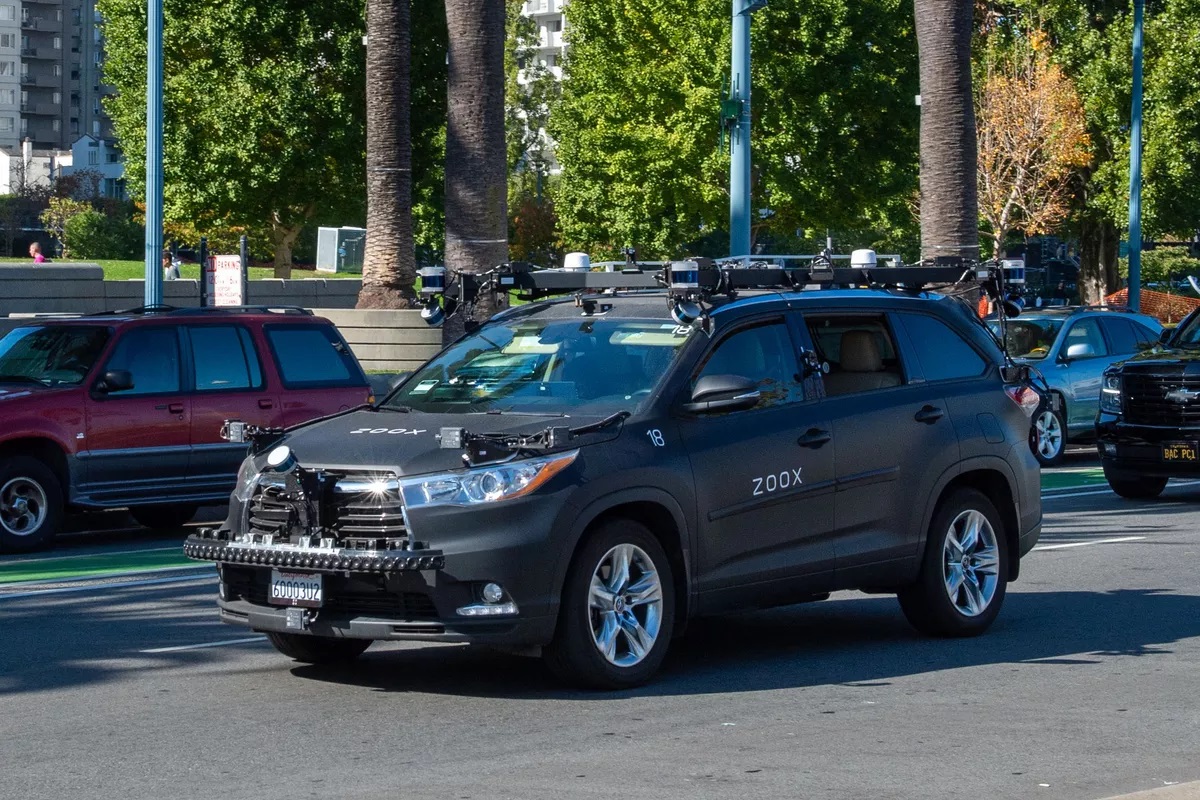
San Francisco is about to become even more crowded with autonomous vehicles as Amazon’s Zoox opens its robotaxi service to members of the public for the first time in the city.

Beginning Tuesday, selected users from the company’s waitlist gained access to free rides in Zoox’s distinctive, steering-wheel-free vehicles as part of its expanding early rider program.

Zoox CEO Aicha Evans said the rollout marks a major step forward. “We have seen incredible interest in Zoox in this market and are excited about this first step to bring our purpose-built robotaxi experience to more people,” she noted.

The company will remove people from the waitlist based on criteria such as location, with the first service zone covering the South of Market, Mission, and Design District neighborhoods. Zoox hasn’t disclosed how many riders will be admitted initially, but said more will be added as the fleet grows.

The company currently operates around 50 robotaxis, split between Las Vegas and San Francisco. It launched a free ride service on the Las Vegas Strip in September, where thousands of visitors have already tried the autonomous shuttles. Zoox says the reaction has been “overwhelmingly positive,” with riders consistently saying they prefer its group-oriented, lounge-style cabin to the feel of a conventional car.

A Different Kind of Robotaxi

Zoox’s vehicles stand out sharply from the rest of the industry’s offerings. Unlike Waymo, Tesla, or Cruise — whose autonomous systems are installed onto traditional car bodies — Zoox manufactures its vehicles from the ground up, removing everything associated with human driving. There is no steering wheel, no pedals, and no driver’s seat. Instead, passengers sit facing one another in a rectangular, gondola-like cabin with large windows and a compact exterior footprint.

The design reflects Zoox’s goal of building a shared mobility service rather than a modified consumer car. The company has been testing autonomous systems in San Francisco since 2017, but the robotaxi now being deployed represents years of reengineering toward a fully purpose-built experience.

A Growing, Heated Competition

Zoox’s arrival slots into a highly competitive and rapidly shifting robotaxi landscape — one that has seen triumphs, setbacks, and aggressive expansion across the past decade.

Waymo remains the dominant player in San Francisco, with more than 1,000 autonomous vehicles operating across the Bay Area as of November. Its fleet consists of Jaguar I-PACE SUVs retrofitted with sensors and computing hardware. Waymo now offers fully driverless rides in five major US cities, giving it the largest footprint of any autonomous ride-hailing service in the country.

Tesla has also moved into the robotaxi space, beginning a pilot program in Austin and the Bay Area. These rides still include safety operators, but the company says it is preparing for a future fleet based on its dedicated robotaxi vehicle, which is still under development.

Uber, after exiting its self-driving program in 2020, is attempting a comeback. It plans to launch a robotaxi service next year using vehicles from Lucid Motors and Nuro, marking a renewed push to compete in the market it once tried to dominate.

Cruise, the most prominent rival to Waymo until last year, saw its rapid expansion collapse after safety incidents forced it to suspend operations and eventually shut down its robotaxi program entirely under GM.

In this context, Zoox enters the field as a fresh but well-funded challenger with a radically different vehicle design — and the backing of Amazon, which bought the company in 2020. That financial muscle gives Zoox more room to scale than many smaller startups that burned out during the autonomous-driving boom.

How Zoox’s Entry Reshapes the Competition

Bringing more San Franciscans into its vehicles gives Zoox a chance to prove it can compete in a city that has become both the testing ground and the battleground for autonomous mobility. The move increases pressure on incumbents like Waymo, which has enjoyed near-monopoly visibility since Cruise’s collapse.

Zoox’s shuttle-like design also adds a new dimension to consumer choice. While Waymo and Tesla offer rides that feel like enhanced versions of traditional cars, Zoox promises a shared, cabin-style environment designed from scratch for autonomy. If San Franciscans find the design more comfortable or social, Zoox could carve out a distinct niche in a crowded market.

The expansion also intensifies competition over data — the lifeblood of autonomous driving. Every ride Zoox provides gives it more real-world training data to improve its systems. That advantage helped Waymo pull ahead earlier, and Zoox is now racing to close the gap.

On top of that, a thriving multi-player market benefits cities and regulators, who hold the belief that robust competition prevents any single company from dominating access, pricing, or public negotiations. Zoox’s rollout helps restore competitive balance in a city that previously saw two major players reduced to one after Cruise was sidelined.


Quora’s Poe App Introduces AI-Powered Group Chats, Unlocking Collaborative Experiences Across 200 Models

0

Quora’s AI platform Poe is expanding its functionality with the launch of group chat capabilities, allowing users worldwide to collaborate in real time with up to 200 participants and access more than 200 AI models in a single conversation.

The move transforms Poe from a one-on-one AI interaction tool into a collaborative environment that could reshape how individuals and teams use AI for creative, organizational, and entertainment purposes.

The new feature enables participants to engage with text, image, video, and audio-generating models simultaneously. Users can combine AI models such as Claude 4.5 Sonnet, Eleven Labs v3, Eleven Labs Music, Nano Banana, GPT-5.1, Kling 2.5 Turbo Pro, o3 Deep Research, Sora 2 Pro, Veo 3.1, and creator-made bots, giving groups unprecedented flexibility to collaborate across multiple AI tools in a single chat.

Quora suggested that group chats could facilitate practical, interactive applications for both personal and professional contexts. Families and friends could plan trips collaboratively using models like Gemini 2.5 for search and o3 Deep Research for information aggregation.

Creative teams might brainstorm visual concepts or generate mood boards using various image models, while groups could also play AI-powered games or quizzes together.

To start a group chat, users simply select the option from Poe’s home screen on the web platform at poe.com. Chat history syncs across devices in real time, allowing participants to move seamlessly between desktop and mobile without losing conversation continuity.

Quora noted that group chat development took six months and will continue to evolve based on user feedback.

“We think the space of potential group interactions mediated by AI and collaboration opportunities with AI is vast and currently under-explored,” the company shared in its announcement.

The platform also allows users to create custom bots and share them for use in group chats, further expanding possibilities for collaborative AI-driven experiences.

“The product we are opening up today also allows anyone to create a custom bot on Poe and share it for others to use in their own groups, and we are excited to see the use cases that everyone discovers,” the company added.

The launch positions Poe alongside competitors like OpenAI’s ChatGPT, which recently began piloting group chat functionality in markets including Japan, New Zealand, South Korea, and Taiwan. Analysts suggest this trend signals a shift in AI usage from individual experimentation toward interactive, community-driven workflows, where AI acts as both a collaborative assistant and creative partner.

Poe is aiming to redefine how users interact with artificial intelligence, encouraging experimentation, learning, and productivity in group settings by integrating multiple AI models into a single conversation. As more users adopt these features, the platform is expected to unlock innovative applications ranging from enterprise brainstorming to family travel planning, educational collaboration, and entertainment, illustrating the expanding role of AI in daily life.

Xiaomi Warns of Major Smartphone Price Hikes in 2025 as Memory Chip Costs Surge

0

China’s Xiaomi has issued a blunt warning that smartphone buyers should brace for even steeper price tags next year, citing soaring memory-chip costs that have already begun squeezing margins across the industry.

According to Reuters, the company admitted that even aggressive retail price increases will not be enough to fully absorb the pressure.

The caution came from Xiaomi President Lu Weibing during an earnings call on Tuesday, where he described the rising cost of memory components as a growing headache that will become “much heavier next year than this year.”

His remarks reflect a tightening supply chain shaped by unprecedented demand for memory chips used in artificial intelligence servers. Global chipmakers — including Samsung — have shifted large swathes of production capacity toward high-bandwidth memory (HBM), the premium chips essential for AI data-center infrastructure. At the same time, they have cut output of the lower-priced chips used in consumer electronics like smartphones, pushing up prices across the board.

Lu said consumers should expect a “sizeable rise” in smartphone retail prices. He added that Xiaomi will have no choice but to pass some of the added costs on to buyers, though even that won’t be “enough to digest it.”

His comments follow complaints from customers who had expressed disappointment at the pricing of Xiaomi’s new Redmi K90. Lu disclosed last month that the surge in memory-chip prices had pushed up production costs for that model.

Despite rising component costs, Xiaomi managed to ship 43.3 million smartphones worldwide in the third quarter. The figure represents a slight 0.5% year-on-year rise and keeps Xiaomi in third place globally with a 13.6% market share, according to data from Omdia cited in the company’s financial report.

Still, the cost pressure is clearly visible in its earnings. Total revenue for the quarter came in at 113.1 billion yuan ($16 billion), up 22.3% but missing the 116.5 billion yuan average analyst estimate from LSEG. Its Hong Kong-listed shares closed down 2.81% after the earnings release, though the stock remains up 18.2% for the year.

EVs and AI Drive Revenue — and Deliver a Surprise Profit Turnaround

Beyond smartphones, Xiaomi pointed to significant gains in its electric-vehicle and artificial intelligence segments, which continue to reshape the company’s earnings profile. It reported that EVs, AI, and other new initiatives now account for 25% of its total revenue.

In the third quarter, Xiaomi’s adjusted net profit surged 80.9% year-on-year to 11.3 billion yuan, beating the average forecast of 10.3 billion yuan from LSEG analysts.

The company’s EV unit delivered a standout performance. Revenue from EVs hit 28.3 billion yuan in the quarter, rising from 20.6 billion yuan in the second quarter and 18.1 billion yuan in the first. Xiaomi delivered 108,796 vehicles in the period — a jump from 81,300 in the second quarter, which did not yet include sales of its new YU7 electric SUV. The YU7 began shipping after its June launch and contributed to the higher volumes.

Critically, Xiaomi said its EV, AI, and new initiatives segment turned an operating profit for the first time — around 700 million yuan — marking a milestone in the company’s diversification strategy.

The Smartphone Market Is Heading Toward Its Next Inflation Wave

Xiaomi’s warning underscores a broader shift unfolding across the global smartphone industry. Manufacturers rely heavily on commodity memory chips, and when supply tightens, the effects ripple through retail pricing almost immediately. The problem is that AI is consuming capacity at a pace never seen before — and there is no sign of relief in 2025.

The shift by major chip producers toward HBM production shows that the AI boom is now directly shaping consumer-device economics. For companies like Xiaomi that play aggressively in mid-range and budget segments, even modest cost inflation on key components can threaten price positioning.

That’s why Lu’s warning matters. If Xiaomi, known for tight pricing, expects to push prices higher, rival brands that depend on similar memory suppliers will likely follow.

At the same time, Xiaomi’s expanding EV and AI portfolio is giving it insulation that pure-play smartphone companies don’t enjoy. The strong performance of its EV division, along with improved profitability in new initiatives, helps offset the drag created by rising smartphone component costs. Its ability to cross-subsidize or reallocate earnings may influence how aggressively it absorbs cost spikes next year.

Still, the company was clear that even with price increases, the chip surge is too large to fully swallow. That means consumers globally, not just in China, are likely walking into another wave of smartphone inflation in 2025.

Nigeria’s Intra-African Trade Surges 14%, Fueling Optimism That AfCFTA Could Unlock Major Economic Gains

0

Nigeria’s commercial engagement with other African nations strengthened sharply in the first half of the year, with intra-African trade rising 14% amid a renewed government push to overhaul border processes and deepen regional connectivity.

The data, released on Monday by the Comptroller-General of the Nigeria Customs Service (NCS), Bashir Adewale Adeniyi, offers one of the clearest signs yet that Nigeria is beginning to benefit from a more integrated continental market.

Adeniyi told participants at a trade conference in Abuja that trade with African partners jumped by 600 billion naira (about $415 million) to 4.82 trillion naira between January and June. He described the growth as a firm signal that Nigeria’s regional trade reforms are gaining traction.

“This is a clear signal of strengthening regional trade momentum,” he said.

Nigeria’s exports to member states within the Economic Community of West African States saw a marked increase as well, which he said highlighted the country’s rising importance as a hub for continental trade and emerging value chains.

The gains coincide with government efforts to remove long-standing trade barriers. Authorities have been digitizing customs procedures, reducing clearance times, and improving transport links with neighboring countries, all aimed at easing the movement of goods across borders. Weak road networks, bureaucratic delays, and a lack of harmonized documentation have historically been some of the biggest obstacles to intra-African trade.

Nigeria’s reforms are part of a broader strategy to position the country advantageously under the African Continental Free Trade Area (AfCFTA), the landmark agreement that aims to create a unified market of more than 1.3 billion people.

Industry, Trade and Investment Minister Jumoke Oduwole said Nigeria has taken “concrete” steps to implement its AfCFTA commitments. Among the measures is a set of new tariff concessions designed to expand market access for Nigerian exporters. She also highlighted the launch of a dedicated air-cargo corridor to East Africa, which has already cut export costs by about 75%.

According to her, the corridor is helping exporters — especially those dealing in perishables — reach distant African markets faster and more competitively.

The surge in regional trade has generated fresh optimism among analysts who have long argued that AfCFTA could significantly boost Africa’s economic fortunes if fully executed. The recent uptick in commerce, they say, demonstrates the scale of potential gains once member states harmonize regulations, improve logistics, and expand cross-border infrastructure.

Analysts have pointed out that Africa currently trades more with Europe and Asia than with itself, largely because of tariff and non-tariff barriers, fragmented markets, and poor connectivity. Nigeria’s improvement, driven by early compliance with AfCFTA-aligned reforms, is seen as proof that removing these barriers could unlock substantial growth for businesses and governments across the continent.

Some trade experts noted that if more African countries adopt Nigeria’s approach — especially in simplifying customs procedures and reducing transport bottlenecks — the continent could see a dramatic rise in manufacturing competitiveness, agricultural exports, and value-added processing.

For Nigeria, the gains come at a crucial moment. The country has faced persistent economic challenges, including high inflation, forex volatility, and reduced oil earnings. Stronger regional trade, analysts say, could offer a new path toward diversification, helping local industries plug into regional supply chains.

The next test will be whether Nigeria can maintain the trajectory — and whether other African states can match its pace of reforms. But for now, officials and analysts agree that the latest figures are a promising indicator that AfCFTA’s long-anticipated economic benefits may be within reach once implementation deepens continent-wide.

Morgan Stanley Sees U.S. Stocks Leading Global Markets in 2026 as AI Capex Surges

0

Morgan Stanley is leaning heavily toward equities going into next year, projecting that U.S. stocks will outperform global peers in 2026 on the back of accelerating artificial intelligence investment and a policy backdrop it believes is finally aligning in favor of risk assets.

“Risk assets are primed for a strong 2026, powered by micro fundamentals, accelerating AI capex, and a favorable policy backdrop,” the bank said in a set of global economic and strategy outlook notes released Monday.

The view caps a turbulent year in global markets, shaped in no small part by President Donald Trump’s shifting tariff approach. Much of that uncertainty has eased heading into 2026, giving investors clearer visibility even as Morgan Stanley cautioned that the next 12 months still carry a wide range of possible outcomes. The U.S., it stressed, remains the central swing factor for global markets.

U.S. Outlook: AI, Earnings, and a Soft Dollar Cycle

Morgan Stanley’s baseline scenario sees the S&P 500 climbing to 7,800 by the end of 2026, implying roughly 16% upside from current levels. The bank attributes the projection to resilient earnings growth across major sectors and productivity gains tied to the rollout of AI-driven tools and infrastructure.

Small-cap stocks are expected to outperform large caps, while cyclicals should lead defensive sectors. The assessment reflects expectations of a Federal Reserve that remains dovish through much of 2026, enabling borrowing costs to stay supportive of growth.

On currencies, Morgan Stanley forecasts the dollar index sliding to 94 in the first half of next year before recovering to 99 by year-end as global growth patterns shift.

Europe: Riding the Coattails of a U.S. Upswing

The firm expects Europe to benefit from a widening U.S. recovery despite the region’s stubborn fiscal constraints and intensifying competition from China.

It raised its 2026 target for the MSCI Europe local currency index to 2,430, up from a prior forecast of 2,250. European stocks have already gained about 12.5% this year, buoyed by improved corporate earnings, easing inflation, and renewed optimism around Germany’s fiscal spending plans.

Still, Morgan Stanley noted that Europe’s structural challenges remain unresolved, making the region more dependent on U.S. momentum than in previous cycles.

Commodities: Gold Soars, Oil Anchored

The bank’s commodities outlook paints a sharply divergent landscape.

Gold is projected to hit $4,500 per ounce in 2026, reflecting expected demand for safe assets and a weaker early-year dollar. Copper is forecast at $10,600 per ton, supported by continued electrification demand and tight supply conditions.

By contrast, Brent crude is expected to hover around $60 a barrel. The brokerage anticipates a soft supply-demand balance through 2026, keeping oil prices capped even if global growth holds up.

A Wide Band of Possibilities

While the baseline is upbeat, Morgan Stanley flagged that uncertainty remains high as markets transition into a new policy and growth cycle shaped by AI, geopolitics, and post-pandemic economic rebalancing. The firm described the U.S. as the critical variable that could swing global markets either toward a sustained rally or back into volatility.

What remains clear, in its view, is that equities—not credit or government bonds—offer the most compelling opportunity next year, with artificial intelligence once again at the center of the global market story.