DD
MM
YYYY

PAGES

DD
MM
YYYY

spot_img

PAGES

Home Blog Page 14

Cerebras Systems’ IPO on Hyperliquid Becomes Closely Watched Events in AI and Semiconductor Sectors

0

The initial public offering of Cerebras Systems has quickly become one of the most closely watched events in the artificial intelligence and semiconductor sectors. Priced at $185 per share, the company’s stock immediately drew extraordinary attention after reports indicated it was trading as high as $290 in pre-market activity on Hyperliquid.

Cerebras has spent years positioning itself as an alternative to dominant AI chip manufacturers. While companies like NVIDIA have become synonymous with AI computing, Cerebras pursued a different strategy centered around building massive wafer-scale processors designed specifically for large language models and high-performance AI workloads. Its technology promises faster training speeds, lower complexity, and more efficient scaling for advanced AI systems.

As demand for compute continues to accelerate globally, investors increasingly view companies controlling AI infrastructure as critical players in the next phase of the digital economy. The IPO pricing at $185 per share already suggested strong institutional demand. However, the pre-market jump to $290 implies that many traders believe the company may still be undervalued relative to its future growth potential.

Such a dramatic rise before regular market trading even begins demonstrates the intensity of speculative and strategic interest surrounding AI infrastructure assets. In many ways, Cerebras is being treated less like a traditional semiconductor company and more like a foundational AI platform capable of benefiting from the explosion in machine learning adoption.

The involvement of Hyperliquid in this process is equally significant. Traditionally, pre-market trading has been dominated by brokerage networks and institutional desks operating within conventional financial systems. Yet the fact that traders are actively speculating on Cerebras through a crypto-native platform illustrates how digital asset infrastructure is expanding into broader financial markets.

Hyperliquid has become known for offering highly liquid perpetual trading products and attracting sophisticated crypto traders. Its participation in price discovery for a major AI IPO suggests that crypto markets are increasingly influencing sentiment around technology equities. This crossover between AI and crypto reflects a broader trend emerging throughout 2026.

Investors are beginning to see compute power as one of the most valuable commodities in the world. Artificial intelligence requires enormous amounts of computational capacity, and the companies capable of supplying that infrastructure are attracting capital at unprecedented levels.

Crypto markets are evolving beyond speculative tokens into platforms that facilitate trading, liquidity, and financial experimentation for a wide range of assets. Cerebras’ explosive debut effectively sits at the intersection of these two transformations.

The IPO also highlights how aggressively markets are pricing future AI growth. Investors are no longer simply valuing current revenue or profitability. Instead, they are assigning enormous premiums to companies perceived as essential to the long-term AI economy. This dynamic has already benefited firms involved in data centers, cloud computing, and advanced semiconductors.

Cerebras represents one of the clearest examples yet of how enthusiasm around AI infrastructure can translate into immediate market momentum. Whether Cerebras can justify such lofty valuations over time remains uncertain. Competition in AI hardware is fierce, and established giants possess massive advantages in scale, software ecosystems, and customer relationships.

Nevertheless, the company’s strong debut indicates that investors are eager to back alternative AI compute providers capable of challenging the existing hierarchy. For now, Cerebras has emerged not only as a semiconductor contender, but also as a symbol of the immense optimism driving the modern AI economy.

Strategy’s STRC Instrument Accumulates 2000 BTC As Robinhood Seeks SEC Filing for a Second Venture Funds

0

The convergence of institutional finance and digital assets continues to accelerate, and two recent developments highlight how traditional capital markets are increasingly embracing crypto-native financial structures.

Strategy announced that its STRC instrument has accumulated more than 2,000 BTC worth of purchasing power as it trades above its $1 par value, while Robinhood has filed with the SEC to launch its second venture fund. Together, these developments reveal how both crypto treasury strategies and retail investment platforms are evolving into more sophisticated financial ecosystems.

Strategy’s STRC product represents another chapter in the company’s aggressive Bitcoin-centered corporate strategy. The firm, already widely recognized for transforming its balance sheet into a Bitcoin treasury vehicle, has continued experimenting with innovative capital structures tied to digital assets. STRC trading above its $1 par value is significant because it indicates strong market demand and investor confidence in the instrument.

In practical terms, the premium pricing has enabled Strategy to accumulate purchasing power equivalent to over 2,000 Bitcoin, further strengthening its ability to expand its BTC reserves. This development reinforces a broader trend in crypto markets:

Bitcoin is increasingly being treated not merely as a speculative asset, but as a treasury reserve instrument. Companies like Strategy are effectively building financial products around Bitcoin exposure, allowing investors to participate in BTC-linked upside without directly holding the asset themselves. The premium on STRC also suggests that market participants are willing to pay above face value for structured exposure to Strategy’s Bitcoin-driven financial engineering.

The implications extend beyond a single company. If instruments like STRC continue attracting capital, they could inspire a wave of BTC-backed corporate securities, hybrid yield products, and tokenized treasury vehicles. Such instruments may become especially attractive in an environment where investors are seeking alternatives to traditional fixed-income products that struggle to outperform inflation or provide meaningful growth.

At the same time, Robinhood’s SEC filing for a second venture fund demonstrates how fintech platforms are broadening their ambitions beyond retail trading. Robinhood initially built its reputation by democratizing access to stock and crypto trading for younger investors.

However, the launch of another venture-focused investment vehicle signals an expansion into private market exposure and early-stage investing. This is strategically important because venture capital has historically been inaccessible to average retail investors.

By positioning itself within venture investing, Robinhood could create new pathways for retail users to gain exposure to emerging startups, AI companies, fintech innovations, and blockchain infrastructure projects. The filing also reflects a larger shift in financial services, where platforms increasingly seek to become comprehensive investment ecosystems rather than single-purpose brokerages.

The timing is particularly notable given the growing intersection between crypto, AI, and venture capital. Institutional appetite for emerging technology sectors remains strong, especially as artificial intelligence and tokenized finance continue attracting billions in capital inflows. Robinhood appears to recognize that the next phase of growth may not come solely from trading fees, but from becoming an allocator and gateway to next-generation innovation.

Together, Strategy and Robinhood illustrate two sides of modern financial transformation. Strategy is leveraging Bitcoin as a corporate monetary asset and financial foundation, while Robinhood is expanding retail access to venture-style investment opportunities. Both developments point toward a future where traditional finance, crypto assets, and technology investing.

Huang Foundation Buys CoreWeave Computing Capacity for Universities in $108m AI Research Push

0

The foundation of Jensen Huang and his wife, Lori Huang, is purchasing artificial intelligence computing capacity from CoreWeave and donating it to universities and nonprofit research institutions.

The move is expected to simultaneously expand access to high-end AI infrastructure and deepen Nvidia’s already extensive ties to one of the fastest-growing cloud-computing companies in the industry.

According to a regulatory filing released Tuesday, the donated computing resources have already been valued at approximately $108.3 million. The filing said the resources will support scientific and artificial intelligence research, while Nvidia plans to provide free engineering services to some of the grant recipients.

The initiative highlights how rapidly the economics of research are changing in the AI era, where access to computing power is becoming as strategically important as funding, laboratory equipment, or academic talent. As AI systems grow more sophisticated and computationally demanding, universities and nonprofit laboratories are increasingly struggling to compete with large technology companies that spend billions of dollars building vast GPU clusters and AI data centers.

Training advanced AI models now requires enormous processing power, advanced networking infrastructure, and huge electricity consumption. For many research institutions, the costs have become prohibitive.

The Huang Foundation’s initiative, therefore, represents more than a philanthropic gesture. It is largely seen as a transformation in which access to AI infrastructure itself is emerging as one of the most valuable resources in science and technology.

CoreWeave, a company that has become one of the defining infrastructure players of the generative AI boom, is at the center of the initiative. Originally founded as a cryptocurrency-mining operation, CoreWeave pivoted aggressively into artificial intelligence cloud services as demand for Nvidia’s graphics processing units exploded following the emergence of generative AI platforms such as OpenAI’s ChatGPT.

Today, CoreWeave rents high-performance GPU computing capacity to startups, enterprises, and research groups seeking access to advanced AI infrastructure without building massive data centers themselves. The company specializes in cloud services optimized around Nvidia chips, making the relationship between the two firms unusually close even by Silicon Valley standards.

That relationship has deepened rapidly over the past two years as Nvidia expanded beyond semiconductor design into a broader strategy of shaping the AI ecosystem itself. In January, Nvidia invested $2 billion in CoreWeave, becoming at the time the company’s second-largest shareholder. The investment reinforced Nvidia’s growing role not only as a supplier of AI chips, but also as a backer of AI cloud providers, model developers, and computing platforms.

The ties between the companies extend far beyond equity ownership. Last year, Nvidia signed a $6.3 billion agreement for cloud computing capacity with CoreWeave. The arrangement included a provision guaranteeing Nvidia would purchase any unused cloud capacity not sold to external customers.

That structure effectively reduced commercial risk for CoreWeave while ensuring Nvidia retained access to large-scale computing infrastructure at a time when AI demand was overwhelming supply across the technology industry.

The Huang Foundation’s latest initiative now adds another layer to that interconnected relationship. While the donation supports scientific and nonprofit research, it also channels substantial business toward CoreWeave, further reinforcing the company’s position within the Nvidia-centered AI infrastructure ecosystem.

The arrangement is likely to intensify scrutiny already building around Nvidia’s expanding financial relationships across the AI industry.

Nvidia’s Expanding AI Ecosystem

Nvidia’s rise during the AI boom has transformed the company from a dominant semiconductor designer into arguably the most influential infrastructure player in global technology. Its GPUs power much of the world’s advanced AI development, from large language models and cloud computing systems to autonomous driving platforms and scientific simulations.

But Nvidia has increasingly gone beyond simply selling chips. The company has invested heavily in AI startups, cloud providers, and model developers, creating a broad commercial ecosystem tightly connected to Nvidia hardware and software. That strategy has helped cement Nvidia’s dominance as AI adoption accelerates worldwide. Yet it has also raised growing concerns among investors and analysts about potential circular financing dynamics within the industry.

Some critics argue Nvidia’s investments in AI firms that simultaneously purchase Nvidia hardware or rely on Nvidia-backed infrastructure may blur the distinction between organic market demand and ecosystem-supported growth.

The issue has become more sensitive because many AI infrastructure companies are spending extraordinary amounts of money to expand capacity, often before achieving stable profitability.

CoreWeave has become one of the clearest examples of the enormous capital intensity shaping the AI economy. The company recently raised the lower end of its capital spending forecast after reporting earnings, citing rising costs for critical infrastructure components.

Those expenditures paint the staggering financial demands involved in building AI cloud infrastructure. Modern AI data centers require vast quantities of GPUs, high-speed networking systems, advanced cooling equipment, and huge electricity supplies. The cost of building and operating those systems has surged as global demand for AI computing continues to accelerate.

For many AI infrastructure companies, securing access to Nvidia’s chips remains the single most important competitive advantage.

Computing Power Becomes a Strategic Asset

The Huang Foundation’s donation also underscores how computing capacity itself is evolving into a strategic resource. Historically, large philanthropic contributions to universities focused on scholarships, laboratories, medical research, or academic buildings. In the AI era, however, access to advanced computing infrastructure may be equally valuable.

Researchers increasingly warn that AI innovation risks becoming concentrated among a small number of corporations capable of financing hyperscale computing systems. This is because academic institutions often lack the financial resources necessary to compete directly with major technology firms in acquiring cutting-edge GPUs and operating large AI clusters. That imbalance has created concerns that independent research could weaken as AI development becomes dominated by private-sector companies controlling the most advanced infrastructure.

By donating cloud-computing resources rather than simply cash, the Huang Foundation is addressing one of the most immediate barriers facing universities and nonprofit research institutions.

Nvidia’s offer to provide engineering services to some recipients further strengthens the initiative because many research groups also lack the specialized expertise needed to optimize large-scale AI systems effectively.

Yuan hits Three-year High as Trump-Xi Summit Fuels Cautious Optimism, But Chinese Stocks Retreat on Profit-taking

0

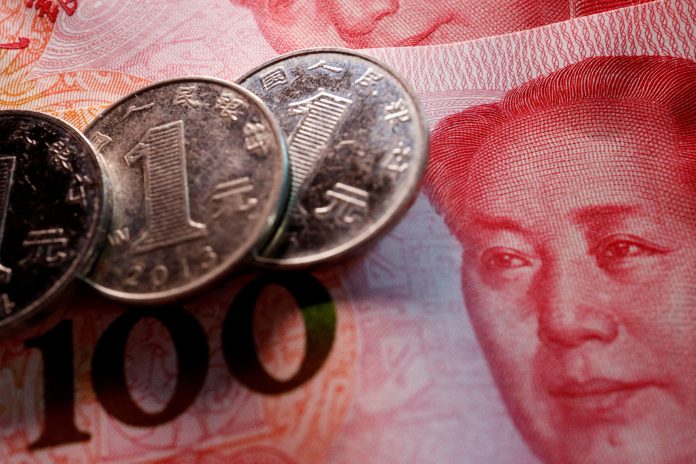
China’s yuan climbed to its strongest level against the dollar in more than three years on Thursday as investors interpreted the summit between Xi Jinping and Donald Trump as a sign that both powers are seeking to prevent another major escalation in economic tensions.

Yet while the currency rallied sharply, Chinese equities moved in the opposite direction, with investors locking in profits after recent gains pushed major benchmarks to multi-year highs.

The divergence between foreign exchange and equity markets points to a broader shift in investor psychology toward China. Currency traders are increasingly focusing on China’s strong export position and improving external balances, while stock investors are becoming more selective after a powerful rally driven largely by artificial intelligence and technology optimism.

Chinese state broadcaster CCTV reported that Xi described relations with the United States as entering a “new positioning” following talks with Trump in Beijing. According to the report, both leaders agreed that building a constructive and strategically stable relationship would guide bilateral ties over the next several years.

Details of the discussions remained limited, but markets had entered the summit with extremely modest expectations. Investors were primarily hoping for reassurance that the fragile tariff truce between the world’s two largest economies would remain intact and that no unexpected confrontation would emerge from the meeting.

That low-expectation environment may itself have helped calm markets.

Larry Hu said Beijing’s objective appeared less focused on concrete agreements and more on projecting stability at a time when China’s economy is showing signs of resilience.

“Beijing is adopting a wait-and-see mode, given the ‘better than expected’ first-quarter growth,” Hu said, adding that China’s priority was to signal “stability and predictability to both international and domestic audiences.”

The yuan strengthened in both onshore and offshore markets after the People’s Bank of China set its daily midpoint fixing at 6.8401 per dollar, the strongest official guidance level since March 2023. The onshore yuan traded around 6.7877 per dollar, while the offshore yuan hovered near 6.7871, both reaching levels not seen in more than three years.

However, the central bank’s fixing mechanism also revealed Beijing’s caution. The official midpoint was significantly weaker than market estimates, marking the largest deviation since early March. Analysts interpreted the move as another indication that Chinese authorities are trying to prevent excessively rapid appreciation of the currency, which could eventually hurt exporters and tighten domestic financial conditions.

Since late last year, the PBOC has repeatedly leaned against strong yuan rallies by setting fixings weaker than market expectations. The strategy marks a delicate balancing act. Beijing wants currency stability and confidence in China’s economy, but it also wants to avoid destabilizing export competitiveness at a time when global demand remains uncertain.

The yuan’s rise this year has been underpinned largely by China’s powerful export machine and widening trade surplus. The currency has appreciated roughly 3% against the dollar in 2026 and gained more than 2% against a basket of major trading partners.

China’s exports have remained surprisingly resilient even amid trade tensions and Western efforts to reduce dependence on Chinese supply chains. Strong overseas demand for electric vehicles, solar products, batteries, and increasingly AI-related hardware has helped support external balances.

Equity markets, however, paused after an extended rally. The benchmark Shanghai Composite Index fell 1.52%, its sharpest one-day decline in nearly two months, after touching an 11-year high a day earlier. The blue-chip CSI300 index dropped 1.68%.

Where It is Headed

Investors largely viewed the decline as technical profit-taking rather than a negative reaction to the Trump-Xi summit itself. Market participants said investor attention is increasingly shifting away from headline trade tensions and toward China’s rapid advances in artificial intelligence and semiconductor development.

Richard Pan said markets are becoming “less and less sensitive” to developments in U.S.-China trade relations.

“The development of the trade war shows that China and the U.S. cannot afford to enter a real big conflict,” Pan said.

His comments reflect a growing market belief that both Washington and Beijing now recognize the economic costs of sustained confrontation, especially as slowing global growth and financial market volatility increase pressure for stability.

Pan also argued that China’s economic resilience has insulated domestic markets from geopolitical shocks more effectively than in previous years. Rather than focusing exclusively on tariffs, investors are increasingly concentrating on the global AI race and China’s efforts to build technological self-sufficiency.

“The competition between China and the U.S. in AI big models will stimulate each other and eventually improve AI capabilities for both,” he said.

That means technology competition remains central to the broader relationship. Reuters reported that Washington has approved around 10 Chinese companies to purchase Nvidia’s H200 AI chips, although deliveries have not yet begun. The development has placed attention on whether the U.S. may selectively ease certain technology restrictions while still maintaining broader strategic controls.

The H200 chip is among Nvidia’s most advanced AI processors and remains highly sought after by Chinese cloud-computing firms and hyperscalers trying to scale large language models and AI inference infrastructure.

The uncertainty around those shipments highlights the contradictory nature of the current U.S.-China relationship. Strategic rivalry continues to intensify, particularly around semiconductors and AI, yet both economies remain deeply interconnected in trade, manufacturing, and capital flows.

Ritesh Ganeriwal said market expectations for the summit were intentionally conservative.

“Investors aren’t positioned for a positive surprise,” Ganeriwal said, adding that even modest progress could improve sentiment.

He noted that the next major deadline in the trade relationship is expected in November, when temporary pauses on tariffs and rare earth restrictions are due to expire.

Analysts say both governments are now increasingly moving toward a “managed competition” framework rather than outright economic decoupling. Under that model, trade in strategically sensitive sectors such as advanced semiconductors and defense technology remains restricted, while lower-risk commercial exchanges continue.

Sources told Reuters that negotiators may discuss reducing tariffs on roughly $30 billion worth of non-sensitive goods without crossing national security red lines. If achieved, such an arrangement could provide markets with a temporary stability window and reduce fears of another destabilizing trade confrontation ahead of the U.S. election cycle and China’s next major economic planning phase.

The market response suggests investors see the Trump-Xi summit less as a breakthrough moment and more as confirmation that both sides are attempting to contain rivalry rather than escalate it uncontrollably. That alone, after years of tariff wars, export controls, and technology sanctions, may be enough to support Chinese assets in the near term.

Investors Bet on Higher-for-Longer Yields as Oil-Fueled Inflation Tests Incoming Fed Chair Kevin Warsh

0

U.S. Treasury yields are climbing sharply as investors increasingly doubt that incoming Federal Reserve Chair Kevin Warsh will be able to bring inflation under control amid surging oil prices and a prolonged Middle East conflict.

Long-dated bonds are bearing the brunt of the selling, with investors demanding significantly higher compensation for persistent inflation risks.

The benchmark 10-year Treasury yield has risen roughly 45 basis points since the beginning of March and hit an 11-month high on Wednesday before settling at 4.484%. The move reflects growing unease that energy-driven price pressures will keep inflation uncomfortably above the Fed’s target for longer than previously expected.

Higher long-term yields are already feeding directly into the real economy. They push up mortgage rates, corporate borrowing costs, and leveraged loan pricing, which can slow consumer spending, business investment, and overall economic growth. This dynamic also makes bonds more competitive with equities, creating potential headwinds for stock prices.

Energy Markets Driving the Narrative

Market participants increasingly see oil prices as the dominant force shaping the inflation outlook and, by extension, the direction of Treasury yields.

“Whatever oil does is where yields are going,” said Byron Anderson, head of fixed income at Laffer Tengler Investments in Scottsdale, Arizona.

Some investors have already begun repositioning. Anderson’s firm is largely avoiding the long end of the yield curve entirely, anticipating that persistent inflation will drive 10-year yields toward 5%, a level last seen in October 2023.

Christian Hoffman, head of fixed income at Thornburg Investment Management in Santa Fe, New Mexico, captured the prevailing frustration.

“It’s not an understatement to say that inflation has been uncomfortable and above target … heading on five years now and there’s also not directionally a way to reassure investors and give them comfort,” he said.

Daunting Challenge for Kevin Warsh

The inflation backdrop presents a tough inheritance for Kevin Warsh as he prepares to take over as Fed Chair. Investors and analysts worry that any early dovish signals from Warsh could destabilize markets.

“If the first things we hear from him (Warsh) are … dovish arguments about how the Fed can cut interest rates, I think that’s going to be a big problem for the bond market,” warned Ryan Swift, chief U.S. bond strategist at BCA Research in Montreal.

Such comments, he said, could cause inflation expectations to break out and lead to a loss of control over the long end of the yield curve.

Financial markets currently price in no change to the Fed’s policy rate, which sits at 3.5%-3.75%, for the remainder of this year. Jim Baird, chief investment officer at Plante Moran Financial Advisors, noted the difficult road ahead.

“As incoming Chairman Warsh rolls up his sleeves to get to work, he has some challenges ahead of him. The challenge around the inflation picture is that there are a number of factors … which can’t be ideally addressed simply by raising rates. Raising rates isn’t going to lower global oil prices,” he said.

Outlook for a Steeper Yield Curve

Many strategists now expect the yield curve to steepen further. Short-term rates are likely to remain anchored near current levels due to the Fed’s hold-steady stance, while longer-term yields continue to rise on inflation concerns and economic resilience.

The spread between 10-year and 2-year yields stood at 48.50 basis points in recent trading after steepening over the last two sessions. Chip Hughey, managing director of fixed income at Truist Wealth in Richmond, Virginia, said sticky inflation reinforces the view that the Fed will stay on hold until price pressures clearly ease, though the timing of any eventual rate cuts remains debated.

Warsh’s known policy leanings, particularly a focus on shrinking the Fed’s balance sheet and potentially adjusting the maturity profile of its holdings, could amplify these pressures. A smaller balance sheet would mean less official buying of Treasuries, increasing net supply in the market, pushing bond prices lower, and lifting long-term yields.

Martin Tobias, U.S. rates strategist at Morgan Stanley, noted that markets are still trying to gauge how Warsh will approach balance sheet policy, an area that could significantly influence term premiums.

The rise in long-term yields comes at a sensitive time and threatens to tighten financial conditions organically even as the Fed holds its short-term policy rate steady. This dynamic could weigh on asset prices across equities, real estate, and credit markets while complicating the path toward a soft landing for the economy.

The situation also highlights the limits of monetary policy when inflation is driven primarily by geopolitical energy shocks rather than domestic demand. With the Middle East conflict showing few signs of quick resolution, investors appear to be pricing in a new reality: higher inflation volatility, elevated term premiums, and a bond market that is less forgiving of dovish policy signals.