DD
MM
YYYY

PAGES

DD
MM
YYYY

spot_img

PAGES

Home Blog Page 14

Coinbase’s Big Move on Solana Native DEX Trading Goes Live

0

Coinbase just dropped a game-changer at Solana’s Breakpoint 2025 event in Abu Dhabi: in-app DEX trading for all Solana tokens. No more waiting for official listings—users can now swap any SPL token directly on-chain via decentralized liquidity pools, settling in USDC or even fiat (bank transfers, debit cards).

Early access kicks off next week, opening the floodgates for millions of new assets to Coinbase’s 100M+ user base. This builds on their recent Base-to-Solana bridge launched Dec 4 via Chainlink’s CCIP and the pending acquisition of Vector, a Solana-native trading platform that spots fresh tokens the moment they launch.

It’s a clear play to fuse CeFi ease with DeFi speed: think centralized UI for discovering and funding trades, but decentralized execution for self-custody. Solana’s DEX volume has already topped $1T this year, and this could supercharge it further by pulling in retail liquidity without the usual gatekeeping.

Cointelegraph highlight how this convergence could make Solana the go-to for token launches, with filters for new drops and portfolio views blending BTC, ETH, and SOL assets seamlessly.

Coinbase’s Solana product lead, Andrew Allen, nailed it: “The goal is to make the millions of new assets created on-chain immediately accessible to all users.” For builders, it’s instant global reach if your token has liquidity. COIN stock dipped 2% pre-market, but retail sentiment on Stocktwits is still bullish.

More drops expected at Coinbase’s Dec 17 showcase. Meanwhile, the broader market’s nursing a hangover. After a brief relief rally (BTC reclaimed $93K on Fed cut hopes), after-hours trading flipped red: BTC slipped below $91K (-1.4%), ETH under $3.2K (-2%), and sectors like DePIN (Filecoin -7.5%, Render -5.5%) and Layer 1s (-2.5%) took the brunt.

Total market cap shed ~1-2% in the last 24 hours, with $600M+ in liquidations per Coinglass. Blame the usual suspects: fading Fed cut euphoria now ~50/50 odds for December, macro jitters from a potential government shutdown draining liquidity, and profit-taking after October’s $125K BTC peak.

Broader risk-off vibes spilled from equities—Nasdaq flat, but crypto’s correlation is amplifying the pain. Altcoins got hammered harder: Zcash -10%, and a MarketVector index of smaller caps is down 70% YTD.

Sentiment’s in “Extreme Fear” per the Crypto Fear & Greed Index (23/100), with open interest dropping as leverage unwinds. Glassnode calls this a “mid-cycle reset,” not a full winter—spot liquidity’s absorbing the selloff, and BTC’s still 15% off lows near $76K. But with $787B in perp futures leverage vs. $135B in ETFs, more fireworks if it tests $86K support.

Polymarket Pessimism: BTC $100K Odds Slide to 30%

Prediction markets are the ultimate vibe check, and Polymarket’s turning bearish. Odds of Bitcoin hitting $100K by Dec 31? Down to 30% from 50%+ last week, with $95K at just 59%. That’s a sharp pivot from October’s 56% shot at $130K now near 0%.

Bettors are piling into downside: 40% chance BTC dips to $80K by year-end, and 61% see a max of $95K. Kalshi’s a tad more optimistic at 42-51% for $100K, but the delta screams caution—traders smell more chop ahead of the Fed.

BecauseBitcoin summed it up: “Odds BTC Reaches $100K Drop to 30% and $95K to 59% For This Year.” Polymarket now pegs BTC’s chance of $100K by year?end under 30% after the Fed made markets do the cha?cha slide. Arbitrage plays are popping too: Pair the $100K yes/no with $80K downside bets for low-risk edges, per Cvrsxd.

If macro stabilizes via ETF inflows keep surprising at $416 BTC added yesterday, that 30% could look undervalued. But with sentiment this fearful, $90K might be the floor before any Santa rally. Crypto’s wild—Solana’s innovating while BTC consolidates.
Ghana’s Economy Expands 5.5% in Q3 2025 as Agriculture and Services Drive Recovery

0
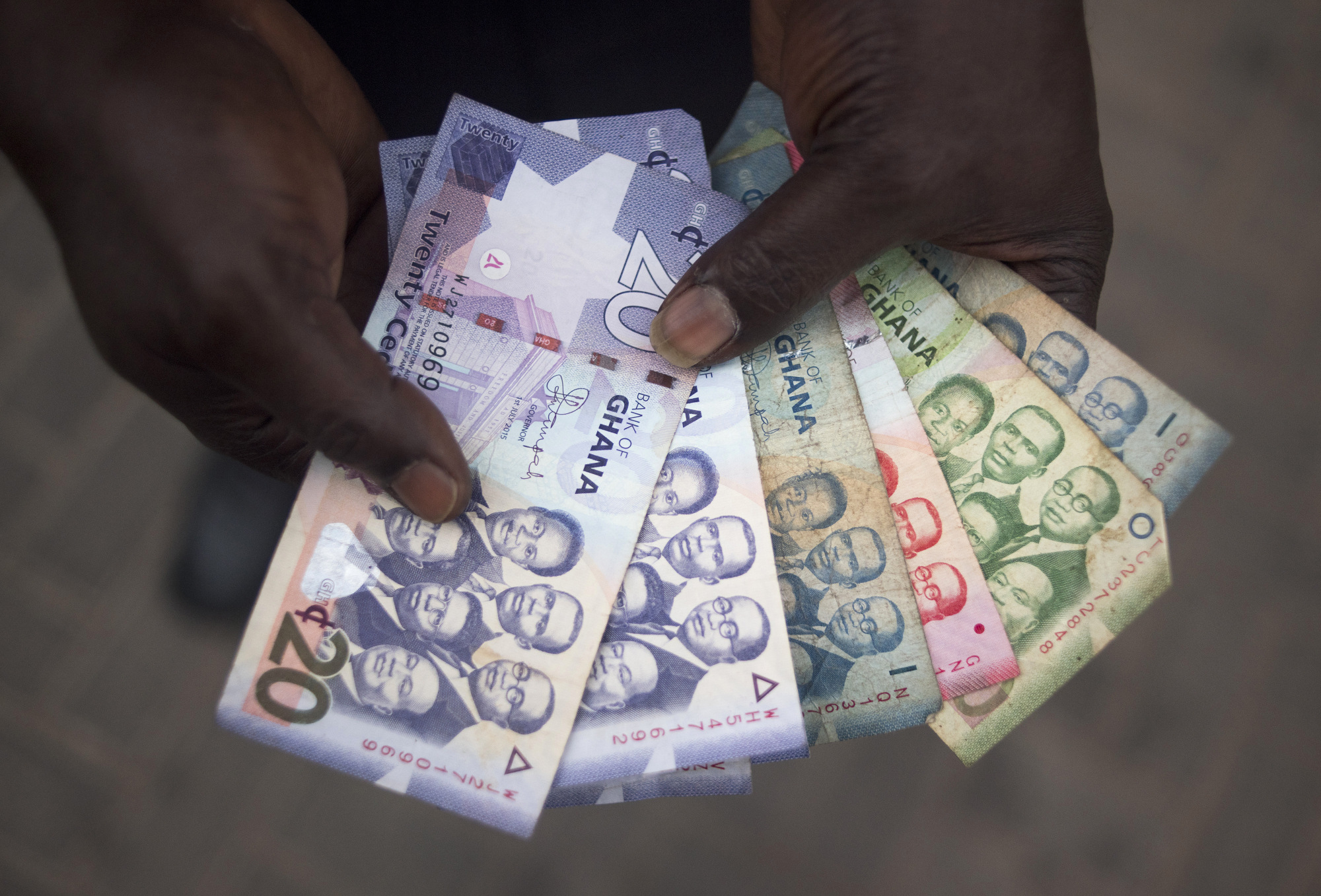
A man holds Ghanian currency in his hands on September 20, 2016 in Accra, Ghana. Ty Wright/Bloomberg News

Ghana’s economy grew by 5.5% year-on-year in the third quarter of 2025, underpinned by strong performances in agriculture and services, the Ghana Statistical Service reported on Wednesday.

The growth, while positive, slowed from a revised 7.0% recorded in the same period last year, largely due to weak industrial sector performance, which expanded by just 0.8%, government statistician Alhassan Iddrisu told reporters.

Agriculture emerged as a key driver, with fishing and crop production pushing sector growth to 8.6%. The services sector, covering finance, insurance, trade, and education, also contributed significantly with a 7.6% expansion.

“Agriculture’s contribution to growth was outsized, showing a sector that is recovering quickly and adding real weight to the national output,” Iddrisu said.

Non-oil GDP rose by 6.8%, slightly below last year’s 7.8%, reflecting continued challenges outside Ghana’s resource sectors. The country, a major producer of gold, oil, and cocoa, is gradually emerging from its most severe economic crisis in decades.

Macroeconomic stability appears to be improving. Annual inflation fell for the 11th consecutive month in November to 6.3%, the lowest level since a 2021 rebasing exercise. In response, Ghana’s central bank has reduced its main interest rate by a cumulative 1,000 basis points this year, citing both the improved economic outlook and expectations for continued declines in inflation.

Analysts note that the recovery is heavily reliant on agriculture and services, while industrial stagnation poses a risk to sustaining higher overall growth. Policy measures, including supportive fiscal and monetary policies, are likely to remain critical to strengthen manufacturing and industrial activity, diversify the growth base, and ensure that the recent decline in inflation translates into broader economic gains for households and businesses.

Comparative Analysis: Ghana’s 2025 Economic Performance in West Africa and Sub-Saharan Africa

This growth, while moderate in absolute terms, situates Ghana above the average expansion expected across Sub?Saharan Africa in 2025, where growth forecasts cluster broadly around the lower to mid?4?percent range according to the latest outlooks from multilateral institutions. In the West African sub?region, Ghana’s performance also compares favorably with regional peers, reflecting relative resilience even as the country works to diversify its economic base.

Ghana’s economic figures signal a rebound in parts of the economy that have been under pressure in recent years. By contrast, industrial output was sluggish, growing by only 0.8?percent, which underscores persistent weakness in manufacturing and construction activity.

Comparatively, some regional peers such as Senegal and Côte d’Ivoire are expected to record higher growth rates in 2025, benefiting from robust energy investment and sustained private investment. Senegal, for example, is forecast to grow at close to 8½?percent, and Côte d’Ivoire has been projected in some assessments to expand at roughly 6?percent, supported by infrastructure spending and diversified services.

Across Sub?Saharan Africa, growth remains uneven. Nigeria’s expansion is expected to be more modest, constrained by structural bottlenecks that have limited non?oil activity. South Africa — the continent’s largest economy — is forecast to post relatively low growth, weighed down by subdued investment and long?standing structural challenges.

In this wider context, Ghana’s around?5½?percent rate places it above many of its peers and signals a stronger recovery trajectory, particularly when coupled with improving macroeconomic conditions.

However, Ghana’s recovery is not without vulnerabilities. The industrial sector’s weak performance remains a concern because manufacturing and construction are key conduits for job creation and broader value addition. Dependence on primary commodity exports — gold, cocoa, and oil — leaves the economy exposed to global price volatility and external demand shifts, a weakness shared by many Sub?Saharan economies that have yet to achieve deep export diversification.

Inflation, while slowing, could remain sensitive to external shocks, and fiscal pressures observed across several African countries may constrain the scope for public investment unless revenue mobilization improves.

Looking ahead to 2026, forecasts generally indicate that Ghana will continue to register moderate growth, with projections pointing to rates in the high?4?percent range. This suggests a gradual continuation of the recovery, supported by stable prices, expansion in agriculture and services, and policy measures that sustain confidence among investors.

Across Sub?Saharan Africa, growth is expected to strengthen modestly in 2026, but the picture will remain heterogeneous with divergence across countries. Some West African economies with robust energy sectors and investment inflows are expected to outperform, while others grappling with weaker commodity revenues or structural constraints may lag.

EU Court Upholds Intel Antitrust Breach, Cuts Fine by a Third to €237m

0

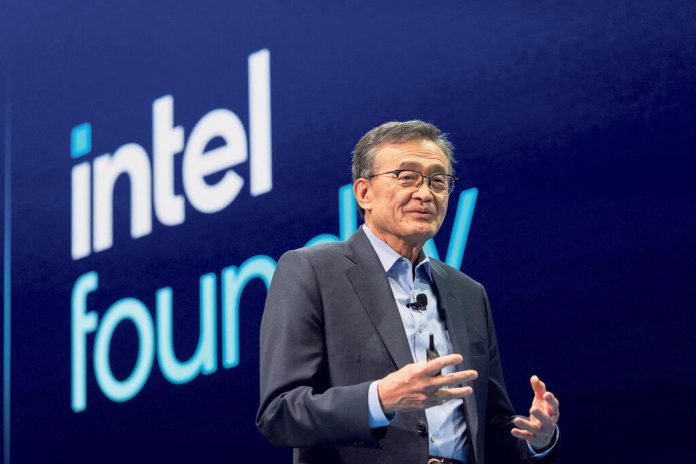
In the latest development of a protracted, 16-year legal saga, U.S. chipmaker Intel lost its challenge against an EU antitrust ruling on Wednesday, but secured a significant financial reduction.

Europe’s second-highest court, the General Court, upheld the European Commission’s finding that Intel engaged in anticompetitive conduct but slashed the associated fine by nearly one-third, from the €376 million imposed in 2023 to €237,105,540 (approximately $278 million).

The decision, known as Case T-1129/23 Intel Corporation v Commission, marks a partial victory for Intel, as the new figure represents a far cry from the original €1.06 billion fine imposed by the Commission in 2009 for broader market abuse allegations, which was largely thrown out by the courts in 2022.

The Original 2009 Case and Its Partial Annulment

The long-running dispute began when the European Commission imposed a then-record fine of €1.06 billion on Intel in 2009 for abuse of its dominant position in the x86 microprocessor market. The Commission’s original decision focused on two main areas of illegal conduct spanning from 2002 to 2007:

  1. Conditional Rebates (The Annulled Part): This was the largest portion of the fine, concerning exclusivity rebates granted to several major computer manufacturers, including Dell, HP, NEC, and Lenovo. These rebates were conditioned on the manufacturers buying all or almost all of their x86 CPUs from Intel.

The Commission argued that these “loyalty rebates” essentially denied rival Advanced Micro Devices (AMD.O) a chance to compete on the merits, forcing manufacturers to stick with Intel to avoid losing the rebate across their much larger volume of Intel purchases.

2. Naked Restrictions (The Upheld Part): This involved direct payments and other restrictions imposed on manufacturers and a large retailer to halt or delay the launch of specific products equipped with AMD processors. This conduct was deemed abusive because its sole object was to exclude the rival.

In a landmark victory for Intel, the General Court effectively overturned the conditional rebates portion of the 2009 fine in 2022. The court ruled that the Commission had made key errors by failing to provide a sufficiently detailed and complete economic analysis, including a proper application of the “as-efficient competitor” (AEC) test. This test requires regulators to show that a rival as efficient as the dominant firm would still be foreclosed by the pricing practice.

The Infringement: “Naked Restrictions”

The fine upheld by the court concerns a narrow, yet serious, category of anti-competitive practices known as “naked restrictions.” This term, in EU competition law, refers to restrictions on competition that have no pro-competitive purpose and whose sole objective is to restrict or exclude rivals.

Specifically, the General Court confirmed that Intel made payments to three major computer manufacturers—HP, Acer, and Lenovo—between November 2002 and December 2006. The payments were conditioned on the manufacturers agreeing to halt or delay the launch of rival products utilizing processors from Intel’s competitor, Advanced Micro Devices.

While the court upheld the Commission’s finding that the naked restrictions were an abuse of Intel’s dominant position in the x86 microprocessor market, it agreed with Intel’s argument that the scale of the original €376 million fine was disproportionate.

The judges in Luxembourg reasoned that the new figure of €237 million is a “more appropriate reflection of the gravity and duration of the infringement at issue,” based on two key mitigating factors:

  1. Limited Scope: The restrictions were found to have affected a relatively limited number of computer models, rather than representing a market-wide foreclosure strategy.
  2. Infringement Gaps: The court noted that there were 12-month gaps separating some of the anti-competitive practices, suggesting the conduct was not a continuous, uninterrupted scheme throughout the entire period.

The court rejected Intel’s other arguments, including claims that its rights of defense were infringed, maintaining that the Commission correctly relied on the practices that were not annulled in the earlier judgments.

Implications and What’s Next

This ruling is a significant victory for the European Commission’s Directorate-General for Competition, as it confirms the judicial sustainability of its 2023 decision (re-imposed after the 2009 penalty was mostly overturned). Commissioner Didier Reynders had stated in 2023 that the decision showed the Commission’s commitment to ensuring “that very serious antitrust breaches do not go unsanctioned.”

However, the 15-year saga may not yet be over. Both the European Commission and Intel have the right to appeal the General Court’s decision to the EU Court of Justice, Europe’s highest court, though appeals are limited to points of law. The final resolution of this case will continue to shape the legal standards for proving exclusionary abuse and calculating fines in future EU antitrust cases against dominant technology firms.

BlackRock Sells €1.7bn Naturgy Shares, as WTW Acquires Newfront for Up to $1.3bn

0

BlackRock has set off one of the biggest ownership reshuffles in Spain’s energy sector this year after unloading a 7.1% stake in Naturgy for around 1.7 billion euros through an accelerated bookbuild handled by JPMorgan.

The sale moved 68,825,911 shares at 24.75 euros apiece, landing well below the previous day’s closing price of 26.16 euros. The discount of about 5.4% fed straight into Thursday’s trading session, dragging Naturgy down roughly 5% to 24.86 euros by 09:21 a.m. (0821 GMT), the weakest performer on the Ibex-35.

The transaction takes BlackRock’s holding down to roughly 11.42%, a marked shift that arrives only a year after the firm became a Naturgy shareholder through its 2024 acquisition of Global Infrastructure Partners. GIP had been a long-standing investor in the utility, and its absorption into BlackRock created one of the most influential blocs in Naturgy’s share register. The latest sale pulls that influence back, but keeps BlackRock firmly among the top tier of shareholders.

Spain’s investment holding giant Criteria Caixa remains the company’s largest investor with nearly 24%. CVC controls 18.6%, while IFM, the Australian infrastructure fund, sits at 15.2%. These three have shaped Naturgy’s strategic course over the past several years, especially during moments of tension over governance, dividends, and long-term planning.

Sabadell, in a note to clients, said the sale effectively shuts the window for any new heavyweight investor entering Naturgy at this stage. The bank added that the changed ownership balance could smooth the path for CVC to consider future moves, including a potential exit, a scenario that has been discussed in industry circles. For now, the reshuffle reins in speculation around outside entrants and keeps the power structure centered around the current three dominant blocs.

For Naturgy itself, the sale carries operational and market advantages. Management has been working to lift the company’s free float closer to a target of around 25%, a level seen as important for liquidity and broader institutional participation. The newly available shares from BlackRock’s sale push Naturgy closer to that goal, strengthening the company’s position in the Iberian equity landscape.

The underlying fundamentals of the utility remain solid. Over the past two years, Naturgy has posted about 2 billion euros in annual earnings, marking a period of record profitability. The combination of stable, regulated businesses, strong cash flow, and reliable contributions from its liberalized operations has kept the company well-positioned even as Europe’s energy markets keep shifting.

A key boost came from its combined-cycle gas plants, which have logged longer operating hours since the April 28 grid outage that stressed the national system. The higher utilization of these plants improved supply security at a moment of heavy strain, helping Spanish authorities avoid widespread disconnections. Energy analysts note that the outage underscored how crucial these facilities remain in stabilizing the grid, especially during seasons of peak demand or when renewables face volatility.

Thursday’s share sale lands at the intersection of shifting investor strategy and a utility navigating a broader continental energy transition. BlackRock’s move trims its exposure while still maintaining influence. Naturgy, meanwhile, gains liquidity, preserves earnings momentum, and keeps attracting attention as one of Spain’s most strategically important energy players.

WTW Acquires Newfront for Up to $1.3bn, Accelerating Digital Transformation and U.S. Middle-Market Growth

Global insurance broker WTW announced on Wednesday a definitive agreement to acquire the technology-focused brokerage Newfront in a deal valued at up to $1.3 billion.

This major strategic move is designed to simultaneously and significantly expand WTW’s reach within the profitable U.S. middle-market and dramatically accelerate its long-term digital and specialty strategies.

The financial terms of the deal emphasize WTW’s commitment to securing the tech-driven platform. The transaction includes an upfront payment of $1.05 billion, structured as approximately $900 million in cash and $150 million in WTW equity.

Furthermore, the agreement features an additional contingent payout of up to $250 million, primarily in equity, with $150 million of that contingent on Newfront successfully exceeding specific revenue growth targets.

The deal is slated to close in the first quarter of 2026, subject to customary closing conditions.

WTW CEO Carl Hess underscored the acquisition’s dual purpose, noting that this move will help the company’s overall push for growth.

“This combination accelerates our technology and specialty strategies, and enables the delivery of an integrated, end-to-end technology platform that will drive growth, enhance operational efficiency and better serve our clients,” he said.

Newfront’s Tech-Driven Edge

Founded in 2017, Newfront established itself as a disruptor by blending traditional insurance expertise with advanced technology, calling itself a “modern insurance brokerage for the 21st century.” The San Francisco-based company brought a high-growth trajectory, achieving an organic revenue growth rate of 20% Compound Annual Growth Rate (CAGR) from 2018 to 2024.

This growth was fueled by a rapidly expanding producer base and the successful adoption of proprietary client tools and emerging technologies, including agentic artificial intelligence (AI) within its brokerage operations.

Newfront had previously demonstrated its market appeal by raising significant capital, including a $200 million funding round in April 2022 that valued the firm at $2.2 billion, and attracting high-profile backers such as Goldman Sachs, Index Ventures, DoorDash CEO Tony Xu, and investment firm Vetamer.

The acquisition is strategically significant because it injects high-growth, specialty-market scale into WTW’s established platform, while enabling WTW to jump ahead in the digital arms race against competitors.

Newfront will immediately broaden WTW’s U.S. middle-market footprint and add specialized scale in highly lucrative, fast-evolving sectors such as technology, fintech, and life sciences.

Operationally, the integration will see Newfront’s core units folded into WTW’s existing divisions to maximize synergy:

  • The Business Insurance unit will be integrated into WTW’s Risk & Broking division.
  • The Total Rewards unit will be folded into the Health, Wealth & Career division.

The move underlines a clear trend among established insurance players seeking to rapidly boost their digital capabilities and expand into niche markets. This also complements WTW’s existing strategy of expanding its global presence, including securing new client wins in the Middle East.

VanEck Rebrands Its Gaming ETF as the “Degen Economy ETF” in Bid to Capture Digital-Era Risk Appetite

0

VanEck is leaning hard into the cultural moment by rebranding its long-running Gaming ETF (BJK) as the “VanEck Degen Economy ETF,” turning a term born out of gambling and later popularized by crypto traders into a full-blown investment pitch.

The change, taking effect after the market closes on April 8, marks a strategic reset for a fund that has been around since 2008 yet holds only about $23 million in assets.

The rebrand is more than a name swap. VanEck is replacing the ETF’s benchmark index and broadening its mandate to capture a far wider slice of the digital economy — the platforms, financial tools and online behavior patterns that dominate the modern risk-taking landscape. The firm is essentially shifting the fund away from a narrow focus on casinos and traditional gaming toward an ecosystem that reflects how younger investors trade, spend, borrow, and earn today.

“Degen,” originally shorthand for “degenerate,” started as an insult among gamblers but became an inside joke and eventually a badge of identity among crypto traders and online retail investors. It describes people who make high-risk, impulsive bets, often for the thrill and community rather than pure financial logic. VanEck appears to be responding to that cultural shift, recognizing that the online world has normalized, even glamorized, this type of behavior. By using the term, the firm is positioning itself as an asset manager willing to meet digital-native investors where they are.

Under the new structure, the ETF’s universe expands into companies that earn at least half of their revenue from what VanEck is classifying as “Millennial Finance” and “Gig Economy and Online Forums.” These categories cover digital brokerages, neobanks, crypto exchanges, buy-now-pay-later providers, ride-hailing platforms, delivery apps, freelance marketplaces, and the online communities that bind these ecosystems together. These businesses have been central to the economic life of younger consumers, who rely heavily on app-based services and tend to take a more fluid approach to risk.

By contrast, the original ETF was rooted firmly in casinos, sports betting, lotteries and other gaming-related operators. While those industries remain profitable, they no longer capture the full spectrum of modern “betting” behavior — which now includes speculative crypto trading, short-term options plays, memestock frenzies, and everyday financial decisions made on mobile apps. The digital era has blurred the line between investing, gambling, and entertainment, and VanEck’s new ETF is attempting to reflect that reality.

The performance gap also helps explain the shift. The Gaming ETF is up only about 3 percent this year and has trailed major benchmarks such as the S&P 500 by a wide margin. With such modest returns and low assets under management, the fund risked fading into obscurity. The new mandate gives VanEck a chance to reposition it at a time when investor interest in gig platforms, digital finance tools, and crypto-adjacent companies remains strong.

The move also fits a broader pattern in the ETF industry. Fund managers have increasingly leaned into cultural or thematic branding to differentiate themselves in a crowded market. Themes tied to AI, electric vehicles, robotics, and even memes have drawn considerable attention over the past three years. The “Degen Economy ETF” follows this template but taps into a subculture that is unusually active, vocal, and tightly networked across social media — the same audience that drove the meme-stock boom and pushed trading apps into mainstream finance.

VanEck’s bet is that the digital risk economy is not a passing phase but a structural shift in how younger generations engage with markets and earn income. By building an ETF around that thesis, the firm is trying to capture a slice of the demographic that spends aggressively online, trades frequently, relies on gig work for flexibility, and uses alternative finance tools in place of traditional banking.

However, some analysts believe that whether the fund gains traction will depend on investors seeing this “Degen Economy” as more than a buzzword. But the rebrand makes it clear that even a conservative, decades-old asset manager can borrow from internet slang and crypto culture if it means staying relevant in the next phase of the ETF market.