DD
MM
YYYY

PAGES

DD
MM
YYYY

spot_img

PAGES

Home Blog Page 1411

Nigeria Edges Closer to FATF Grey List Exit After Legal Recognition of Crypto in New Securities Act

0
LAGOS, NIGERIA - JULY 15: A general view of congested traffic in central Lagos on July 15, 2008 in Lagos, Nigeria. (Photo by Dan Kitwood/Getty Images)

Nigeria is inching toward removal from the Financial Action Task Force (FATF) grey list after integrating cryptocurrency and digital asset regulation into the newly signed Investments and Securities Act (ISA) 2025.

The landmark law, endorsed by President Bola Tinubu, aims to correct the systemic weaknesses in Nigeria’s anti-money laundering (AML) and counter-terrorism financing (CFT) frameworks — key deficiencies that earned the country a spot on the FATF’s increased monitoring list just over a year ago.

The law signals a turning point for Africa’s largest economy, which had been under pressure from international partners to plug regulatory loopholes exploited by money launderers and illicit financial networks operating through both traditional and digital finance channels.

Nigeria was officially grey-listed by the FATF on February 24, 2023, over concerns that its legal and institutional frameworks lacked the rigor to adequately prevent and respond to financial crimes. Being placed on the list, often viewed as a red flag for investors and financial institutions, meant the country was subjected to enhanced monitoring and increased scrutiny from global partners, affecting cross-border financial transactions and foreign investment flows.

But the ISA 2025, which now recognizes virtual and digital assets as securities, has been described by government officials and regulatory insiders as a critical legislative move toward fixing those gaps. Dr. Emomotimi Agama, Director-General of the Securities and Exchange Commission (SEC), said on Wednesday that the updated law offers a pathway to escape the constraints of the grey list.

“The AML-CFT issue is what brought about our inclusion in the grey list; the inclusion of this law provides us an avenue to exit that grey list, and that is very critical to the international community,” he said during a press briefing.

The updated ISA does more than just recognize digital assets. It seeks to bring the vast and fast-moving crypto space into a structured and supervised regulatory environment, a move analysts say could bolster both investor confidence and market transparency.

Agama said the law reinforces Nigeria’s message to the global financial community. “We are open for business, but we will protect legitimate enterprises,” he said.

Clamping down on bad actors in crypto

Beyond attracting new investors, the SEC’s move aims to clean up a sector that has been under the microscope for its use in funding terrorism, laundering money, and evading capital controls.

Dr. Agama clarified that cryptocurrency trading, under a regulated environment, would not undermine the Naira — a concern raised by central bankers and some economists. Instead, the SEC would enforce compliance and clamp down on rogue actors.

“SEC now has the power to clamp down on such entities,” he said. “We encourage everyone in this space to come under regulation to seek clearance.”

To support this, the Commission has introduced two regulatory programmes — the Regulatory Incubation Programme and the Accelerated Regulatory Incubation Programme. These initiatives are designed to evaluate risks posed by crypto and digital finance operators, offer tailored regulatory guidance, and help genuine innovators operate sustainably.

Dr. Agama disclosed that a new cohort of startups and financial technology providers will be admitted into the incubation process in the coming quarter following comprehensive assessments.

Building investor confidence through oversight

The updated legal framework also reinforces investor protection through improved Know Your Customer (KYC) protocols, a major pain point in past regulatory gaps. With stricter KYC, authorities can separate genuine actors from fraudsters, reducing the risk of scams and financial abuse — a critical consideration as more Nigerians turn to crypto for savings and cross-border transactions.

“Once this happens, the tendency is that investors will be more confident, because they know that we have their back,” Agama said.

The SEC is working closely with institutions like the Central Bank of Nigeria (CBN), the Economic and Financial Crimes Commission (EFCC), and the Nigeria Financial Intelligence Unit (NFIU) to ensure coordinated enforcement, especially across borderless digital transactions.

Digital assets now officially recognized

The SEC’s new powers are outlined in Section C, page 188 of the ISA’s clean copy. It formally categorizes digital assets as securities and brings them under the purview of securities exchange regulations.

According to the provision, a registered exchange now includes any organized platform that:

(a) Brings together buyers and sellers of securities, virtual assets, commodities, or financial instruments;

(b) Matches bids and offers of multiple buyers and sellers of such assets;

(c) Where matched offers result in legitimate transactions.

This legislative clarity is expected to help prevent the abuse that had become rampant in Nigeria’s crypto ecosystem, often operating in a regulatory vacuum. With clear definitions, oversight responsibility, and enforcement powers now spelled out, regulators say it will be harder for malicious actors to game the system.

Exit from the grey list will open doors

While Nigeria’s exit from the FATF grey list has not yet been confirmed, the ISA 2025 may be the strongest case yet for removal. Countries like Morocco and Pakistan recently exited the list after implementing similar structural reforms in their financial systems, and Nigerian officials are banking on this development to deliver the same result.

If successful, Nigeria could regain access to smoother cross-border financial operations, reestablish trust with international investors, and improve its standing in global finance.

But experts warn that enforcement is key. While the ISA provides the structure, the challenge lies in execution. A regulatory framework is only as effective as the political will and institutional integrity behind it.
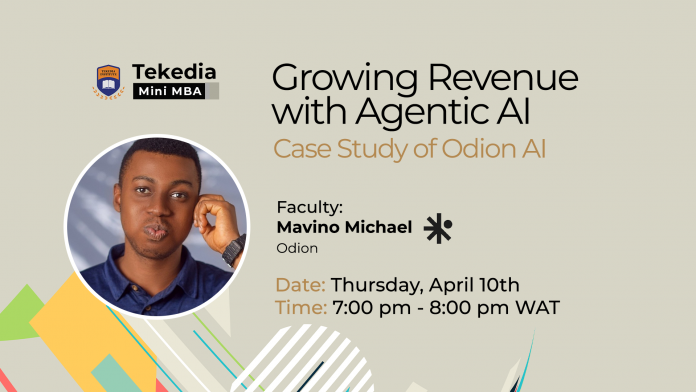
Growing Revenue with Agentic AI: Case Study of Odion AI

0

OdionAI is one of the most advanced agentic AIs in Africa. The team has built  frontier African AI Agents for finance, e-commerce and search. Join Mavino Ikein, CEO of OdionAI, as he takes us on how we can grow revenue with agentic AI.

Thur, April 10 | 7pm-8pm WAT | Growing Revenue with Agentic AI: Case Study of Odion AI – Mavino Michael, Odion | Zoom link

Tekedia Mini-MBA >> the best school. Take your seat for the next edition starting in June here

The Dilemma of Tariffs Woe Between China and United States

0

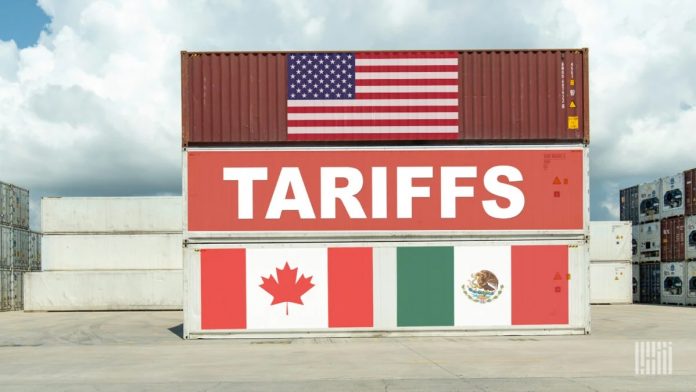
The tariff situation between China and the USA is indeed a complex and evolving dilemma. It’s a high-stakes standoff that’s reshaping global trade, rattling markets, and forcing both nations into a tense game of economic brinkmanship. On one side, the U.S., under President Donald Trump, has escalated tariffs on Chinese goods to a staggering 125%, effective immediately as of recent announcements.

This move builds on earlier duties that had already reached 104%, reflecting a strategy to pressure China into renegotiating trade terms and addressing long-standing grievances about trade imbalances and market access. The U.S. imported $438.9 billion in goods from China in 2024, while exporting only $143.5 billion, leaving a trade deficit of roughly $295 billion—a gap Trump has repeatedly targeted as evidence of China “ripping off” the U.S.

His administration has paired this hardline stance with a 90-day pause on tariffs for most other trading partners, lowering their rates to a baseline 10%, signaling a willingness to negotiate with nations that don’t retaliate. China, meanwhile, isn’t backing down. Beijing has responded with an 84% tariff on U.S. goods, up from a previous 34%, effective April 10, 2025.

This retaliation reflects China’s resolve to “fight to the end,” as stated by its Commerce Ministry, framing the tariffs as a defense of sovereignty and economic interests. China’s leadership sees the U.S. actions as bullying and argues that its trade surplus—while significant—is a natural outcome of comparative advantages and U.S. consumption patterns, not deliberate exploitation.

Yet, with exports to the U.S. being a key economic driver, the tariff hike to 125% threatens to slash trade flows, with the World Trade Organization warning of a potential 80% drop in U.S.-China goods trade, amounting to a $466 billion hit. The dilemma lies in the mutual dependence intertwined with this hostility. The U.S. relies on China for everything from electronics to holiday goods—87% of U.S. Christmas items in 2024 came from China—while China needs the U.S. market to sustain its export-led growth.

Escalating tariffs could decouple these economies, spiking costs for U.S. consumers (think pricier iPhones or toys) and hammering Chinese manufacturers along the eastern seaboard. Markets have swung wildly—surging with relief at the 90-day pause for other nations, then dipping as the U.S.-China clash intensified. Oil prices jumped 4% on April 9, and the S&P 500 saw a historic rally after the broader tariff reprieve, only for uncertainty to creep back in.

Both sides face risks. For the U.S., tariffs might spark inflation or recession if supply chains can’t adapt—economists like Joe Brusuelas suggest the pause won’t fully avert downturn fears. For China, choking off U.S. exports could worsen its economic slowdown, though it’s betting on resilience honed from past trade spats. Neither wants to blink first, yet a prolonged standoff could fracture global trade into rival blocs, with China potentially gaining influence over nations wary of U.S. unpredictability.

It’s a classic prisoner’s dilemma: cooperation could stabilize both economies, but distrust and domestic pressures—Trump’s base cheering protectionism, China’s leaders guarding national pride—push them toward mutual harm. The next 90 days will test whether negotiations can break the deadlock or if this tariff war becomes a new economic Cold War.

Thirteen Things To Know About Late Banking Titan Pascal Dozie

0

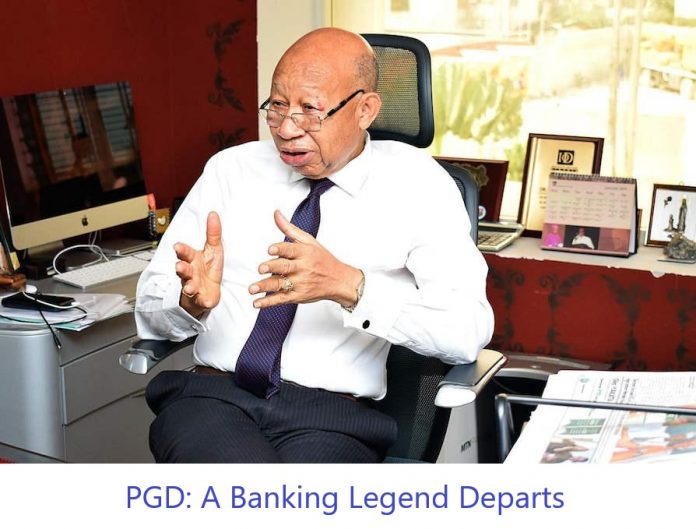
Late Pascal Dozie, was a towering figure in the Nigerian business and financial landscape, who passed away on the 8th of April 2025.

As the founder of Diamond Bank and the pioneer chairman of MTN Nigeria, Dozie left an indelible mark on Nigeria’s economic landscape. His life was a testament to vision, resilience, and an unwavering commitment to nation-building.

Below are 15 amazing facts that highlight the remarkable journey and legacy of this late banking icon.

1. Humble Beginnings

Born on April 9, 1939, in Egbu, a small village near Owerri in Imo State, Nigeria, Pascal Dozie’s story began in modest circumstances. Raised by his father, Charles Dozie, a Catholic catechist, and his mother, Janet, he grew up in a traditional Igbo community where discipline and communal values shaped his early years. This foundation of humility and hard work would later define his approach to life and business.

2. A Stellar Academic Journey

Dozie’s intellectual brilliance shone early. After completing his primary education at Our Lady’s School Emekuku and secondary education at Holy Ghost Juniorate Seminary and Holy Ghost College in Owerri, he traveled to London. There, he earned a Bachelor of Science in Economics from the London School of Economics and later a master’s in administrative science, specializing in operational research and industrial engineering, from City University London. His education equipped him with the tools to revolutionize Nigeria’s financial sector.

3. From Teaching to Global Economics

Before embarking on his illustrious business career, Late Pascal Dozie spent three years teaching after secondary school. This early experience honed his ability to communicate complex ideas simply a skill that would later serve him in boardrooms and mentorship roles. His professional journey began in the UK as an economist at the National Economic Development Office, followed by a stint as a part-time lecturer at Northwestern Polytechnic in London.

4. A Consulting Pioneer in Africa

In 1970, he took his expertise to Uganda, serving as a consulting economist for the African States Consulting Organization. However, a military coup in 1971 led by Idi Amin forced him to leave. Returning to Nigeria at his mother’s request, he founded the African Development Consulting Group (ADCG) in 1971. ADCG, one of the first Nigerian-owned consulting firms, worked with global giants like Nestlé and Pfizer, laying the groundwork for his entrepreneurial empire.

5. The Birth of Diamond Bank

In 1985, Late Pascal Dozie applied for a banking license to address the financial challenges faced by traders in South-Eastern Nigeria, who often carried cash over dangerous roads. After satisfying the Central Bank of Nigeria’s requirements, Diamond Bank commenced operations in 1991 with a modest share capital of ?10 million ($28,000) and 21 shareholders. Under his leadership as CEO until 2006, it grew into one of Nigeria’s most innovative and respected financial institutions.

6. A Trailblazer in Digital Banking

Dozie was a visionary who foresaw the transformative power of technology in banking. Diamond Bank became one of the first Nigerian banks to integrate digital solutions, enhancing customer experience and operational efficiency. This pioneering approach set the stage for the digital banking revolution in Nigeria, cementing his reputation as a forward-thinker.

7. Revolutionizing Telecommunications with MTN Nigeria

Beyond banking, Dozie played a pivotal role in Nigeria’s telecom boom. As the pioneer chairman of MTN Nigeria, he traveled globally to secure investors for the fledgling network in 1998. Despite initial rejections, his persistence paid off, and by 2016, MTN Nigeria boasted 60 million subscribers. His leadership helped make mobile connectivity accessible to millions, transforming communication across the country.

8. A Leader Across Multiple Sectors

Dozie’s influence extended far beyond banking and telecom. He held prestigious roles such as Director of the Central Bank of Nigeria, President of the Nigerian Stock Exchange, Chairman of the Nigerian Economic Summit Group, and Co-Chair of the Commonwealth Business Council. Each position showcased his dedication to economic development and institutional excellence in Nigeria.

9. Founding Africa Capital Alliance

A champion of entrepreneurship, Dozie was a founding partner of Africa Capital Alliance, a leading private equity firm focused on fostering African business growth. His efforts supported countless startups and established businesses, reinforcing his legacy as a catalyst for economic empowerment.

10. Commitment to Education

As Chairman of Pan-Atlantic University in Lagos, Dozie invested heavily in shaping Nigeria’s future leaders. His belief in education as a cornerstone of development was evident in his support for the university, which continues to produce graduates driving innovation across various fields.

11. Mentorship and Inspiration

Known for his generosity with time and wisdom, Dozie mentored numerous young entrepreneurs and business leaders. Many of Nigeria’s successful professionals today credit him with shaping their journeys, a testament to his role as a teacher and guide.

12. National and International Honors

Dozie’s contributions earned him prestigious accolades, including the Officer of the Order of the Niger (OON) in 2000 and the Commander of the Order of the Niger (CON) in 2011. He also received the All-Africa Business Leaders Award (AABLA) and a Lifetime Achievement Award, recognizing his global impact.

13. A Family Legacy

Last Pascal Dozie’s influence extended to his family. He handed over Diamond Bank’s leadership to his son, Uzoma Dozie, who served as CEO from 2014 until the bank’s merger with Access Bank in 2019. Uzoma has since founded Sparkle, a fintech platform, continuing the family’s legacy of innovation.

Conclusion

Pascal Dozie’s death on April 8, 2025, marked the end of an era, but his contributions to Nigeria’s banking, telecommunications, and broader economic landscape will resonate for generations. From his humble village roots to the commanding heights of corporate Nigeria, his life was a masterclass in tenacity.

Markets Soar, Experts React as Trump Pauses Global Tariffs for 90 Days, Slaps China with Steeper 125% Tariff

0
USC experts talk about the importance of U.S.-China trade and how it affects the economy. (Illustration/iStock)

President Donald Trump on Wednesday triggered a market rally not seen in years after announcing a 90-day pause on sweeping global tariffs introduced only a week earlier — a dramatic turnaround that fueled speculation he may have deliberately tanked the stock market to benefit his political and financial allies.

The decision, which exempts China and instead slaps it with an even steeper tariff of 125%, comes amid increasing scrutiny of Trump’s motives after days of turmoil wiped $7 trillion off global markets. The president’s reversal prompted an immediate surge on Wall Street: The Dow leaped more than 2,600 points, while the S&P 500 climbed 7% and the Nasdaq soared 10% within an hour of the announcement.

“Based on the lack of respect that China has shown to the World’s Markets, I am hereby raising the Tariff charged to China by the United States of America to 125%, effective immediately,” Trump wrote on Truth Social. “At some point, hopefully in the near future, China will realize that the days of ripping off the U.S.A., and other Countries, is no longer sustainable or acceptable.”

But alongside his public salvo at China, Trump issued another message earlier in the day to his followers: “This is a great time to buy.” That statement, posted shortly after markets opened Wednesday morning, has fueled the belief that the president may have manipulated the market for political optics — or worse, financial advantage.

Four hours after that post, he announced the 90-day pause on global tariffs, a move that sent markets soaring and led many to believe the sequence was anything but coincidence. A congresswoman is now calling for an investigation.

“I’m calling for an investigation into whether President Trump manipulated the market to benefit his Wall Street donors—all while working people and small businesses paid the price. Did Trump help insiders cash in on his tariff flip-flopping? It sure looks like corruption,” Sen. Elizabeth Warren, D-Mass, said Wednesday.

Trump’s pivot came a day after billionaire hedge fund manager Bill Ackman publicly advised him to halt the global tariff escalation. Ackman hailed his decision to pause the tariffs.

“This was brilliantly executed by @realDonaldTrump. Textbook, Art of the Deal,” Ackman posted on Tuesday, praising the strategy behind the trade maneuver and market timing.

The White House insists the president’s move is strategic. Treasury Secretary Scott Bessent said the reversal came after an “overwhelming” response from more than 75 countries seeking to negotiate rather than retaliate.

“President Trump created maximum negotiating leverage for himself,” Bessent said. “The ones that we have lowered went into effect a week ago, and we have just been overwhelmed — overwhelmed — by the responses from, mostly, our allies, who want to come and negotiate in good faith.”

Press Secretary Karoline Leavitt reinforced that message, dismissing allegations that the president panicked under pressure from Wall Street or banking institutions like JPMorgan Chase and Goldman Sachs, which warned the new trade policy could tip the U.S. into recession.

“Many of you in the media clearly missed the art of the deal,” she said.

However, not everyone is convinced by the White House’s narrative. Some view the tariff maneuvering as fundamentally anti-China from the beginning.

A message from the White House posted Wednesday read bluntly: “DO NOT RETALIATE AND YOU WILL BE REWARDED,” signaling to countries other than China that restraint would be met with favorable treatment — namely the new 10% baseline tariff.

China Responds Swiftly

Beijing, however, chose to strike back.

Just hours after Trump’s announcement, China’s Ministry of Commerce said it would restrict exports of dual-use items, goods with both civilian and military applications, to a dozen U.S. firms. The retaliatory list includes: American Photonics, Novotech Inc., Echodyne, and Teledyne Brown Engineering. Other firms on the blacklist include Kratos Unmanned Aerial Systems, BRINC Drones, and Domo Tactical Communications. Ongoing shipments to these firms are to be terminated immediately.

“From 12:01 p.m. on April 10, the export of dual-use items to these 12 firms will be prohibited, while any ongoing related export activities must be stopped immediately,” the Chinese Commerce Ministry said.

Will China Just Go Through the Backdoor?

Some experts believe China will find ways to skirt the penalties, especially now that the U.S. has lowered tariffs on other countries to 10%.

Spencer Hakimian, founder of Tolou Capital Management, said China could simply reroute its goods through countries like Vietnam or Mexico.

“By the way, now that we’re back to 10% tariffs on Vietnam, Bangladesh, Cambodia, Mexico, etc., isn’t China just going to continue dumping into the U.S. via those middle countries and undercutting American manufacturers yet again?” Hakimian asked.

The loophole he’s referring to, known in trade circles as transshipment, is a long-running concern, and critics argue it renders U.S. tariff policy ineffective unless coordinated multilaterally.

However, Peter Schiff, Chief Economist at Euro Pacific Capital, dismissed the White House’s spin, arguing that Trump’s move amounted to a quiet retreat.

“It looks like Trump has already surrendered in what may go down as the shortest global trade war in history,” Schiff said. “I guess once he saw how badly the U.S. was losing, he needed to find a graceful way to save face.”

Still, Schiff warned that the economic consequences of even a brief tariff war are long-lasting. “Damage is already done. Confidence has been shaken. Global partners will remember this.”

What Comes Next?

For now, investors are celebrating — but the truce may be short-lived.

If China escalates further or if the EU proceeds with its planned retaliatory measures, the White House may be forced to revise its pause. Trump has not said whether countries like the European Union, Canada, or India will continue to enjoy the 10% baseline or if they risk returning to the earlier, much steeper levels.

With China targeting defense-linked companies and dual-use technologies, it’s clear that this economic dispute is no longer confined to trade. It has now moved into national security territory, and that could complicate future negotiations. With the global chessboard shifting by the hour, the next move and market shock may not be far away.