DD
MM
YYYY

PAGES

DD
MM
YYYY

spot_img

PAGES

Home Blog Page 1498

CBN Says Bank Recapitalization Crucial to Achieving $1tn Economy, But Experts Warn Power Crisis Undermines Vision

0

The Central Bank of Nigeria (CBN) on Monday declared that recapitalizing the banking sector was inevitable if the country intends to build a $1 trillion economy by 2030.

CBN Deputy Governor, Corporate Services, Ms. Emem Usoro, who delivered a keynote address at the opening of the 36th CBN seminar for finance correspondents and business editors in Abuja, emphasized that improving banks’ capital base would ensure resilience and enable them to finance the country’s development projects. She stated that recapitalization would also position Nigerian banks to compete more effectively with their global counterparts.

Speaking through the acting Director, Corporate Communications Department, Mrs. Sidi Ali-Hakama, Usoro said the time had come to pay significant attention to the recapitalization of banks, especially as Nigeria targets an ambitious economic expansion from its current estimated size of $250 billion to $1 trillion in less than a decade.

“The push for a recapitalization of banks would no doubt improve the strength and health of the financial system, deepen financial intermediation, and promote healthier competition that would strengthen our payment system,” she said.

She noted that the 2004 banking reform, which raised the minimum capital base to N25 billion and reduced the number of banks from 89 to 25, proved successful in its time. A similar decisive move, she argued, is now needed as Nigeria plans to multiply its economic size fourfold.

“The 2004 banking sector consolidation and recapitalization exercise, which set a limit of N25 billion minimum capital base for banks, brought the Nigerian banks from 89 to 25, was a noble idea that the Central Bank of Nigeria implemented in line with emerging developments at that time.

“Today, our economy is valued at approximately $250 billion. As we aspire to build a $1 trillion-economy, all hands must be on deck…This gathering is essential to bring to the fore the bank’s efforts and policy direction,” she said.

However, outside the walls of the seminar, the consensus among economic experts is far more sobering. Many have warned that without a stable power supply, the dream of a $1 trillion economy remains a mirage. According to them, the country’s chronic power crisis poses a far greater threat to growth than capital inadequacy.

According to a study, for every 1% increase in electricity supply, an economy is expected to grow by 3.94%. Inversely, a 1% increase in real gross domestic product leads to a 0.34% increase in electricity supply and consumption.

Currently, Nigeria generates about 4,000MW to 5,000MW of electricity, a figure that has remained stagnant for years despite decades of policy shifts, billions of dollars in spending, and successive power sector reforms. Experts argue that this level of generation is not even sufficient for Lagos alone, let alone an entire country.

“With a current installed capacity of about 14,000 megawatts, and utilization ranging between 3500 to a maximum 4000, over 11 years post privatization, the government’s aim to boost electricity access from 45% to 90% by 2030 is not feasible without a bench markable framework backed by credible data,” Dr. Joy Ogaji, managing director, Association of Gencos, said late last year.

Nigeria needs an estimated 30,000MW of stable power to grow its economy significantly, yet, there is no actionable plan in place to raise its power generation to even 10,000MW in the next ten years.

Against this backdrop, the talk of a $1 trillion economy feels out of touch with reality.

The power deficit continues to cripple productivity across sectors. Manufacturing plants operate at a fraction of their capacity, small businesses rely on expensive diesel generators, and foreign investors routinely cite electricity as a major disincentive.

Over the years, Nigeria has rolled out different interventions to reform the power sector, including privatizing generation and distribution assets, signing power purchase agreements, and setting up regulatory bodies. But none of these efforts has led to significant or sustained improvement in electricity supply.

The current administration, like those before it, has promised to “fix power.” Yet there is no clear roadmap to ramp up generation, expand transmission, or overhaul the comatose distribution companies. Experts have therefore called for the federal government to declare a state of emergency in the power sector.
How Layer 1 Blockchains may be best

0

I recently read content from Moralis ‘Academy’. Some of you may already be familiar with Moralis due to the ‘SDK’ product.

They have a perplexing summary on the differences between Blockchains by Layer types 1, 2 & 3.

‘Layer-2 (L2) networks help the blockchain industry to scale by taking computations off-chain and minimizing fees and latency. That said, layer-2 networks don’t address the issue of interoperability. Thankfully, layer-3 (L3) networks exist to enable various blockchains and protocols to communicate.

Though the concept of a “layer-3 network” is mainly theoretical, the umbrella term refers to protocols that supplement layer-1 (L1) and layer-2 (L2) networks. In the future, many expect layer-3 networks to play an essential role in connecting the Web3 ecosystem and facilitating the mass adoption of blockchain technology. In addition, the ability of layer-2 networks to reduce congestion and layer-3 networks to facilitate interoperability between protocols enables the interconnectivity the Web3 landscape needs to flourish.’

A lot of content about Web3 presumes the ‘to-market’ consumer/collectible end, almost as if there is no other aspect to blockchain integration.

In this area, most especially, consumers should be more concerned with security, and with keeping highly personalized virtual content safe, which underlies a need to focus on security and decentralization aspects of the blockchain trilemma, not transaction speed or cost.

The main use case for high transaction rates, and super low cost, is mass data being managed at scale, industrially, commercially, and in organisations. Excluding exchange activity, this is usually not of transferable value, and is often ‘soulbound’.

If we are to believe any of the content being created out there, the consumer tradeable area is the one of most concern to ordinary individuals.

The Blockchain Trilemma features the conundrum of the variable features of a Blockchain – Security, Scalability and Decentralization. They are like a 3 sliced pie, making any slice bigger, diminishes the slice of the other two.

The Moralis perspective mentions interoperability and interconnectivity, but fails to highlight any progress in the Security or Decentralization credentials of infrastructure beyond L1 at all.

We’re not specifically ‘Moralis Bashing’ here ; this is a widely held perspective.

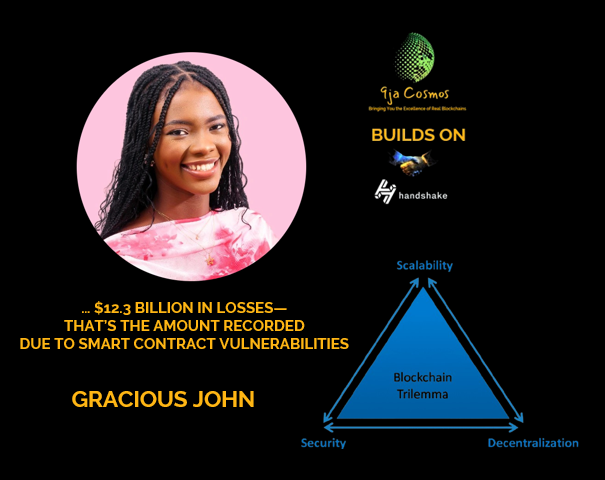
I remind myself of a statement by Gracious John, which I extracted from an online post more than a year ago –

… $12.3 BILLION IN LOSSES—  THAT’S THE AMOUNT RECORDED DUE TO SMART CONTRACT VULNERABILITIES

Smart Contracts and Bridges should be kept very far away from Web 3 tradeable and collectible retail, in particular when it comes to highly liquid assets like memecoins and fungible tokens for retail-end networks.

But the centralization problem isn’t only about Technical Structure. It is also about ownership. Owners can be incentivized through tokenomics to take an initial share as ‘just’ return for the birth of an ecosystem. But then they should walk away and leave it operate autonomously.

People are greedy. They are prone to want more than they deserve. They are also vulnerable to coercion by criminal elements or heavy handedness from regulatory powers. Autonomous public structures operating with ZKP (Zero Knowledge Proof), mitigate against these challenges.

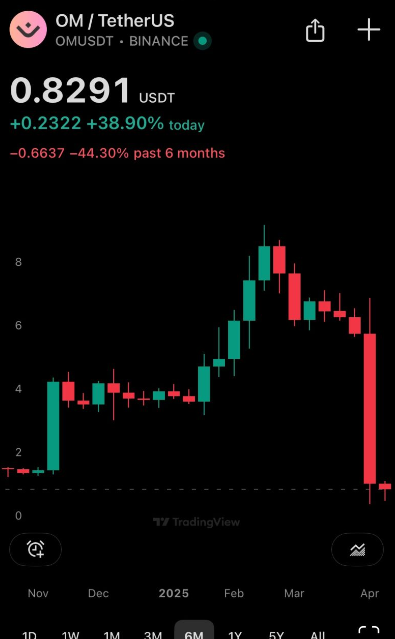
New coin issuances are getting wiped superfast, and the most recent demise – Mantra OM has shown a spectacular demise, although most recent news is that an OM Buyback & Burn Program is incoming after the wild price dip, ref: owner – J.P. Mullin.

But all that just leads to one issue, if ecosystem autonomy could prevent these insider ‘mishandling’, in the first place, wouldn’t systems be more decentralized and robust?

One of the redeeming aspects of FIAT currencies, is that every nation can have only one of them, and there is only roughly 190 of them there. New slap-together coins/tokens are coming out all the time and there seems no end to the pump and dump.

Perhaps the new discomfort with these ‘disposable’ cryptos will see a resurgence in authentic PoW BTC styled architectures like ERG, HNS and RVN, with their autonomous nature, mining communities, and with lots more appreciation headroom than Bitcoin?

They were expensive and time consuming to make, made fairer division between community and creators, and share an enduring maximum circulation and robust decentralized build structure with Bitcoin, which hasn’t been seen in releases since 2020.

9ja Cosmos is here…

.9jacom Domains

.det0x Domains

Detoxant 3 Tokenized Artworks

Opaque Emotion Pathways Tokenized Artworks

Preview our Sino Amazon/Sinosignia releases (Ente)

Visit 9ja Cosmos LinkedIn Page

Visit 9ja Cosmos Website

Follow 9ja Cosmos on X

Mobile Money-Enabled International Remittances Emerged as The Fastest Growing Ecosystem Transaction in 2024

0

Mobile money continues to transform the global financial landscape, driving unprecedented growth in remittances, merchant payments, bill payments, and savings.

In 2024, mobile-money-enabled services demonstrated remarkable resilience and expansion, particularly in Sub-Saharan Africa, while other regions like South Asia and MENA showed rapid adoption.

According to a survey from the 13th edition of “The State of the Industry Report on mobile money 2025”, mobile money-enabled international remittances emerged as the fastest-growing ecosystem transaction by value, nearly tripling since 2020.

In 2024, transaction values surged by 22% to reach $34 billion, outpacing the global remittance market’s modest 0.7% growth with a remarkable 28% increase in 2023. Sub-Saharan Africa dominated, accounting for over 70% of mobile money remittances, but South Asia led year-on-year growth at 62%, followed by East Asia and the Pacific at 39%.

Merchant payments via mobile money reached USD 100 billion in 2024, a 21% increase from 2023, making them the highest-value ecosystem transaction over three times the value of international remittances. Transaction volumes grew by 25%, second only to peer-to-peer (P2P) transfers. Sub-Saharan Africa drove two-thirds of merchant payment values, but MENA (38%), East Asia and the Pacific (37%), and South Asia (25%) recorded faster year-on-year growth than Sub-Saharan Africa’s 16%.

Access to merchant payments improved significantly, with registered merchant accounts growing by 40% and unique customer accounts paying merchants rising by 15% between September 2023 and June 2024. While in-person transactions remain dominant, online merchant payments are gaining traction, with their average value increasing by over a third during the same period. This shift underscores mobile money’s role in bridging physical and digital commerce.

After a rare decline in 2023, global bill payments via mobile money rebounded strongly in 2024, growing by USD 16 billion, double the value lost the previous year. Sub-Saharan Africa accounted for 70% of bill payment values, but MENA (32%) and South Asia (24%) led in annual growth.

Bill payments remain a core use case, with over 90% of MMPs offering this service in 2023 and 2024. Electricity bill payments topped transaction values for 41% of providers, and nearly one in five MMPs introduced recurring bill payment options to enhance user convenience.

Transfers between banks and mobile money accounts grew faster than cash-ins and cash-outs. Of all interoperable transaction values, bank-to-mobile (B2M) transfers were the highest in 2024 at $127 billion (Figure 25). Mobile-to-bank (M2B) transfers totaled $125 billion in 2024, 17% higher than in 2023.

This marked the first time since 2019 that B2M transfers were higher than M2B – another important milestone for the industry and a sign of growing regular mobile money use. P2P off-net transfers rose by 14% in 2024 to reach $73 billion.

In line with other use cases, interoperability transactions are most prevalent in Sub-Saharan Africa (58%). However, other regions grew faster, despite Sub-Saharan Africa’s higher share of interoperable transaction values. MENA grew the quickest year on year at 63%, followed by South Asia (32%), and East Asia and the Pacific (31%). In line with other use cases, interoperability  transactions are most prevalent in Sub-Saharan

Africa (58%). However, other regions grew faster despite Sub-Saharan Africa’s higher share of interoperable transaction values. MENA grew the quickest year on year at 63%, followed by South Asia  (32%), and East Asia and the Pacific (31%).

Savings A Growing Financial Tool in Mobile Money

Savings remain the second most-offered adjacent financial service. Savings was also the second fastest-growing mobile money-adjacent financial service, with 34% of MMPs offering savings up from 23% in 2023. As a result, the cumulative number of unique customers who transferred funds to a savings account grew by 80% between September 2023 and June 2024.

This includes customers using a dedicated interest-bearing savings account (where regulations permit) or others who use mobile money accounts as a reliable store of value.  Demand-side data supports this latter point. In several African and Asian countries, mobile money is being used by more customers to save money.

The number of customers saving money via mobile money over the past 12 months grew by more than 20 percentage points in Ethiopia, India, Indonesia, and Nigeria. Significant increases were also observed in Pakistan and Uganda. A high number of users were already using mobile money to save money in Kenya in 2023, leading to a modest rise in 2024.  As of 2023, responses to the 2024 GSMA Global Adoption Survey suggests that women continue to rely on mobile money to save money.

Barriers to Mobile Money Adoption

Despite mobile money’s growth, barriers to account ownership persist. A preference for cash remains the primary obstacle, especially among women in Ethiopia, Pakistan, Nigeria, and the Philippines. In Bangladesh, men cited cash preference more than women.

Lack of knowledge and skills also hinders adoption, with Ethiopia’s nascent market showing similar challenges for men (66%) and women (60%) in understanding mobile money. Device usability issues affected both genders equally (46% for men, and 45% for women).

Gender-specific barriers are notable in conservative markets. In Pakistan, 39% of women cited family disapproval as a barrier, compared to 12% of men. In Egypt, 24% of women used a friend or family member’s account, compared to 15% of men, reflecting cultural norms that limit women’s financial autonomy.

Looking Ahead

Mobile money’s meteoric rise in 2024 underscores its transformative potential in global finance. From powering remittances and merchant payments to enabling savings and interoperability, mobile money is reshaping how individuals and businesses engage with money.

Sub-Saharan Africa remains the epicenter, but rapid growth in South Asia, MENA, and East Asia signals a broadening global footprint.

Interest on Virtuals Protocol Resume According to Data From IntoTheBlock

0

Data from IntoTheBlock indicates a recent increase in transaction volumes on Virtuals Protocol, a blockchain project focused on AI agent creation and deployment. This uptick, noted around mid-April 2025, suggests renewed interest in the platform after a significant decline earlier in the year, with transaction volumes rising by 20% from April 1 to April 10. However, the ecosystem has faced challenges, with prior reports showing a 99% drop in revenue and DEX trading volumes since December 2024. While this resurgence could signal a potential recovery for Virtuals Protocol and its native token, market sentiment remains cautious due to earlier losses and broader uncertainties.

Virtuals Protocol is a decentralized blockchain platform designed to enable the creation, deployment, and monetization of AI agents—autonomous software entities capable of performing tasks like data analysis, content creation, or transaction processing. Built on Ethereum with plans for cross-chain compatibility, it aims to democratize AI development by allowing users to build and trade these agents as NFTs, fostering a marketplace for AI-driven services.

Users can develop customizable AI agents using provided tools, no advanced coding required. Agents are tokenized as NFTs, enabling ownership, trading, and monetization on the platform’s marketplace. The protocol uses its native token (often referred to as VIRTUAL) for governance, allowing stakeholders to vote on platform upgrades.

It supports integration with DeFi, gaming, and other Web3 ecosystems, aiming for broad use cases. The platform has seen fluctuating activity, with recent data from IntoTheBlock showing a 20% rise in transaction volumes in early April 2025, though it previously faced a 99% drop in revenue and trading volumes since late 2024. Its goal is to blend Artificial intelligence (AI) nd blockchain to create a scalable, user-driven economy, but it’s still navigating market volatility and adoption challenges.

AI agents in Virtuals Protocol are autonomous software entities built on the blockchain, designed to perform specific tasks with varying degrees of intelligence and customization. Agents can execute predefined tasks like data processing, content generation (e.g., text, images), or transaction management (e.g., DeFi trades) without constant user input.

Customizability: Users can tailor agents via the platform’s tools, adjusting parameters like decision-making logic or integration with external data sources, no deep coding expertise needed.

Interoperability: Agents interact with Web3 ecosystems—think DeFi protocols, NFT marketplaces, or gaming environments—using APIs and cross-chain compatibility (primarily Ethereum-based, with plans for broader networks).

Self-Learning (Limited): Some agents can adapt based on data inputs, though they’re not fully autonomous AI like advanced LLMs; their “learning” is constrained by predefined algorithms and user settings.

NFT-Based Ownership: Each agent is tokenized as an NFT, allowing users to own, trade, or monetize them on Virtuals’ marketplace. This ties functionality to economic incentives.

Decentralized Execution: Agents run on the blockchain, ensuring transparency and resistance to censorship, with actions logged immutably.

Example use cases: An agent could monitor crypto markets and execute trades based on set conditions, generate digital art for an NFT collection, or manage community interactions in a DAO. Recent data shows a 20% uptick in transaction volumes (April 2025), hinting at growing use, but functionality is still evolving, with limits tied to blockchain scalability and AI complexity.

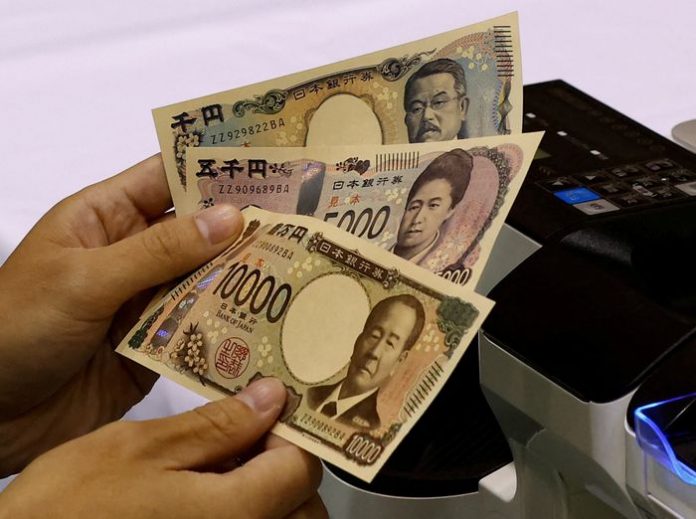
The Rise in Japan’s 30-Year Bond Yield Could Strengthen the Yen

0

The surge in Japan’s 30-year bond yield to 2.845%, the highest since 2004, reflects growing market expectations of tighter monetary policy from the Bank of Japan (BOJ) and broader global bond market dynamics. The 12-basis-point jump points to investor concerns about potential rate hikes, driven by persistent inflation pressures and a weakening yen, which has been hovering near historic lows. This yield spike aligns with recent reports of super-long JGB yields climbing amid supply concerns and a global sell-off in bonds, partly triggered by U.S. tariff policies unsettling markets.

On the flip side, some argue this could be a temporary overreaction to global volatility rather than a clear signal of BOJ policy shift, as Japan’s economy still grapples with sluggish growth and deflationary risks. The BOJ’s cautious approach to unwinding decades of ultra-loose policy adds uncertainty—yields might stabilize if they hold off on aggressive hikes. Still, the market’s pricing in an 85% chance of a rate hike by July suggests momentum is building for change.

The rise in Japan’s 30-year bond yield to 2.845% could strengthen the yen in the short term, as higher yields attract foreign capital seeking better returns, increasing demand for the currency. Investors may buy yen to invest in Japanese government bonds (JGBs), putting upward pressure on its value. The recent market dynamics show the yen reacting to yield differentials, especially against the U.S. dollar, where the USD/JPY pair has been sensitive to U.S. Treasury yield movements and BOJ policy signals.

However, the yen’s response is not guaranteed. Persistent global risk-off sentiment, U.S. tariff threats, or a stronger dollar (driven by U.S. rate expectations) could offset this effect, keeping the yen weak. The yen has been under pressure, trading near 155-160 against the dollar recently, partly due to Japan’s still-low interest rates compared to the U.S. If the BOJ doesn’t signal a clear rate hike soon, the yield spike alone may not sustain yen appreciation, especially with speculative short positions on the yen remaining high.

A Bank of Japan (BOJ) rate hike, signaled by the 30-year bond yield hitting 2.845%, would have wide-ranging implications: Higher rates would likely boost the yen as capital flows into Japan for better yields. This could ease import-driven inflation but hurt exporters, a key economic driver, as a stronger yen makes Japanese goods pricier abroad. JGB yields would rise further, increasing borrowing costs for the government, which carries a debt-to-GDP ratio over 250%.

The BOJ might need to balance rate hikes with yield curve control to avoid market instability. A hike aims to curb inflation, which has exceeded the BOJ’s 2% target at times (recently ~2.5-3%). Success could stabilize prices, but overly aggressive hikes risk tipping Japan’s fragile economy into deflation again. Higher rates could dampen consumer spending and business investment, slowing growth. Japan’s GDP has been sluggish, with 2024 forecasts at ~0.5-1%. A misstep could trigger recessionary pressures.

A stronger yen and tighter policy might influence other central banks, especially in Asia, and affect global bond markets. However, Japan’s unique low-rate environment limits its global impact compared to U.S. policy shifts. On the other hand, if the BOJ hikes too cautiously, persistent inflation and a weak yen near 155-160 USD/JPY could erode purchasing power and investor confidence.

Markets expect an 85% chance of a hike by July, but the BOJ’s history of dovish surprises suggests they might delay, prioritizing growth over inflation control. The outcome hinges on upcoming BOJ meetings and global cues like U.S. policy moves.