DD
MM
YYYY

PAGES

DD
MM
YYYY

spot_img

PAGES

Home Blog Page 15

France Faces Mounting Debt Pressure as Bond Market Signals Warning

0

France’s 30-year government bond yield has climbed to its highest level since the global financial crisis, signaling growing investor concerns over the country’s fiscal outlook and adding pressure to the broader European debt market.

The surge in long-term borrowing costs reflects mounting worries about rising public debt, political uncertainty, and the sustainability of government spending at a time when many advanced economies are grappling with elevated interest rates.

Government bond yields are a key indicator of investor confidence in a country’s economic and fiscal health. When yields rise, it means investors are demanding higher returns to hold government debt, often because they perceive greater risks.

France’s 30-year bond yield reaching levels not seen since the 2008 financial crisis suggests that markets are increasingly cautious about the nation’s long-term economic trajectory.

The French government has struggled to bring public finances under control following years of heavy spending during the COVID-19 pandemic, the energy crisis triggered by the Russia-Ukraine conflict, and various domestic support programs aimed at protecting households from inflation.

As a result, public debt has continued to rise, raising questions about the country’s ability to meet European Union fiscal targets. Political uncertainty has further complicated the situation.

France has experienced a turbulent political environment marked by fragmented parliamentary support and contentious debates over fiscal reforms.

Investors are concerned that political divisions could make it difficult for policymakers to implement spending cuts or structural reforms necessary to stabilize public finances.

The lack of clear consensus on budgetary discipline has contributed to increased risk premiums on French government bonds. The rise in French bond yields also comes amid a broader shift in global monetary conditions.

Central banks, including the European Central Bank, have maintained relatively high interest rates to combat inflation. Higher benchmark rates generally translate into increased borrowing costs for governments and businesses alike.

Investors now expect governments with large debt burdens to face greater financing challenges, making long-term bonds particularly sensitive to fiscal concerns. The implications of rising yields extend beyond France.

As one of the eurozone’s largest economies, France plays a crucial role in the stability of European financial markets. A sustained increase in French borrowing costs could influence debt markets across the region, especially for countries with similarly high debt levels.

It may also complicate the ECB’s efforts to maintain financial stability and support economic growth. For the French government, higher bond yields mean that servicing existing debt and issuing new debt will become more expensive.

This could force policymakers to make difficult choices between increasing taxes, reducing public spending, or accepting larger deficits. Such measures may have significant economic and social consequences, particularly if they slow growth or trigger public resistance.

Financial markets are closely monitoring whether France can restore investor confidence through credible fiscal reforms. A commitment to reducing deficits, improving economic competitiveness, and maintaining political stability could help ease concerns and moderate borrowing costs over time.

The rise of France’s 30-year bond yield to levels last seen during the financial crisis serves as a stark reminder of the challenges facing heavily indebted nations in a higher interest-rate environment. It underscores the importance of fiscal discipline and political cohesion as governments navigate an increasingly uncertain global economic landscape.

Moonshot Unveils ‘World’s Largest Open-Weight AI Model’ As China’s Challenge To U.S. AI Leaders Accelerates

0

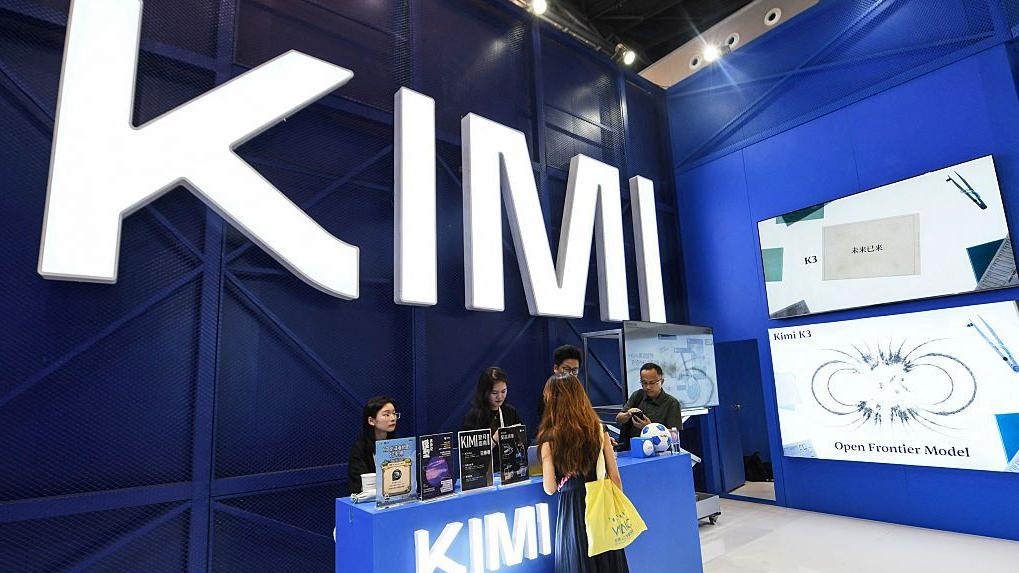
Chinese artificial intelligence startup Moonshot has unveiled Kimi K3, a 2.8 trillion-parameter model that it says is the world’s largest open-weight AI system, intensifying competition between Chinese and U.S. AI developers as Beijing’s open-source ecosystem rapidly closes the technological gap with Silicon Valley.

The launch represents another milestone in China’s accelerating AI development and reinforces a broader trend reshaping the global industry. Rather than merely catching up to U.S. leaders, Chinese AI companies are increasingly competing at the frontier through open-weight models that combine advanced capabilities with substantially lower deployment costs.

Moonshot said Kimi K3 delivers performance approaching Anthropic’s frontier Fable models, while offering enterprises and developers the flexibility to download, customize and deploy the model themselves, an attractive proposition as businesses seek alternatives to expensive proprietary AI services.

The announcement comes just weeks after Anthropic’s Fable and Mythos models were withdrawn from non-U.S. markets following U.S. government security restrictions, a development that has created new opportunities for Chinese developers to expand internationally, particularly in emerging markets.

Kimi K3 is the latest example of how Chinese AI firms are shortening the innovation cycle.

Companies including Moonshot, Z.ai, MiniMax, DeepSeek, Alibaba, Meituan and Zhipu have released capable foundation models over the past year, challenging the long-held assumption among Western analysts that Chinese AI technology trails American competitors by six months or more.

That perception has steadily weakened as Chinese models have demonstrated competitive performance across coding, reasoning, mathematics, and agent-based tasks while often costing significantly less to deploy.

The shift has been driven partly by China’s embrace of open-weight AI, allowing developers and enterprises to build customized applications without relying on proprietary cloud services operated by U.S. technology companies.

Unlike closed models from OpenAI, Anthropic and Google, open-weight systems provide access to model weights, enabling organizations to fine-tune models for specialized tasks, deploy them within private infrastructure and avoid recurring API fees.

A 2.8 Trillion-Parameter Model

Moonshot said Kimi K3 is the first publicly released open-weight model to approach the 3 trillion-parameter threshold.

Parameters are the internal mathematical variables an AI model learns during training. While a larger parameter count generally denotes greater model capacity, it does not automatically translate into superior performance. Training quality, architecture, data, and inference optimization are equally important.

Even so, Kimi K3’s scale places it among the largest AI models ever announced.

The model includes a one-million-token context window, allowing it to process and retain extraordinarily large volumes of text, code and documentation within a single prompt. That capability makes the model particularly suited for enterprise workloads involving extensive technical documentation, software development, legal analysis, scientific research and long-form reasoning.

Moonshot said the model was designed specifically for advanced reasoning, long-horizon coding and knowledge-intensive work requiring sustained contextual understanding.

Competitive Benchmark Performance

Moonshot claims Kimi K3 delivers performance approaching some of the world’s strongest proprietary AI systems.

According to the company, the model performed competitively with Anthropic’s Fable 5 while substantially outperforming Anthropic Opus 4.8, OpenAI’s GPT-5.6 Sol and GPT-5.5 in GPU kernel optimization, an important measure of how efficiently AI software utilizes computing hardware to maximize throughput and minimize latency.

Independent benchmark organizations also reported encouraging results.

Arena.ai ranked Kimi K3 first in web interface-building capability, while Vals AI placed it second overall behind Fable 5 and ahead of GPT-5.6 Sol.

Artificial Analysis found the model delivered performance broadly comparable to OpenAI’s GPT-5.5 and Anthropic’s Opus 4.8, particularly on evaluations measuring complex multi-step reasoning and agentic workflows.

Those results suggest Chinese models are becoming increasingly competitive across a broader range of enterprise applications rather than excelling only in isolated benchmarks.

Efficiency Becoming As Important As Scale

Moonshot said Kimi K3 incorporates two major architectural improvements designed to increase computational efficiency while enabling longer autonomous coding sessions with minimal human supervision.

That represents an important shift in AI development. Rather than simply building ever-larger models, leading developers are increasingly focused on improving inference efficiency, reducing latency and lowering deployment costs, all of which determine the commercial viability of large language models.

Lian Jye Su, chief analyst at Omdia, said cost remains one of China’s biggest competitive advantages.

“They can be run at a fraction of the cost that OpenAI charges its clients,” he said, while cautioning that model size alone does not guarantee superior performance.

Lower operating costs have become an increasingly powerful selling point as enterprises seek to scale AI deployment without dramatically increasing computing budgets.

Despite being open-weight, Kimi K3 is unlikely to be deployed locally by most organizations.

Ryan Fedasiuk, a fellow at the American Enterprise Institute, noted that operating a 2.8 trillion-parameter model would require computing infrastructure costing hundreds of thousands of dollars, placing self-hosting beyond the reach of most individual developers and smaller businesses.

Instead, the model is expected to be deployed primarily through cloud providers, enterprise AI platforms and specialized infrastructure operators.

Investors reacted quickly to the announcement.

Shares of Hong Kong-listed AI companies Zhipu and MiniMax fell 27.7% and 16.5%, respectively, before the close of trading, reflecting concerns that Moonshot’s technological lead could intensify competition within China’s increasingly crowded AI sector.

The reaction underscores how quickly competitive dynamics are evolving as Chinese developers release new frontier models at an accelerating pace.

Before Kimi K3, China’s largest publicly known models included Meituan’s LongCat-2.0 and DeepSeek V4-Pro, each containing approximately 1.6 trillion parameters. Several other Chinese developers have now crossed the trillion-parameter threshold, signaling that frontier-scale AI development is becoming increasingly widespread within China’s technology sector.

Direct comparisons with U.S. models remain difficult because companies, including OpenAI and Anthropic, do not disclose parameter counts for GPT-5.5, Fable or Mythos. Instead, performance comparisons increasingly rely on independent benchmark evaluations rather than model size alone.

Moonshot has emerged as one of China’s fastest-growing AI startups, supported by major investors including Alibaba and Tencent.

The company has expanded aggressively over the past year as competition intensifies among Chinese AI developers seeking to establish leadership in both domestic and international markets.

Bloomberg reported recently that Moonshot is seeking $2 billion in new financing at a valuation of approximately $30 billion ahead of a potential Hong Kong initial public offering.

Kimi K3’s release is seen as another indication that the competitive balance in artificial intelligence is evolving. While U.S. companies continue to lead in frontier proprietary models, Chinese developers have rapidly established themselves as leaders in the open-weight ecosystem by combining strong performance with lower deployment costs and greater customization.

That strategy is proving attractive to enterprises seeking greater control over AI infrastructure, particularly in regions where access to advanced U.S. models has become more restricted because of export controls and national security policies. The result is a bifurcated AI market: one centered on proprietary frontier systems from U.S. firms, and another built around increasingly powerful open-weight models from China.

Kalshi Opens Betting on Drug Trial Outcomes and Regulatory Decisions with 13-Contract Biotech Pilot

0

Prediction market platform Kalshi has expanded into the biotechnology sector by launching a pilot program that allows users to trade on the outcomes of drug trials and regulatory decisions.

The initiative introduces 13 new contracts centered on clinical trial results, pharmaceutical approvals, and key decisions by health regulators, marking a significant step in the growing intersection between financial markets, healthcare, and predictive analytics.

The new contracts enable traders to speculate on whether specific drugs will achieve certain milestones, such as successful Phase III trial outcomes or approval from regulatory agencies like the U.S. Food and Drug Administration (FDA).

By doing so, Kalshi aims to transform complex scientific and regulatory developments into tradable events that reflect collective market expectations.

Prediction markets have long been used to forecast political elections, economic indicators, and sporting events. However, applying this model to biotechnology is particularly notable because of the industry’s high levels of uncertainty and financial significance.

Drug development is notoriously risky, with only a small percentage of candidates receiving regulatory approval after years of research and billions of dollars in investment. Biotech companies often experience dramatic swings in valuation based on trial data or regulatory announcements.

Investors, pharmaceutical firms, and analysts closely monitor these events because they can determine the commercial future of a company and influence broader healthcare trends.

Kalshi’s new biotech contracts could therefore serve as an additional information tool by aggregating the beliefs and expectations of a wide range of market participants.

Supporters of prediction markets argue that they can generate more accurate forecasts than traditional expert opinions. By incentivizing participants to trade based on their genuine expectations, markets often synthesize diverse information into a single probability estimate.

In the context of biotechnology, this could provide investors and industry stakeholders with a real-time measure of confidence regarding upcoming drug approvals or clinical trial outcomes.

The launch also reflects the increasing sophistication of event-based trading platforms. As regulatory acceptance of prediction markets grows in the United States, companies like Kalshi are exploring new sectors where information asymmetry and uncertainty create opportunities for forecasting markets.

Biotechnology, with its complex scientific data and significant economic implications, appears to be a natural extension. The initiative raises important questions and potential concerns.

Critics argue that allowing speculation on medical outcomes could create ethical challenges, particularly if market participants attempt to influence public perception or gain access to non-public information. Drug trial results are highly sensitive, and ensuring fair trading practices will be essential to maintaining market integrity.

Regulators may also closely monitor these contracts to ensure compliance with securities laws and insider trading regulations. Since pharmaceutical companies are publicly traded and their valuations can be significantly affected by clinical developments, maintaining transparency and preventing information misuse will be critical.

Despite these concerns, the introduction of biotech prediction markets could have broader benefits. Accurate forecasting of drug approvals may assist investors in allocating capital more efficiently and help researchers, policymakers, and healthcare organizations better anticipate future developments in medicine.

In addition, these markets could provide an alternative perspective on the likelihood of breakthrough therapies reaching patients. Kalshi’s 13-contract biotech pilot represents an innovative experiment at the crossroads of finance, science, and technology.

If successful, it may pave the way for a broader ecosystem of healthcare-related prediction markets, offering new methods for assessing uncertainty in one of the world’s most consequential industries.

As biotechnology continues to drive medical innovation, prediction markets could become an increasingly influential tool in shaping expectations and understanding future healthcare outcomes.

Toyota’s Robotics Ambitions Grow with Walden’s $300 Million Funding Round

0

The intersection of artificial intelligence, robotics, and decentralized finance witnessed two major developments this week as Toyota-backed humanoid robotics startup Walden emerged from stealth with a massive $300 million seed funding round.

While real-world asset (RWA) platform Ostium suffered an $18 million exploit on the Arbitrum network. Both events highlight the immense opportunities and risks that continue to define the technology sector.

Walden’s debut has quickly become one of the most significant fundraising announcements in the robotics industry this year. The startup, reportedly backed by Toyota and several prominent venture capital firms, secured $300 million in seed financing, giving it an impressive valuation of approximately $1.1 billion before even launching publicly.

Such a valuation underscores growing investor confidence in humanoid robotics as advances in artificial intelligence continue to accelerate.

The company aims to develop next-generation humanoid robots capable of performing tasks across manufacturing, logistics, healthcare, and domestic environments. With labor shortages affecting many economies and companies increasingly seeking automation solutions, humanoid robots are being viewed as a potential answer to productivity challenges.

Toyota’s involvement is particularly noteworthy. The Japanese automotive giant has spent years investing in robotics and mobility technologies, including its Human Support Robot initiative and various AI-driven automation projects.

By supporting Walden, Toyota appears to be positioning itself at the forefront of the emerging humanoid robotics race, which already includes major players such as Tesla with its Optimus robot, Figure AI, and several Chinese robotics firms.

Investor enthusiasm for humanoid robots has surged following rapid improvements in generative AI models and machine learning capabilities. The belief is that advanced AI systems can significantly improve robots’ ability to understand environments, process instructions, and interact naturally with humans.

Analysts estimate that the global humanoid robotics market could eventually reach trillions of dollars in value if commercial deployment scales successfully.

However, despite the optimism, the industry still faces considerable challenges.

High manufacturing costs, safety concerns, battery limitations, and the complexity of developing general-purpose robots remain significant obstacles. Walden’s large funding round therefore represents not only confidence in its technology but also a substantial bet on the future of AI-powered automation.

In stark contrast to the optimism surrounding robotics, the decentralized finance sector faced another reminder of its persistent security vulnerabilities. Ostium, a real-world asset trading platform operating on the Arbitrum blockchain, reportedly suffered an exploit resulting in losses estimated at approximately $18 million.

The attack once again highlights the risks associated with decentralized finance protocols, particularly those managing increasingly complex financial products tied to real-world assets. Although details regarding the exploit are still emerging, early reports suggest that the attacker may have exploited vulnerabilities within smart contract mechanisms or pricing systems.

The incident adds to a growing list of major DeFi security breaches that have collectively cost the industry billions of dollars over the past several years. Despite improvements in auditing practices and on-chain monitoring tools, hackers continue to identify weaknesses in protocol architecture, governance systems, and bridge infrastructure.

The attack could also have broader implications for the rapidly expanding RWA sector, which has been one of the fastest-growing segments within crypto markets. Tokenized treasuries, commodities, private credit products, and other real-world assets have attracted increasing institutional interest due to their ability to bridge traditional finance with blockchain infrastructure.


Security incidents such as the Ostium hack may temporarily dampen investor confidence and intensify calls for stronger risk management frameworks and regulatory oversight.

For institutional participants considering entry into tokenized asset markets, security remains a critical factor influencing adoption decisions. Walden’s billion-dollar emergence and Ostium’s multimillion-dollar exploit illustrate the contrasting realities of today’s technology landscape.

While artificial intelligence and robotics continue attracting enormous capital and optimism, decentralized finance still struggles with the fundamental challenge of securing increasingly sophisticated financial systems. Both sectors remain transformative, but their future success will ultimately depend on their ability to translate innovation into sustainable and trustworthy ecosystems.

The Binance’s Push Into Payments

0

Binance, the world’s largest cryptocurrency exchange by trading volume, is increasingly positioning itself beyond its traditional role as a digital asset marketplace.

Recent developments suggest that the company is building a comprehensive super app designed to integrate payments, banking-like services, investments, and broader financial tools into a single ecosystem.

This strategic shift reflects a growing trend in fintech, where companies seek to become all-in-one platforms capable of serving users’ everyday financial needs. The concept of a super app has already proven successful in Asia.

Platforms such as WeChat and Alipay transformed from simple messaging and payment applications into expansive ecosystems that allow users to make payments, access loans, book services, invest, and conduct various financial activities without leaving the platform.

Binance appears to be pursuing a similar vision, but with cryptocurrency and blockchain technology at its core.

At the center of Binance’s strategy is the expansion of its payment infrastructure. Binance Pay has already emerged as one of the company’s key products, enabling users to send and receive cryptocurrencies instantly and at minimal cost.

The service has witnessed growing adoption among merchants and businesses globally, allowing customers to pay for goods and services using digital assets. By integrating stablecoins and supporting cross-border transactions.

Binance aims to provide an alternative to traditional payment networks, which are often expensive and slow, particularly in emerging markets. The company’s ambitions, however, extend far beyond payments.

Binance has been steadily introducing financial products that resemble traditional banking services. These include savings products, staking opportunities, crypto-backed loans, and yield-generating instruments that allow users to earn returns on their digital assets.

Such offerings position Binance as a potential competitor not only to crypto exchanges but also to banks, payment processors, and fintech firms.

A super app ecosystem could significantly increase user engagement and retention. Instead of merely using Binance to trade cryptocurrencies, customers could eventually rely on the platform for daily financial activities, including remittances, investments, bill payments, and even access to credit.

This integrated approach creates network effects, making the platform more valuable as additional services are added. The timing of Binance’s expansion is also noteworthy. Global interest in stablecoins and tokenized financial assets continues to grow rapidly.

Governments, payment companies, and financial institutions are increasingly exploring blockchain-based settlement systems. Binance is seeking to capitalize on this momentum by positioning itself as an infrastructure provider for the future digital economy.

The path toward becoming a global super app is not without challenges. Regulatory scrutiny remains one of Binance’s biggest hurdles. The company has faced investigations and compliance issues across several jurisdictions in recent years.

Expanding into financial services will inevitably attract even greater attention from regulators concerned about consumer protection, anti-money laundering standards, and systemic financial risks.

Major fintech companies, traditional banks, and emerging blockchain firms are all racing to establish their own digital financial ecosystems. Companies such as PayPal, Visa, and various stablecoin issuers are increasingly integrating blockchain capabilities into their offerings, creating a highly competitive environment.

Despite these challenges, Binance’s move toward building a super app represents a significant evolution in the cryptocurrency industry’s maturation. The company is betting that the future of finance will be increasingly digital, borderless, and blockchain-powered.

If successful, Binance could transform from being merely the world’s largest crypto exchange into one of the most influential financial technology platforms globally, reshaping how millions of users interact with money, payments, and financial services in the years ahead.