DD
MM
YYYY

PAGES

DD
MM
YYYY

spot_img

PAGES

Home Blog Page 16

Why Investors Are Choosing ZKP Over Ethereum and Solana in 2026: $300/Day Proof Pods and Presale Auction Stand Out!

0

The global crypto market has reached a huge $3.1 trillion value in early 2026. Many investors follow the Solana price today, close to $141, or keep an eye on the Ethereum  price near $3,130. These assets offer balance and trust, but experts note that their large size now reduces the chance of sharp gains.

Is there another hidden route to serious profits? Analysts are highlighting Zero Knowledge Proof (ZKP), a privacy-focused network launched with $100 million in initial funding. The project runs on physical Proof Pods and daily presale auction activity. Experts say ZKP offers stronger growth potential than older and crowded crypto assets.

Market buzz centers on an analyst projection of a $1.7 billion raise along with a widely shared giveaway. Analysts believe this setup offers strong upside, positioning ZKP as the absolute best crypto to buy now for 2026.

Zero-Knowledge Proof: An AI-Privacy Network Built for Long-Term Wealth

Zero Knowledge Proof (ZKP) is making waves with its $100 million self-funded ecosystem. Unlike many projects that only promise results, ZKP has already delivered a four-layer blockchain supported by real hardware. This clear progress is why analysts describe ZKP as the best crypto to buy now for users who value working technology.

The network is built around zkML, which lets AI models confirm data accuracy without exposing private details. Experts call this the missing piece needed for the growing AI economy. ZKP works as a trust layer by turning math-based proofs into the standard method for AI verification.

Tech insiders believe ZKP could see 2000x growth as it becomes a digital trust badge for companies like OpenAI. Early participants are gaining access to core infrastructure for the next tech era. Analysts warn that skipping this phase could feel like missing the early internet.

Beyond software, ZKP sells $249 physical Proof Pods that generate daily token rewards. These devices can upgrade across 300 levels to increase output, with the final level producing up to $300 per day. A $5 million giveaway is driving strong attention, awarding ten winners $500,000 each to reward early network supporters.

With an analyst forecast of a $1.7 billion raise, the daily 200 million token presale auction is moving quickly today. Each day adjusts the price floor. Because it connects AI and privacy, experts have labeled ZKP the absolute best crypto to buy now.

Institutional Momentum Helps Hold the Solana Price Today

Strong activity continues as institutions move deeper into the network. On January 12, spot ETFs posted $16.24 million in net inflows, lifting total assets beyond $1 billion. This demand supports the Solana price today, which remains stable between $135 and $143.

Analysts are watching resistance near $145, while sentiment stays positive. The blockchain has tripled its market share and strengthened its role in decentralized finance, with Total Value Locked ranging from $9.3 billion to $9.6 billion.

Interest is also rising ahead of the SKR governance token launch on January 21. This update is expected to increase user control, supported by a large airdrop for early supporters.

Those tracking the Solana price today are watching how engagement changes. Even with short term swings, steady ETF inflows point to strong long term confidence as the network handles millions of transactions.

Ethereum Holds Support as Network Activity Grows

The second-largest digital asset is showing steady behavior as it trades between $3,088 and $3,165. This range keeps the Ethereum price in a stable zone with a market cap of $377 billion. Institutional interest is picking up again, with spot ETFs recently seeing $168 million in net inflows. Analysts are closely monitoring the 20-day EMA support as the network processes 2.15 million transactions each day.

Network upgrades are also driving faster growth across the ecosystem. After recent changes, gas fees have fallen to a five-year low of just $0.17. This reduces costs and improves speed for users.

Grayscale reached a key milestone by paying out $9.3 million in staking rewards to investors. These factors help form a strong base for the Ethereum price as the community prepares for the upcoming Glamsterdam update.
ZKP Named by Analysts as the Best Crypto to Buy Now

The Solana price today remains supported by ongoing ETF inflows from large investors. At the same time, the Ethereum price has found stability as transaction fees hit multi-year lows. Still, analysts point out that large market caps may limit future gains.

For those seeking a quicker path to growth, experts describe Zero Knowledge Proof (ZKP) as a key trust layer for the future AI-driven economy. Through zkML, analysts believe the project fills the trust gap for major platforms like OpenAI.

Specialists see ZKP as a rare opportunity for generational wealth because it focuses on the verification needs AI relies on most. With a major raise projected, analysts continue to call ZKP the absolute best crypto to buy now in the current market cycle.

Find Out More about Zero Knowledge Proof:

Website: https://zkp.com/

Auction: https://auction.zkp.com/

X: https://x.com/ZKPofficial

Telegram: https://t.me/ZKPofficial

 

CME Group Plans to Launch Futures Contracts for Cardano, Chainlink and Stellar Lumens 

0

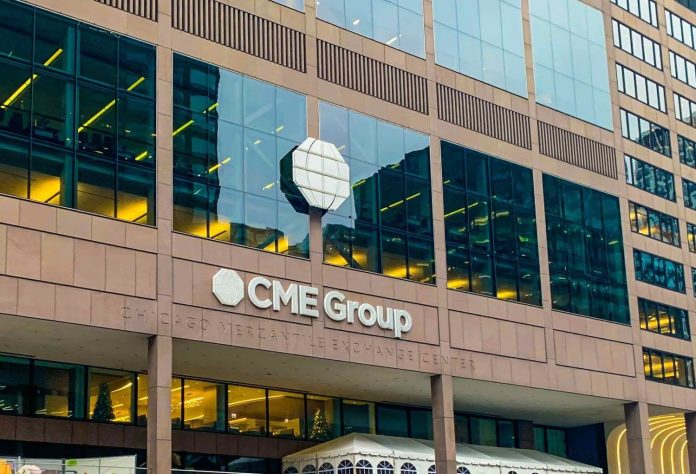
CME Group announced on January 15, 2026, that it plans to launch futures contracts for Cardano (ADA) and Chainlink (LINK), along with Stellar (XLM/Lumens), expanding its regulated cryptocurrency derivatives offerings.

The launches are scheduled for February 9, 2026, pending regulatory review and approval.This builds on CME’s existing crypto suite, which already includes futures and options for Bitcoin, Ether, XRP, and Solana.

The addition of these altcoins reflects growing institutional demand for regulated tools to manage risk in cryptocurrencies beyond the majors. Cardano (ADA) futures: Standard contract size of 100,000 ADA; Micro contract size of 10,000 ADA. Chainlink (LINK) futures: Standard contract size of 5,000 LINK; Micro contract size of 250 LINK. Stellar (Lumens) futures: Standard contract size of 250,000 Lumens; Micro contract size of 12,500 Lumens.

These micro-sized contracts aim to provide more flexibility, accessibility, and capital efficiency for a broader range of market participants, including retail traders alongside institutions.

The news highlights it as a step toward greater mainstream adoption and legitimacy for these projects in traditional finance. Stablecoin yield restrictions refer to proposed or existing regulatory limits in the U.S. on whether crypto platforms like exchanges or wallets can pay interest, yield, or rewards to users who hold stablecoins (dollar-pegged cryptocurrencies such as USDC or USDT).

This has become a major flashpoint in ongoing U.S. crypto legislation, particularly in the context of the recent Senate Banking Committee delay of the Digital Asset Market Clarity Act often called the Clarity Act or market structure bill around January 15-16, 2026.

The GENIUS Act 

Congress passed the GENIUS Act in mid-2025, creating a federal framework for payment stablecoins. It prohibits stablecoin issuers from directly paying interest or yield to holders. The goal was to prevent stablecoins from functioning like bank deposits, which could draw money out of traditional banks and affect lending/credit in the economy.

However, a perceived loophole emerged: While issuers can’t pay yield, intermediaries like Coinbase or other platforms could still share revenue or offer rewards to users holding stablecoins on their platforms. For example, Coinbase has offered around 4-5% APY on USDC holdings in the past, funded by interest earned on the underlying reserves.

The Senate Banking Committee’s draft aimed to close or tighten this loophole as part of broader rules dividing oversight between the SEC (securities) and CFTC (commodities/spot markets). Prohibits crypto companies (exchanges, platforms) from paying interest to consumers solely for holding a stablecoin.

Allows some rewards or incentives for specific activities, such as: Sending payments/transactions. Participating in loyalty programs. Other active uses (not just passive holding). This is seen as a win for banks, which argue that unrestricted stablecoin yields could siphon trillions in deposits reducing funds available for loans, mortgages, and community lending.

Banks via groups like the American Bankers Association lobbied heavily, claiming these “rewards” are effectively interest by another name and create unfair competition outside banking regulations.

Coinbase CEO Brian Armstrong publicly withdrew support on January 14, 2026, calling the provisions one of the “biggest” issues. He argued it would “kill rewards on stablecoins,” erode competition, and let banks “ban their competition.”

Platforms like Coinbase earn significant revenue from stablecoin-related activities, partly from these rewards programs that attract and retain users. Crypto advocates view yield/rewards as a key innovation: It lets users earn on digital dollars similar to high-yield savings but on-chain, promotes adoption, and keeps U.S. stablecoins competitive globally.

Armstrong and others say treating crypto differently harms innovation and economic freedom, especially since banks already pay interest on deposits. Stablecoins with yields threaten the banking system by pulling deposits away, potentially raising borrowing costs and hurting local economies.

This is protectionism; stablecoins offer better, faster, global payments, and users should benefit from yields without artificial restrictions. The markup delay stemmed directly from this tension, plus other issues e.g., tokenized equities, DeFi rules, CFTC vs. SEC authority. Negotiations continue, with potential compromises like narrower activity-based rewards.

If restrictions tighten, it could limit stablecoin growth in the U.S.; if loosened, it might boost adoption but face banking pushback. In short, these restrictions aim to prevent stablecoins from becoming “deposit-like” products that compete directly with banks, while crypto firms fight to preserve user incentives and innovation.

The fight highlights the clash between traditional finance and crypto in shaping America’s digital asset rules.

Equity Fear and Greed Index Hits Highest Level since September

0

The CNN Fear & Greed Index often referred to as the Equity or Stock Market Fear and Greed Index measures investor sentiment in the US stock market on a scale of 0 (Extreme Fear) to 100 (Extreme Greed).

It aggregates seven indicators, including market momentum, stock price strength/breadth, volatility (VIX), put/call options, safe haven demand, and junk bond demand.

As of the latest update, the index stands at 63, firmly in the Greed zone typically 55+ indicates Greed, with 75+ being Extreme Greed. This reflects improving or bullish investor sentiment amid recent market performance. This level represents the highest reading since at least September 2025, based on available data and reports:In late 2025, the index plunged into Extreme Fear territory during periods of market pullbacks and volatility.

By December 2025, it began recovering into the Greed zone for the first time since September in some reports. Recent readings climbed steadily into January 2026, with values in the low-to-mid 60s marking a notable high point compared to the fear-dominated sentiment in the fall of 2025.

Historical lows in late 2025 hit as low as single digits during corrections. This greed reading suggests investors are optimistic, potentially driven by strong equity performance e.g., S&P 500 near or at elevated levels, but contrarian investors sometimes view high greed as a caution signal for possible overextension or future pullbacks.

The CNN Fear & Greed Index reaching 63 in the Greed zone. its highest level since at least September 2025 — signals a notable shift in investor sentiment from the fear-dominated periods of late 2025 when readings dipped into single digits or low teens during market pullbacks, trade concerns, and volatility.

This reading reflects improving bullish confidence, driven by strong underlying indicators: Positive market momentum (S&P 500 well above its 125-day moving average). Strong stock price strength and breadth more new 52-week highs, favorable volume in advancing stocks.

VIX subdued compared to its moving average. Reduced safe haven demand. Increased junk bond appetite— tighter credit spreads, showing willingness to take risk. Favorable put/call options dynamics not signaling heavy hedging.

Key Implications for the Stock Market

The move into Greed territory often aligns with ongoing rallies, as seen in recent months. The S&P 500 has been pushing toward or hovering near all-time highs recently around 6,944–6,960 levels, supported by positive economic data, corporate earnings resilience, and optimism for 2026 growth.

This sentiment recovery follows the sharp fear plunge in fall 2025 around November lows around 9–11 during corrections. Historically, elevated greed readings especially 60+ can act as a warning for over-optimism. Excessive greed sometimes precedes short-term pullbacks, profit-taking, or corrections, as investors become complacent and valuations stretch.

It’s not an immediate sell signal — markets can stay “greedy” for extended periods during bull runs — but it suggests reduced margin of safety and higher vulnerability to negative surprises. With Wall Street forecasts for 2026 generally positive e.g., S&P targets ranging from modest gains to 8,000+ by year-end, sustained greed could fuel additional advances if earnings and economic conditions remain supportive.

Readings in the 60s not yet Extreme Greed at 75+ indicate building enthusiasm but not euphoria. A reversal could occur if momentum slows or external pressures emerge. Contrarians often view high greed as a time to trim positions or prepare for volatility.

This marks a clear rebound from late-2025 fear extremes tied to factors like tariff talks and economic uncertainty, suggesting the market has shaken off much of that anxiety. The upward trend from ~53 a month ago to 63 now reinforces a “risk-on” environment, but watch for any quick drops back toward Neutral/Fear as potential buying opportunities.

The index implies optimistic but potentially frothy sentiment right now — bullish for near-term stability or gains, yet a reminder to stay vigilant against complacency.

Europe’s New Crypto Rules Are Changing in Practice

0

The European Union’s Markets in Crypto-Assets (MiCA) regulation represents the bloc’s comprehensive framework for crypto-assets, aimed at enhancing consumer protection, market integrity, financial stability, and innovation while eliminating legal gray zones.

MiCA entered into force in June 2023, with phased application: rules for stablecoins (asset-referenced tokens and e-money tokens) from mid-2024, and broader requirements for crypto-asset service providers (CASPs) from December 30, 2024.

As of January 2026, MiCA is in full effect, though a transitional “grandfathering” period allows many existing providers to operate under national rules until July 1, 2026 or earlier in some member states, depending on local implementation.

In practice, here’s what Europe’s new crypto rules are changing for key stakeholders: Unified licensing across the EU: Providers must obtain authorization from a national regulator e.g., Central Bank of Ireland for Kraken in 2025, but a single MiCA license allows operations throughout all 27 EU member states and EEA countries, reducing the need for multiple national approvals.

As of late 2025/early 2026, around 102 CASPs are fully authorized per ESMA’s register, including some banks (12 credit institutions involved). Many more operate under transitional rules until mid-2026.

Stricter operational requirements include capital reserves, governance standards, conduct-of-business rules, robust AML/KYC, complaint handling, and safeguards against market abuse. Platforms must provide clear risk disclosures, protect client assets like segregation, and maintain transparency in trading.

This creates a more professional, bank-like environment but increases compliance costs—non-compliance can lead to fines up to €5 million or more.

For Stablecoins and Issuers

Algorithmic stablecoins are effectively banned or non-compliant, as MiCA requires full backing by liquid reserves at a 1:1 ratio with fiat or other assets. Compliant stablecoins like fiat-backed must allow redemption at par value, hold high-quality reserves, and face limits on transaction volumes and use as a means of exchange to protect monetary sovereignty.

Only about 30 active issuers are noted in recent data, reflecting slower adoption and restrictions on non-compliant ones., major ones like certain USDT variants face delisting or restrictions for EU users. Exchanges and wallets have rotated toward MiCA-compliant stablecoins, fragmenting liquidity for non-compliant tokens.

For Users and Investors

Greater protection and transparency: Platforms must disclose risks, costs, and charges clearly. Users benefit from better asset safeguarding, redemption rights for stablecoins, and reduced fraud risk through supervision.

Enhanced consumer safeguards include marketing restrictions, fair treatment rules, and easier complaint resolution. However, some services, certain non-compliant tokens or high-risk products may become unavailable or restricted in the EU.

Related rules like DAC8 (tax reporting) kicked in January 2026, requiring CASPs to report user/transaction data to tax authorities (first reports due in 2027), increasing transparency but potentially more scrutiny on holdings/transactions.

The transitional phase is ending, with full enforcement ramping up—national authorities shifting to active supervision, and ESMA/EBA guidance operational. This standardizes the market but may lead to consolidation (fewer but more compliant players) and some services migrating outside the EU if they can’t meet requirements.

MiCA has moved crypto from a fragmented, uncertain space to a regulated one similar to traditional finance—benefiting long-term stability and institutional entry while requiring adaptation from providers and users.

1,000,000x Once Captured Market Attention, Is Zero Knowledge Proof’s $5M Auction the Next Viral Story?

0

Crypto history compresses years of development into defining moments. Ethereum’s early phase illustrates this. A project starting with limited attention and skepticism eventually delivered one of the largest value expansions ever recorded. Rare as it is, analysts still study these conditions closely.

In 2026, similar conversations arise around Zero Knowledge Proof (ZKP). Analysts and early observers watch it not for guaranteed outcomes but because the structure is familiar.

With a live presale auction active daily and a $5M reward program running alongside, Zero Knowledge Proof is evaluated as the best crypto to buy. It also appears in discussions of a top crypto presale that progresses in real time, based on mechanics rather than staged hype.

Early Patterns Turn Skepticism Into Conviction

Ethereum’s first supporters lacked certainty. In 2015, programmable blockchains were widely misunderstood, and Bitcoin held attention. What separated Ethereum was readiness: the network worked, developers built immediately, and access was public.

These traits allowed value to accumulate quietly before recognition arrived. Investors today searching for the best crypto to buy often revisit that pattern. They do not attempt to repeat history, but they recognize when preparation precedes popularity.

Early-cycle analysts closely monitor any top crypto presale, emphasizing execution over narrative. Ready infrastructure and clear participation rules are key markers that signal opportunity long before hype peaks, and that same principle now applies to Zero Knowledge Proof (ZKP) in 2026.

Zero Knowledge Proof’s Live Presale Auction Shapes Access

Unlike typical presales with fixed pricing or short rounds, Zero Knowledge Proof distributes tokens through a live daily presale auction. Each 24-hour window functions independently: supply releases, participation records, and pricing finalizes before the next window begins.

This design creates forward-only progression:

  • Each day’s conditions close permanently
  • Early conditions cannot be recreated
  • Entry tightens as awareness grows

For investors evaluating the best crypto to buy early, this cadence matters. It replaces discretionary allocation with structured participation. That clarity is why Zero Knowledge Proof increasingly appears as a top crypto presale based on transparent mechanics instead of short-term promotional bursts.

The $5M Reward Program Increases Participation Without Distortion

Alongside the auction, Zero Knowledge Proof runs a $5M reward program. Ten participants each receive $500,000 in tokens while the auction itself remains unaffected.

Key rules stay constant:

  • Daily token supply does not change
  • Allocation remains proportional
  • Pricing settles on-chain at the end of each window

This separation preserves credibility. Incentives attract attention but do not alter price discovery. Investors looking for the best crypto to buy note this discipline. It also reinforces why Zero Knowledge Proof is considered a top crypto presale, balancing visibility with structural integrity.

The Initial Coin Auction Provides Transparent Price Discovery

Zero Knowledge Proof’s distribution model uses an Initial Coin Auction rather than fixed pricing. Each window clears at a single effective price for all participants, without private allocations or preferential tiers later.

This removes historical friction points in early distributions. Analysts assessing the best crypto to buy based on fairness and transparency recognize the ICA as a rare verifiable record of demand evolution over time. It is also why Zero Knowledge Proof frequently appears among top crypto presales, as disciplined price discovery often precedes lasting adoption.

Infrastructure Exists Before Public Participation

Another factor in early breakout comparisons is sequencing. Zero Knowledge Proof committed over $100M internally before opening its presale. Funding built network architecture, cryptographic layers, and a compute layer for verifiable workloads.

Public participants are not financing construction. They enter an already operational environment, which changes the risk profile significantly. For investors determining the best crypto to buy in 2026, this distinction matters. It keeps Zero Knowledge Proof on the radar as a top crypto presale that prioritizes execution over speculative promise.

Final Assessment for Early 2026 Participation

Crypto’s million-percent stories exist not because they repeat on demand but because value forms quietly. Ethereum grew following limited attention, functional infrastructure, and open access before market consensus appeared.

Zero Knowledge Proof (ZKP) now receives similar analysis. A live presale auction, a $5M reward program enhancing visibility, and infrastructure built before token distribution make it a focal point for early 2026. Investors tracking the best crypto to buy and evaluating top crypto presales see this as a rare stage: not guaranteeing outcomes but highlighting a familiar setup forming in real time.

Explore Zero Knowledge Proof:

Website: https://zkp.com/

Auction: https://auction.zkp.com/

X: https://x.com/ZKPofficial

Telegram: https://t.me/ZKPofficial